

I have absolutely no reason to be at sea. I don’t do oceanographic research, don’t work in any way, shape, or form with phytoplankton, and I barely have the time to set up my own research trips let alone take two weeks to help on someone else’s. Yet here I am, my first day aboard the R/V Cape Hatteras on a cruise to the Sargasso to study phytoplankton energetics.
My role on the ship is to document the research and help out with diel sampling, a process that requires bi-hourly water/plankton samples to test the properties of phytoplankton across a full daily cycle. It’s an incredibly exhausting process to do alone because of the time demands.
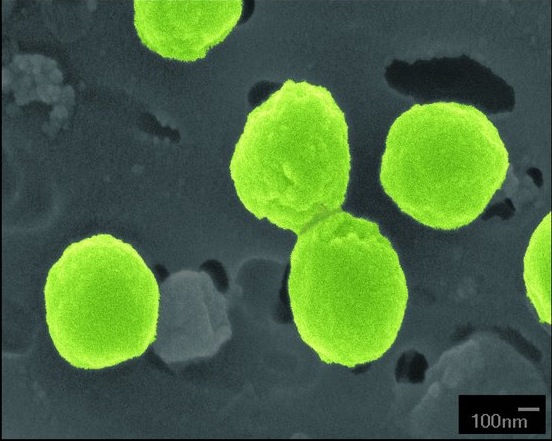
The study organism most people on the ship are interested in is Prochlorococcus, a cyanobacteria and the most abundant phytoplankton on earth. People have argued that it drives the earth’s oxygen production and is the base of the ocean food chain. As a scientific community, we still don’t know much of the basics about prochlorococcus because it occurs in the open ocean, a relatively hard place to access, and is difficult to culture in the lab. One of the main goals of the cruise is to determine the effect that grazing zooplankton have on the overall growth rate and population. Eventually, a team from the University of Georgia group led by Brian Binder want to put together a population model combined with physical oceanography, that will describe the population and predict how changes will trickle up the food chain.
Yajuan Lin from the Duke University Marine Lab (who I am assisting), has a related but distinct project on board. We will be comparing various methods for directly measuring energy production in the prochlorococcus. At a molecular level, prochlorococcus produce more RNA when active, so measuring RNA abundance may yield insight into overall productivity. There may be an underlying DNA-level reason for this so we’re also collecting DNA samples for comparison. We have three metal dures containing liquid nitrogen to preserve these samples for a year’s worth of future labwork.
The other method looks at flourescence in the prochlorococcus immediately after being brought on board. The flourometer shines a suite of photoactive wavelengths at a sample of seawater and the two photosystems involved in photosynthesis absorb and then reflect that light energy in a different wavelength. The final result is a light profile that we can use to calculate how much energy is produced by the sample.
For now, everyone is settling in for the 36 hour steam out to the Sargasso Sea. We’re at the point where the ocean is a solid dark blue with the occasional raft of seaweed floating by. It’s amazing that these little rafts support larval fish and other small organisms out here, providing shelter from large predators. We’re all taking naps, trying to gain our sea legs, and making sure everything is strapped down and ready to go for tomorrow.
~Bluegrass Blue Crab
research, don’t deal in any way, shape, or form with phytoplankton,
and I barely have the time to set up my own research trips let alone
take two weeks to help on someone else’s. However, here I am, first
day at sea on a cruise to the Sargasso to study phytoplankton
energetics. I look forward to catching up with you all upon my
return!
My role on the ship is largely to document the research and help out
with diel sampling, a process that requires bi-hourly water/plankton
samples to test the properties of the phytoplankton across a full
daily cycle. It’s an incredibly hard process to do by oneself just
because of the time demands.
The study organism most people on the ship are interested in is
prochlorococcus, a cyanobacteria that is the most abundant
phytoplankton on earth. People have argued that it drives the earth’s
oxygen production and the base of the food chain in the ocean. As a
scientific community, we still don’t know much of the basics about it
because it occurs in the open ocean, a relatively hard place to
access, and is difficult to culture in the lab. One of the main goals
of the cruise is to determine the effect that grazing zooplankton have
on the overall growth rate and population. Eventually, Brian Binder’s
(from University of Georgia) group wants to put together a population
model, combined with physical oceanography traits, that will describe
the population and predict how changes will trickle up the food chain.
Yajuan and I, from Duke, have a related but distinct project on board.
We’ll be comparing various techniques at directly measuring energy
production in the prochlorococcus. At a molecular level, they produce
more RNA when they are active, so measuring RNA abundance might yield
insight into overall productivity. There may be an underlying
DNA-level reason for this so we’re also collecting DNA samples for
comparison. We have three strapped down metal dures holding liquid
nitrogen to preserve all these samples for a year’s worth of labwork
later.
The other methodology looks at flourescence in the prochlorococcus
immediately upon being brought on board. The flourometer shines a
suite of photoactive wavelengths at a sample of seawater and the two
photosystems involved in photosynthesis absorb and then reflect that
light energy in a different wavelength. The final result is a light
profile and we can calculate how much energy is produced by the
sample.
For now, everyone is settling in for the 36 hour steam out to the
Sargasso Sea. We’re at the point where the ocean is a solid dark blue
with the occasional raft of seaweed floating by. It’s amazing that
these little rafts support larval fish and other small organisms out
here, providing shelter from large predators. We’re all taking naps,
trying to gain our sea legs, and making sure everything is strapped
down and ready to go for tomorrow.
~Bluegrass Blue Crab
Good luck and enjoy the moment. It sounds like one of life’s memorable adventures.
U. Chris
So are you just going for fun? Or is there some devious social sciencey plan?