Skip to content

Southern Fried Science

Over 15 years of ocean science and conservation online

  • Home
  • About SFS
  • Authors
  • Support SFS

Key takeaways from my Convention on Migratory Species report on fish aggregating devices in the Mediterranean Sea

Posted on September 3, 2026 By David Shiffman No Comments on Key takeaways from my Convention on Migratory Species report on fish aggregating devices in the Mediterranean Sea
Conservation, Featured

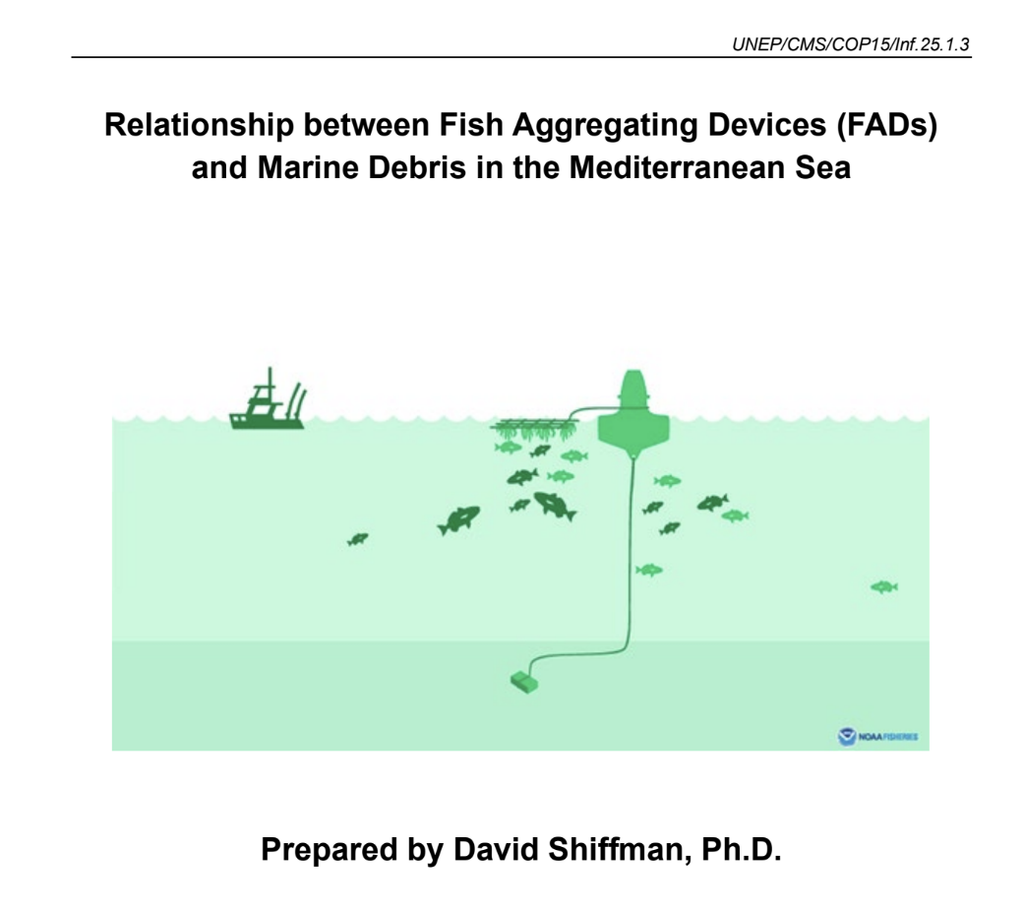
The United Nations Environment Programme hired me to produce a Convengtion on Migratory Species report on the environmental impacts associated with fish aggregating devices and how to mitigate those impacts. Here are some key takeaways.

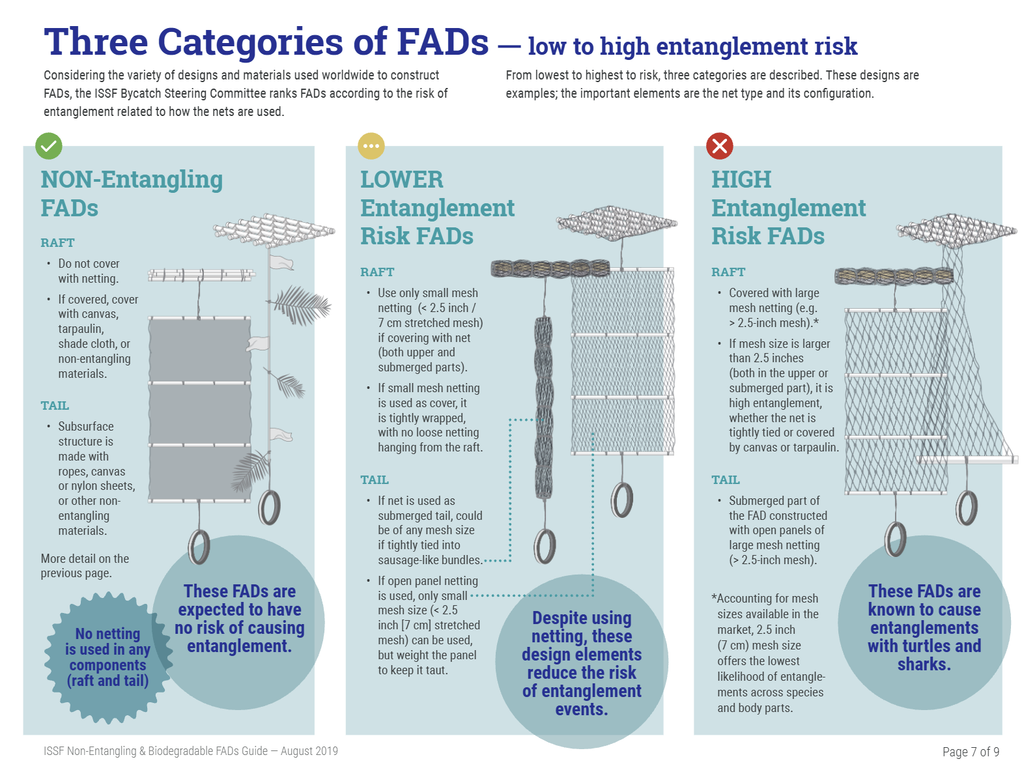
FADs very widely in design, and different designs have different environmental impacts. Because open-ocean fish tend to associate with any hard structure they encounter, designs for fish aggregating devices vary enormously. Some are large and require a crane to deploy, some are small and can be deployed by hand from a small boat. Some use high-tech materials and are equipped with a variety of electronic sensors for detecing when fish are near them and the fishing vessel should come back, while others are made of natural or biodegradable materials like logs or palm fronds. Still others are made out of trash such as oil drums, old tired, and plastic bottles. Some are designed to float freely, while others are anchored (but may begin to float freely if the anchor chain breaks. Some have nets and are designed to entangle fish (but entangle other things as well as bycatch,) while others are non-entangling and merely attract fish to an area so fishermen can later catch them.
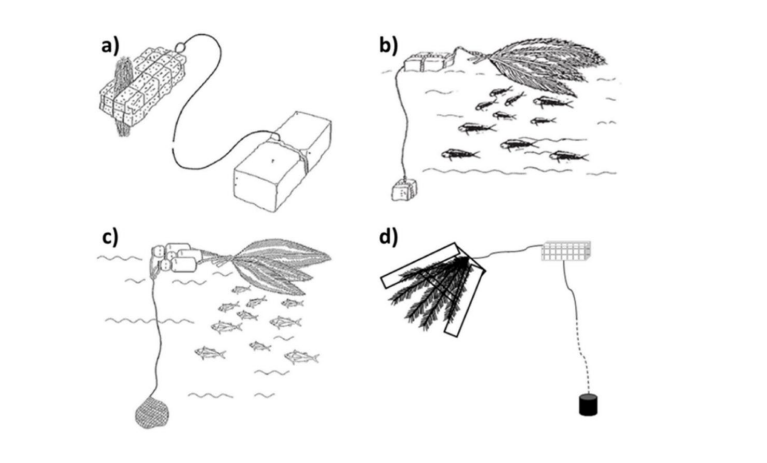
Figure 4. From Sinopoli 2025, showing common designs of FADs deployed in the
Mediterranean region, noting that some incorporate plastic floats, the use of heavy pieces of
trash as anchors, and some organic/biodegradable components including palm fronds

Generally, the use of non-entangling FADs made of biodegradable materials is recommended as a best practice, and in some jurisdictions that’s required.
FADs are extremely widely used, and many become abandoned or lost, resulting in “ghost gear” or marine debris. In the Mediterranean region, most FADs are of the anchored design, and more than 60,000 are deployed each year. Approximately 2/3 of these are lost or abandoned, which means they will continue to attract or entangle fish and other marine life, functioning as ‘ghost gear.” Some are large enough to become navigation hazards, some eventually sink to the seafloor where they can crush or smother sensitive habitats. More than 96% of marine litter found on the seafloor of the central Mediterannean is traceable to lost or abandoned FADs, and it’s a major threat to threatened and sensitive black coral habitats. Over 1 million pieces of marine debris from lost or abandoned fishing gear are estimated to be in the Mediterranean, and there’s enough lost or abandoned plastic rope to wrap around the Earth ten times.
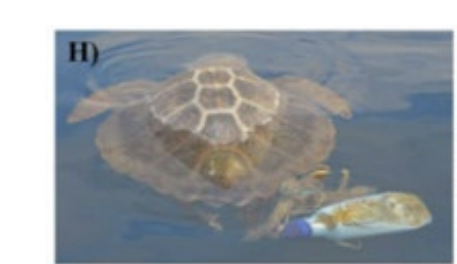
A sea turtle entangled in a plastic bottle that had been used as a FAD float.

A patchwork of overlapping lesiglation and regulations at the national, regional, and global level govern these issues, but there are countless inconsistencies and loopholes. My report examined regulations from the EU parliament, the General Fisheries Council of the Mediterranean, the United Nations Food and Agriculture Organization’s code of conduct for responisble fisheries, the UN Fish Stocks Agreement, the London protocol on marine pollution, and national-level and regional fisheries management organizations regulations from around the world. I also reviewed best practice guides from academic experts, environmental non-profigts, and sustainable fisheries industry groups.

The report issued a series of recommendations for new regulations, organized into construction, deployment, and post-use. Additional detail is available on each in the full report.
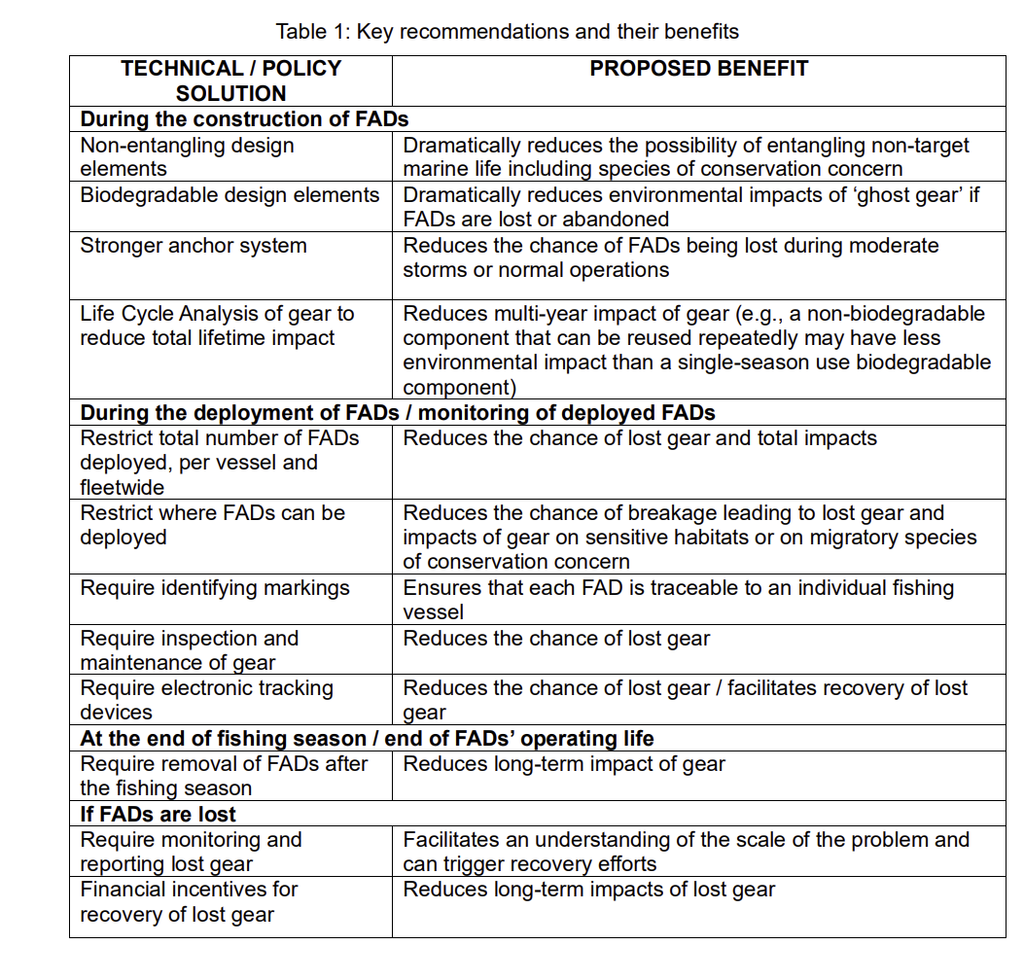
You can read the full report here, available in English, French, or Spanish.
Share this:

  • Share on Bluesky (Opens in new window) Bluesky
  • Share on Facebook (Opens in new window) Facebook
  • Share on Reddit (Opens in new window) Reddit
  • Share on Threads (Opens in new window) Threads
  • Share on WhatsApp (Opens in new window) WhatsApp
  • Share on Mastodon (Opens in new window) Mastodon

Related

Tags: convention on migratory species fish aggregating devices fish aggregation devices mediterranean sea conservation

Post navigation

❮ Previous Post: Aliens, Ridley Scott, and bad science

You may also like

Blogging
A guide to following shark and ray conservation at this week’s Convention on Migratory Species meeting
November 4, 2014
Uncategorized
Shark protections, shark careers, and sharky grammar: Dear Shark Man, Volume 1
November 8, 2017
Science
European Union officials propose stronger finning ban, sign UN migratory shark initiative
November 22, 2011
Conservation
Giant manta rays protected by Convention on Migratory Species
November 25, 2011

Leave a Reply

Your email address will not be published. Required fields are marked *

This site uses Akismet to reduce spam. Learn how your comment data is processed.

Popular Posts

Jabberwocks and Snallygasters: teaching environmental education with monsters, mayhem, and dice.Jabberwocks and Snallygasters: teaching environmental education with monsters, mayhem, and dice.August 31, 2026Andrew Thaler
Have we found the city of Atlantis?Have we found the city of Atlantis?September 1, 2026Chris Parsons
That's not a blobfish: Deep Sea Social Media is Flooded by AI SlopThat's not a blobfish: Deep Sea Social Media is Flooded by AI SlopDecember 19, 2025Andrew Thaler
Sharks, science, and summer camp: Jeff Carrier's underappreciated Seacamp legacySharks, science, and summer camp: Jeff Carrier's underappreciated Seacamp legacySeptember 2, 2026David Shiffman
Please Help This Little Dumbo Octopus Travel Across AmericaPlease Help This Little Dumbo Octopus Travel Across AmericaAugust 3, 2026Angelo Villagomez
What Ocean Ramsey does is not shark science or conservation: some brief thoughts on "the Shark Whisperer" documentaryWhat Ocean Ramsey does is not shark science or conservation: some brief thoughts on "the Shark Whisperer" documentaryJuly 2, 2025David Shiffman
What is a Sand Shark?What is a Sand Shark?November 12, 2017Chuck Bangley
Shark of Darkness: Wrath of Submarine is a fake documentaryShark of Darkness: Wrath of Submarine is a fake documentaryAugust 10, 2014Michelle Jewell
Toxic workplaces: the “tall poppy” problem in conservation and academiaToxic workplaces: the “tall poppy” problem in conservation and academiaAugust 26, 2026Chris Parsons
The conservation impacts of recreational fishingThe conservation impacts of recreational fishingAugust 25, 2026David Shiffman
Subscribe to our RSS Feed for updates whenever new articles are published.

We recommend Feedly for RSS management. It's like Google Reader, except it still exists.

Southern Fried Science

  • Home
  • About SFS
  • Authors
  • Support SFS


If you enjoy Southern Fried Science, consider contributing to our Patreon campaign.

Copyright © 2026 Southern Fried Science.

Theme: Oceanly Premium by ScriptsTown