Most people know me for my work on ocean conservation, Indigenous-led stewardship, and marine protected areas. Over the past year, however, I have found myself increasingly drawn into a different but deeply connected area of research: how public lands tell America’s story, and what happens when that story is deliberately altered or erased.
This work began through conversations with colleagues and partners across the public lands community. As I spent more time working with advocates, historians, park supporters, and policy experts, I started to see public lands not only as places that protect nature, but also as places that preserve our collective memory. National parks, monuments, wildlife refuges, and other public lands are living classrooms where visitors learn about the people, cultures, conflicts, and movements that shaped the United States.
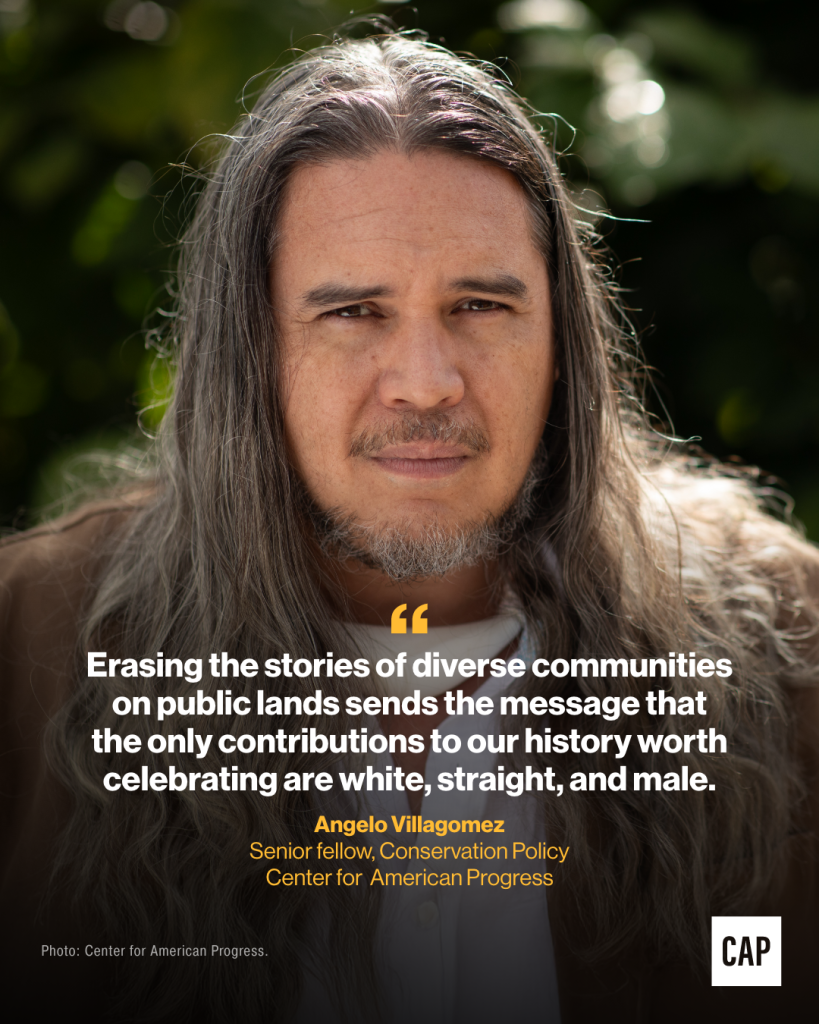
Over the past year, I have had the opportunity to collaborate with public lands partners both inside and outside the Center for American Progress (CAP). Together, we have explored how ongoing efforts to censor historical interpretation and remove context from public lands affect the public’s understanding of the past. That collaboration has resulted in three reports that document an increasingly coordinated effort to reshape the stories told across America’s public lands.
The first report examined how federal policies and executive actions were affecting public lands and waters by changing place names, limiting access, and altering historical interpretation. Our research found that these actions were not isolated incidents. Instead, they formed part of a broader effort to diminish or exclude the experiences of communities whose stories have traditionally been underrepresented in public narratives.
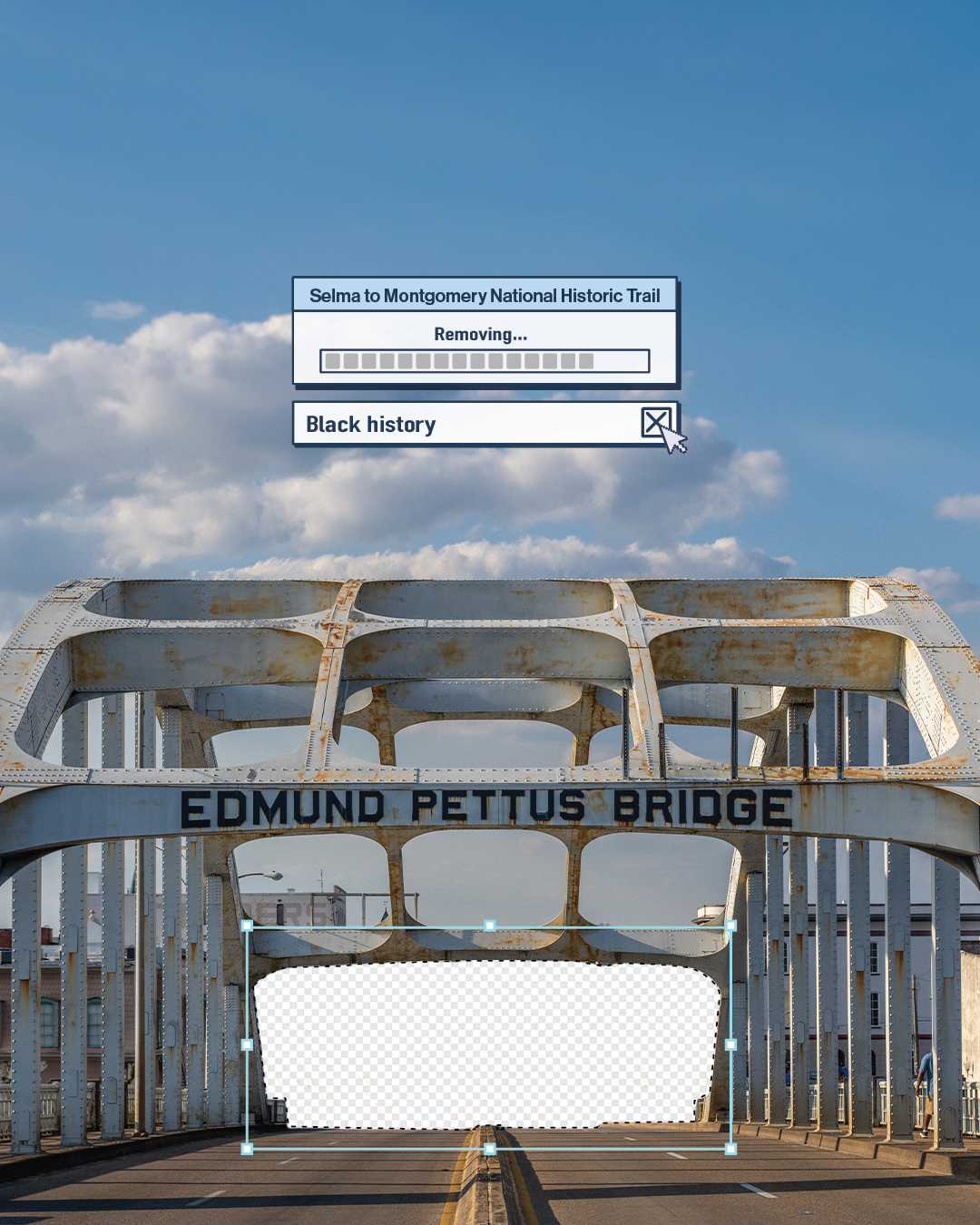
As we continued our work, we focused specifically on the history of Black Americans on public lands. From civil rights landmarks to sites connected to slavery, emancipation, and cultural achievement, public lands help Americans understand difficult chapters of our nation’s past. Historical interpretation is often uncomfortable because history itself is uncomfortable. Yet understanding those realities is essential. We documented efforts to remove or revise content discussing slavery, racial discrimination, and systemic injustice, raising concerns about whether future visitors would receive a complete and accurate understanding of the places they visit.
Our most recent project expanded the scope of this research even further. Drawing on a leaked Department of the Interior database, we analyzed hundreds of sites across the country that had been flagged for revision, review, or removal of historical and scientific content. The findings revealed that the impacts extended far beyond any single community or historical topic. Content related to Black history, Indigenous history, women’s history, immigration, labor movements, LGBTQ+ history, and even science education had all been targeted for review in more than one-third of U.S. national parks.
When many people think about conservation, they think about wildlife, forests, coral reefs, or clean water. Those things are critically important, and they remain central to my work. But conservation also involves protecting the stories attached to places. A historic battlefield, a civil rights landmark, an ancestral Indigenous homeland, or a memorial to a labor movement all help people understand how the nation became what it is today.
The effort to preserve public lands has always been about more than protecting scenery. It is about protecting the full American experience. If we remove historical context, sanitize difficult truths, or erase the contributions of entire communities, we lose an essential part of what these places are meant to accomplish.
This research has expanded my understanding of conservation policy. It has shown me that protecting public lands requires protecting both the physical landscape and the narratives embedded within it. The stories told at public lands influence how visitors understand history, identity, justice, and citizenship. They help us grapple with both our greatest achievements and our deepest failures.
As the United States reflects on its 250 years of history and looks toward its future, public lands remain one of the country’s most powerful civic resources. They offer opportunities to learn, reflect, and engage with a richer and more complete understanding of the American story.
This is still a relatively new area of research for me, and I am grateful to the many partners who have helped shape my thinking along the way. Through my collaboration with colleagues across CAP, especially the Racial Equity and Justice team, and with partners throughout the public lands community, I have come to appreciate how closely conservation and history are connected.
Protecting places matters. Protecting the truth about those places matters too.