Skip to content

Southern Fried Science

Over 15 years of ocean science and conservation online

  • Home
  • About SFS
  • Authors
  • Support SFS

Open source. Open science. Open Ocean. Oceanography for Everyone and the OpenCTD

Posted on June 24, 2016June 24, 2016 By Andrew Thaler 2 Comments on Open source. Open science. Open Ocean. Oceanography for Everyone and the OpenCTD
Oceanography for Everyone
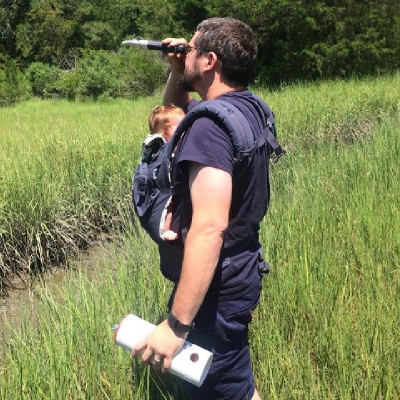
Andrew compares the OpenCTD readout to a hand refractometer, because apparently he's a hipster ecologist.
Andrew compares the OpenCTD readout to a hand refractometer, because apparently he’s a hipster ecologist.

Nearly four years ago, Kersey Sturdivant and I launched a bold, ambitious, and, frankly, naive crowdfunding initiative to build the first low-cost, open-source CTD, a core scientific instrument that measures salinity, temperature, and depth in a water column. It was a dream born from the frustration of declining science funding, the expense of scientific equipment, and the promise of the Maker movement. After thousands of hours spent learning the skills necessary to build these devices, hundreds of conversations with experts, collaborators, and potential users around the world, dozens of iterations (some transformed into full prototypes, others that exist solely as software), and one research cruise on Lake Superior to test the housing and depth and temperature probes, the OpenCTD has arrived.
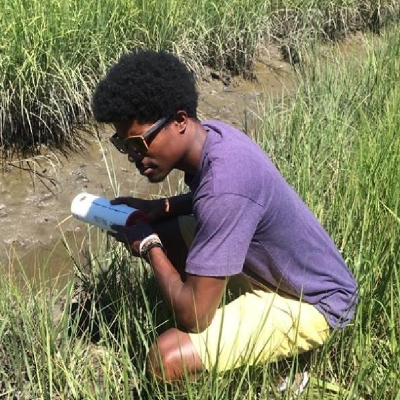
Kersey strike a pose while deploying an OpenCTD in our local estuary.
Kersey strikes a pose while deploying an OpenCTD in our local estuary.

Over the last week, Kersey and I have been hard at work building a battery of CTDs while methodically documenting the construction process. You can watch the event unfurl on the #HackTheOcean hashtag. We now have three new CTDs ready to be distributed to collaborators at various institutions for more field tests and, in particular, to assess the precision of three different conductivity probes, all of which have been calibrated and validated here, in Virginia.

OpenCTD versus commercial CTD temperature and depth test. Conductivity test are occurring this summer, but initial surveys indicated no significant deviation from commercial instruments (indeed, we’re even using a commercial conductivity circuit that has been thoroughly tested in other environmental monitoring contexts.)

Now, finally, after 4 years of challenges and opportunities, of redesigns, re-education, and re-development, it’s time for you to join our open-source community of Citizen Oceanographers and build your own OpenCTD!

We’ve hosted the entire build guide, as well as the software, 3D printer files, support documentation, and raw data from our first research cruise in the Oceanography for Everyone GitHub repository, where you can also find guides and designs for the BeagleBox field computer and the Niskin3D 3D-printable Niskin bottle. 3D print files are also available on Thingiverse, if you’re more comfortable with that platform. We’ve also gone out of our way to make the build as simple as possible. You’ll need to learn basic programming and electronics, but the technical aspects of building your own CTD shouldn’t be a barrier to entry.

Over these four years, the OpenCTD has grown from a single project to a community of citizen oceanographers committed to making the tools needed to study the oceans as accessible as possible. As my friend and colleague Eric Stackpole said upon launching the first OpenROV kickstarter:

“Ocean exploration shouldn’t require a research grant, it should require curiosity.”


Since launching, numerous people have asked us if we can build an OpenCTD for them. We are not really set up to be a manufacturer of CTDs, however, get in touch with either me (andrew@oceanographyforeveryone.com) or Kersey (kersey@oceanographyforeveryone.com) and we can talk about holding an OpenCTD training workshop with your institution or organization.
Share this:

  • Click to share on Bluesky (Opens in new window) Bluesky
  • Click to share on Facebook (Opens in new window) Facebook
  • Click to share on Reddit (Opens in new window) Reddit
  • Click to share on Threads (Opens in new window) Threads
  • Click to share on WhatsApp (Opens in new window) WhatsApp
  • Click to share on Mastodon (Opens in new window) Mastodon

Related

Tags: community oceanography for everyone open science open source OpenCTD

Post navigation

❮ Previous Post: Help crowdfund shark research: will the weasel shark disappear before we know it?
Next Post: Sink Your Teeth into Elasmobranch Science: A Primer on Shark Teeth ❯

You may also like

Blogging
Ocean Outreach in an Evolving Online Ecosystem: Exploration wants to be shared
August 11, 2016
Oceanography for Everyone
Fun Science FRIEDay – Open-Acess Science for the Masses
July 15, 2016
Weekly Salvage
Building the future with open hardware. Monday Morning Salvage: March 27, 2017
March 26, 2017
Uncategorized
Watch Blue Pints Episode 6: Science Online Oceans and Hacking the Ocean
April 30, 2013

2 thoughts on “Open source. Open science. Open Ocean. Oceanography for Everyone and the OpenCTD”

  1. clarkrichards says:
    June 27, 2016 at 8:34 pm

    Pretty cool! I’ve seen that temperature plot going around quite a bit the last few days — any idea what the conductivity data look like? That’s the harder measurement to make, and it’s not much of a CTD without the C … 😛

  2. Andrew David Thaler says:
    June 27, 2016 at 10:09 pm

    We don’t have a ton of conductivity curves because were testing three different probes, but in linear tests, all fell with 2% of the commercial CTD. Three OpenCTDs were just released into the wild for field testing, with a hard focus on the C.

Comments are closed.

Popular Posts

What Ocean Ramsey does is not shark science or conservation: some brief thoughts on "the Shark Whisperer" documentaryWhat Ocean Ramsey does is not shark science or conservation: some brief thoughts on "the Shark Whisperer" documentaryJuly 2, 2025David Shiffman
I can serve on your graduate thesis committee. Here’s what you can expect of me, and what I expect in return.I can serve on your graduate thesis committee. Here’s what you can expect of me, and what I expect in return.October 16, 2025David Shiffman
I turned my woodshop into a personal solar farm.I turned my woodshop into a personal solar farm.June 21, 2021Andrew Thaler
Shark of Darkness: Wrath of Submarine is a fake documentaryShark of Darkness: Wrath of Submarine is a fake documentaryAugust 10, 2014Michelle Jewell
What can the funniest shark memes on the internetz teach us about ocean science and conservation?What can the funniest shark memes on the internetz teach us about ocean science and conservation?November 8, 2013David Shiffman
Breaking News! "Most Comprehensive Estimate of Mortality": Between 63 and 273 Million Sharks Killed Each YearBreaking News! "Most Comprehensive Estimate of Mortality": Between 63 and 273 Million Sharks Killed Each YearMarch 1, 2013David Shiffman
Blackfish: the Science Behind the MovieBlackfish: the Science Behind the MovieSeptember 18, 2013Chris Parsons
Mermaids: The New Evidence is a Fake DocumentaryMermaids: The New Evidence is a Fake DocumentaryMay 28, 2013Andrew Thaler
Norway and Cook Islands put their deep-sea mining plans on pause.Norway and Cook Islands put their deep-sea mining plans on pause.December 3, 2025Andrew Thaler
I spent 50 days working out in Virtual Reality and everything went better than expected.I spent 50 days working out in Virtual Reality and everything went better than expected.May 16, 2019Andrew Thaler
Subscribe to our RSS Feed for updates whenever new articles are published.

We recommend Feedly for RSS management. It's like Google Reader, except it still exists.

Southern Fried Science

  • Home
  • About SFS
  • Authors
  • Support SFS


If you enjoy Southern Fried Science, consider contributing to our Patreon campaign.

Copyright © 2025 Southern Fried Science.

Theme: Oceanly Premium by ScriptsTown