
Skip to content

Southern Fried Science

Over 15 years of ocean science and conservation online

  • Home
  • About SFS
  • Authors
  • Support SFS

Recent Posts

small boy holding Miss Abyss Dumbo Octopus
Please Help This Little Dumbo Octopus Travel Across America
August 3, 2026
Isn’t ironic, don’t you think: dismantling the Ocean Observatories Initiative on World Oceans Day
June 9, 2026
My Journey Into Researching Historical Erasure on Public Lands
July 31, 2026
The next OpenCTD is here!
June 22, 2026
humpback whale in Antarctica
The evolution of the International Whaling Commission – from  whaling quotas to whale conservation
June 10, 2026
“Why Sustainable Seafood Matters” is now available for preorder! Here’s what it’s about, and why I decided to write it.
June 8, 2026

Agents of seal: stealthy seals use subsurface structures to sneak by sharks

Posted on November 18, 2014December 8, 2014 By Michelle Jewell 1 Comment on Agents of seal: stealthy seals use subsurface structures to sneak by sharks
Blogging, Science

michelleMichelle Jewell is a Zoologist specialized in predator/prey behaivour and the Scientific Communicator for EDNA Interactive.  She has spent the past 4 years studying the behaviour of white sharks and Cape fur seals at Geyser Rock, ‘Shark Alley’, South Africa.  

Predators are highly influential in ecosystems because of the many top-down effects they can have.  The most obvious and direct way predators influence an ecosystem is by eating and reducing the number of prey animals in the system, but another equally important way is the indirect influence they have on the behaviour of prey animals.

If you have avoided parking on a risky-looking street, taken a different route between classes to avoid a bully, or abandoned a forest hike because of snapping twigs in the distance, you have been indirectly affected by perceived ‘predators’.  In the wild, prey animals will also change their behaviour when they perceive that predators are around, and these altered behaviours often influence other species, ultimately shaping the ecosystem.

Read More “Agents of seal: stealthy seals use subsurface structures to sneak by sharks” »

Fun Science FRIEDay – The Origin of HIV

Posted on November 14, 2014November 25, 2014 By Kersey Sturdivant
Blogging, Science

Happy Fun Science FRIEDay


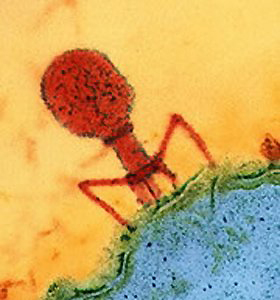
After a hiatus, I hope to get back to regularly writing these pieces. This week I was particular inspired to focus on an article I read about the discovery of the origins of the human immunodeficiency virus (HIV) and subsequently the origins of AIDS.

Scanning electron micrograph of HIV-1 (in green) budding from cultured lymphocyte. Multiple round bumps on cell surface represent sites of assembly and budding of virions. Photo Credit: Centers for Disease Control (CDC)
Scanning electron micrograph of HIV-1 (in green) budding from cultured lymphocyte. Multiple round bumps on cell surface represent sites of assembly and budding of virions.
Photo Credit: Centers for Disease Control (CDC)

AIDS burst onto the scene like a bat out of hell, wreaking havoc on an unsuspecting human population. First recognized in the early 1980s by the Centers for Disease Control and Prevention, better known as the CDC), AIDS went on to cause approximate 36 million deaths globally becoming one of the most devastating diseases in human history. But where did this affliction come from and what were the chain of events that led to the pandemic?

Read More “Fun Science FRIEDay – The Origin of HIV” »

Marine Ecology via Remote Observation: an update from #ROV2PNG

Posted on November 12, 2014November 12, 2014 By Andrew Thaler
Science

Note: we’re home after an exceptional 3 weeks of work in Papua New Guinea. Sadly, the course was so intense that we weren’t able to produce updates during the program. Instead, please accept these time-shifted updates from #ROV2PNG. After more than a week of building robots, developing research proposals, presenting and defending their proposals to … Read More “Marine Ecology via Remote Observation: an update from #ROV2PNG” »

Newly-build robots face many sea trials: an update from #ROV2PNG

Posted on November 10, 2014 By Andrew Thaler
Science

Note: we’re home after an exceptional 3 weeks of work in Papua New Guinea. Sadly, the course was so intense that we weren’t able to produce updates during the program. Instead, please accept these time-shifted updates from #ROV2PNG.

Students prepare for Pilot Academy.

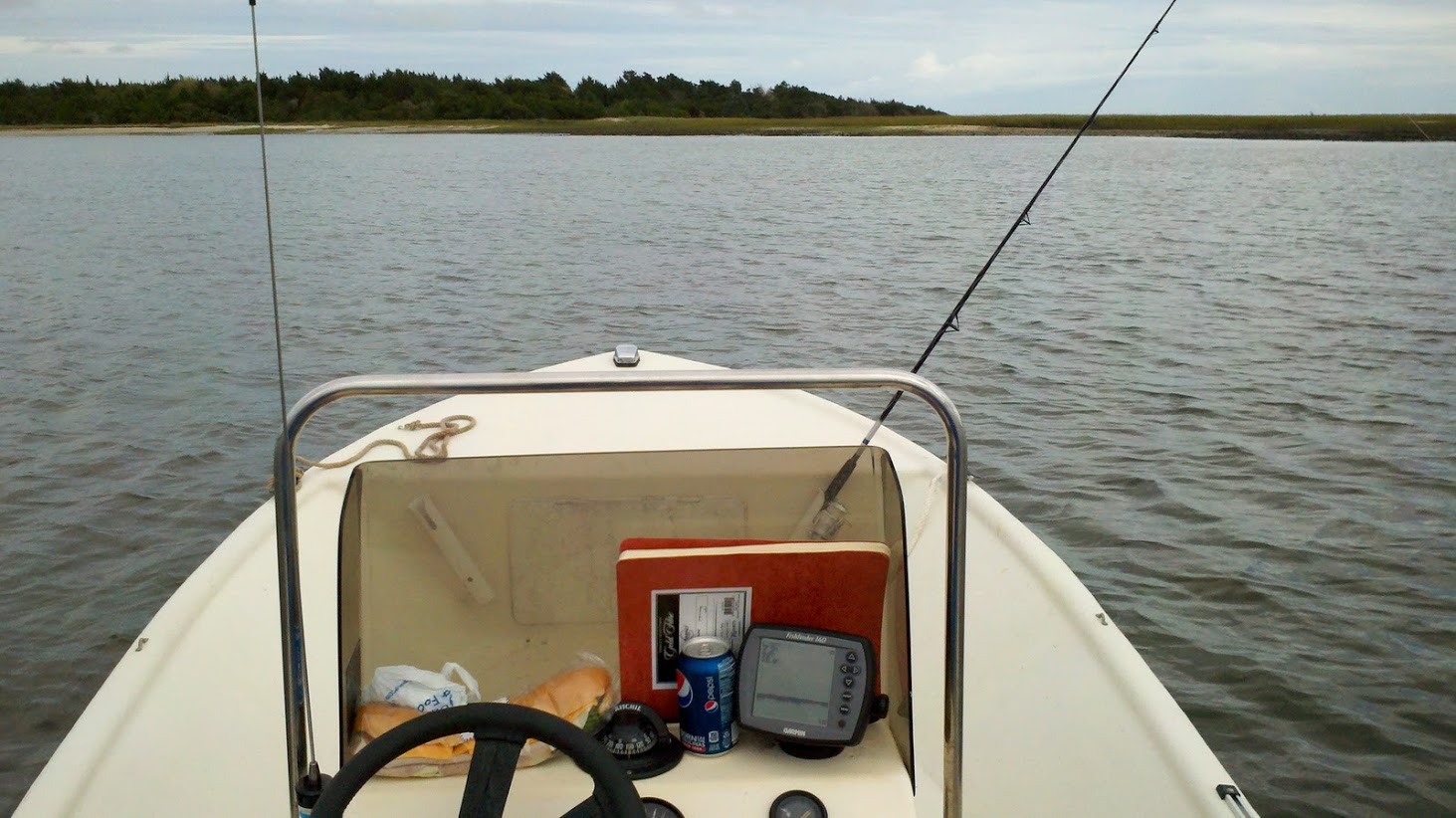
With a week of robot building behind us, it’s time to put our robots, and our newly minted robot pilots to the test. Monday began with a day of tether management and pilot training. The OpenROV does not come with its own, pre-built tether management system; operators must design their own and adapt it to the unique challenges of their field environment. So we set the team off to develop their own tether management systems and the results were astounding, artistic, and clever.

One of several innovative tether management systems.

With tethers securely managed, it was time for Erika’s Pilot Academy. As some teams continued to perform maintenance and troubleshooting, and some worked on their ecology projects, others were led, group by group, to the test tank, where Erika and Dominik had built a challenge course for them to fly. Without looking at the tank or robot, each student had to pilot an ROV around the tank, collect a weighted target, and bring it to the surface. Even for veteran OpenROV pilots, this exercise can be challenging. We closed out the first day of pilot training with 23 skilled pilots.

Read More “Newly-build robots face many sea trials: an update from #ROV2PNG” »

Watch Outbreak Wednesday at 8 and tweet along with public health experts!

Posted on November 10, 2014 By David Shiffman
Popular Culture, Science

Much of the public panic about the current ebola situation can be contact traced to the 1995 movie “Outbreak.” This fictional movie is based on the supposedly true story “the Hot Zone” by Richard Preston , though an important new analysis by infectious disease researcher Dr. Tara Smith shows that the Hot Zone has some major factual … Read More “Watch Outbreak Wednesday at 8 and tweet along with public health experts!” »

Six new robots join Papua New Guinea’s marine science assets: an update from #ROV2PNG

Posted on November 7, 2014November 6, 2014 By Andrew Thaler 1 Comment on Six new robots join Papua New Guinea’s marine science assets: an update from #ROV2PNG
Science

Note: we’re home after an exceptional 3 weeks of work in Papua New Guinea. Sadly, the course was so intense that we weren’t able to produce updates during the program. Instead, please accept these time-shifted updates from #ROV2PNG.


Students prepare to soak test their ROV.

After a long week of intensive robot building, six brand new OpenROVs went into the water on Friday. Our student’s hard work paid off as their robots dove into the freshwater test tank. There are few things more rewarding than watching students, who’ve sweated over a difficult build while learning challenging new skills for 12 hours or more every day, launch their completed robots drive them around the test tank for the first time.

Of course, failure is part of our pedagogy, and two robots will require another day of troubleshooting before they can be released into the sea.

Dominik sets up the Chromebooks for their first flight.

Amy delivers a talk on Human Ecology.

Read More “Six new robots join Papua New Guinea’s marine science assets: an update from #ROV2PNG” »

Media coverage of the Yates Supreme Court case isn’t treating illegal fishing seriously

Posted on November 6, 2014 By David Shiffman 1 Comment on Media coverage of the Yates Supreme Court case isn’t treating illegal fishing seriously
Conservation, Science

This week, the Supreme Court heard oral arguments for Yates vs. the United States. Commercial fishermen John Yates was caught with dozens of illegally caught grouper, he destroyed much of the evidence of this crime, and he was charged under a law designed to prosecute people for destruction of evidence. He is now suing the government for overreach.

The question of whether a law most commonly known for being used to deal with destruction of financial records can also be used to deal with destruction of evidence of illegal fishing is an interesting one. The Obama administration claims that the law was designed to be a generic Federal destruction of evidence ban, and it has also been used, according to a USA Today article, to “go after the destruction of cars, cash, cocaine, child pornography- even murder weapons and bodies.” It seems to me that it is an appropriate role of government to write regulations to ensure that our shared natural resources are sustainably exploited, it is an appropriate role of government to enforce violations of those laws, and it is an appropriate role of government to punish people for destroying evidence of those violations. A much bigger problem, however, is with much of the media coverage of this case.

Read More “Media coverage of the Yates Supreme Court case isn’t treating illegal fishing seriously” »

Why #DoctorWho needs a science advisor!

Posted on November 5, 2014November 5, 2014 By Chris Parsons 2 Comments on Why #DoctorWho needs a science advisor!
Uncategorized

There is probably no one in the science geek/nerd community who has not heard of Doctor Who, even if they can’t recite the names of all 13 actors who have played a regenerating incarnation of the Doctor (I’m including the awesome John Hurt in this list), or don’t own an exceedingly long, multi-colored scarf. Doctor Who is the longest running science fiction TV show in the world (first airing in 1963) and consistently gains peak viewing figures in the UK, and has a substantial number of viewers around the world. It’s the British equivalent of Star Trek, although instead of phasers the Doctor has a sonic screwdriver – which is basically the science/engineering equivalent of a magic wand. Also there is distinctly less snogging of aliens and gratuitous bare-chested scenes in Doctor Who compared to Star Trek.

I’ve watched Doctor Who almost religiously since 1974, and as a youngster owned a complete set of Doctor Who novelizations, decades of annuals and a subscription to the magazine. I’m a dyed in the multi-colored wool Whovian (as fans are called).

Read More “Why #DoctorWho needs a science advisor!” »

Why we need ACTIVISTS not WHACKTIVISTS !

Posted on November 4, 2014November 22, 2016 By Chris Parsons
Conservation

My lazy Sunday morning was ruined by a “whacktivist” on a friend’s Facebook page on whale and dolphin issues.

To explain what I mean, here are some definitions:

ACTIVIST – someone who tries to draw public attention and concern to an issue they consider to be important. This typically involves trying to convert an uncaring or unaware public into a public that is aware of and likewise concerned about the issue.

Activists are an important part of society. Activists often lead major societal shifts that have changed things for the better. Civil rights and environmental activists were responsible for encouraging ground breaking laws and societal changes in the 1960s and 1970s.

WHACKTIVIST – someone who tries to convert the public into caring about an issue using inappropriate means, such as insulting those who do not agree with them and using arguments that are illogical or factually incorrect. Whacktivists often do not respect the rights of those who are opposed to them – they use bullying, harassing, and threatening violence and other criminal acts. Whacktivists often see issues in black and white and are resistant to opinions and facts that do not fit their world view.

Read More “Why we need ACTIVISTS not WHACKTIVISTS !” »

A guide to following shark and ray conservation at this week’s Convention on Migratory Species meeting

Posted on November 4, 2014November 4, 2014 By David Shiffman
Blogging, Conservation

This week, the Convention on the Conservation of Migratory Species of Wild Animals (CMS) will have its 11th Conference of the Parties in Quito, Ecuador. While less well-known than the Convention on International Trade in Endangered Species (CITES,) CMS is another very important international wildlife conservation treaty. As the name suggests, it focuses on the conservation of species that migrate across national political borders. This meeting includes several  proposals for listing species of sharks and rays on the CMS Appendices. In fact, most of the proposals are for elasmobranchs this time.

CMS

How does CMS work?

Like CITES, CMS allows member states to propose listing of threatened species on different appendices, which have different levels of protection. Appendix I obligates strict protection of that species by member states, where appendix II encourages member states to cooperate in the management of that species through regional or global agreements.  Currently, basking sharks, great white sharks, and oceanic mantas are listed on appendix I, and whale sharks, makos, porbeagles, and northern hemisphere spiny dogfish are listed on Appendix II. There are also non-binding “memoranda of understanding,” such as the 2010 MOU on migratory sharks. As of May of this year, CMS has 120 parties. This paper by Holly Edwards is a good introduction to how it all works.

What exactly does listing do for a species?

The specific actions required to follow up on these listings are basically up to the CMS parties themselves, and the required actions are not particularly clear for Appendix II. Mako sharks were listed on CMS Appendix II in 2008, for example, and they don’t yet have internationally agreed-upon catch limits. Appendix I listings for basking sharks helped lead to European Union fishing prohibitions for these species, though.

Shark and ray conservation proposals

There are a series of shark and ray conservation proposals listed for the CMS 2014 conference of the parties. These include Appendix II listings for hammerhead sharks (great and scalloped), thresher sharks (all three species), and silky sharks, as well as listings on Appendix I and II for reef manta rays, all 9 species of mobula rays, and all species of sawfish. Project AWARE, Shark Advocates International, Defenders of Wildlife, Humane Society International, Shark Trust, and the International Fund for Animal Welfare have produced some fact sheets and the Pew Environment Group has summaries of each of these proposals except the sawfish ones. The shark and ray proposals are expected to be introduced and debated Thursday morning, but we will likely not know the outcome until next Monday.

How do I follow along?

The main meeting hashtag is #CMSCoP11 (Convention on Migratory Species 11th conference of the parties), but also check out #SharksWithoutBorders and #Time4Action .

Additionally, representatives from variety of environmental non-profits will be attending the conference of the parties and/or tweeting updates. Here is an incomplete list:

Read More “A guide to following shark and ray conservation at this week’s Convention on Migratory Species meeting” »

Posts pagination

Previous 1 … 101 102 103 … 275 Next

Popular Posts

What Ocean Ramsey does is not shark science or conservation: some brief thoughts on "the Shark Whisperer" documentaryWhat Ocean Ramsey does is not shark science or conservation: some brief thoughts on "the Shark Whisperer" documentaryJuly 2, 2025David Shiffman
Zombie ideas in conservation: trophy hunting and conservationZombie ideas in conservation: trophy hunting and conservationAugust 6, 2026Ali Gaster
What is a Sand Shark?What is a Sand Shark?November 12, 2017Chuck Bangley
Shark of Darkness: Wrath of Submarine is a fake documentaryShark of Darkness: Wrath of Submarine is a fake documentaryAugust 10, 2014Michelle Jewell
Is Academic Publishing is breaking conservation science?Is Academic Publishing is breaking conservation science?August 10, 2026Chris Parsons
Ten very bad, no good things the latest Trump Administration has done to the oceansTen very bad, no good things the latest Trump Administration has done to the oceansAugust 14, 2026Ali Gaster
Considering writing a popular science book? Here's my adviceConsidering writing a popular science book? Here's my adviceJuly 7, 2025David Shiffman
How the Bluespotted Ribbontail Stingray got its SpotsHow the Bluespotted Ribbontail Stingray got its SpotsMarch 28, 2024David Shiffman
That's not a blobfish: Deep Sea Social Media is Flooded by AI SlopThat's not a blobfish: Deep Sea Social Media is Flooded by AI SlopDecember 19, 2025Andrew Thaler
Emergency room conservation: why waiting for the Endangered Species Act to save a species is a fiscal disasterEmergency room conservation: why waiting for the Endangered Species Act to save a species is a fiscal disasterAugust 11, 2026Ali Gaster

squishy

Subscribe to our RSS Feed for updates whenever new articles are published.

We recommend Feedly for RSS management. It's like Google Reader, except it still exists.

Southern Fried Science

  • Home
  • About SFS
  • Authors
  • Support SFS


If you enjoy Southern Fried Science, consider contributing to our Patreon campaign.

Copyright © 2026 Southern Fried Science.

Theme: Oceanly Premium by ScriptsTown