
Skip to content

Southern Fried Science

Over 15 years of ocean science and conservation online

  • Home
  • About SFS
  • Authors
  • Support SFS

Recent Posts

small boy holding Miss Abyss Dumbo Octopus
Please Help This Little Dumbo Octopus Travel Across America
August 3, 2026
Isn’t ironic, don’t you think: dismantling the Ocean Observatories Initiative on World Oceans Day
June 9, 2026
My Journey Into Researching Historical Erasure on Public Lands
July 31, 2026
The next OpenCTD is here!
June 22, 2026
humpback whale in Antarctica
The evolution of the International Whaling Commission – from  whaling quotas to whale conservation
June 10, 2026
“Why Sustainable Seafood Matters” is now available for preorder! Here’s what it’s about, and why I decided to write it.
June 8, 2026

Update on Blue Pints

Posted on July 27, 2012October 27, 2013 By Andrew Thaler 1 Comment on Update on Blue Pints
Uncategorized

Last month we launched the video component of Southern Fried Science–Blue Pints. Blue Pints was designed to be an informal conversation among marine scientists about current issues in marine science and conservation. Our first four episodes covered topics ranging from shark finning to Japanese kelp fishing to Sea monsters and hoax UFO’s. Thanks to Google+, we could broadcast these discussions live while recording them for posterity. It took several episodes for us to hit our stride and I’m certain that we’ll continue to perfect and change the formatting as we continue, which leads us to the big question on everyone’s mind:

What is next for Blue Pints?

A weekly episode proved a bit too much for our current schedules, so we’re cutting down on the number we produce every month. On top of that, as many of you know, I’m defending my doctoral dissertation next month, so my southern fried schedule is pretty much completely packed until then. Finally, as much as you all love to see mine, David’s, and Amy’s faces, I’m sure you’d much rather we mix up the hosts a bit.

Two things are happening between now and the end of August. First, we’re soliciting guests to join in on our broadcasts. If there are issues in marine science and conservation that you’d like to talk about, or you just want to hang out online with us talking about the ocean, drop us a line or leave a comment on this post and we’ll start assembling a schedule of ocean communicators. Second, we’re launching a complementary program–A shot of Blue–which will be a short (5 minutes or less) discussion covering a single topic. This will help round out the schedule with out demanding too much of our time. We may continue to run episodes during this month, but will not be sticking to a regular schedule.

Check out the first 4 episodes of Blue Pints:

Read More “Update on Blue Pints” »

Live from Dayton: Using twitter to shed light on the Scopes Monkey Trial, 87 years later

Posted on July 23, 2012July 23, 2012 By Andrew Thaler
Science

Clarence Darrow and William Jennings Bryan, 1925

Over the last 2 weeks, I’ve taken to twitter to “live-tweet” the Scopes Monkey Trial, as it happens, 87 years after the event. Through the news reports of H.L. Mencken and several historical documents, I attempted to capture the atmosphere of 1925 Dayton, Tennessee, the tension of the trial, the exciting, and sometimes irreverent, nature of the proceedings.

To accomplish this, I drew from several publications, most notably Mencken: The American Iconoclast by Marion Elizabeth Rodgers and A Religious Orgy in Tennessee: A Reporter’s Account of the Scopes Monkey Trial a collection of Mencken’s Scopes Trial reports assembled by Art Winslow. The website The Evolution-Creationism Controversy: A Chronology was very helpful in establishing the dates for various events during the trial State v. Scopes: Trial Excerpts provided access to the public testimony for several key trial events.

Below the fold is the entire archive of my Scopes Trial tweets, with added resources and additional content. Enjoy!

Read More “Live from Dayton: Using twitter to shed light on the Scopes Monkey Trial, 87 years later” »

Books reviews: read up on sharks and grouper before the AES/ASIH meeting

Posted on July 23, 2012July 23, 2012 By David Shiffman
Uncategorized

In just three weeks, the American Elasmobranch Society and the American Society of Ichthyologists and Herpetologists will hold their annual meeting. This year, it will take place in Vancouver, British Columbia as part of the World Herpetology Congress. I’ll be presenting, and I’m looking forward to seeing many of our readers there. Those of you who will be attending this conference, as well as anyone with an interest in sharks and other marine fishes, may be interested in these great new marine science books!

1. Groupers of the world: a field and market guide (by Matthew Craig, Yvonne Sadovy de Mitcheson, and Phillip Heemstra). Grouper are some of the most economically important fish in the ocean, and it’s important that scientists, managers, and eco-conscious consumers have access to the latest scientific and conservation information about these fish. As fisheries landings have increased greatly in recent years (the 300,000 tons landed in 2008 are 10 times the landings from the 1950’s), many species are rapidly declining in population. Recent research showed that 12% of known grouper species are Threatened (Vulnerable, Endangered, or Critically Endangered according to IUCN Red List standards) and another 13% are Near Threatened. Mating behaviors like spawning aggregations and the tendency to change sex further complicates management.

In addition to introducing readers to the field and summarizing the latest scientific discoveries, this book serves as a detailed reference guide to the 163 known species of grouper. The authors demonstrate how to identify each species using more than 300 beautiful color photographs and line drawings,  and detailed maps show where each can be found. The population status (including major threats and some proposed solutions), IUCN Red List conservation status, life history information and known feeding behavior is also reviewed for each species. $79.95, CRC Press.

Read More “Books reviews: read up on sharks and grouper before the AES/ASIH meeting” »

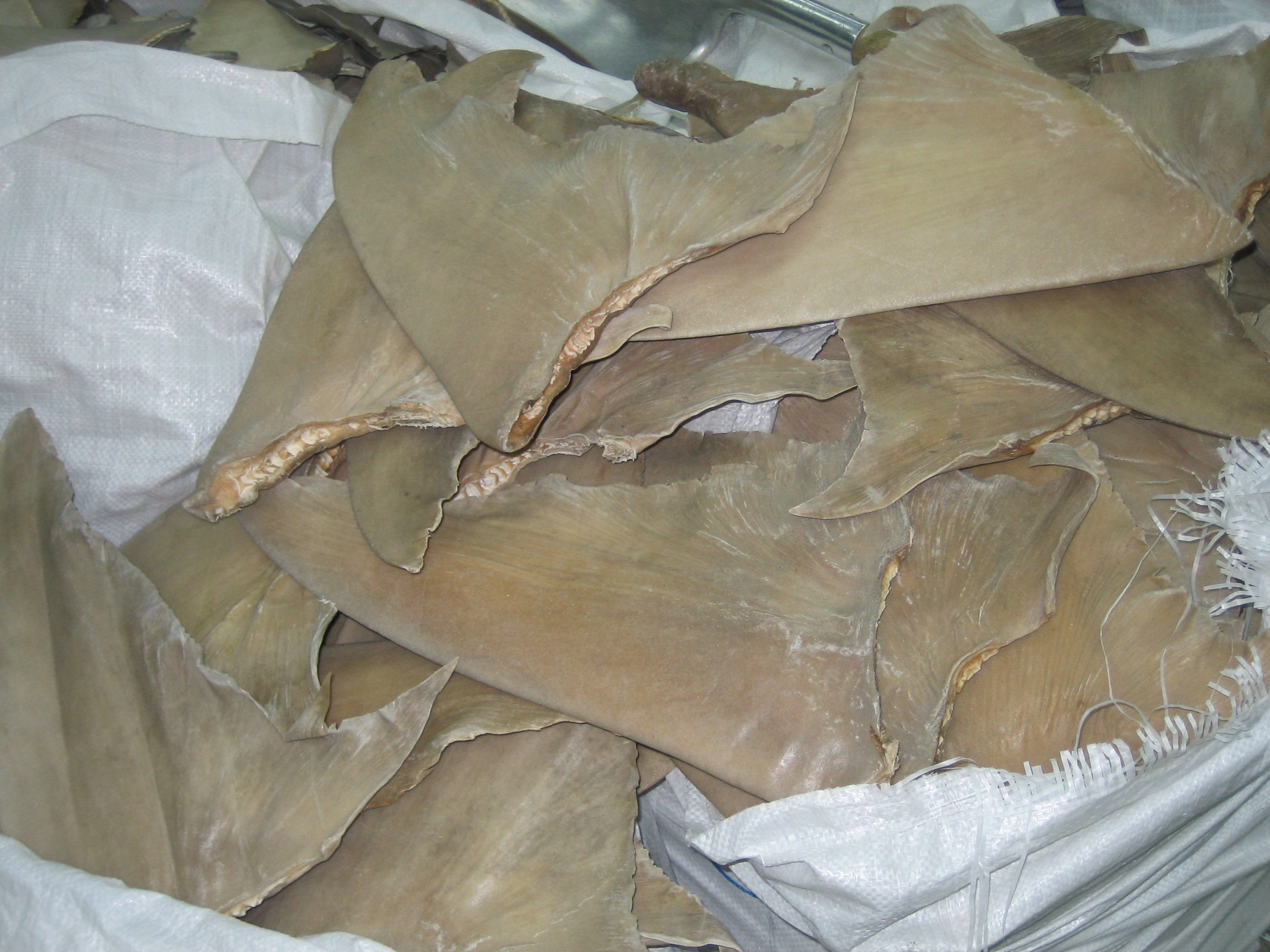
Shark fin soup, conservation, and racism: A Storify of yesterday’s twitter discussion

Posted on July 19, 2012 By David Shiffman 3 Comments on Shark fin soup, conservation, and racism: A Storify of yesterday’s twitter discussion
Uncategorized

Accusations of racism and cultural imperialism have long plagued the shark conservation movement. Earlier this week, a second lawsuit was filed in California opposing their shark fin ban. One of the reasons given for the Chinatown Neighborhood Association’s lawsuit was discrimination against citizens of Chinese descent. According to the San Francisco Examiner:

“[Chinatown Neighborhood Association Member Marcus] Lee noted that the law allows consumers to eat shark meat steaks, but not shark fin soup, leading to racial tensions. “How can you save the shark if you ban eating only the fins, but not the shark meat?” Lee asked. “This ruling is not the solution to the problem. In order to save the sharks, you might as well ban the whole shark entirely.” “

An earlier lawsuit against California’s fin ban, filed by the Asian-American Rights Committee of California, also pointed out the cultural significance of shark fin soup. According to the Huffington Post:

 ” “Shark fin soup is an Asian cultural delicacy with origins in the Ming Dynasty. It is a ceremonial centerpiece of traditional Chinese banquets, as well as celebrations of weddings and birthdays of one’s elders,” the committee wrote in its complaint. “

My personal views on this issue are complex. Populations of many species of sharks are declining at alarming rates (which has numerous negative ecological consequences), the single largest driver for these declines is demand for shark fin soup, and this demand primarily comes from Asian cultures. With very few exceptions, conservationists are not racist, and there are very good reasons to campaign for reducing shark fin soup consumption (and reducing shark fishing in general) . There’s a big difference between criticizing something because it’s different from your own culture and criticizing something because it creates negative ecological and economic ripple effects worldwide. However, when conservationists who are primarily Westerners criticize something that is done primarily by non-Westerners, it undeniably creates what politicians call troubling “optics”. In short, I don’t think campaigning to reduce shark fin consumption is racist, but I can understand how some people might.

I asked my twitter followers what they thought of the claim that criticizing shark fin soup is racist, and added some of the best contributions to the excellent discussion that resulted to a Storify. Check it out below, and feel free to continue the discussion in the comments below.

Read More “Shark fin soup, conservation, and racism: A Storify of yesterday’s twitter discussion” »

The Beneath the Waves Film Festival is touring the U.S. West Coast

Posted on July 18, 2012 By David Shiffman 3 Comments on The Beneath the Waves Film Festival is touring the U.S. West Coast
Uncategorized

Regular readers know that we are big fans of the Beneath the Waves Film Festival, which shows marine science and conservation movies (I’m actually a co-organizer). If you’ve been excited to attend the festival after reading about it on Southern Fried Science but haven’t been able to attend, this could be your chance. The flagship event takes place each March as part of the Benthic Ecology conference, but this year the festival has expanded to include a variety of public screenings throughout the country.

Read More “The Beneath the Waves Film Festival is touring the U.S. West Coast” »

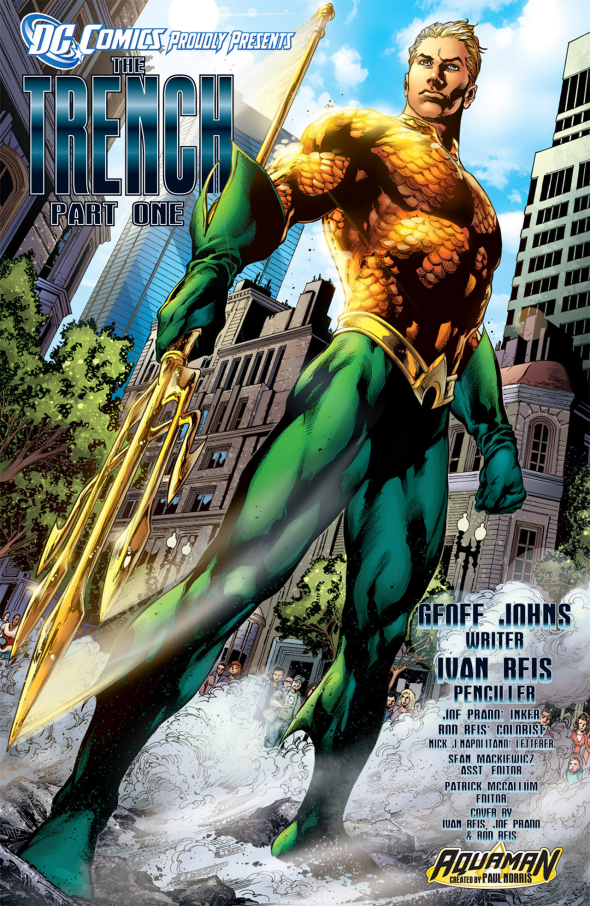
The horrifying physiological and psychological consequences of being Aquaman

Posted on July 18, 2012December 27, 2012 By Andrew Thaler 20 Comments on The horrifying physiological and psychological consequences of being Aquaman
Popular Culture

Aquaman. DC Comics.
Aquaman. DC Comics. A rational response to seal poaching is to lob a polar bear at the aggressors.

Aquaman may not be everybody’s favorite superhero, but since his creation in 1941, he has been among DC’s most enduring icons. During the Golden Age of comic books, he held his own against Superman, Batman, and Wonder Woman. Silver Age Aquaman was a founding member of the Justice League. His powers, tied to the ocean, forced writers to create a compelling, complex hero with explicit limitations. In the early days, when Superman’s strength was practically infinite, and Batman’s brilliance was unmatched, Aquaman had to become more than just a superhero, he had to be a person.

If Superman existed to show us how high the human spirit could fly, and Batman to show us the darkness within even our most noble, Aquaman is here to show us the world that triumphs in our absence. The ocean is not ours, and no matter how great our technology, we will never master it as we have mastered land, but Aquaman has. Through this lonely ocean wanderer, we can experience a world that we can never truly command. In many ways, Aquaman was stronger than the Man of Steel and darker than the Dark Knight. He knew loneliness that the orphan and the alien exile never could.

Roll on, thou deep and dark blue Ocean – roll!
Ten thousand fleets sweep over thee in vain;
Man marks the earth with ruin – his control
Stops with the shore; — upon the watery plain
The wrecks are all thy deed, not does remain
A shadow of man’s ravage, save his own,
When for a moment, like a drop of rain,
He sinks into thy depths with bubbling groan,
Without a grave, unknell’d, uncoffin’d, and unknown.

Byron

Even though Aquaman had to fight harder, endure the jokes of other, less limited heroes, and find relevance in an ecosystem hostile to the humans that had to empathize with him, Aquaman was never forced to confront the truly horrifying consequences of life in the ocean.

Read More “The horrifying physiological and psychological consequences of being Aquaman” »

Watch Episode 4 of Blue Pints: Sea Grant and Sea Monsters

Posted on July 13, 2012October 27, 2013 By Andrew Thaler 2 Comments on Watch Episode 4 of Blue Pints: Sea Grant and Sea Monsters
Uncategorized

httpv://www.youtube.com/watch?v=RIfiPiQJ3pU

Read More “Watch Episode 4 of Blue Pints: Sea Grant and Sea Monsters” »

South Carolina Governor Nikki Haley slashes funding for coastal science and sustainable development

Posted on July 12, 2012January 9, 2024 By David Shiffman 4 Comments on South Carolina Governor Nikki Haley slashes funding for coastal science and sustainable development
South Carolina Governor Nikki Haley slashes funding for coastal science and sustainable development
Science

Earlier this week, South Carolina governor and rising tea party star Nikki Haley cut all state funding for the South Carolina Sea Grant Consortium. Sea Grant programs are a critical part of the United States’ marine and coastal research network. In addition to providing millions of dollars in scientific grants, the  national Sea Grant college program (of which the South Carolina consortium is a member) connects scientists, educators, and citizens with the goal of “helping citizens utilize scientific information to support a vibrant economy while ensuring ecological sustainability” (source). In total, there are 32 Sea Grant programs throughout the country, which help coordinate research and strategic goals with experts in every state that borders an ocean or one of the Great Lakes.

Despite Governor Haley’s claims, the Sea Grant Consortium is basically the opposite of big government and wasteful government spending. Though they are administered centrally by the National Oceanic and Atmospheric Administration, each Sea Grant program is independently run. According to Executive Director Rick DeVoe,

“It is important to note that the programs we undertake are developed as a result of the input we solicit from our stakeholders along the coast and inland – businesses and organizations, NGOs, and people who depend on coastal and marine resources for their livelihoods, their pleasure and their quality of life….The S.C. Sea Grant Consortium generates and applies science-based information on issues and opportunities to enhance the practical use and conservation of coastal and marine resources to foster a sustainable economy and environment in the state and region.”

The state contribution pays mostly for local staff and facilities that are used to apply for and distribute grants. Since much of the funding for grants they distribute comes from the Federal government, the entire state-contributed budget for the South Carolina Sea Grant Consortium is a little over $428, 000 out of a total state budget of around $21,000,000,000, less than the total salaries of the Governor’s personal staff. Cutting this critical program thus results in a 0.002% reduction in state government spending, right after the state of South Carolina got more than $1.4 billion in increased tax revenue as a result of the economy improving.

Read More “South Carolina Governor Nikki Haley slashes funding for coastal science and sustainable development” »

Candidate Mitt Romney on Ocean Policy

Posted on July 10, 2012 By Andrew Thaler 2 Comments on Candidate Mitt Romney on Ocean Policy
Popular Culture

[View the story “Romney on Ocean Policy” on Storify]

Potential in Small-Scale Kombu Fishing in Samani Town, Hokkaido, Japan

Posted on July 9, 2012July 9, 2012 By Bluegrass Blue Crab
Uncategorized

As part of the GCOE-INeT Summer School at Hokkaido University this year I have had the opportunity to use Samani Town as a case study of “the sustainability of coupled human and natural systems”. The small coastal town of roughly 5,500 people is dependent on farming, fishing, forestry, mining, and increasingly tourism. Samani town is one of the oldest towns in Hokkaido Island and kelp fishing just offshore traces its roots back to the Ainu people who first populated the area. While other industries are important to life and economy in Samani, fishing deserves special note both because of the history and the successful local management.

Read More “Potential in Small-Scale Kombu Fishing in Samani Town, Hokkaido, Japan” »

Posts pagination

Previous 1 … 141 142 143 … 275 Next

Popular Posts

What Ocean Ramsey does is not shark science or conservation: some brief thoughts on "the Shark Whisperer" documentaryWhat Ocean Ramsey does is not shark science or conservation: some brief thoughts on "the Shark Whisperer" documentaryJuly 2, 2025David Shiffman
Zombie ideas in conservation: trophy hunting and conservationZombie ideas in conservation: trophy hunting and conservationAugust 6, 2026Ali Gaster
What is a Sand Shark?What is a Sand Shark?November 12, 2017Chuck Bangley
Ten very bad, no good things the latest Trump Administration has done to the oceansTen very bad, no good things the latest Trump Administration has done to the oceansAugust 14, 2026Ali Gaster
Is Academic Publishing is breaking conservation science?Is Academic Publishing is breaking conservation science?August 10, 2026Chris Parsons
Shark of Darkness: Wrath of Submarine is a fake documentaryShark of Darkness: Wrath of Submarine is a fake documentaryAugust 10, 2014Michelle Jewell
How the Bluespotted Ribbontail Stingray got its SpotsHow the Bluespotted Ribbontail Stingray got its SpotsMarch 28, 2024David Shiffman
These are the 10 most-cited shark science papers of all timeThese are the 10 most-cited shark science papers of all timeApril 24, 2025David Shiffman
Emergency room conservation: why waiting for the Endangered Species Act to save a species is a fiscal disasterEmergency room conservation: why waiting for the Endangered Species Act to save a species is a fiscal disasterAugust 11, 2026Ali Gaster
That's not a blobfish: Deep Sea Social Media is Flooded by AI SlopThat's not a blobfish: Deep Sea Social Media is Flooded by AI SlopDecember 19, 2025Andrew Thaler

squishy

Subscribe to our RSS Feed for updates whenever new articles are published.

We recommend Feedly for RSS management. It's like Google Reader, except it still exists.

Southern Fried Science

  • Home
  • About SFS
  • Authors
  • Support SFS


If you enjoy Southern Fried Science, consider contributing to our Patreon campaign.

Copyright © 2026 Southern Fried Science.

Theme: Oceanly Premium by ScriptsTown