

Skip to content

Southern Fried Science

Over 15 years of ocean science and conservation online

  • Home
  • About SFS
  • Authors
  • Support SFS

Recent Posts

small boy holding Miss Abyss Dumbo Octopus
Please Help This Little Dumbo Octopus Travel Across America
August 3, 2026
Isn’t ironic, don’t you think: dismantling the Ocean Observatories Initiative on World Oceans Day
June 9, 2026
My Journey Into Researching Historical Erasure on Public Lands
July 31, 2026
The next OpenCTD is here!
June 22, 2026
humpback whale in Antarctica
The evolution of the International Whaling Commission – from  whaling quotas to whale conservation
June 10, 2026
“Why Sustainable Seafood Matters” is now available for preorder! Here’s what it’s about, and why I decided to write it.
June 8, 2026

The Semester I Got Crabs

Posted on May 14, 2012October 27, 2013 By Guest Writer 2 Comments on The Semester I Got Crabs
Science

Shannon is a student who participated in my blogging workshop as part of her Science and Nature Writing class earlier this semester. He she recounts her experience conducting independent research at the Duke University Marine Lab.


This past semester I was simply enjoying my life and doing what college students do when it happened: I got crabs. Sixty-four of them, to be exact. Never before had I experienced such prolonged irritation; before long I was just itching to get rid of them. For weeks I was sure that I had made a foolish mistake, vowing to be more careful in the future. Now, I’m not talking about Pthirus pubis, the sexually transmitted disease—get your mind out of the gutter! The crabs I’m referring to are Clibanarius vitattus, the striped hermit crabs that haunted my dreams and terrorized my every waking moment for the duration of my first ever independent study experiment.

Read More “The Semester I Got Crabs” »

#SciFund Returns: Can an abalone in a bag save two on the reef?

Posted on May 10, 2012May 10, 2012 By Andrew Thaler
Science

#SciFund, a month long initiative to raise funds for a variety of scientific research projects, is once again upon us. Project leaders post a project description and an appeal for funds, and members of the public are invited to make small donations to projects that they deem worthy. Donations come with rewards such as access to … Read More “#SciFund Returns: Can an abalone in a bag save two on the reef?” »

#SciFund Returns – A Climate for Castrators?

Posted on May 9, 2012 By Andrew Thaler 2 Comments on #SciFund Returns – A Climate for Castrators?
Science

#SciFund, a month long initiative to raise funds for a variety of scientific research projects, is once again upon us. Project leaders post a project description and an appeal for funds, and members of the public are invited to make small donations to projects that they deem worthy. Donations come with rewards such as access to … Read More “#SciFund Returns – A Climate for Castrators?” »

Shark fin bans: A storify of this week’s twitter discussion

Posted on May 8, 2012 By David Shiffman 20 Comments on Shark fin bans: A storify of this week’s twitter discussion
Conservation, Science

Earlier this week, I asked my twitter followers what they thought about shark fin bans, which prompted a long and stimulating discussion. What follows is my first attempt at “Storify”, shared in the hopes that the discussion can continue here.

As I’ve said before, I’m not a big supporter of shark fin bans because they don’t allow for sustainable, well-managed fisheries to supply the market. Additionally, they promote the common (and false) belief that shark fin soup is the only major problem facing sharks, and don’t address many of the other important issues associated with shark conservation.

Instead, I favor a comprehensive approach to shark management, including requiring that sharks be landed with fins attached (i.e. a ban on “finning” but the fins can still be used if the shark is landed whole), special protections for threatened and endangered species, science-based fisheries quotas for species that can sustain fishing, time/area closures or gear restrictions when necessary, and  careful monitoring (including requiring that all fishing nations report the species composition of their catch).

Check out the great discussion if you missed it, and let me know what you think of this important issue in the comments of this post.

Read More “Shark fin bans: A storify of this week’s twitter discussion” »

Personal Sustainability Challenge May Edition – ditching the disposable razors

Posted on May 7, 2012May 4, 2012 By Andrew Thaler 5 Comments on Personal Sustainability Challenge May Edition – ditching the disposable razors
Uncategorized

A rigorous documentation of 24 hours of neck-beard growth, highlighting both the coarseness and density of neck-beard hairs.

I am what most people would consider a “well-bearded” individual. According to this graph, I fall rather appropriately into the category of “Sea Captain”. Despite my proud embeardedness, I also play host to a horrifying parasite frequently referred to as a “neck beard”–a foul nest of bristles with a coarseness and consistency that lies somewhere between steel wool and dermal denticles. This means that, appearances aside, I still need to shave, sometimes twice, daily.

If you’re like most American men, this means using either disposable razors or cartridge razors, both of which result in discarded plastic and steel. Cartridge razors, commonly found with an increasingly horrifying numbers of blades, vibrators, laser pointers, and PEZ dispensers, produce less waste but are also more expensive. The average price for the three-bladed monster at my local pharmacy runs about $4.00 a cartridge, and those things don’t last very long–I’m lucky if I can get 2 weeks out of a single cartridge, often less (although, somehow, the very last cartridge in each pack seems to last 3 times longer than the others). In addition to wasting plastic and steel in the actual cartridges, and plastic and cardboard in the packaging, I’m burning around $100 per year.

There are a few possible ways to reduce shaving associated waste. The most obvious is switching to an electric razor–which is what our other beardly blogger did until recently (he now reports that “My beard used to destroy electrics in less than a year.“)–but the cutting heads need to be replaced and they will, eventually wear out. I’m also not a fan of electric razors, I don’t particularly like the shave I get with them. Next on the list are single-blade safety razors, the classic standard of the 1930’s through 80’s. These have the advantage of no plastic, and allegedly get you a closer, cleaner shave than disposables (though I suspect that has more to do with the brush/lather and spending more time on getting a good shave), but the blades are still disposable. So, it appears as though, if I truly want to eliminate as much waste as possible from my shaving routine, I need to take a more traditional approach.

Read More “Personal Sustainability Challenge May Edition – ditching the disposable razors” »

#SciFund Returns: Coping with stress: Coral reefs in Kiribati

Posted on May 4, 2012May 3, 2012 By Andrew Thaler
Science

#SciFund, a month long initiative to raise funds for a variety of scientific research projects, is once again upon us. Project leaders post a project description and an appeal for funds, and members of the public are invited to make small donations to projects that they deem worthy. Donations come with rewards such as access to … Read More “#SciFund Returns: Coping with stress: Coral reefs in Kiribati” »

Recollections from a future ocean – a short story for eno magazine

Posted on May 3, 2012May 3, 2012 By Andrew Thaler
Science

eno. is the new literary magazine for the Nicholas School of the Environment at Duke University. Its mission is “to inspire a respect for our environment by engaging in thoughtful expression through the use of artistic, reflective, and creative forms.” This year, I have two poems and one short story featured. Both poems can be found … Read More “Recollections from a future ocean – a short story for eno magazine” »

Aquaculture in NC: Carolina Mariculture Co.

Posted on May 3, 2012May 3, 2012 By Bluegrass Blue Crab
Uncategorized

Jay onto his boat, photo by author

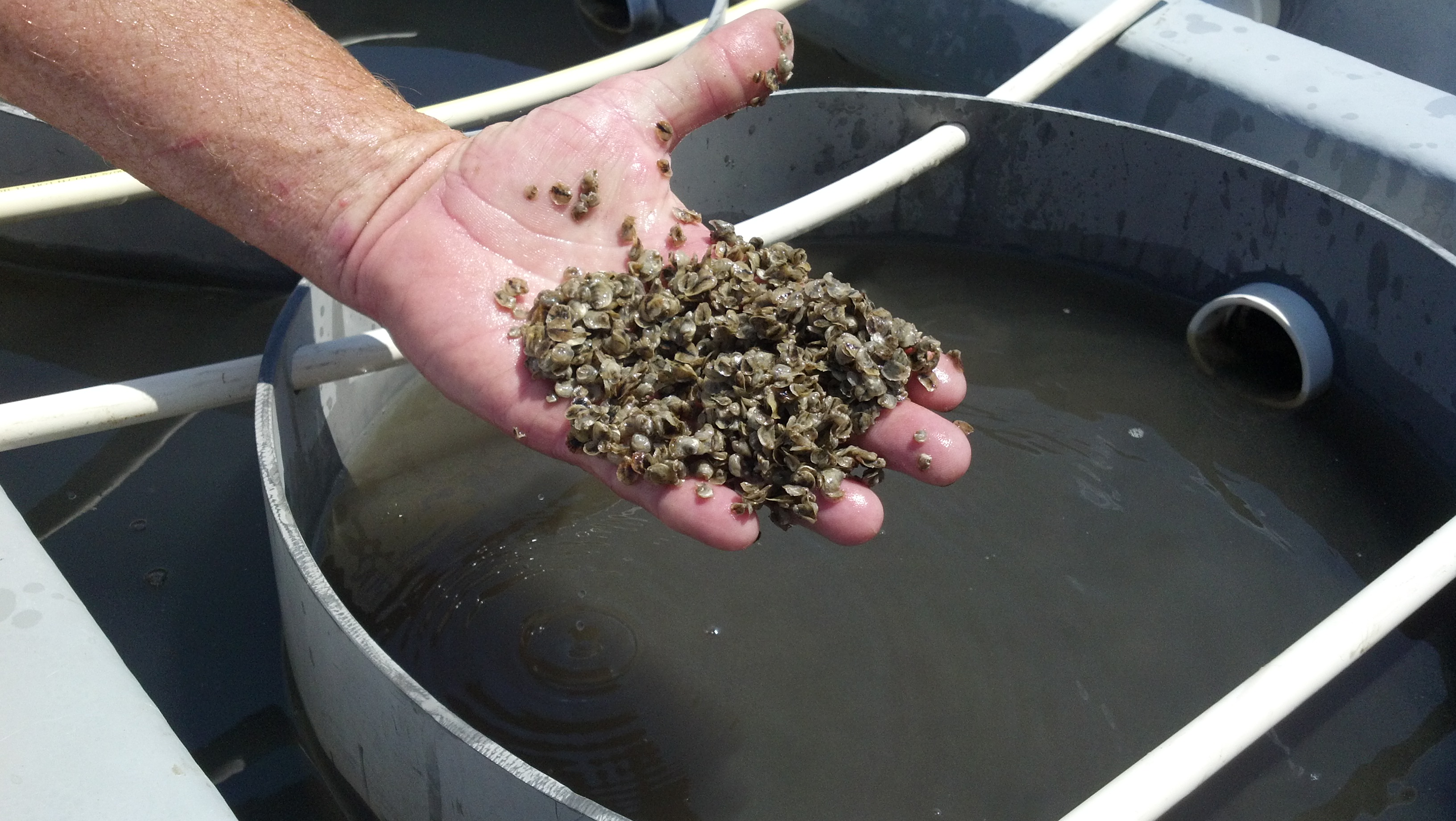
Though oyster mariculture isn’t new to places like the Chesapeake Bay, Jay Styron’s Carolina Mariculture Company, based in Cedar Island, NC, is a shining vision of the future in North Carolina. Much of the state’s efforts in aquaculture are directed at tilapia, catfish, and hybrid striped bass, which are grown in ponds on traditional farm land. These are often grown as a means of diversifying an existing farm economy. Mariculture, though, blends this type of aquaculture with commercial fishing to grow seafood in estuaries and inshore regions, creating a saltier crop. In many ways mariculture should be embraced by both farming and fishing communities but is often instead viewed as the strange uncle of the food production family. Enter pioneer Jay Styron, who grows oysters not only for food but also demonstration purposes – and he proudly creates delicious oysters.

Read More “Aquaculture in NC: Carolina Mariculture Co.” »

#SciFund Returns – Muddy waters: coral health after storm events

Posted on May 3, 2012May 3, 2012 By Andrew Thaler
Science

#SciFund, a month long initiative to raise funds for a variety of scientific research projects, is once again upon us. Project leaders post a project description and an appeal for funds, and members of the public are invited to make small donations to projects that they deem worthy. Donations come with rewards such as access to … Read More “#SciFund Returns – Muddy waters: coral health after storm events” »

#SciFund Returns: Seahorse Adventures

Posted on May 2, 2012 By Andrew Thaler
Science

#SciFund, a month long initiative to raise funds for a variety of scientific research projects, is once again upon us. Project leaders post a project description and an appeal for funds, and members of the public are invited to make small donations to projects that they deem worthy. Donations come with rewards such as access to … Read More “#SciFund Returns: Seahorse Adventures” »

Posts pagination

Previous 1 … 145 146 147 … 275 Next

Popular Posts

What Ocean Ramsey does is not shark science or conservation: some brief thoughts on "the Shark Whisperer" documentaryWhat Ocean Ramsey does is not shark science or conservation: some brief thoughts on "the Shark Whisperer" documentaryJuly 2, 2025David Shiffman
Zombie ideas in conservation: trophy hunting and conservationZombie ideas in conservation: trophy hunting and conservationAugust 6, 2026Ali Gaster
What is a Sand Shark?What is a Sand Shark?November 12, 2017Chuck Bangley
Ten very bad, no good things the latest Trump Administration has done to the oceansTen very bad, no good things the latest Trump Administration has done to the oceansAugust 14, 2026Ali Gaster
Is Academic Publishing is breaking conservation science?Is Academic Publishing is breaking conservation science?August 10, 2026Chris Parsons
How the Bluespotted Ribbontail Stingray got its SpotsHow the Bluespotted Ribbontail Stingray got its SpotsMarch 28, 2024David Shiffman
Shark of Darkness: Wrath of Submarine is a fake documentaryShark of Darkness: Wrath of Submarine is a fake documentaryAugust 10, 2014Michelle Jewell
These are the 10 most-cited shark science papers of all timeThese are the 10 most-cited shark science papers of all timeApril 24, 2025David Shiffman
Emergency room conservation: why waiting for the Endangered Species Act to save a species is a fiscal disasterEmergency room conservation: why waiting for the Endangered Species Act to save a species is a fiscal disasterAugust 11, 2026Ali Gaster
That's not a blobfish: Deep Sea Social Media is Flooded by AI SlopThat's not a blobfish: Deep Sea Social Media is Flooded by AI SlopDecember 19, 2025Andrew Thaler

squishy

Subscribe to our RSS Feed for updates whenever new articles are published.

We recommend Feedly for RSS management. It's like Google Reader, except it still exists.

Southern Fried Science

  • Home
  • About SFS
  • Authors
  • Support SFS


If you enjoy Southern Fried Science, consider contributing to our Patreon campaign.

Copyright © 2026 Southern Fried Science.

Theme: Oceanly Premium by ScriptsTown