
Skip to content

Southern Fried Science

Over 15 years of ocean science and conservation online

  • Home
  • About SFS
  • Authors
  • Support SFS

Recent Posts

We Asked IMCC7 Attendees What Ocean Conservation Needs. Here’s What They Said.
November 5, 2026
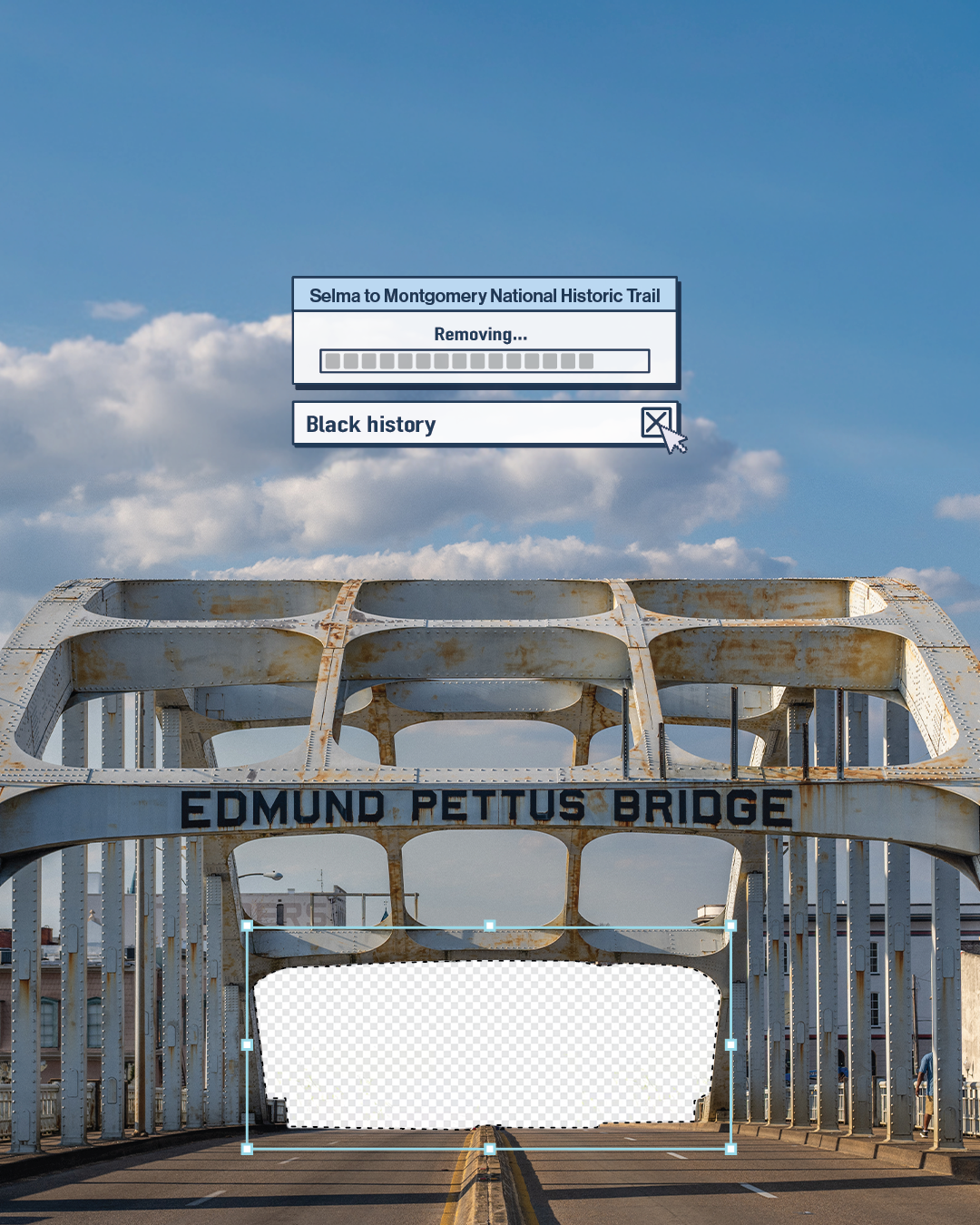
Researching Historical Erasure on Public Lands
July 31, 2026
5 things I learned helping to reassess the global conservation status of every species of tuna and billfish
September 15, 2026
Key takeaways from my Convention on Migratory Species report on fish aggregating devices in the Mediterranean Sea
September 3, 2026
Jabberwocks and Snallygasters: teaching environmental education with monsters, mayhem, and dice.
August 31, 2026
The conservation impacts of recreational fishing
August 25, 2026

#SciFund Challenge: Turtles in the Deep

Posted on November 9, 2011December 9, 2011 By Andrew Thaler 1 Comment on #SciFund Challenge: Turtles in the Deep
Science

#SciFund is a month-and-a-half long initiative to raise funds for a variety of scientific research projects. Project leaders post a project description and an appeal for funds, and members of the public are invited to make small donations to projects that they deem worthy. Donations come with rewards such as access to project logs, images from … Read More “#SciFund Challenge: Turtles in the Deep” »


#SciFund Challenge: Doctor Zen and the Amazon Crayfish

Posted on November 9, 2011December 9, 2011 By Andrew Thaler
Science

#SciFund is a month-and-a-half long initiative to raise funds for a variety of scientific research projects. Project leaders post a project description and an appeal for funds, and members of the public are invited to make small donations to projects that they deem worthy. Donations come with rewards such as access to project logs, images from … Read More “#SciFund Challenge: Doctor Zen and the Amazon Crayfish” »

#SciFund Challenge: Culture of Climate Change in French Polynesia

Posted on November 9, 2011December 9, 2011 By Andrew Thaler 1 Comment on #SciFund Challenge: Culture of Climate Change in French Polynesia
Science

#SciFund is a month-and-a-half long initiative to raise funds for a variety of scientific research projects. Project leaders post a project description and an appeal for funds, and members of the public are invited to make small donations to projects that they deem worthy. Donations come with rewards such as access to project logs, images from … Read More “#SciFund Challenge: Culture of Climate Change in French Polynesia” »

The #SciFund Challenge: Tracking the migration of the Atlantic Puffin

Posted on November 8, 2011December 9, 2011 By Andrew Thaler
Science

#SciFund is a month-and-a-half long initiative to raise funds for a variety of scientific research projects. Project leaders post a project description and an appeal for funds, and members of the public are invited to make small donations to projects that they deem worthy. Donations come with rewards such as access to project logs, images … Read More “The #SciFund Challenge: Tracking the migration of the Atlantic Puffin” »

Seven Billion Strawmen: Population Bombs and Demography

Posted on November 8, 2011December 9, 2011 By Bluegrass Blue Crab 3 Comments on Seven Billion Strawmen: Population Bombs and Demography
Conservation

As Halloween welcomed the world’s seven billionth person, there has been renewed interest in meeting the food, shelter, and water needs of a large and growing global population. One recent article in the Washington Post (10/30/11) attempted to make 7 billion a tangible number that kids can wrap their minds around by describing 7 billion M&M’s filling three Olympic-sized swimming pools. While I think this is a useful exercise, when thinking about 7 billion people, not all people can be counted equally. In terms of resource use, each of the over 300 million United States citizens are like bloated, entitled M&M’s squeezing their smaller brethren out of the pool.

Read More “Seven Billion Strawmen: Population Bombs and Demography” »

Traveling the world in 140 characters or less: How Twitter got me a trip to New Zealand

Posted on November 7, 2011December 9, 2011 By David Shiffman 1 Comment on Traveling the world in 140 characters or less: How Twitter got me a trip to New Zealand

Last May, I attended the 2nd International Marine Conservation Congresss, an interdisciplinary conference that brought together scientists, NGOs, policymakers, and interested members of the general public. It was the largest professional meeting dedicated to saving the oceans in history, and it was an honor to be a part of it. In addition to seeing old friends and meeting some of my heroes, I took the opportunity to “live-Tweet” the talks I attended. Whenever a presenter made an important point, I summarized it in a Tweet, and, whenever possible, I included relevant hashtags (#Shark, #bycatch) and links to more information (either a website or published paper affiliated with the presenter, or one from a 3rd party working in the same field).

Read More “Traveling the world in 140 characters or less: How Twitter got me a trip to New Zealand” »

in which four environmental scientists play Oilsprings of Catan, destroy world

Posted on November 7, 2011December 9, 2011 By Andrew Thaler 2 Comments on in which four environmental scientists play Oilsprings of Catan, destroy world
Conservation, Popular Culture

Catan: Oilsprings. image by Andrew Thaler

This weekend I assembled a small team of marine and environmental scientists, including a molecular ecologist, a human geographer with experience in environmental justice, a political ecologist with experience in common-pool resource theory, and a veteran of the US Commission on Ocean Policy with extensive experience in marine spatial planning, to test out the new expansion for Settlers of Catan, Catan: Oilsprings. Settlers of Catan is a popular and expansive board game that focuses on resource management, development, and trading. Oilsprings is designed to add an element of “Tragedy of the Commons” to the game by introducing a new resource, oil, which allows rapid development, but at a cost that affects all players.

Read More “in which four environmental scientists play Oilsprings of Catan, destroy world” »

Support “Shored Up”, a new documentary about beach renourishment

Posted on November 6, 2011December 9, 2011 By David Shiffman 2 Comments on Support “Shored Up”, a new documentary about beach renourishment
Conservation

Our friends from the fantastic ocean acidification documentary  A Sea Change are working on an important new project. It’s called “Shored Up“, and it’s all about sea level rise and the strategies that coastal communities are using to try and keep their beaches.

One issue in particular, beach renourishment, has major environmental implications that aren’t often considered. Sand provides critical habitat for organisms other than tourists, and not all sand is the same: it differs in grain size, chemical composition, and other variables. Organisms that are adapted to one type of sand, such as beach-dwelling crabs and snails, often struggle to survive in another that’s dumped in huge quantities in their habitat. Additionally, the ecosystem where the sand comes from is often greatly disturbed by the huge sand-collecting dredges.

The movie doesn’t just focus on renourishment, however:

Read More “Support “Shored Up”, a new documentary about beach renourishment” »

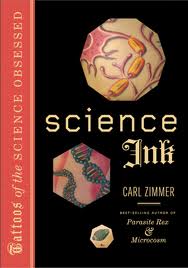
The indelible stamp – Scientists and their tattoos

Posted on November 1, 2011December 9, 2011 By Andrew Thaler 5 Comments on The indelible stamp – Scientists and their tattoos
Popular Culture, Science

How do you declare your undying love for science? How do you immortalize your doctoral dissertation? How can you let the world know about your eternal love affair with tardigrades, Euler’s Identity, caffeine, or the voyager spacecraft? If you answered any of these with “get a tattoo!” than you’ve probably already heard about Science Ink: Tattoo’s of the Science Obsessed, by Carl Zimmer.

Over the last several years, Zimmer has been compiling scientists’ tattoos at the Science Tattoo Emporium, which now contains 255 pieces of ink. In Science Ink, Zimmer has selected the best looking,  most memorable tattoos from his online collection and published them in a beautiful book featuring both artwork and insight into each piece.

Zimmer is among the best of the “science communicators”, those who distill the essence of important concepts into comprehensible units. Each tattoo come with either a description of the story behind its origin, its meaning to the canvas, or the fundamentals of the concept it represents. The book covers an extensive range of topics, from mathematics to natural history to physics and astronomy. When I first heard about this project, I was expecting a coffee-table style book of tattoo photographs, but it is much more than that. The tattoos are simply prompts for a deeper exploration into the meaning of science to society, as well as a delightful collection of (very) short stories about individuals experience in science.

Read More “The indelible stamp – Scientists and their tattoos” »

Shark Science Monday: the Known Unknowns of Shark Conservation

Posted on October 31, 2011December 9, 2011 By David Shiffman 7 Comments on Shark Science Monday: the Known Unknowns of Shark Conservation
Science

“There are known knowns; there are things we know we know. We also know there are known unknowns, that is to say we know there are some things we do not know. But there are also unknown unknowns – the ones we don’t know we don’t know.” – Former U.S. Secretary of Defense Donald Rumsfeld.

As nature documentary viewers often hear, there is a lot about sharks and rays that scientists don’t know… but what are the most important things that we need to know? A new paper written by Colin Simpfendorfer, Will White, and former Shark Science Monday interview subjects Michelle Heupel and Nick Dulvy attempts to identify these “known unknowns” of shark and ray conservation. “The importance of research and public opinion to conservation management of sharks and rays: a synthesis”, which arose out of the 2010 Sharks International conference, is the most complete record ever created of the research questions that we need to answer in order to better conserve and manage these animals. For young shark researchers eager to work on projects with practical conservation importance, this paper is a great place to start looking for ideas. Additionally, future published work that claims to be important for conservation and management would do well to cite it, and anyone interested in this subject should read it.

Read More “Shark Science Monday: the Known Unknowns of Shark Conservation” »

Posts pagination

Previous 1 … 159 160 161 … 277 Next

Popular Posts

Getting a sense of porpoiseJanuary 20, 2009Andrew Thaler
This is the worst academic presentation in the world ... tributeApril 23, 2015Chris Parsons
That's not a blobfish: Deep Sea Social Media is Flooded by AI SlopThat's not a blobfish: Deep Sea Social Media is Flooded by AI SlopDecember 19, 2025Andrew Thaler
Have we found the city of Atlantis?Have we found the city of Atlantis?September 1, 2026Chris Parsons
Shark of Darkness: Wrath of Submarine is a fake documentaryShark of Darkness: Wrath of Submarine is a fake documentaryAugust 10, 2014Michelle Jewell
What Ocean Ramsey does is not shark science or conservation: some brief thoughts on "the Shark Whisperer" documentaryWhat Ocean Ramsey does is not shark science or conservation: some brief thoughts on "the Shark Whisperer" documentaryJuly 2, 2025David Shiffman
Soon may the explainer come: Everything you’ve always wanted to know about sea shanties but were afraid to askSoon may the explainer come: Everything you’ve always wanted to know about sea shanties but were afraid to askNovember 22, 2022David Shiffman
The 45 most influential female ecologists alive today according to twitterThe 45 most influential female ecologists alive today according to twitterFebruary 10, 2014Guest Writer
No, harassing a shark for fun is not ethically equivalent to scientific research that helps conserve a speciesNo, harassing a shark for fun is not ethically equivalent to scientific research that helps conserve a speciesMarch 26, 2014David Shiffman
Our favorite sea monsters – Ningen (#4)Our favorite sea monsters – Ningen (#4)September 7, 2010Andrew Thaler

squishy

Subscribe to our RSS Feed for updates whenever new articles are published.

We recommend Feedly for RSS management. It's like Google Reader, except it still exists.

Southern Fried Science

  • Home
  • About SFS
  • Authors
  • Support SFS


If you enjoy Southern Fried Science, consider contributing to our Patreon campaign.

Copyright © 2026 Southern Fried Science.

Theme: Oceanly Premium by ScriptsTown