


The wildfire that ignited in Dare County last week is still burning, as many coastal residents were reminded last night when the wind changed and brought smoke inland. Fortunately, the incident command is reporting that the fire is more than 50% contained, has not reached the town of Stumpy Point, and did not penetrate to … Read More “Short update on the North Carolina Wildfire and Red Wolves” »
Question: If your elected officials fail basic taxonomy, promote anti-science curriculum, and consistently attempt to undermine the fundamental underpinning of all biology, what happens when they start trying to legislate from this flawed view of reality?
Read More “Florida Senate fails basic biology, accidentally outlaws sex.” »

Foucault saw the concepts of knowledge and power as one entity, which he called “pouvoir-savoir”, based on the philosophy that knowledge and power are co-evolved. There are a number of examples where Foucault’s assertion seem to be correct. In France, a group of patients with muscular dystrophy coordinated and collected vast amounts of collective data on the rare disease by detailed recordkeeping by family members. They even held their own conferences and shared information, eventually bringing in a couple of doctors to do standard medical analysis on their data. Armed with knowledge of the disease, they were able to confront the medical establishment, which had previously ignored their cases because so little was known about the disease and the doctors did not want to look ignorant. Public attention brought by these events also brought funding to an otherwise unprofitable treatment regiment (Rabeharisoa and Callon in Jasanoff 2004). In other parts of the world, knowledge of medicinal plants and other helpful plant genotypes has been linked to indigenous rights movement through intellectual property (Whatmore 2002). Plant germplasms have become a way for communities to connect to international groups supporting biodiversity, which in turn helps secure indigenous rights over both intellectual and land properties.

In Beaufort, the first sign that something was amiss occurred on Sunday night. The air became thick with haze and smelled like of burning mulch. At first we thought it was just an overzealous barbecue somewhere down the road, but as we drove over the Morehead City highrise bridge, we discovered that the smoke was everywhere. This wasn’t an isolated grilling accident, trash burn, or house on fire, some thing was burning, something big. It could only be a forest fire, and, judging by the direction of the wind, it was blowing in from somewhere near the Outer Banks.
Bonehenge is our community outreach project of choice here at Southern Fried Science. Over the last few years we’ve been raising money and publicity to help make Bonehenge a reality. There is a widget on the left side of the page where you can make a donation to help build Bonhenge. We’ll match all donations up to $250 dollars, so you can make you contribution count double. Here are three reasons why you should contribute to Bonehenge:
Read More “Three reasons why you should donate to Bonehenge” »

Yellowstone National Park was established to preserve the American West, largely held up as the iconic American landscape. Picturesque Yellowstone houses the hopes and dreams of the frontier, the wilderness that is a large part of American heritage, and the final refuge for North American wildlife. Despite such a colorful and large part of American history, Yellowstone should perhaps be famous not for its astounding trees and bouncing elk, but instead for the ecosystems that depend on Yellowstone’s geysers. They are the unsung heroes of modern biotechnology and place Yellowstone’s wilderness leaps and bounds above other temperate forests in terms of biodiversity.

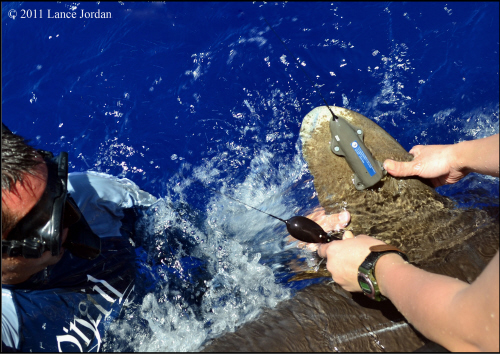
Several months ago, still photographs showing an injured great white shark surfaced. The shark in question was previously captured by a shark research team lead by Dr. Michael Domeier on the TV show “Shark Men” – and the capture of this shark didn’t go as planned. These still images were taken from a video, and in response to the ensuing controversy, Dr. Domeier’s team claimed that when the full video is viewed, you can see that the injury comes from another shark and not from capture injury. No clear sharkbite injuries are visible in the original still image.
I submitted a Freedom of Information Act request for the full video, which had been in the possession of NOAA’s Office of National Marine Sanctuaries pending an investigation.
Here, for the first time available to the public, is the full video from which the above images were taken.
Read More “Full video of injured shark shows numerous natural injuries” »


Two of Ostrom’s (1990) institutional design principles emphasize the role of the local –rules must be adapted to local conditions and resource users must participate in the rulemaking process. These principles were determined empirically through cross-site analysis, but a large body of research from science studies supports these finding theoretically as well. The most clear example of including the community in management is through comanagement, which works at the collective level to shift how and where rules are made (Jentoft, McCay et al. 1998). The comanagement process also highlights the importance of different types of knowledge to the policy process by providing a more complete base of information on which to make decisions.
The supporting theory reaches back to early studies in game theory that determined the fairness of a rule was one of the critical factors in determining if cooperation would emerge (Axelrod 1984). Fairness does not necessarily mean that every citizen benefits equally, but instead that people are punished according to their transgressions and benefit according to their contributions. However, the perception of fairness matters more than actual fairness when people evaluate a policy. That perception depends on transparency of the policymaking process. Gusterson goes so far as to say “instead of seeking a definitive technical judgment, then, we should ask about the processes by which judgments come to be considered definitive and their authors authoritative” (Nader 1996). People are more likely to consider a policy fair if they consider the process fair. One way, arguably the best way, to make the process transparent and therefore fair is to involve citizens in that process.
February 2005 – A giant in the oil industry sets out to drill what is, at the time, the deepest oil well in the world, a staggering 32,000 feet below the sea bed. The oil field, just 28 miles from the Louisiana coast, is estimated to contain up to a billion barrels of oil. The success of this well could launch a new era of offshore drilling and revolutionize an industry. And then, after 18 months and $180 million dollars, just 2,000 feet from their target, ExxonMobil halts their drill, declares Blackbeard West unsafe, and walks away.
Barely 5 years later, a similar well, deep and deeply unsafe, would suffer a catastrophic blowout, pumping millions of barrels of crude into the Gulf of Mexico. The resulting investigation revealed a history of unacceptable risk and a blasé attitude towards safety on the part of BP. While the BP blowout at the Macondo well was a disaster on a global scale, Blackbeard West was a disaster deferred. How could these two incidents, both created by nearly the same conditions, have had such dramatically different consequences? What can we learn about the culture of oil exploration and the true cost of a crude economy from Blackbeard West?
Read More “Chronicle of a Death Forestalled: the Gulf of Mexico oil spill that didn’t happen” »
There I was, proudly ambivalent about events happening across the pond. Some royal something or other getting civil union-ed with some wealthy something something. Apparently this happening also involves some high-falutin’ muckity-muck. I had managed to avoid just about everything about this event, until my shields were ultimately breached by an unlikely saboteur. The scientific journal Cell bizarrely decided to dedicate this weeks issue to the royal wedding by publishing this bit of ad nauseum: