
Skip to content

Southern Fried Science

Over 15 years of ocean science and conservation online

  • Home
  • About SFS
  • Authors
  • Support SFS

Recent Posts

small boy holding Miss Abyss Dumbo Octopus
Please Help This Little Dumbo Octopus Travel Across America
August 3, 2026
Isn’t ironic, don’t you think: dismantling the Ocean Observatories Initiative on World Oceans Day
June 9, 2026
My Journey Into Researching Historical Erasure on Public Lands
July 31, 2026
The next OpenCTD is here!
June 22, 2026
humpback whale in Antarctica
The evolution of the International Whaling Commission – from  whaling quotas to whale conservation
June 10, 2026
“Why Sustainable Seafood Matters” is now available for preorder! Here’s what it’s about, and why I decided to write it.
June 8, 2026

SFS Gear Review: Keen Hybrid Life

Posted on March 3, 2011March 3, 2011 By Bluegrass Blue Crab 2 Comments on SFS Gear Review: Keen Hybrid Life
Uncategorized

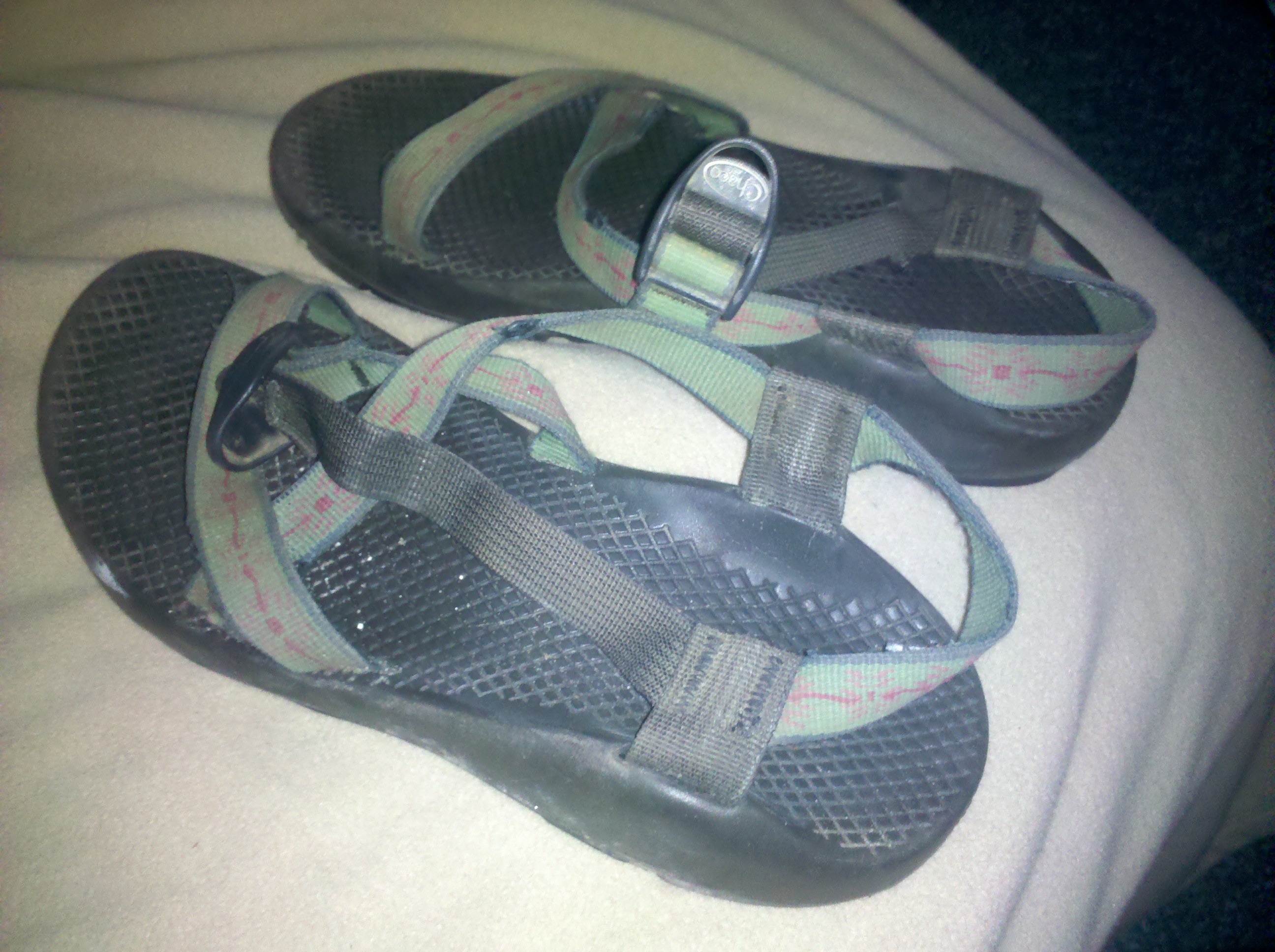
Everyone’s seen the Keen sandals – the ones that characterize the feet of kayakers all over and arguably create their own style. Keen, however, also offers shoes more in line with their motto of “hybrid life” – that is, they are supposed to be good for a life on-the-go for someone who only wants to carry one pair of shoes.

I received such a pair as a birthday gift from my mother – the source of most shoes in my life. She bought them because they were “cute” and because they came in green, a color that pervades my wardrobe. So they’ve passed the mom test on style. How’d they do on function?

Read More “SFS Gear Review: Keen Hybrid Life” »

Biodiversity Wednesday: Three Gorges

Posted on March 2, 2011March 3, 2011 By David Shiffman 3 Comments on Biodiversity Wednesday: Three Gorges
Uncategorized

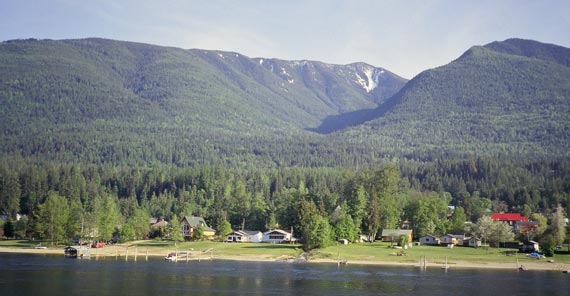
The Three Gorges region of Central China has one of the most striking landscapes on Earth. Steep cliffs covered in lush greenery rise right from the shores of the Yangtze (Yellow) river. Despite the harshness of the terrain, millions of people and numerous species of unique plants and animals call this region home.

One of the three Gorges. Photo Credit: David Shiffman, 2007

The Yangtze is the third largest river in the world (after the Nile and the Amazon). The river and it’s shores are home to iconic Chinese species such as the Dawn Redwood tree, the tiger, the pangolin, the Chinese sturgeon and the Chinese river dolphin. All told, 570 species of vertebrates and almost 2,100 species of plants live in this region according to UNESCO. The area also has thousands of archaeological sites, including rare evidence of the Ba and Damaio peoples. This entire ecosystem is in big trouble because of one of the largest engineering projects of all time- the Three Gorges Dam.

Read More “Biodiversity Wednesday: Three Gorges” »

State of the Field: Shark Conservation Policies

Posted on March 1, 2011March 1, 2011 By David Shiffman 6 Comments on State of the Field: Shark Conservation Policies
Conservation, Science

Shark populations around the world are crashing. Researchers have reported that many populations have decreased by 90% or more since the 1970’s. The leading causes for these precipitous declines are bycatch, which kills tens of millions of sharks each year, and the shark fin fishery, which kills as many as 73 million sharks each year. In this edition of State of the Field, I will explain what different countries are doing about this problem.

In many parts of the world, it is still legal to cut the fins off of a still-living shark and dump the rest of the animal overboard where it will bleed to death or drown. Other nations have a variety of management policies.

Credit: Fiona Ayerst, Marine Photobank

Read More “State of the Field: Shark Conservation Policies” »

Call for chapters – Environmental Leadership: A Reference Handbook

Posted on March 1, 2011March 1, 2011 By Andrew Thaler
Conservation

The Nicholas School of the Environment is seeking scholarly editorial contributions to Environmental Leadership, a 2-volume, 100-chapter reference handbook that is part of the new SAGE Reference Series on Leadership. Chapters are anticipated to be 7000 words.  This is a unique opportunity to help define environmental leadership.  Academic and public libraries will be able to purchase the handbook as both a printed and a digital product.

Read More “Call for chapters – Environmental Leadership: A Reference Handbook” »

Help identify this mystery machine from the darkest recesses of our lab

Posted on February 28, 2011 By Andrew Thaler 10 Comments on Help identify this mystery machine from the darkest recesses of our lab
Science

The mystery machine

While cleaning out our lab the other day, we discovered this mysterious piece of equipment buried deep within a cabinet. After querying several dozen scientists of different eras, we have determined only that it was manufactured in the early 20th century and no one has any idea what it is. The optics were made by Bausch and Lomb, the motor was made by Dunmore. We have a few guesses about its intended purpose.

This machine is massive, it weighs about 50 pounds and is forged from Bakelite and steel. The drum is clearly some kind of centrifuge and the optics point into the center of the spinning drum. No one has yet been willing to plug it in and turn it on. There are two patent numbers listed on the plate – patent # 1,648,369 and patent # 1,907,803.

Read More “Help identify this mystery machine from the darkest recesses of our lab” »

Political Ecology at Home – Lessons from Abroad?

Posted on February 28, 2011February 22, 2011 By Bluegrass Blue Crab
Uncategorized

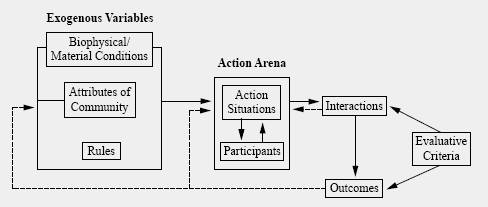
Political ecology within the First World came from a gradual realization that the definition of the field did not only apply to exotic cultures abroad, but had resonance domestically. As first defined by Blaikie and Brookfield (1987), political ecology combines “the concerns of ecology and a broadly defined political economy. Together this encompasses the constantly shifting dialectic between society and land-based resources, and also within classes and groups within society itself” (17). Scholars returning from research in the Third World observed this shifting dialectic in their own countries, complete with struggles over power and access between sectors of society.

The first call to the political ecology community to consider applying their principles to the First World came from Louise Fortmann (1996) in her article “Bonanza! The unasked questions: Domestic land tenure through international lenses.” Although she admitted there are vast differences between home and abroad, she identifies six lessons from the international land tenure debate that could have traction in the United States: property as social process, customary tenures, common property and community management of resources, gender, the complexity of tenancy relationships, and land concentration.

Read More “Political Ecology at Home – Lessons from Abroad?” »

Weekly dose of TED – Greg Stone: Saving the ocean one island at a time

Posted on February 25, 2011 By Andrew Thaler
Uncategorized

Kiribati is perhaps one of the most remote countries in the world. Despite its distance from the sources of environmental degradation, it will probably be the very first country to be destroyed by climate change. Most of the country, a collection of small islands spanning an area almost as large as the United States, lies … Read More “Weekly dose of TED – Greg Stone: Saving the ocean one island at a time” »

SFS Gear Review: ExOfficio anti-microbial Underwear

Posted on February 24, 2011February 23, 2011 By Andrew Thaler 3 Comments on SFS Gear Review: ExOfficio anti-microbial Underwear
Uncategorized

There’s a reason I wrote this free form poem, and that reason is Exoficio’s anti-bacterial boxer shorts. Yes, today we’re talking about underwear. Let’s face it, a bad pair of underpants can make a field season miserable, while a decent pair will make you, and everyone around you, much more comfortable. Life is messy, especially while doing field work.

Read More “SFS Gear Review: ExOfficio anti-microbial Underwear” »

Stem cell research, science policy, and President Bush’s book

Posted on February 24, 2011February 21, 2011 By David Shiffman
Science

At the recommendation of my parents, I’ve started reading “Decision Points”,  President Bush’s autobiography. I’ve enjoyed it more than I expected to. It paints a picture of a well-intentioned guy doing what he thought was right in tough circumstances and occasionally getting it wrong. I find this view of President Bush more appealing than either of the common liberal caricatures of him (those being either an evil genius trying to destroy the world or a bumbling idiot completely out of his depth).

Each chapter focuses on an important decision he made during his two-term Presidency. One of these concerned his stem cell research policy and made a few references to his policy towards science as a whole. Since liberals considered his science policies so bad that incoming-President Obama references “restoring science to it’s rightful place” in his inauguration speech, I was curious to hear President Bush’s side of the story.

Read More “Stem cell research, science policy, and President Bush’s book” »

Turtle science at the Archie Carr National Wildlife refuge

Posted on February 23, 2011February 23, 2011 By David Shiffman
Conservation, Science

The high density of sea turtles at the Archie Carr National Wildlife Refuge provides a  wonderful opportunity for research, and a team from the University of Central Florida takes full advantage of it. They were kind enough to allow me to tag along.

Read More “Turtle science at the Archie Carr National Wildlife refuge” »

Posts pagination

Previous 1 … 179 180 181 … 275 Next

Popular Posts

What Ocean Ramsey does is not shark science or conservation: some brief thoughts on "the Shark Whisperer" documentaryWhat Ocean Ramsey does is not shark science or conservation: some brief thoughts on "the Shark Whisperer" documentaryJuly 2, 2025David Shiffman
Zombie ideas in conservation: trophy hunting and conservationZombie ideas in conservation: trophy hunting and conservationAugust 6, 2026Ali Gaster
What is a Sand Shark?What is a Sand Shark?November 12, 2017Chuck Bangley
Shark of Darkness: Wrath of Submarine is a fake documentaryShark of Darkness: Wrath of Submarine is a fake documentaryAugust 10, 2014Michelle Jewell
Is Academic Publishing is breaking conservation science?Is Academic Publishing is breaking conservation science?August 10, 2026Chris Parsons
Considering writing a popular science book? Here's my adviceConsidering writing a popular science book? Here's my adviceJuly 7, 2025David Shiffman
How the Bluespotted Ribbontail Stingray got its SpotsHow the Bluespotted Ribbontail Stingray got its SpotsMarch 28, 2024David Shiffman
Emergency room conservation: why waiting for the Endangered Species Act to save a species is a fiscal disasterEmergency room conservation: why waiting for the Endangered Species Act to save a species is a fiscal disasterAugust 11, 2026Ali Gaster
That's not a blobfish: Deep Sea Social Media is Flooded by AI SlopThat's not a blobfish: Deep Sea Social Media is Flooded by AI SlopDecember 19, 2025Andrew Thaler
Ten very bad, no good things the latest Trump Administration has done to the oceansTen very bad, no good things the latest Trump Administration has done to the oceansAugust 14, 2026Ali Gaster

squishy

Subscribe to our RSS Feed for updates whenever new articles are published.

We recommend Feedly for RSS management. It's like Google Reader, except it still exists.

Southern Fried Science

  • Home
  • About SFS
  • Authors
  • Support SFS


If you enjoy Southern Fried Science, consider contributing to our Patreon campaign.

Copyright © 2026 Southern Fried Science.

Theme: Oceanly Premium by ScriptsTown