

Skip to content

Southern Fried Science

Over 15 years of ocean science and conservation online

  • Home
  • About SFS
  • Authors
  • Support SFS

Recent Posts

small boy holding Miss Abyss Dumbo Octopus
Please Help This Little Dumbo Octopus Travel Across America
August 3, 2026
Isn’t ironic, don’t you think: dismantling the Ocean Observatories Initiative on World Oceans Day
June 9, 2026
My Journey Into Researching Historical Erasure on Public Lands
July 31, 2026
The next OpenCTD is here!
June 22, 2026
humpback whale in Antarctica
The evolution of the International Whaling Commission – from  whaling quotas to whale conservation
June 10, 2026
“Why Sustainable Seafood Matters” is now available for preorder! Here’s what it’s about, and why I decided to write it.
June 8, 2026

Turtle excluder devices: analysis of resistance to a successful conservation policy

Posted on January 7, 2011December 31, 2011 By David Shiffman 9 Comments on Turtle excluder devices: analysis of resistance to a successful conservation policy
Conservation

Conservation efforts often have an associated tradeoff, and many proposed solutions are shot down because the costs are perceived to be too high. A conservation policy that benefited a charismatic endangered species with very little cost should be popular and enthusiastically adopted. However, even though turtle excluder devices greatly reduce sea turtle mortality and have very low costs, they were vigorously opposed by shrimpers. Though many factors contributed to this opposition to turtle excluder devices, analysis of quotes from newspaper articles reveals that one of the major issues was a failure of the conservation community to educate and communicate with shrimpers.

The problem

Most species of sea turtles are either threatened or endangered. Although they face many threats, a 1990 National Academy of Sciences study reached the conclusion that “drowning in shrimp trawls kills more sea turtles than all other human activities combined”. Trawling consists of dragging a large net behind a boat to catch shrimp. This fishing method has one of the highest bycatch rates of any used today, resulting in over 11 million metric tons of bycatch a year. Sea turtles breathe at the surface, and being trapped underwater in a net can be fatal if they aren’t freed in time. Adult loggerhead turtles can hold their breath for up to 45 minutes, but trawlers often wait up to four hours before hauling in their nets. This resulted in an estimated 48,000 sea turtles caught in trawl nets each year from 1973-1984 in U.S. waters, of which 11,000 died . Gulf of Mexico shrimping was particularly hard on loggerhead and kemp’s ridley sea turtles.

Read More “Turtle excluder devices: analysis of resistance to a successful conservation policy” »

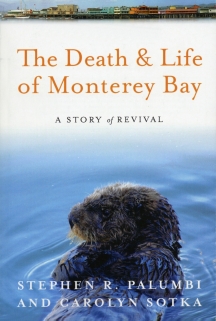
Weekly dose of TED – Stephen Palumbi: Following the mercury trail

Posted on January 7, 2011January 7, 2011 By Andrew Thaler
Conservation, Science

For 2011 we’re going to do a bit more with our Weekly dose of TED series. Instead of just posting a video each week, we’re going to include a short discussion of either the entire talk or a point that could be expanded. The idea that, when it comes to seafood, we may not know … Read More “Weekly dose of TED – Stephen Palumbi: Following the mercury trail” »

Finding Melville’s Whale: The Mast Head (Chapter 35)

Posted on January 6, 2011 By Andrew Thaler
Uncategorized

Thanks to everyone who stuck around during our blog vacation. Our adventure into Moby Dick continues with chapter 35 – The Mast Head. Read along with us and discuss this chapter or the book as a whole in the comments. Visit this page for the complete collection to date: Finding Melville’s Whale. The Mast Head Upon … Read More “Finding Melville’s Whale: The Mast Head (Chapter 35)” »

SFS Gear Reviews: Blundies – the steel-toed shit kickers

Posted on January 6, 2011January 6, 2011 By Andrew Thaler
Uncategorized

I’ll admit it, my original plan never involved buying an expensive pair of steel-toed boots, ever. I’d been using a $25 pair of steel-cap rubber boots forever. In Australia, en route to a research cruise, I was made aware that my current pair were not going to be appropriate for the cruise, so I wandered into Brisbane and bought my first pair of Blundies.

Read More “SFS Gear Reviews: Blundies – the steel-toed shit kickers” »

Blog-cation Shark news roundup

Posted on January 6, 2011December 22, 2010 By David Shiffman
Science

While we were away, a variety of interesting shark news stories were reported. Here are links to some of my favorites.

It’s been an exciting time for shark conservation.

In addition to the Shark Conservation Act passing the Senate,  the Northern Mariana Islands voted to protect sharks in their waters, and the Phillipines will start protecting thresher sharks and manta rays.

The IUCN shark specialist group also came out with a study recommending a complete ban on shark finning in European Union waters.

A Brazilian NGO called the Environmental Justice Institute is suing to stop illegal shark finning in Brazil.

Read More “Blog-cation Shark news roundup” »

Scientists’ Guide to Field Gear

Posted on January 5, 2011December 29, 2010 By Andrew Thaler 6 Comments on Scientists’ Guide to Field Gear
Uncategorized

Field work can be rough. Depending on where your research is located, field seasons may require months of planning, tons of gear, days of travel, and the possiblility that everything may go completely FUBAR at any point. The burden of a successful field season often falls on the shoulders of young graduate students, who may be designing and planning a major research project for the first time. We at Southern Fried Science would like to do a little to help make your field season just a bit easier.

Read More “Scientists’ Guide to Field Gear” »

Beneath the Waves Film Festival- There’s still time to submit!

Posted on January 5, 2011January 5, 2011 By David Shiffman 2 Comments on Beneath the Waves Film Festival- There’s still time to submit!
Uncategorized

Last November, I told you about the upcoming Beneath the Waves Film Festival.  Since it takes place at a scientific conference,  Beneath the Waves provides a unique forum for scientists and filmmakers to interact. It is ideal for starting filmmakers, as well grad students and scientists who make public education films. The deadline for submission … Read More “Beneath the Waves Film Festival- There’s still time to submit!” »

Biodiversity Wednesday – The Western Ghats

Posted on January 5, 2011December 31, 2010 By Andrew Thaler
Conservation, Science

This year, we’re going to change around our Biodiversity Wednesday series. Instead of posting a YouTube clip of some various organism or region, we’re going to highlight a lesser known region of biodiversity importance and discuss related conservation and management issues.

Located along the west coast of India, the Western Ghats are a 1600-km mountain range formed when the Indian sub-continent split from Gondwana approximately 150 million years ago. These basalt mountains are rich in iron ore and, to a lesser extent, bauxite, making them prime candidates for mineral extraction. Due to the position of the mountains, the Western Ghats interact with the annual monsoon season to generate high amounts of rainfall. Nearly 40% of all Indian river systems drain through the Western Ghats.

Read More “Biodiversity Wednesday – The Western Ghats” »

Finding Melville’s Whale: The Cabin Table (Chapter 34)

Posted on January 4, 2011January 3, 2011 By Andrew Thaler
Uncategorized

Thanks to everyone who stuck around during our blog vacation. Our adventure into Moby Dick continues with chapter 34 – The Cabin Table. Read along with us and discuss this chapter or the book as a whole in the comments. Visit this page for the complete collection to date: Finding Melville’s Whale. The Cabin Table Down … Read More “Finding Melville’s Whale: The Cabin Table (Chapter 34)” »

State of the Field: The Reality of Earth

Posted on January 4, 2011January 4, 2011 By Bluegrass Blue Crab
Science

This post is the first of a new series here at Southern Fried Science called “State of the Field”. The series is meant to introduce key ideas, methods, and theories to support later research posts and to spread these concepts across disciplines. For the first month, I’ll be covering what’s known as “big T” theory to my lab group – that is, grand social theory about how the world works and also the theory that guides research question and method development. Please discuss!

Is there an ultimate reality of earth?

Somewhere in the introduction of most social science papers is a short statement about the author’s philosophy. Scholars in physics have long recognized that you cannot observe something without perturbing the something. In a research world where that something is a person, the subject can tell you how much a researcher is perturbing the observed system. This realization then begs the question – since we can’t observe a pristine system, is there a single reality out there to describe? Or will each researcher have a slightly different, though correct, description of reality based on their interactions with that reality? Or, taking the idea farther, is there no reality at all but instead a world completely constructed by those who describe it? These philosophies are called positivist, critical realist, and social constructionist, respectively.

Depending on the philosophy chosen, there are lots of things at stake such as objective methodology, legitimacy of certain types of knowledge, and the authority of science. Stay tuned for further discussion of these – first let’s get into more detail about the philosophies themselves.

Read More “State of the Field: The Reality of Earth” »

Posts pagination

Previous 1 … 186 187 188 … 275 Next

Popular Posts

What Ocean Ramsey does is not shark science or conservation: some brief thoughts on "the Shark Whisperer" documentaryWhat Ocean Ramsey does is not shark science or conservation: some brief thoughts on "the Shark Whisperer" documentaryJuly 2, 2025David Shiffman
Zombie ideas in conservation: trophy hunting and conservationZombie ideas in conservation: trophy hunting and conservationAugust 6, 2026Ali Gaster
What is a Sand Shark?What is a Sand Shark?November 12, 2017Chuck Bangley
Shark of Darkness: Wrath of Submarine is a fake documentaryShark of Darkness: Wrath of Submarine is a fake documentaryAugust 10, 2014Michelle Jewell
Is Academic Publishing is breaking conservation science?Is Academic Publishing is breaking conservation science?August 10, 2026Chris Parsons
How the Bluespotted Ribbontail Stingray got its SpotsHow the Bluespotted Ribbontail Stingray got its SpotsMarch 28, 2024David Shiffman
Considering writing a popular science book? Here's my adviceConsidering writing a popular science book? Here's my adviceJuly 7, 2025David Shiffman
That's not a blobfish: Deep Sea Social Media is Flooded by AI SlopThat's not a blobfish: Deep Sea Social Media is Flooded by AI SlopDecember 19, 2025Andrew Thaler
Emergency room conservation: why waiting for the Endangered Species Act to save a species is a fiscal disasterEmergency room conservation: why waiting for the Endangered Species Act to save a species is a fiscal disasterAugust 11, 2026Ali Gaster
At least 74 practicing shark researchers: How a silly thing I said online raised thousands for conservationAt least 74 practicing shark researchers: How a silly thing I said online raised thousands for conservationFebruary 26, 2025David Shiffman

squishy

Subscribe to our RSS Feed for updates whenever new articles are published.

We recommend Feedly for RSS management. It's like Google Reader, except it still exists.

Southern Fried Science

  • Home
  • About SFS
  • Authors
  • Support SFS


If you enjoy Southern Fried Science, consider contributing to our Patreon campaign.

Copyright © 2026 Southern Fried Science.

Theme: Oceanly Premium by ScriptsTown