Skip to content

Southern Fried Science

Over 15 years of ocean science and conservation online

  • Home
  • About SFS
  • Authors
  • Support SFS

Six new robots join Papua New Guinea’s marine science assets: an update from #ROV2PNG

Posted on November 7, 2014November 6, 2014 By Andrew Thaler 1 Comment on Six new robots join Papua New Guinea’s marine science assets: an update from #ROV2PNG
Science

Note: we’re home after an exceptional 3 weeks of work in Papua New Guinea. Sadly, the course was so intense that we weren’t able to produce updates during the program. Instead, please accept these time-shifted updates from #ROV2PNG.
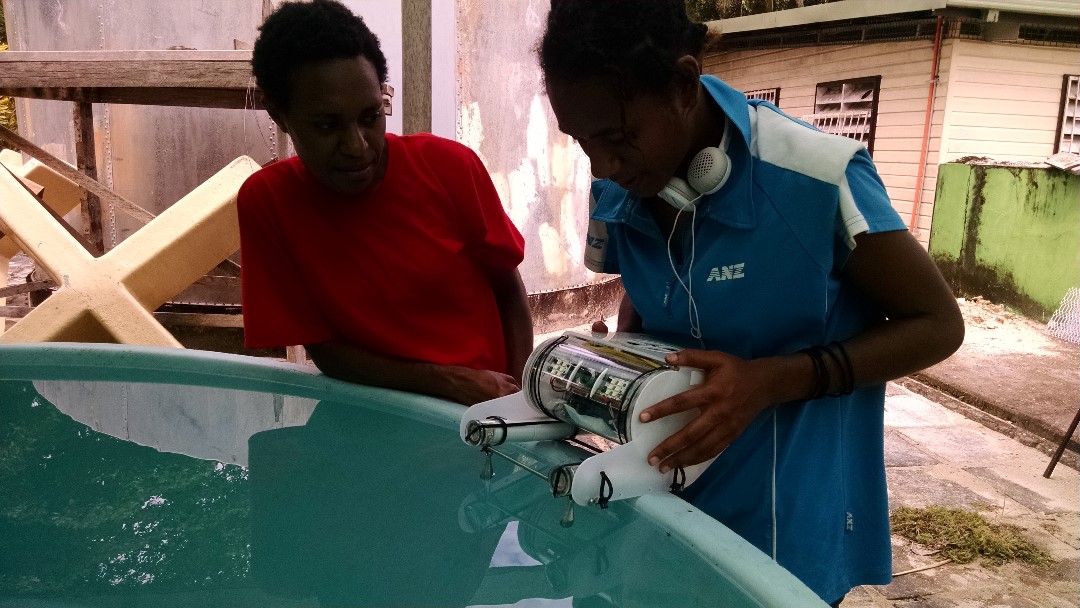

Students prepare to soak test their ROV.

After a long week of intensive robot building, six brand new OpenROVs went into the water on Friday. Our student’s hard work paid off as their robots dove into the freshwater test tank. There are few things more rewarding than watching students, who’ve sweated over a difficult build while learning challenging new skills for 12 hours or more every day, launch their completed robots drive them around the test tank for the first time.

Of course, failure is part of our pedagogy, and two robots will require another day of troubleshooting before they can be released into the sea.
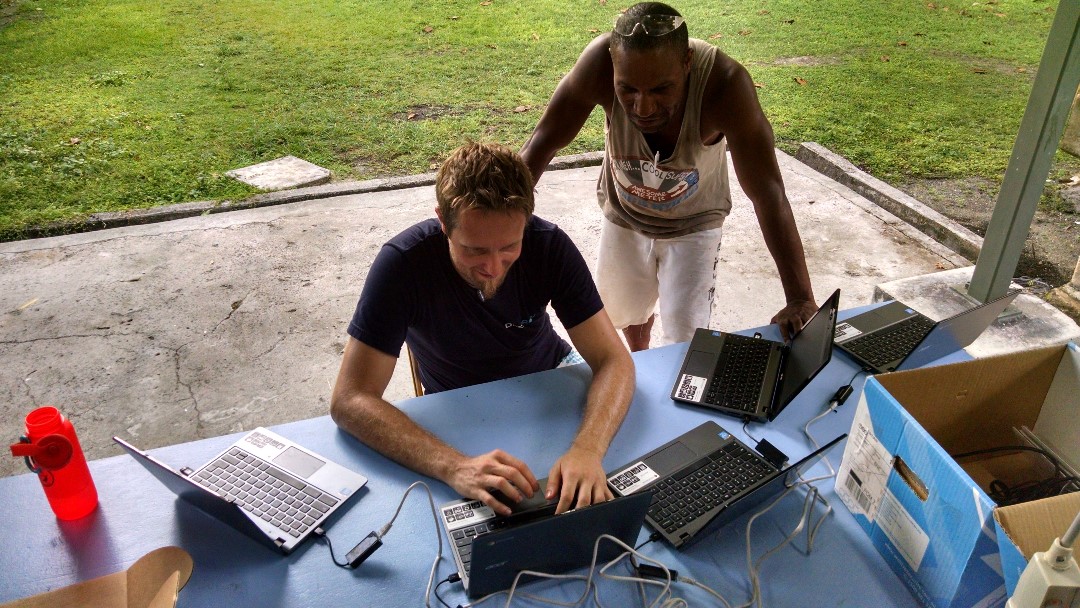
Dominik sets up the Chromebooks for their first flight.
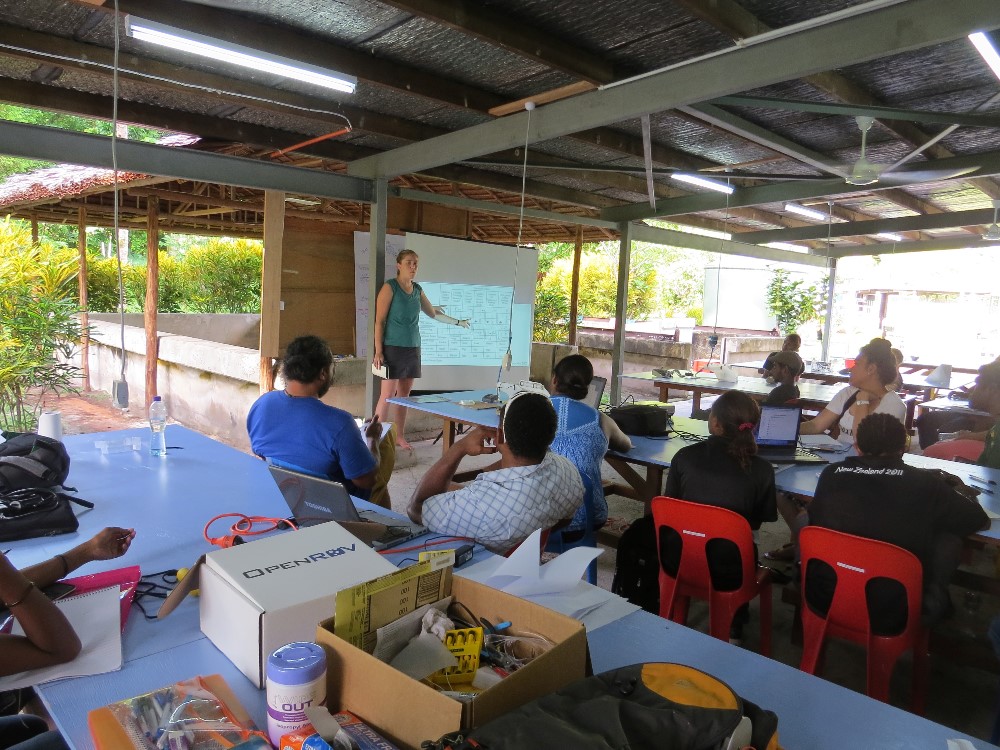
Amy delivers a talk on Human Ecology.

Friday also marked the first milestone for the student ecology projects. Each student took to the stage to present their research proposal to the class. From 23 excellent projects, the instructors narrowed it down to six proposals that will be developed into full research projects and implemented over the next week. After carefully deliberations, we picked the six that best fit into the limitations of a week long course and take advantage of the OpenROVs’ capabilities. This week, we’ll explore the diversity and distribution of commercial sea cucumbers in Kavieng lagoon, the effect of electromagnetic fields on sharks offshore, habitat structure of seagrass beds around Nago Island, impacts of marine debris around Kavieng town, abundance of hard coral coverage on local reefs, and temporal variability of sea stars in nearshore regions.
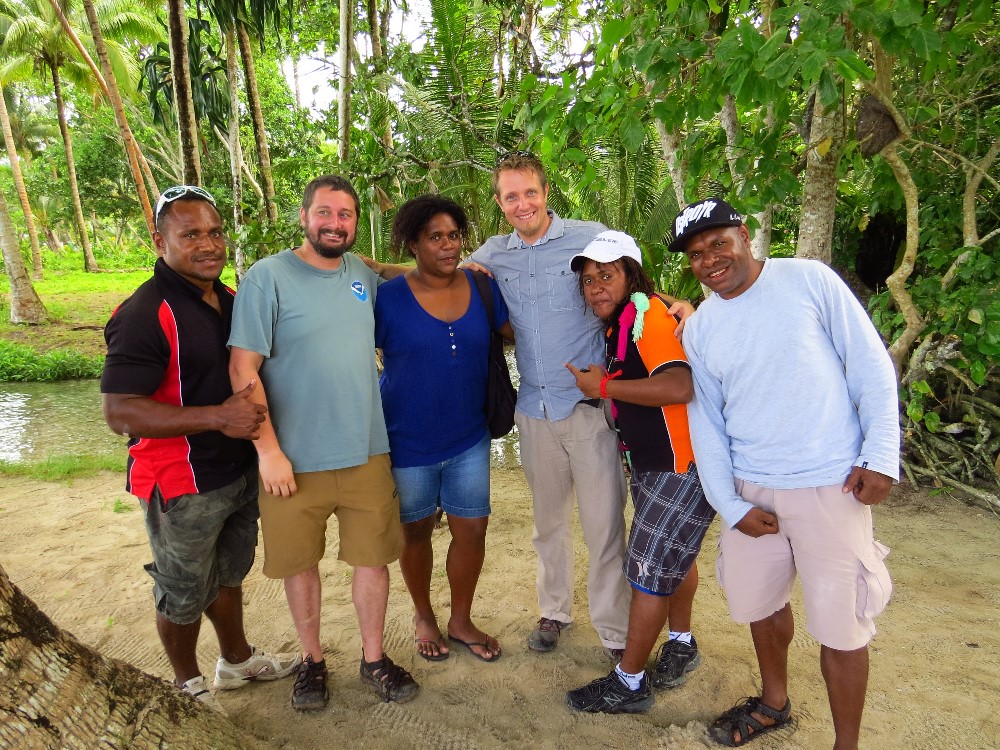
Students get a day off to relax and tour New Ireland,

We’re looking forward to another exciting week of marine ecology via remote observation on Nago Island!

Share this:

  • Share on Bluesky (Opens in new window) Bluesky
  • Share on Facebook (Opens in new window) Facebook
  • Share on Reddit (Opens in new window) Reddit
  • Share on Threads (Opens in new window) Threads
  • Share on WhatsApp (Opens in new window) WhatsApp
  • Share on Mastodon (Opens in new window) Mastodon

Related

Tags: #ROV2PNG OpenROV Papua New Guinea

Post navigation

❮ Previous Post: Media coverage of the Yates Supreme Court case isn’t treating illegal fishing seriously
Next Post: Watch Outbreak Wednesday at 8 and tweet along with public health experts! ❯

You may also like

Open Science
We want to give you an ROV!
January 13, 2020
Weekly Salvage
“The internet may be a series of tubes, but those tubes are mostly underwater” – Weekly Salvage: September 23, 2019
September 23, 2019
Weekly Salvage
Beware the walrus, explosion detected near missing submarine, diamond mining, and more! Monday Morning Salvage: November 27, 2017
November 27, 2017
Weekly Salvage
A new Gulf oil spill, opposition to deep-sea mining, DIY drop cameras, and more! Massive Monday Morning Salvage: October 30, 2017
October 30, 2017

One thought on “Six new robots join Papua New Guinea’s marine science assets: an update from #ROV2PNG”

  1. Britton Winterrose says:
    November 26, 2014 at 11:04 am

    I would love to get details on how to build these ROV’s! Would you be able to share?

Comments are closed.

Popular Posts

I can serve on your graduate thesis committee. Here’s what you can expect of me, and what I expect in return.I can serve on your graduate thesis committee. Here’s what you can expect of me, and what I expect in return.October 16, 2025David Shiffman
Marine Biology Career AdviceMarine Biology Career AdviceMay 30, 2025David Shiffman
Florida angler catches (and likely kills) Endangered great hammerhead sharkFlorida angler catches (and likely kills) Endangered great hammerhead sharkFebruary 13, 2012David Shiffman
What Ocean Ramsey does is not shark science or conservation: some brief thoughts on "the Shark Whisperer" documentaryWhat Ocean Ramsey does is not shark science or conservation: some brief thoughts on "the Shark Whisperer" documentaryJuly 2, 2025David Shiffman
Walking Backwards Into the Future: Applying Indigenous Knowledge to Deep Sea MiningWalking Backwards Into the Future: Applying Indigenous Knowledge to Deep Sea MiningFebruary 5, 2026Angelo Villagomez
Shark of Darkness: Wrath of Submarine is a fake documentaryShark of Darkness: Wrath of Submarine is a fake documentaryAugust 10, 2014Michelle Jewell
That's not a blobfish: Deep Sea Social Media is Flooded by AI SlopThat's not a blobfish: Deep Sea Social Media is Flooded by AI SlopDecember 19, 2025Andrew Thaler
Ocean Anti-Kickstarter of the Month: Triton Gills is almost certainly a scamOcean Anti-Kickstarter of the Month: Triton Gills is almost certainly a scamMarch 25, 2016Andrew Thaler
What does the new species of hammerhead mean for shark science and conservation?What does the new species of hammerhead mean for shark science and conservation?November 11, 2013David Shiffman
Bipartisan Concern Expressed Over Deep Sea Mining at Congressional HearingBipartisan Concern Expressed Over Deep Sea Mining at Congressional HearingJanuary 23, 2026Angelo Villagomez
Subscribe to our RSS Feed for updates whenever new articles are published.

We recommend Feedly for RSS management. It's like Google Reader, except it still exists.

Southern Fried Science

  • Home
  • About SFS
  • Authors
  • Support SFS


If you enjoy Southern Fried Science, consider contributing to our Patreon campaign.

Copyright © 2026 Southern Fried Science.

Theme: Oceanly Premium by ScriptsTown