
Skip to content

Southern Fried Science

Over 15 years of ocean science and conservation online

  • Home
  • About SFS
  • Authors
  • Support SFS

Tag: Cayman

Return from the Cayman Abyss: cruise post-mortem and some thoughts on media coverage

Posted on March 1, 2013 By Andrew Thaler 3 Comments on Return from the Cayman Abyss: cruise post-mortem and some thoughts on media coverage
Science

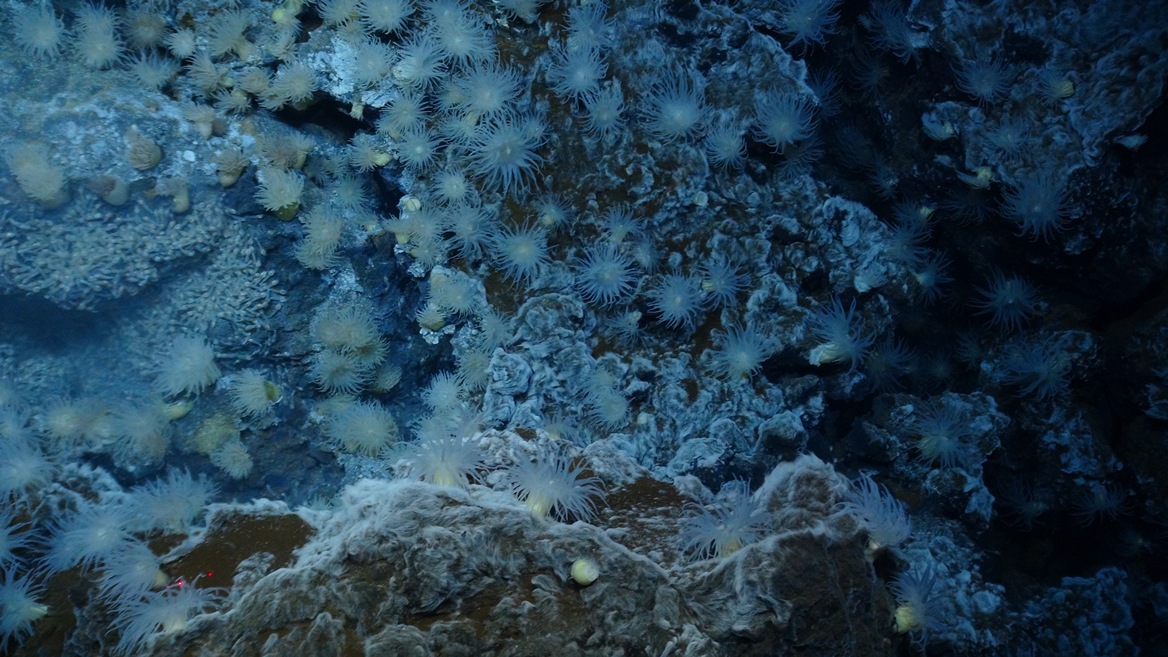
AndrewThumbAt 7 AM EST on Monday, February 25, the ROV Isis rose from the depths of the Cayman Abyss, bringing to a close the 82nd cruise of the RRS James Cook. During JC82, we explored two recently discovered hydrothermal vents fields in the Cayman Trough: Von Damm, named for the late marine geochemist Karen Von Damm, and Beebe, named for the 20th century explorer William Beebe. By any measure, JC82 was a massive success. The samples and videos we’ll bring back will provide ecologists, geologists, and chemists with new insights into fundamental ocean systems for years. The images alone, some beautiful, some heart-breaking, have already inspired.
bacteriamatssmall
Eyeless shrimp, dancing anemones, and a garden of filamentous bacteria. I’m a pretty good writer, and I can’t even begin to describe how beautiful this is. Photo Credit: NERC

Since I last updated the blog on our adventures exploring the Cayman Trough, we’ve had a steady stream media coverage, most of which has been excellent, some of which has been… strange. It’s been fascinating watching the articles come out, seeing what different media outlets consider the story, and, most important to me, getting a chance to share our adventure with a wide audience. Now that the #DeepestVents cruise is officially over (and we’re in transit to yet another, equally exciting bolt on cruise to investigate submerged lava flows off the island of Montserrat), I thought it would be a good opportunity to reflect on the cruise, the story, and how the media shaped it.

Read More “Return from the Cayman Abyss: cruise post-mortem and some thoughts on media coverage” »

Update from the Cayman Abyss

Posted on February 15, 2013February 15, 2013 By Andrew Thaler 1 Comment on Update from the Cayman Abyss
Science

Andrew is currently at sea exploring the world’s deepest hydrothermal vents aboard the RRS James Cook. You can follow along with the adventure at the cruise blog–Into the Cayman Abyss–and on twitter using the hashtag #DeepestVents. Below is a cross post of his first entry Confessions of a Benthic Mercenary – It’s all about connectivity.


AndrewThumbModern deep-sea science is built on broad international collaborations. We share resources, expertise, and ship time. These exchanges allow scientists from around the world to benefit from a global research fleet that includes dedicated oceanographic platforms like the RRS James Cook or the RV Atlantis as well as novel vessels-of-opportunity that could include Norwegian container ships, North Carolina ferries, or Papua New Guinea tug boats. There are small differences between the operation of vessels from different nations – new acronyms, different power supplies, and an enduring disagreement regarding what constitutes a proper biscuit (ask a North Carolinian to take you to Bojangles sometime) – but the rhythm of a ship at sea is dictated, above all else, by the ocean.

The international and interconnected network of deep-sea scientists is how I now find myself, as an American, sailing aboard a British ship, in a role that could best be described as a Benthic Mercenary.

Read More “Update from the Cayman Abyss” »

This Week in the Deep

Posted on January 26, 2013January 25, 2013 By Andrew Thaler
Science

New and noteworthy publications in deep-sea science for the week of January 21, 2013.

Geobiology: Did life originate from a global chemical reactor?

Many decades of experimental and theoretical research on the origin of life have yielded important discoveries regarding the chemical and physical conditions under which organic compounds can be synthesized and polymerized. However, such conditions often seem mutually exclusive, because they are rarely encountered in a single environmental setting. As such, no convincing models explain how living cells formed from abiotic constituents. Here, we propose a new approach that considers the origin of life within the global context of the Hadean Earth. We review previous ideas and synthesize them in four central hypotheses: (i) Multiple microenvironments contributed to the building blocks of life, and these niches were not necessarily inhabitable by the first organisms; (ii) Mineral catalysts were the backbone of prebiotic reaction networks that led to modern metabolism; (iii) Multiple local and global transport processes were essential for linking reactions occurring in separate locations; (iv) Global diversity and local selection of reactants and products provided mechanisms for the generation of most of the diverse building blocks necessary for life. We conclude that no single environmental setting can offer enough chemical and physical diversity for life to originate. Instead, any plausible model for the origin of life must acknowledge the geological complexity and diversity of the Hadean Earth. Future research may therefore benefit from identifying further linkages between organic precursors, minerals, and fluids in various environmental contexts.

Read More “This Week in the Deep” »

Updates from the Deep: New and Noteworthy in Hydrothermal Vent Research

Posted on January 10, 2012January 12, 2012 By Andrew Thaler 7 Comments on Updates from the Deep: New and Noteworthy in Hydrothermal Vent Research
Conservation, Science

From hairy-chested yeti crabs to the deepest known fields, hydrothermal vents have been enjoying a bit of science celebrity in the last few weeks. Beneath the headlines, there has been an eruption of vent-related research published in the scientific literature and some exciting new expeditions just left port.

The Discovery of New Deep-Sea Hydrothermal Vent Communities in the Southern Ocean and Implications for Biogeography

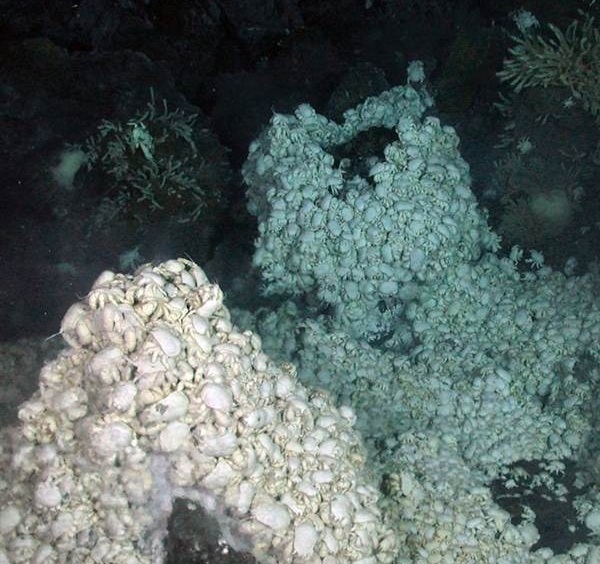
'Hoff' crabs in paradise. Image from ChEss Southern Ocean Consortium

The exhaustive author list on this paper reads like a who’s who in hydrothermal vent biogeography. This is the paper that introduced “the Hoff” crab to the world, but the findings are far more significant. Hydrothermal vent systems are sorted into biogeographic provinces, with different regions supporting different communities. The iconic giant tube worms dominate the eastern Pacific, while the western Pacific (prominently featured in Deep Fried Sea) plays host to fist sized snails, and the Atlantic features shrimp as its dominant species. There are several missing gaps in our understanding of how these qualitatively different communities are connected – the Southern Ocean, the south Atlantic, the Indian Ocean, and the Cayman Trough, among others. Filling in these gaps in our knowledge can help us understand the history and evolution of hydrothermal vent ecosystems.

Read More “Updates from the Deep: New and Noteworthy in Hydrothermal Vent Research” »

Popular Posts

Shark scientists want their research to help save threatened species, but don’t know how. Our new paper can help.Shark scientists want their research to help save threatened species, but don’t know how. Our new paper can help.December 1, 2025David Shiffman
Norway and Cook Islands put their deep-sea mining plans on pause.Norway and Cook Islands put their deep-sea mining plans on pause.December 3, 2025Andrew Thaler
What Ocean Ramsey does is not shark science or conservation: some brief thoughts on "the Shark Whisperer" documentaryWhat Ocean Ramsey does is not shark science or conservation: some brief thoughts on "the Shark Whisperer" documentaryJuly 2, 2025David Shiffman
The Trouble with Teacup PigsThe Trouble with Teacup PigsOctober 14, 2012Andrew Thaler
What we know we don't know: impacts of deep-sea mining on whales, dolphins, sharks, turtles, and other migratory species.What we know we don't know: impacts of deep-sea mining on whales, dolphins, sharks, turtles, and other migratory species.November 20, 2025Andrew Thaler
2025: My year in writing, public speaking, and media interviews2025: My year in writing, public speaking, and media interviewsDecember 3, 2025David Shiffman
Urea and Shark OsmoregulationUrea and Shark OsmoregulationNovember 15, 2010David Shiffman
Shark of Darkness: Wrath of Submarine is a fake documentaryShark of Darkness: Wrath of Submarine is a fake documentaryAugust 10, 2014Michelle Jewell
How tiny satellites are tracking marine wildlifeDecember 1, 2025Andrew Thaler
Build a dirt cheap, tough-as-nails field computer in a Pelican caseBuild a dirt cheap, tough-as-nails field computer in a Pelican caseJuly 21, 2015Andrew Thaler
Subscribe to our RSS Feed for updates whenever new articles are published.

We recommend Feedly for RSS management. It's like Google Reader, except it still exists.

Southern Fried Science

  • Home
  • About SFS
  • Authors
  • Support SFS


If you enjoy Southern Fried Science, consider contributing to our Patreon campaign.

Copyright © 2025 Southern Fried Science.

Theme: Oceanly Premium by ScriptsTown