Skip to content

Southern Fried Science

Over 15 years of ocean science and conservation online

  • Home
  • About SFS
  • Authors
  • Support SFS

Tag: deep-sea mining

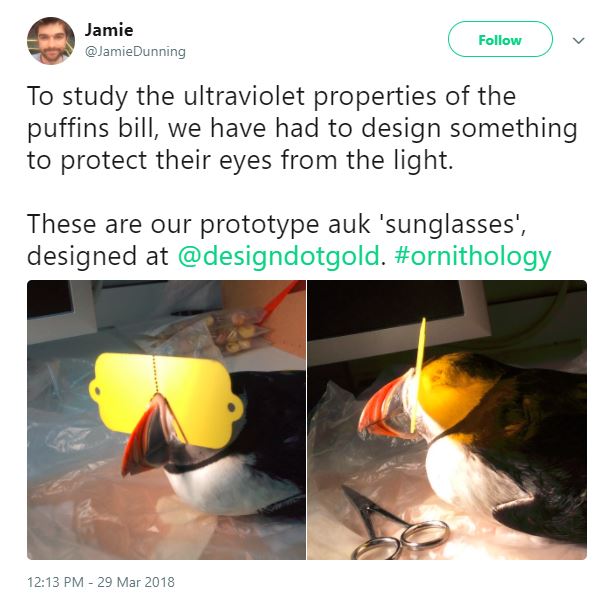
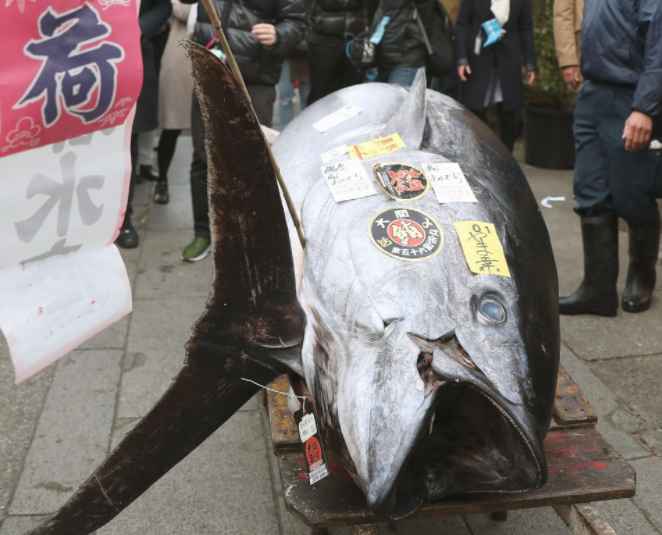
Southern Fried Science year-in-review, Palau’s Giant, a new challenge for deep-sea mining, Porgs are Puffins, and more! Monday Morning Salvage: December 25, 2017.

Posted on December 25, 2017December 25, 2017 By Andrew Thaler
Weekly Salvage

Happy Holidays from the Southern Fried Science Team!

Fog Horn (A Call to Action)

  • The Saipan Blog’s Angelo Villagomez put together a list of extraordinary Indigenous Pacific Conservationists to Follow on Twitter in 2018. Go. Follow them. Learn what’s really happening in Pacific Conservation.

Flotsam (what we’re obsessed with right now)

  • Do-it-yourself science is taking off. A growing movement seeks to make the tools of science available to everyone (including you). I love that The Economist now has a “Punk Science” heading.
  • Palau now requires all tourists to sign an environmental pledge when they enter the country. All flights in now feature this delightful short film.

https://www.youtube.com/watch?v=KhuY8eNLzBM

  • Arlo Guthrie was right! Cool short video of bipedal “walking” in gastropods. Clamzo boys, Clamzo!

Read More “Southern Fried Science year-in-review, Palau’s Giant, a new challenge for deep-sea mining, Porgs are Puffins, and more! Monday Morning Salvage: December 25, 2017.” »

Everything about hagfish is the best thing about hagfish, the battle for the deep-sea heats up, parasitic butt snails, and more! Monday Morning Salvage: December 17, 2017

Posted on December 18, 2017December 18, 2017 By Andrew Thaler
Weekly Salvage

Fog Horn (A Call to Action)

  • The CDC was given a list of seven banned words for their upcoming budgets. Among the censored words are “science-based” and “evidence-based”, which, of course, are concepts central to the CDC’s mission. I have some thoughts about why this list has appeared at this time. If you think the CDC shouldn’t be censored in their mission to safeguard public health, call your representatives.

Flotsam (what we’re obsessed with right now)

  • Bird and Moon author Rosemary Mosco is this week’s Hagfish Lover of note: Feeling Sick and Snotty?

  • Underwater robots reveal the all-you-can-eat-buffet of the deep sea.

Read More “Everything about hagfish is the best thing about hagfish, the battle for the deep-sea heats up, parasitic butt snails, and more! Monday Morning Salvage: December 17, 2017” »

Deep-sea mining goes to court, a year in climate reporting, oyster-adorned singers, and more! The Monday Morning Salvage: December 11, 2017.

Posted on December 11, 2017 By Andrew Thaler
Weekly Salvage

Flotsam (what we’re obsessed with right now)

  • 2017 Year in Climate. It’s been a wild, woolly years of climate highs and policy lows.
    • How Americans Think About Climate Change, in Six Maps.
    • Climate Change Is Complex. We’ve Got Answers to Your Questions.
    • As Climate Changes, Southern States Will Suffer More Than Others.
    • Miles of Ice Collapsing Into the Sea.
  • Fossils of Congress, featuring real, non-elected fossils, found around DC, might be my new favorite thing.
https://fossilsofcongress.tumblr.com/post/168190045787/the-discs-are-pieces-of-crinoid-stem-crinoid-a

Read More “Deep-sea mining goes to court, a year in climate reporting, oyster-adorned singers, and more! The Monday Morning Salvage: December 11, 2017.” »

A year of brutal hurricanes, the wonderful resilience of limpets, talking about meat consumption, and more! The Monday Morning Salvage: December 4, 2017.

Posted on December 4, 2017December 4, 2017 By Andrew Thaler
Weekly Salvage

Flotsam (what we’re obsessed with right now)

  • ‘Extremely Active’ 2017 Atlantic Hurricane Comes to a Close – Here’s the Full Season in One Four-Minute Video:
  • The final news, for now, from the missing Argentinian submarine: Argentine Navy: Water Entered Missing Sub’s Snorkel and Argentina Abandons Rescue Mission for Missing Sub.
The Argentine military submarine ARA San Juan and crew are seen leaving the port of Buenos Aires, Argentina June 2, 2014. Picture taken on June 2, 2014. Armada Argentina/Handout via REUTERS

Read More “A year of brutal hurricanes, the wonderful resilience of limpets, talking about meat consumption, and more! The Monday Morning Salvage: December 4, 2017.” »

Beware the walrus, explosion detected near missing submarine, diamond mining, and more! Monday Morning Salvage: November 27, 2017

Posted on November 27, 2017 By Andrew Thaler
Weekly Salvage

Fog Horn (A Call to Action)

  • In Port Moresby this Wednesday? The University of Papua New Guinea is hosting a public lecture and panel on experimental seabed mining in the Bismark Sea.

Flotsam (what we’re obsessed with right now)

  • Text abbreviations for marine biologists. Courtesy of New Scientist. via Francis Villatoro.

Read More “Beware the walrus, explosion detected near missing submarine, diamond mining, and more! Monday Morning Salvage: November 27, 2017” »

Farting oysters, bombing sea lions, and a new trash island? It must be the Monday Morning Salvage! November 20, 2017

Posted on November 20, 2017 By Andrew Thaler
Weekly Salvage

Fog Horn (A Call to Action)

  • It’s Native American History Month. Southern Fried Science recognizes that our servers are housed on the occupied land of the Timpanogos people while the majority of our writers live on unceded Powhatan territory. This November, Try Something New: Decolonize Your Mind.

Flotsam (what we’re obsessed with right now)

  • Boaters stumble on massive Caribbean “gyre” of plastic garbage. “Gyre is in quotes because I’m almost certain that this is debris from the 2017 Atlantic Hurricane season, rather than an accumulation of decades of plastic is a circulating ocean current. It’s still shocking to see.

https://www.youtube.com/watch?v=GSMGKwZBaWM

  • The ARA San Juan, one or Argentina’s two diesel-electric submarines, is missing. Search and rescue is mobilizing and there’s hints that the sailors tried to send out a signal Saturday.
  • Without a Treaty to Share the Arctic, Greedy Countries Will Destroy It. Cosign.

Read More “Farting oysters, bombing sea lions, and a new trash island? It must be the Monday Morning Salvage! November 20, 2017” »

Twitter Ocean Chess, lessons from the Vaquita, awe of the deep, and more! Monday Morning Salvage: November 13, 2017

Posted on November 13, 2017November 13, 2017 By Andrew Thaler
Weekly Salvage

Fog Horn (A Call to Action)

  • Ocean policy news breaking this week. We’ll have a comment template ready to go when it does. Please check back. We can’t announce until we know exactly what we’re dealing with.
  • Still time to register for OceanDotComm! Science Communication folks! Are you ready for OceanDotComm? Register now!

Flotsam (what we’re obsessed with right now)

  • This is an amazing piece about the importance of awe in deep-sea conservation. Unless we regain our historic awe of the deep ocean, it will be plundered.
Wine bottle found in the deep North Atlantic. Laura Robinson, University of Bristol, and the Natural Environment Research Council. Expedition JC094 was funded by the European Research Council.
  • The Vaquita are going extinct and with them comes an importance lesson on the value of social science to conservation research:

My wife, on the other hand, is a social scientist who works on development here in Mexico. When we first started dating, I used to tease her for being a soft little scientist in her soft little science. I now understand that helping a community pull itself out of poverty is more complex than brain surgery or quantum physics.

There is no magic equation for community organizing but she begins by understanding that “the community” isn’t some monolithic creature that thinks as a unit. There are complex politics and power dynamics at work that can either aid or destroy all her efforts.

I now understand why the vaquita is going extinct. They sent too many people like me into the region and not enough like her.

source.

  • Would you like to play a game? Last week David and I unleashed Twitter Ocean Chess upon the internet and the results are in: it’s the only valid use of 280 characters.
    • Marine biology nerd chess is the only decent justification for 280-character tweets
    • Here’s what happened when two marine scientists played emoji chess on Twitter
    • Emojis + Marine biology triva = OCEAN CHESS 🐬🦀♞

Read More “Twitter Ocean Chess, lessons from the Vaquita, awe of the deep, and more! Monday Morning Salvage: November 13, 2017” »

A new Gulf oil spill, opposition to deep-sea mining, DIY drop cameras, and more! Massive Monday Morning Salvage: October 30, 2017

Posted on October 30, 2017October 29, 2017 By Andrew Thaler
Weekly Salvage

I’ve been away for 2 weeks, so it’s a super-massive edition of the Monday Morning Salvage!

Fog Horn (A Call to Action)

  • There’s still an unimaginable amount of work to do in Dominica and across the Caribbean. Support the Rebuild Dominica Hurricane Relief fund or any of the other funds from our list: How to help our island colleagues in the wake of total devastation.

Flotsam (what we’re obsessed with right now)

  • This is such a cool story: A Trail of Rocks Traces Historical Steamship Routes. We can track old steamship routes from rocks scraped out of the furnaces and tossed overboard.
  • Former Papua New Guinea Attorney General attacks deep sea mining project. They always pick pictures for these articles that don’t show how much life is right around the vents.
Sampling SMS under the sea Photo: Nautilus Minerals
  • Whose ecological footprint is bigger: Medics, economists, or environmentalists? Spoilers: conservationists still have an impact, but they sure ain’t number 1.

Jetsam (what we’re enjoying from around the web)

  • There’s a fresh oil spill in the Gulf of Mexico, and it’s pretty darn huge:
    • Coast Guard Responding to 300,000 Gallon Crude Oil Spill in Gulf of Mexico.
    • Gulf of Mexico Oil Spill May Be Biggest Since 2010.
    • New Estimate Doubles the Size of Last Week’s Oil Spill in the Gulf of Mexico.
  • Some fun from Deep Sea News: When real-life marine biologist and mom goes to sea, she takes the octonauts with her.

  • This is fine: Report on U.S. Marine Sanctuary Oil Drilling Sent to White House, Not Released to Public. This is totally fine: Trump Administration Proposes Largest Oil and Gas Lease Sale in U.S. History.
  • Alaska’s Oyster Farmers Are Filling an Acidification-Driven Void. The state’s oyster farming industry is gaining ground as growers elsewhere struggle. From Hakai Magazine, which is great.
  • Nature is one of the most under-appreciated tools for reigning in carbon. From Anthropocene, which is fast becoming my favorite environmental print magazine. Sorry, Orion.
  • Thousands of penguin chicks starve in Antarctica.

Hey, Andrew, how about you give us at least *some* good news today? Ok, fine.

Read More “A new Gulf oil spill, opposition to deep-sea mining, DIY drop cameras, and more! Massive Monday Morning Salvage: October 30, 2017” »

The horrifying physiological and psychological consequences of being Aquaman

Posted on October 25, 2017 By Andrew Thaler
Popular Culture

This is an update and repost of our seminal article on the science of Aquaman, revised and expanded. 


Aquaman. DC Comics.
Aquaman. DC Comics. A rational response to seal poaching is to lob a polar bear at the aggressors.

Aquaman may not be everybody’s favorite superhero, but since his creation in 1941, he has been among DC’s most enduring icons. During the Golden Age of comics, he held his own against Superman, Batman, and Wonder Woman. Silver Age Aquaman was a founding member and eventually leader of the Justice League. His powers, tied to the ocean, forced writers to create a compelling, complex hero with explicit limitations. In the early days, when Superman’s strength was practically infinite, and Batman’s brilliance was unmatched, Aquaman had to become more than just a superhero, he had to be a person.

If Superman existed to show us how high the human spirit could fly, and Batman to show us the darkness within even our most noble, Aquaman is here to show us the world that triumphs in our absence. The ocean is not ours, and no matter how great our technology, we will never master it as we have mastered land. Aquaman has. Through this lonely ocean wanderer, we can experience a world that we can never truly command. In many ways, Aquaman was stronger than the Man of Steel and darker than the Dark Knight. He knew loneliness that the orphan and the alien exile never could.

Even though Aquaman had to fight harder, endure the jokes of other, less interesting heroes, and find relevance in an ecosystem hostile to the humans that had to empathize with him, Aquaman was never forced to confront the truly horrifying consequences of life in the ocean.

The penetrating cold

Aquaman is, for all intents and purposes, a marine mammal. With the exception of a healthy mane in later incarnations, he is effectively hairless. As a human, we would expect his internal body temperature to hover around 99°F, or about 37°C. Even at its warmest points, the surface temperature of the ocean around the equator is only about 80°F/27°C. At the poles, ocean temperature can actually drop a few degrees below freezing. In the deep sea, ambient temperature levels out around 2 to 4°C. The ocean is cold, and water is a much better thermal conductor than air. Warm blooded species have evolved many different systems to manage these gradients, including countercurrent heat exchangers, insulating fur, and heavy layers of blubber. This is what a marine mammal that can handle cold waters look like:

Elephant Seal. NSF, photo by Mike Usher

Aquaman is not just a human, he is an atypically uninsulated human. If the man has more than 2% body fat, I’d be shocked. In contrast, warm-water bottlenose dolphins have at least 18 to 20% body fat. Anyone who SCUBA dives knows that, even with a 12 millimeter neoprene wet suit, after a few hours in 80°F water, you get cold. Aquaman, lacking any visible insulation, should have slipped into hypothermia sometime early in More Fun Comics #73. He is built for the beach rather than the frigid deep.

Jason Momoa is not a man blessed with an over-abundance of “bioprene”.

Read More “The horrifying physiological and psychological consequences of being Aquaman” »

Lessons from Puerto Rico, mutant starfish, pictures of ships, and more! Monday Morning Salvage: October 9, 2017.

Posted on October 9, 2017 By Andrew Thaler
Weekly Salvage

Flotsam (what we’re obsessed with right now)

  • A fish scientist’s 10 tips for surviving a hurricane: Lessons learned from Puerto Rico from our friends at the Fisheries Blog.
  • Commentary: For Hurricane-Hit Puerto Rico, an Insider’s Guide to Disaster Management by gCaptain.
The Military Sealift Command hospital ship USNS Comfort (T-AH 20) arrives in San Juan, Puerto Rico, Oct. 3, 2017. U.S. Navy Photo

Read More “Lessons from Puerto Rico, mutant starfish, pictures of ships, and more! Monday Morning Salvage: October 9, 2017.” »

Posts pagination

Previous 1 … 11 12 13 … 15 Next

Recent Popular Posts

What Ocean Ramsey does is not shark science or conservation: some brief thoughts on "the Shark Whisperer" documentaryWhat Ocean Ramsey does is not shark science or conservation: some brief thoughts on "the Shark Whisperer" documentaryJuly 2, 2025David Shiffman
Shark of Darkness: Wrath of Submarine is a fake documentaryShark of Darkness: Wrath of Submarine is a fake documentaryAugust 10, 2014Michelle Jewell
Your car has just been crushed by hagfish: Frequently Asked QuestionsYour car has just been crushed by hagfish: Frequently Asked QuestionsJuly 13, 2017Andrew Thaler
Mermaids: The New Evidence is a Fake DocumentaryMermaids: The New Evidence is a Fake DocumentaryMay 28, 2013Andrew Thaler
"Twitter sucks now and all the cool kids are moving to Bluesky:" Our new survey shows that scientists no longer find Twitter professionally useful or pleasant"Twitter sucks now and all the cool kids are moving to Bluesky:" Our new survey shows that scientists no longer find Twitter professionally useful or pleasantAugust 19, 2025David Shiffman
What can the funniest shark memes on the internetz teach us about ocean science and conservation?What can the funniest shark memes on the internetz teach us about ocean science and conservation?November 8, 2013David Shiffman
Your car has just been crushed by hagfish: Frequently Asked QuestionsYour car has just been crushed by hagfish: Frequently Asked QuestionsFebruary 27, 2024Andrew Thaler
I built the cheapest 3D printer available online so that you don't have to: iNSTONE Desktop DIY (review)I built the cheapest 3D printer available online so that you don't have to: iNSTONE Desktop DIY (review)March 14, 2019Andrew Thaler
Urea and Shark OsmoregulationUrea and Shark OsmoregulationNovember 15, 2010David Shiffman
How many nuclear weapons are at the bottom of the sea. An (almost certainly incomplete) census of broken arrows over water.How many nuclear weapons are at the bottom of the sea. An (almost certainly incomplete) census of broken arrows over water.July 26, 2018Andrew Thaler
Subscribe to our RSS Feed for updates whenever new articles are published.

We recommend Feedly for RSS management. It's like Google Reader, except it still exists.

Southern Fried Science

  • Home
  • About SFS
  • Authors
  • Support SFS


If you enjoy Southern Fried Science, consider contributing to our Patreon campaign.

Copyright © 2025 Southern Fried Science.

Theme: Oceanly Premium by ScriptsTown