Skip to content

Southern Fried Science

Over 15 years of ocean science and conservation online

  • Home
  • About SFS
  • Authors
  • Support SFS

Tag: open science

Southern Fried Science year-in-review, Palau’s Giant, a new challenge for deep-sea mining, Porgs are Puffins, and more! Monday Morning Salvage: December 25, 2017.

Posted on December 25, 2017December 25, 2017 By Andrew Thaler
Weekly Salvage

Happy Holidays from the Southern Fried Science Team!
Fog Horn (A Call to Action)

  • The Saipan Blog’s Angelo Villagomez put together a list of extraordinary Indigenous Pacific Conservationists to Follow on Twitter in 2018. Go. Follow them. Learn what’s really happening in Pacific Conservation.

Flotsam (what we’re obsessed with right now)

  • Do-it-yourself science is taking off. A growing movement seeks to make the tools of science available to everyone (including you). I love that The Economist now has a “Punk Science” heading.
  • Palau now requires all tourists to sign an environmental pledge when they enter the country. All flights in now feature this delightful short film.

https://www.youtube.com/watch?v=KhuY8eNLzBM

  • Arlo Guthrie was right! Cool short video of bipedal “walking” in gastropods. Clamzo boys, Clamzo!
Read More “Southern Fried Science year-in-review, Palau’s Giant, a new challenge for deep-sea mining, Porgs are Puffins, and more! Monday Morning Salvage: December 25, 2017.” »

Everything about hagfish is the best thing about hagfish, the battle for the deep-sea heats up, parasitic butt snails, and more! Monday Morning Salvage: December 17, 2017

Posted on December 18, 2017December 18, 2017 By Andrew Thaler
Weekly Salvage

Fog Horn (A Call to Action)

  • The CDC was given a list of seven banned words for their upcoming budgets. Among the censored words are “science-based” and “evidence-based”, which, of course, are concepts central to the CDC’s mission. I have some thoughts about why this list has appeared at this time. If you think the CDC shouldn’t be censored in their mission to safeguard public health, call your representatives.

Flotsam (what we’re obsessed with right now)

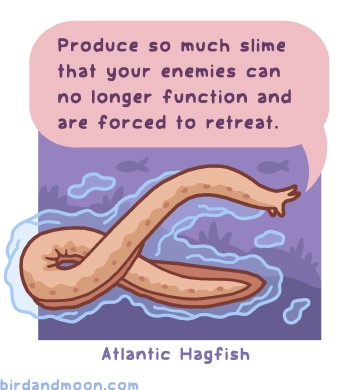
  • Bird and Moon author Rosemary Mosco is this week’s Hagfish Lover of note: Feeling Sick and Snotty?

  • Underwater robots reveal the all-you-can-eat-buffet of the deep sea.

Read More “Everything about hagfish is the best thing about hagfish, the battle for the deep-sea heats up, parasitic butt snails, and more! Monday Morning Salvage: December 17, 2017” »

Open source. Open science. Open Ocean. Oceanography for Everyone and the OpenCTD

Posted on June 24, 2016June 24, 2016 By Andrew Thaler 2 Comments on Open source. Open science. Open Ocean. Oceanography for Everyone and the OpenCTD
Oceanography for Everyone

Nearly four years ago, Kersey Sturdivant and I launched a bold, ambitious, and, frankly, naive crowdfunding initiative to build the first low-cost, open-source CTD, a core scientific instrument that measures salinity, temperature, and depth in a water column. It was a dream born from the frustration of declining science funding, the expense of scientific equipment, … Read More “Open source. Open science. Open Ocean. Oceanography for Everyone and the OpenCTD” »

A 3D-printable, drone and ROV-mountable, water sampler

Posted on August 10, 2015August 11, 2015 By Andrew Thaler 2 Comments on A 3D-printable, drone and ROV-mountable, water sampler
Education, Open Science, Science

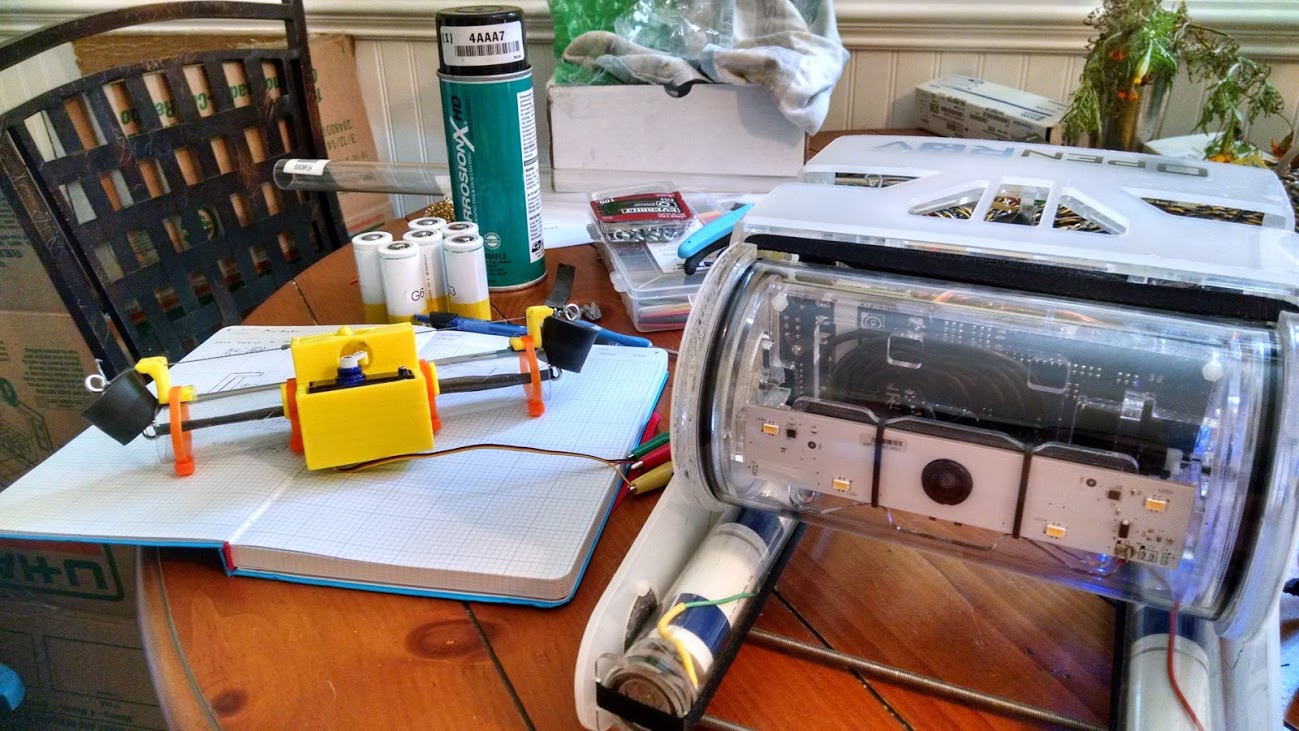
IMG_20150809_160734584_HDRThe Niskin bottle, a seemingly simple tube designed to take water samples at discrete depths, is one of the most important tools of oceanography. Coupled with a CTD, an array of Niskin bottles fit into the rosette, a Voltron-esque amalgamation of everything an oceanographer needs to profile the ocean. Niskin bottles are neither cheap nor particularly easy to use. A commercial rosette requires a decent-sized winch to launch and recover, which means you need a vessel and a crew to deploy. For Rogue Ecologist and citizen scientists, getting a high-quality, discrete water sample is a perpetual challenge. With tools like the OpenROV and the soon-to-be-completed EcoDrone, I wanted a Niskin bottle that was light weight and capable of being mounted on both underwater robots and quadcopters with ease.

Until now. 

After a few months of brainstorming and planning, I sat down this Friday and began building a 3D printable Niskin bottle that could be hand deployed or mounted on an OpenROV or drone. While this version is designed around a 1.25 inch acrylic tube, the trigger mechanism can be expanded to fit any size pipe. The trigger is driven by a waterproof servo developed by the good folks over at OpenROV. Everything else can either be purchased off-the-shelf or printed on you home 3D printer. Later this month, I’ll be taking my prototypes out on the RV Blue Heron for field testing in Lake Superior.

Bill of Materials

Read More “A 3D-printable, drone and ROV-mountable, water sampler” »

Hacking the Tractor: what the future of farming means for open science

Posted on July 20, 2015July 21, 2015 By Andrew Thaler
Science

I took a gamble when I bought the tractor mower. It was old, but well-cared for and ran well, but it was wearing out. Still, I couldn’t get a quarter as much machine for twice the price. Two months later, the mower deck cracked, rusted out from ten years of hard use. A replacement deck would run into the thousands of dollars, there were no options for just the shell, a cheaper, but still pricey option, and there were no off-brand decks to be found. Those three facts alone should tell you that we’re dealing with a John Deere, here.

John Deere made headlines earlier this year when Wired ran an impressive (and rare) expose on farm tech: New High Tech Farm Equipment is a Nightmare for Farmer. Deere followed up with a rebuttal letter, declaring that farmers did, in fact, own their equipment, while simultaneously outlining all the ways in which they didn’t: John Deere: of course you “own” your tractor, but only if you agree to let us rip you off.

Here’s the short version: Tractors are complicated and increasingly controlled by onboard computers. These computers use proprietary software, and that software is protected by the Digital Millennium Copyright Act (DMCA). The software itself is encrypted to prevent copying or modding. Those encryption are also protected by the DMCA. Breaking that encryption is illegal, regardless of the state of the software. If you have to decrypt the software to remove it, you’re breaking the law.

Read More “Hacking the Tractor: what the future of farming means for open science” »

Popular Posts

Shark scientists want their research to help save threatened species, but don’t know how. Our new paper can help.Shark scientists want their research to help save threatened species, but don’t know how. Our new paper can help.December 1, 2025David Shiffman
Norway and Cook Islands put their deep-sea mining plans on pause.Norway and Cook Islands put their deep-sea mining plans on pause.December 3, 2025Andrew Thaler
What Ocean Ramsey does is not shark science or conservation: some brief thoughts on "the Shark Whisperer" documentaryWhat Ocean Ramsey does is not shark science or conservation: some brief thoughts on "the Shark Whisperer" documentaryJuly 2, 2025David Shiffman
The Trouble with Teacup PigsThe Trouble with Teacup PigsOctober 14, 2012Andrew Thaler
What we know we don't know: impacts of deep-sea mining on whales, dolphins, sharks, turtles, and other migratory species.What we know we don't know: impacts of deep-sea mining on whales, dolphins, sharks, turtles, and other migratory species.November 20, 2025Andrew Thaler
2025: My year in writing, public speaking, and media interviews2025: My year in writing, public speaking, and media interviewsDecember 3, 2025David Shiffman
Urea and Shark OsmoregulationUrea and Shark OsmoregulationNovember 15, 2010David Shiffman
Shark of Darkness: Wrath of Submarine is a fake documentaryShark of Darkness: Wrath of Submarine is a fake documentaryAugust 10, 2014Michelle Jewell
How tiny satellites are tracking marine wildlifeDecember 1, 2025Andrew Thaler
Build a dirt cheap, tough-as-nails field computer in a Pelican caseBuild a dirt cheap, tough-as-nails field computer in a Pelican caseJuly 21, 2015Andrew Thaler
Subscribe to our RSS Feed for updates whenever new articles are published.

We recommend Feedly for RSS management. It's like Google Reader, except it still exists.

Southern Fried Science

  • Home
  • About SFS
  • Authors
  • Support SFS


If you enjoy Southern Fried Science, consider contributing to our Patreon campaign.

Copyright © 2025 Southern Fried Science.

Theme: Oceanly Premium by ScriptsTown