Skip to content

Southern Fried Science

Over 15 years of ocean science and conservation online
  • Home
  • About SFS
  • Authors
  • Support SFS

Tag: osedax

Space whales. Space. Whales. SPAAAAACE WHAAAAALES! Weekly Salvage: October 21, 2019

Posted on October 21, 2019October 20, 2019 By Andrew Thaler
Weekly Salvage

Transcript below.

Read More “Space whales. Space. Whales. SPAAAAACE WHAAAAALES! Weekly Salvage: October 21, 2019” »

Bone-eating Jabba worms, the world’s deepest plastic bag, new shipwrecks, climate change art, and more! Monday Morning Salvage: May 14, 2018.

Posted on May 14, 2018 By Andrew Thaler
Weekly Salvage

Foghorn (A Call to Action!)

  • Yale study: Newspaper op-eds change minds and The Long-lasting Effects of Newspaper Op-Eds on Public Opinion. Scientists and conservationists, this May, make an effort to publish a Letter to the Editor or OpEd in your local paper. If you’ve done so, please leave a link to it in the comments.
  • How to save the high seas: As the United Nations prepares a historic treaty to protect the oceans, scientists highlight what’s needed for success.

Flotsam (what we’re obsessed with right now)
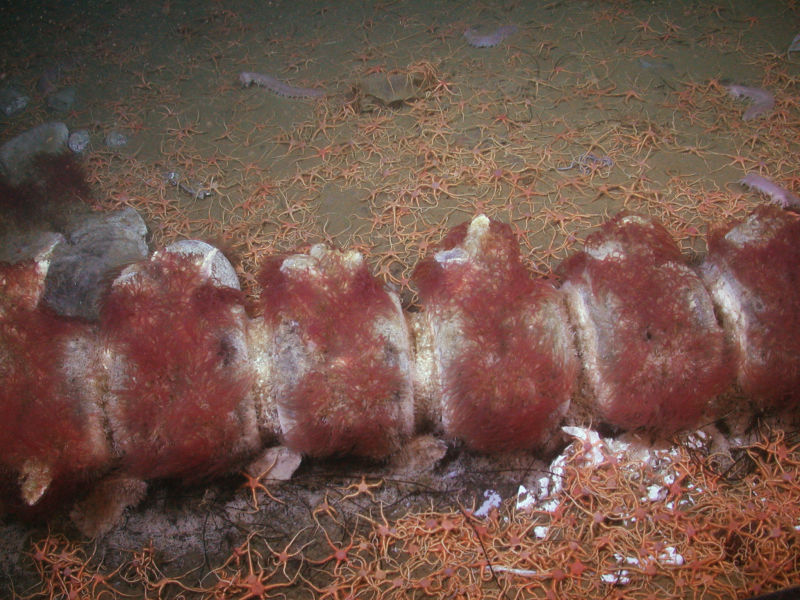
  • No commentary needed: Eyeless, Mouthless, Bone-Eating Worm Named After Jabba the Hutt.

Osedax worms growing on the vertebrae of a dead whale.
Photo: 2006 MBARI

  • Every ocean, every dive, every time, trash: Plastic Bag Found at the Bottom of World’s Deepest Ocean Trench.

Read More “Bone-eating Jabba worms, the world’s deepest plastic bag, new shipwrecks, climate change art, and more! Monday Morning Salvage: May 14, 2018.” »

Parasitic barnacles, a code of conduct for marine conservation, #BillMeetScienceTwitter, and more! Monday Morning Salvage: May 22, 2017.

Posted on May 22, 2017May 22, 2017 By Andrew Thaler
Weekly Salvage

Fog Horn (A Call to Action)

  • 27 National Monuments are under review by the Department of the Interior. Our Nation Monuments are our National Treasures. Don’t let them be sold to the highest bidder! Submit formal public comments on the DOI Monument Review and make your voice heard.

Flotsam (what we’re obsessed with right now)

  • This parasitic barnacle, Sacculina carcini, replacing the reproductive organs of a crab.
  • Hat tip to Tommy Leung, who’s twitter feed is a gold mine of fantastic parasites and where to find them.
  • #BillMeetScienceTwitter. What started as an inquiry into whether science celebrities really engage with practicing scientists on a regular basic morphed into the best way to find new scientists to follow on Twitter. I’m curating a massive list of all the self-identified Ocean Scientists that participated.

Jetsam (what we’re enjoying from around the web)
  • Deep-sea mining is gearing up on the high seas, and international regulations is still lagging far behind technology: The Wild West of Deep-Sea Mining.
  • oceanbites rolls out an excellent overview of the different kinds of robots used in conducting deep-sea research.
  • Beyond drug lords and conservationists: Who is missing in the coverage of the vaquita’s demise? from the legendary team at Deep Sea News.
  • Henderson Island is isolated and uninhabited, so why are all its beaches so completely covered in garbage? Spoilers: It’s because the planet is an interconnected global system with impacts felt far beyond the source of insult.
  • Bone-eating snot flower worm will never not be my favorite common name. Tiny Zombie Worms Are the Beavers of the Deep.
  • The history of the entire world, in one entertaining YouTube video (via Vox):
  • Are Ships The Careless Giants Of The Sea? Yes, but they don’t have to be.
  • Trump’s EPA Greenlights a Nasty Chemical. A Month Later, It Poisons a Bunch of Farmworkers.
  • Trump country is flooding, and climate ideas are shifting.
  • The Ocean as the New Frontier of Climate Action.
  • The Antarctic Peninsula is 3 degrees warming than is used to be, and that means plants are growing and Antarctica is getting greener.
  • The long history of ocean drilling and scientific discovery.
  • A tiny anchovy could be a silver bullet for malnutrition in Peru—if only we would let it: The Fish that Smells like Money.
  • I talk alot about e-waste and disposable electronics, which is why I’m excited to see modular, open-source smartphone projects finally start to mature. The ZeroPhone looks like on of the most promising additions to this space.
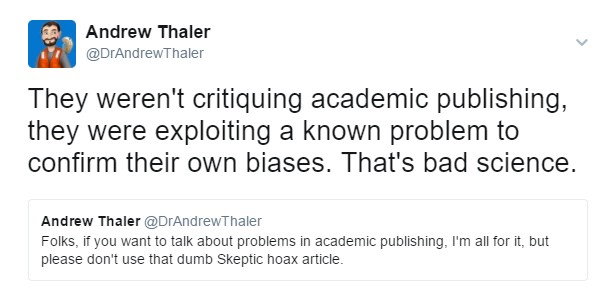
  • Skeptic Magazine has a pseudoscience problems. Unfortunately, this time it’s the skeptics promoting some pretty eyebrow-raising junk science. I went a little deeper into this on Twitter.

Read More “Parasitic barnacles, a code of conduct for marine conservation, #BillMeetScienceTwitter, and more! Monday Morning Salvage: May 22, 2017.” »

Monday Morning Salvage: February 6, 2017

Posted on February 6, 2017 By Andrew Thaler
Uncategorized

Bringing you the best of marine science and conservation from the last week.

Flotsam (what we’re obsessed with right now)
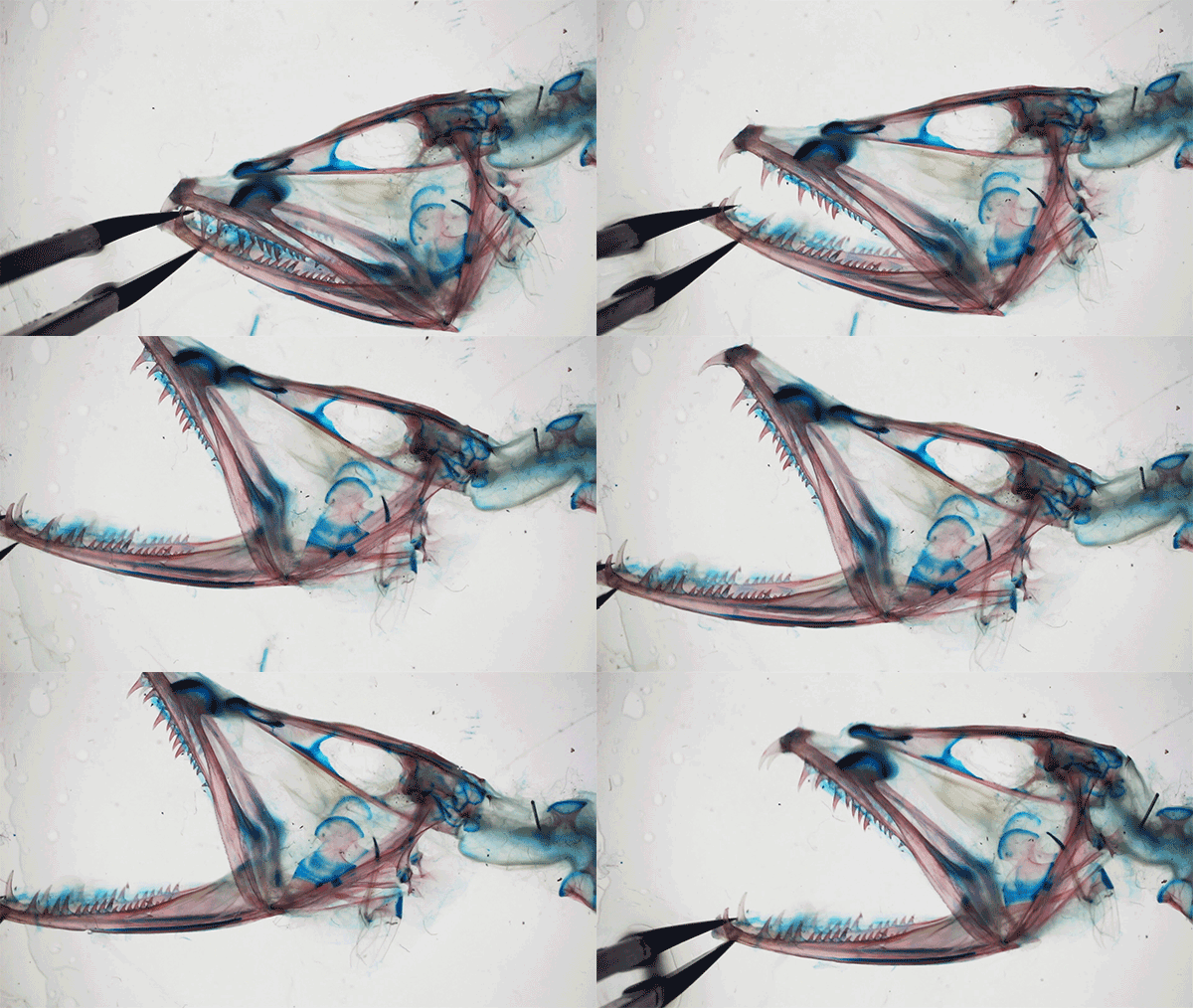
  • The ridiculous, extensible jaw and neck joint of a Barbeled Dragonfish.

  • Deep-Sea Fishes That Are Built to Eat Big.

Jetsam (what we’re enjoying from around the web)

Read More “Monday Morning Salvage: February 6, 2017” »

The Sex Lives of Spoonworms: 10 marine animals with parasitic, dwarf, and otherwise reduced males

Posted on May 31, 2013September 19, 2013 By Andrew Thaler 8 Comments on The Sex Lives of Spoonworms: 10 marine animals with parasitic, dwarf, and otherwise reduced males
Science

Earlier this week, Fox News commentator and all-around terrific guy* Erick Erickson, while discussing a recent Pew Study that revealed that women were the sole breadwinners in 40% of US households that contain children, had this to say:

“I’m so used to liberals telling conservatives that they’re anti-science. But liberals who defend this and say it is not a bad thing are very anti-science. When you look at biology—when you look at the natural world—the roles of a male and a female in society and in other animals, the male typically is the dominant role. The female, it’s not antithesis, or it’s not competing, it’s a complementary role.”

source

headshot-thalerSMALL

I’m not sure where Erickson got his science education from, but it’s pretty clear he should have spent a little more time shopping around on the free market, because he sure is wrong. How wrong? I managed to assemble this list of 10 marine species with dwarf, parasitic, or otherwise reduced males (including an entire female-only class) while waiting for my toast**. So have a seat and let me show you how much weirder and more wonderful the world is than Erickson’s Disney-esque misinterpretation of biology.

1. Anglerfish

The deep-sea Anglerfish is among the most common examples of parasitic males in the marine world. Anglerfish comprise a variety of taxa in the order Lophiiformes. Almost all (females) possess a specialized appendage that acts as a lure to attract unwary prey. Life in the deep sea is rough–even though it is the largest and most diverse ecosystem on Earth, biomass is fairly low–so finding a mate is a struggle for these slow swimming fishes. The solution: carry your partner with you.

Male anglerfish are tiny, often less than 5% the size of the female, but they possess powerful olfactory receptors, allowing them to seek out females. Once a mate is located, the male anglerfish latches on to her abdomen, fuses his circulatory system with hers, and is then slowly digested until there’s nothing left but a sac of gonads surrounded by basic life-supporting tissues. Female anglerfish are not monogamous, either. At any given time she could be covered by a half-dozen parasitic males. Kinky.
Read More “The Sex Lives of Spoonworms: 10 marine animals with parasitic, dwarf, and otherwise reduced males” »

I *heart* cryptozoology

Posted on October 6, 2011October 6, 2011 By Andrew Thaler 5 Comments on I *heart* cryptozoology
Science

Cryptozoology, the study of animals whose existence is unproven, lies just south of the boundary between science and pseudoscience. Unlike most psuedoscientific movements, which require adherents to suspend disbelief and ignore the realities of physics, chemistry, medicine, and, well, reality, the foundational principals of cryptozoology – that there are remnant populations of thought-to-be-extinct species and that there are still large, charismatic animals that have not yet been discovered – are grounded in ecology. In deep-sea biology, we discover new species all of the time, some of which are far more fantastical than humans can imagine. Some times, we even discover once extinct species. So it is not much of a leap to go from exploratory zoology to cryptozoology.


Read More “I *heart* cryptozoology” »

Bone-eating worms and contorted creationist thinking

Posted on September 7, 2010January 12, 2012 By Andrew Thaler 10 Comments on Bone-eating worms and contorted creationist thinking
Science

I tend to avoid the creationist blogs. Every time I get sucked into that vortex of pseudoscience, I find the exact same debunked claims that were bunk when I was 12. There are better bloggers out there who have the energy and patience to systematically dissect the same tired old rubbish day after day, but I’m not one of them.

This claim, however, is special. There’s nothing new in the rhetoric behind it, it’s just another “how could this commensalism/symbiosis/mutualism evolve? It must be magic!” mantra. And the analysis isn’t terribly sophisticated, anyone could do the basic googling to find out why every argument in it is either wrong or deceptive. What’s special is that it’s about one of my favorite critters, Osedax – the bone eating worm.

Read More “Bone-eating worms and contorted creationist thinking” »

Lazy Vertebrae

Posted on February 11, 2010February 11, 2010 By Andrew Thaler 2 Comments on Lazy Vertebrae
Science

It’s been a long time since we’ve reposted this video. Even Osedax needs some love.

Hundred-leven to 1, Polyandry like Crazy!

~Southern Fried Scientist

Lyrics below the jump:

Read More “Lazy Vertebrae” »

Popular Posts

Shark scientists want their research to help save threatened species, but don’t know how. Our new paper can help.Shark scientists want their research to help save threatened species, but don’t know how. Our new paper can help.December 1, 2025David Shiffman
Norway and Cook Islands put their deep-sea mining plans on pause.Norway and Cook Islands put their deep-sea mining plans on pause.December 3, 2025Andrew Thaler
What Ocean Ramsey does is not shark science or conservation: some brief thoughts on "the Shark Whisperer" documentaryWhat Ocean Ramsey does is not shark science or conservation: some brief thoughts on "the Shark Whisperer" documentaryJuly 2, 2025David Shiffman
What we know we don't know: impacts of deep-sea mining on whales, dolphins, sharks, turtles, and other migratory species.What we know we don't know: impacts of deep-sea mining on whales, dolphins, sharks, turtles, and other migratory species.November 20, 2025Andrew Thaler
2025: My year in writing, public speaking, and media interviews2025: My year in writing, public speaking, and media interviewsDecember 3, 2025David Shiffman
The Trouble with Teacup PigsThe Trouble with Teacup PigsOctober 14, 2012Andrew Thaler
Urea and Shark OsmoregulationUrea and Shark OsmoregulationNovember 15, 2010David Shiffman
How tiny satellites are tracking marine wildlifeDecember 1, 2025Andrew Thaler
Shark of Darkness: Wrath of Submarine is a fake documentaryShark of Darkness: Wrath of Submarine is a fake documentaryAugust 10, 2014Michelle Jewell
"Twitter sucks now and all the cool kids are moving to Bluesky:" Our new survey shows that scientists no longer find Twitter professionally useful or pleasant"Twitter sucks now and all the cool kids are moving to Bluesky:" Our new survey shows that scientists no longer find Twitter professionally useful or pleasantAugust 19, 2025David Shiffman
Subscribe to our RSS Feed for updates whenever new articles are published.

We recommend Feedly for RSS management. It's like Google Reader, except it still exists.

Southern Fried Science

  • Home
  • About SFS
  • Authors
  • Support SFS


If you enjoy Southern Fried Science, consider contributing to our Patreon campaign.

Copyright © 2025 Southern Fried Science.

Theme: Oceanly Premium by ScriptsTown