Skip to content

Southern Fried Science

Over 15 years of ocean science and conservation online

  • Home
  • About SFS
  • Authors
  • Support SFS

Tag: plastic

Ocean Kickstarter of the Month: Control ocean plastic with BioBooms

Posted on January 4, 2016January 4, 2016 By Andrew Thaler
Uncategorized

On January 1, 2016, the Southern Fried Science central server began uploading blog posts apparently circa 2041. Due to a related corruption of the contemporary database, we are, at this time, unable to remove these Field Notes from the Future or prevent the uploading of additional posts. Please enjoy this glimpse into the ocean future while we attempt to rectify the situation.


“Two thirds of “collected” ocean plastic end up back in the ocean. Why scoop it when microbes can poop it?”

BioBooms: Eat the plastic out of our oceans, one trawl at a time.

broken

We’ve seen nearly 3 decades of ill-conceived ocean cleanup projects, and we’re still dealing with many of the same issues that arose when the Great Pacific Garbage Patch was first discovered. Adding insult to injury, a recent study revealed that almost 70% of all garbage collected during these ocean cleanup operation has ended up back in the ocean thanks to poor downstream control and a limited understanding of the plastic lifecycle on the part of these programs. Indeed, without longitudinal support, these plastic sucking boondoggles tend to be all flash and no pan. The point-source operations, like Waterwheel Global, have fared much better, but still do nothing for the plastic that is already out there. 

BioBooms has the potential to change that. Using a proprietary plastic consuming microbe, the BioBooms team hopes to break down ocean plastic in situ, converting photodegraded plastics into fuel that will then be used to power their ships.

Read More “Ocean Kickstarter of the Month: Control ocean plastic with BioBooms” »
Why I keep returning to the Baltimore Water Wheel

Posted on December 5, 2015December 5, 2015 By Andrew Thaler 1 Comment on Why I keep returning to the Baltimore Water Wheel
Conservation

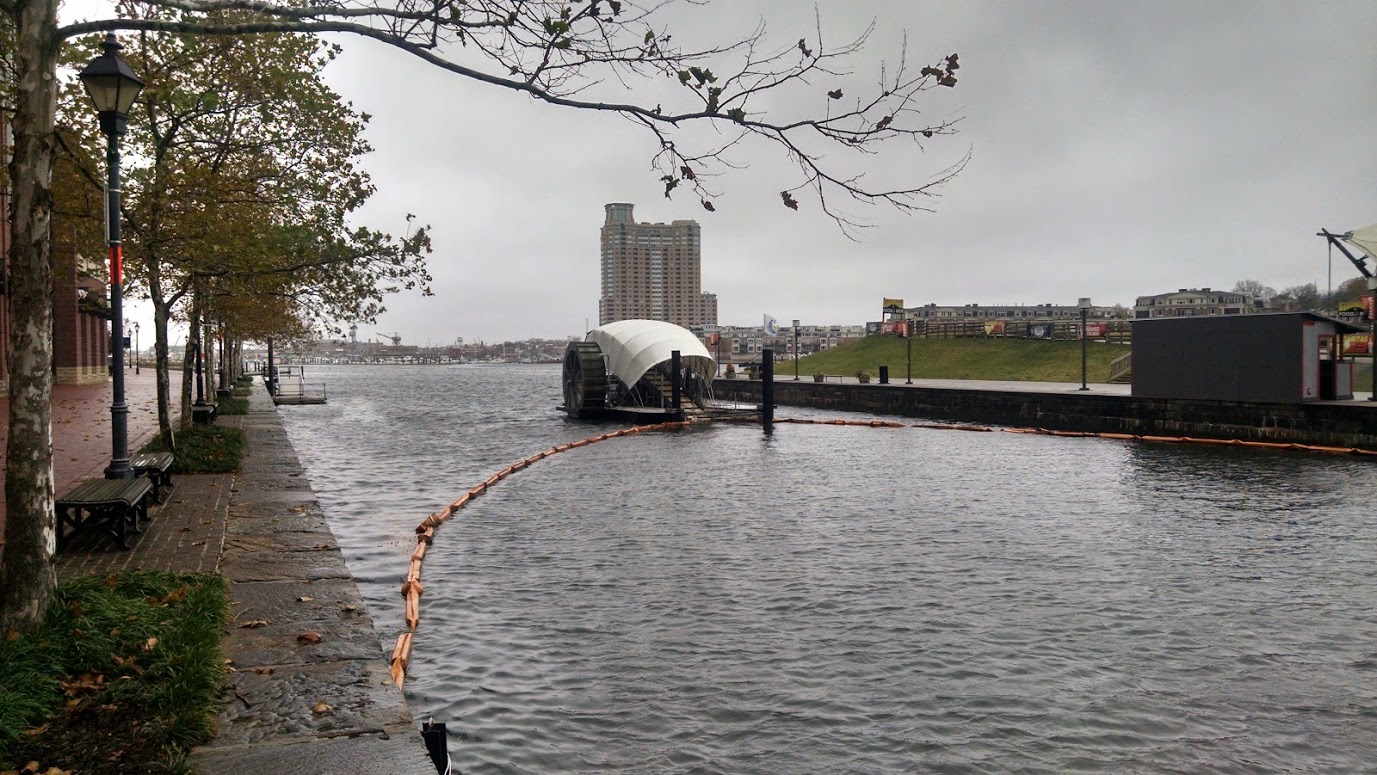
Last month, I returned to Baltimore for the National Ocean Exploration Forum. While there, I paid a visit to my old friend, Mr. Trashwheel.

The Inner Harbor Water Wheel is in its second year of operation, cleaning up the Chesapeake Bay to the tune of up to 50,000 pounds of trash per day. I have written about this cool piece of engineering and ingenuity several times.

Charm in the fall.
Charm in the fall.

So why do I keep writing and revisiting this project?

It’s working.

Read More “Why I keep returning to the Baltimore Water Wheel” »

Ocean Kickstarter of the Month: Cleaning our oceans one marina at a time.

Posted on November 5, 2015November 23, 2015 By Andrew Thaler
Conservation

Update 2: Seabin has moved to Indiegogo. Find them here.

Update: Due to issues with the platform, Seabin has suspended its Kickstarter campaign. We will update if there is a relaunch. 

Seabin Project. An automated rubbish bin that lives in the water of marinas and collects floating rubbish, oil, fuel & detergents 24/7

Seabin Project. Cleaning our oceans one marina at a time.

The accumulation of trash in our oceans is a big deal, and while there are some very good systems designed to remove garbage from local waterways, there is also a plethora of questionable projects as well. Seabin, an automated trash collector that catches floating waste, oil, fuel and detergents from marines and other confined, high traffic waterways, fits squarely in that first group. A small, shore-powered, suction driven system draws floating trash into a container, separates oil, fuel, and detergents, and returns clean seawater back to the marina.

This Mallorca-based team has been developing Seabin for several years, and, by all accounts, have poured their time and savings into validating a functional prototype. They’ve been working with marinas and other ocean-tech groups to develop a system that is simple to use and easy to service by a single operator. While the Seabin currently draws high voltage shore power, they have visions of a future alternative-energy system.

Onward to the Ocean Kickstarter criteria!

Read More “Ocean Kickstarter of the Month: Cleaning our oceans one marina at a time.” »

Three facts (and a lot of questions) about The Ocean Cleanup

Posted on June 4, 2015February 19, 2016 By Andrew Thaler
Conservation, Science

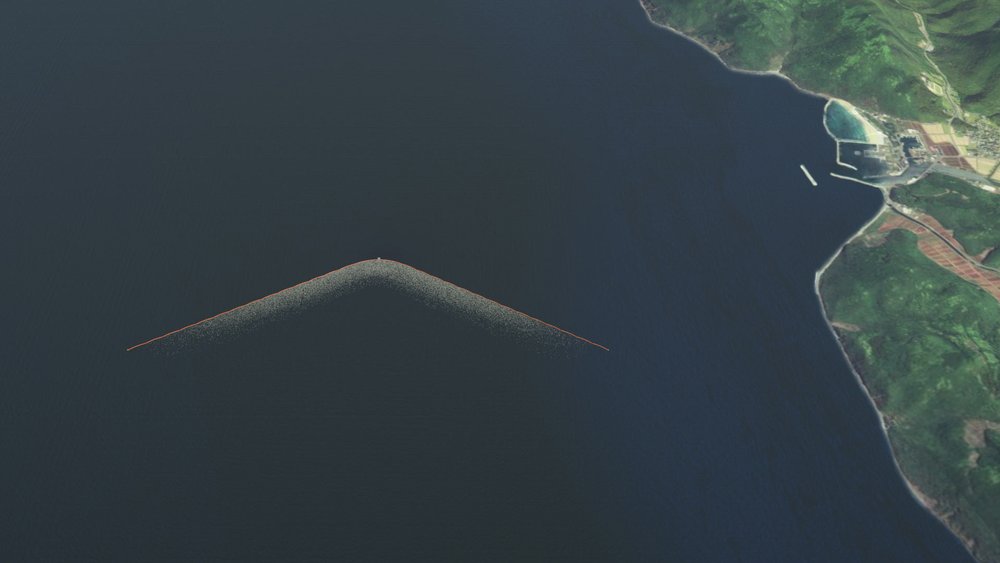
The Ocean Cleanup is back in the news, with their first test deployment happening imminently off the coast of Japan. From reviews of their current material, it seems clear that they have not taken the critical assessment of their feasibility study, graciously provided pro-bono by Drs. Martini and Goldstein, to heart. This is unfortunate. As the project has progressed, many in the ocean science and conservation community have not only grown more skeptical of its effectiveness, but are increasingly wary of the potential this project has to cause significant environmental harm. As of yet, The Ocean Cleanup has presented no formal Environmental Impact Assessment, a critical document which would provide the data necessary to properly gauge the potential for environmental harm from large-scale engineering projects.

Image produced by The Ocean Cleanup.

Goldstein and Martini’s technical review is essential reading for anyone tracking the progress of The Ocean Cleanup, but there are many additional issues that the Ocean Cleanup has not yet addressed. Here, I present three issues related to the construction and operation of The Ocean Cleanup and the necessary information that, were I in charge of regulating the high seas, would need to know before such a project could be approved.

1. The Ocean Cleanup will be the largest offshore structure ever assembled. 

When completed, The Ocean Cleanup will span 100 km of open sea with a massive array of booms and moored platforms. If successfully constructed in the proposed region, the mooring used will be the deepest ever constructed. The booms will stretch across a major oceanic current, interacting with plankton transport and pelagic migrations.

What I want to know: How will The Ocean Cleanup monitor changes in ocean-wide population structure? What community baselines have been established from which ecosystem impact can be assessed? What contingency are in place should catastrophic failure occur? Ultimately, what chronic threshold will be used to trigger a shutdown of the Ocean Cleanup, should major environmental impacts be detected as a result of standard operation, who will access to the data necessary to monitor those impacts, and who will have authority to trigger a shutdown?

Read More “Three facts (and a lot of questions) about The Ocean Cleanup” »

Science in the Fleet: The Promise of Technology as a Panacea for Human Impacts

Posted on October 7, 2013October 27, 2013 By Andrew Thaler
Popular Culture, Science

FleetCover1-REACHToday marks the release of Fleet: Wide Open, part 2 of my serial maritime science fiction adventure. With half the story revealed, we now see the roll technology plays in both the history and the day-to-day operations of the fleet. Specifically, we see three major technological advances that seem as though they would have been major solutions to the environmental problems facing the fleet, yet somehow, the world continues to fall apart.

In our world and the world of the fleet, we often hold up technological innovation as a panacea for global problems. It’s easy to look towards the next big advancement as the solution to our current woes — from alternative energy sources to groundbreaking trash removal devices — but what is often lost in the hype is the human component. Yes, technology is a necessary component of global environmental solutions. You can even look at the arc of human advancement as one long series of bootstrap-hoists — we need to utilize dirty tech to access environmentally sustainable tech (i.e. you can’t develop the ability to produce solar panels without first harnessing the energy locked in fossil fuels). But technology alone is useless without also changing human behavior. This creates a major problem, as technological innovation is often used as a tool to bypass human behavior entirely, the assumption being that it doesn’t matter what the individual does, so long as the tech is in place to mitigate it.

The horse piles of New York

Around the turn of the last century, New York City was in crisis. Horses, the primary means of transportation for people and products within the city have an unfortunate byproduct — feces, lots and lots of feces. At its peak, more than 60,000 horses were depositing upwards of 500 tones of manure every day. The horse crisis itself was the result of a major technological innovation — more efficient fertilizer based on mass produced phosphate. Where once there was a major economic incentive to collect the manure and resell it as fertilizer, now there was also no incentive. And so, the mountains of feces piled up. It got so bad that one editorial expounded that, by the 1930’s piles of horse manure would stand three stories tall and the city would be awash in an unending tide of feces.

Read More “Science in the Fleet: The Promise of Technology as a Panacea for Human Impacts” »

What does a day of discarded plastic from a molecular lab look like?

Posted on November 14, 2012 By Andrew Thaler
Science

To complement my post earlier today on the need for best practice guidelines to minimize plastic waste in a conservation genetics lab, I asked my labmates to save all of their consumables from a day of molecular benchwork. The above picture (Sharpie for scale) is the result. All told, we produced about 1/2 kilogram of plastic … Read More “What does a day of discarded plastic from a molecular lab look like?” »

Republican House leaders abandon Pelosi’s “green the capitol” initiative

Posted on April 7, 2011April 2, 2011 By David Shiffman
Conservation

While I often disagreed with former Speaker of the House Nancy Pelosi, her “green the capitol” initiative was admirable. Serving local foods in the cafeteria and providing diners with compostable utensils and cups helped make the House of Representatives a model eco-friendly workplace. Now that Republicans have retaken the house, they have decided to abandon these policies.

Read More “Republican House leaders abandon Pelosi’s “green the capitol” initiative” »

Southern Fried Scientist’s Predictions for 2011

Posted on January 1, 2011December 29, 2010 By Andrew Thaler 4 Comments on Southern Fried Scientist’s Predictions for 2011
Conservation, Science

Happy New Year to all our readers! 2010 was a big year for Southern Fried Science. We added a new blogger, moved to our own server, and launched The Gam. Along the way we’ve won a few awards, hosted the first Ocean of Pseudoscience week, cooked a whole pig, exposed some blatant greenwashing, challenged conventional … Read More “Southern Fried Scientist’s Predictions for 2011” »

The Majestic Plastic Bag

Posted on September 2, 2010 By Andrew Thaler
Conservation, Popular Culture

Weekly dose of TED – Capt. Charles Moore on the seas of plastic

Posted on June 18, 2010April 21, 2010 By Andrew Thaler 3 Comments on Weekly dose of TED – Capt. Charles Moore on the seas of plastic
Uncategorized

Posts pagination

Previous 1 … 4 5

Popular Posts

Florida angler catches (and likely kills) Endangered great hammerhead sharkFlorida angler catches (and likely kills) Endangered great hammerhead sharkFebruary 13, 2012David Shiffman
Shark of Darkness: Wrath of Submarine is a fake documentaryShark of Darkness: Wrath of Submarine is a fake documentaryAugust 10, 2014Michelle Jewell
Full video of injured shark shows numerous natural injuriesFull video of injured shark shows numerous natural injuriesMay 3, 2011David Shiffman
Severely injured great white shark found, are scientists responsible?Severely injured great white shark found, are scientists responsible?March 29, 2011David Shiffman
What Ocean Ramsey does is not shark science or conservation: some brief thoughts on "the Shark Whisperer" documentaryWhat Ocean Ramsey does is not shark science or conservation: some brief thoughts on "the Shark Whisperer" documentaryJuly 2, 2025David Shiffman
The Urgency Does Not Exist: My statement on Deep-sea Mining to the Subcommittee on Energy and Mineral ResourcesThe Urgency Does Not Exist: My statement on Deep-sea Mining to the Subcommittee on Energy and Mineral ResourcesJanuary 24, 2026Andrew Thaler
10 Tips for grad students to make the most of a scientific conference10 Tips for grad students to make the most of a scientific conferenceAugust 21, 2013David Shiffman
That's not a blobfish: Deep Sea Social Media is Flooded by AI SlopThat's not a blobfish: Deep Sea Social Media is Flooded by AI SlopDecember 19, 2025Andrew Thaler
Bipartisan Concern Expressed Over Deep Sea Mining at Congressional HearingBipartisan Concern Expressed Over Deep Sea Mining at Congressional HearingJanuary 23, 2026Angelo Villagomez
Sea Shepherd currently winning eBay "My Nonprofit" contestJuly 2, 2010David Shiffman
Subscribe to our RSS Feed for updates whenever new articles are published.

We recommend Feedly for RSS management. It's like Google Reader, except it still exists.

Southern Fried Science

  • Home
  • About SFS
  • Authors
  • Support SFS


If you enjoy Southern Fried Science, consider contributing to our Patreon campaign.

Copyright © 2026 Southern Fried Science.

Theme: Oceanly Premium by ScriptsTown