 Seb Pardo is a biologist currently doing a PhD at Simon Fraser University in Canada. He is broadly interested in the biology, ecology, and conservation of sharks and rays. At present, his research is focused on borrowing tools from evolutionary biology to predict the biology and extinction risk of poorly studied sharks and rays. By using these data-poor methods, he hopes to make the most out of currently available data to inform policy decisions relevant for the sustainable management of sharks and rays. His twitter handle is @sebpardo
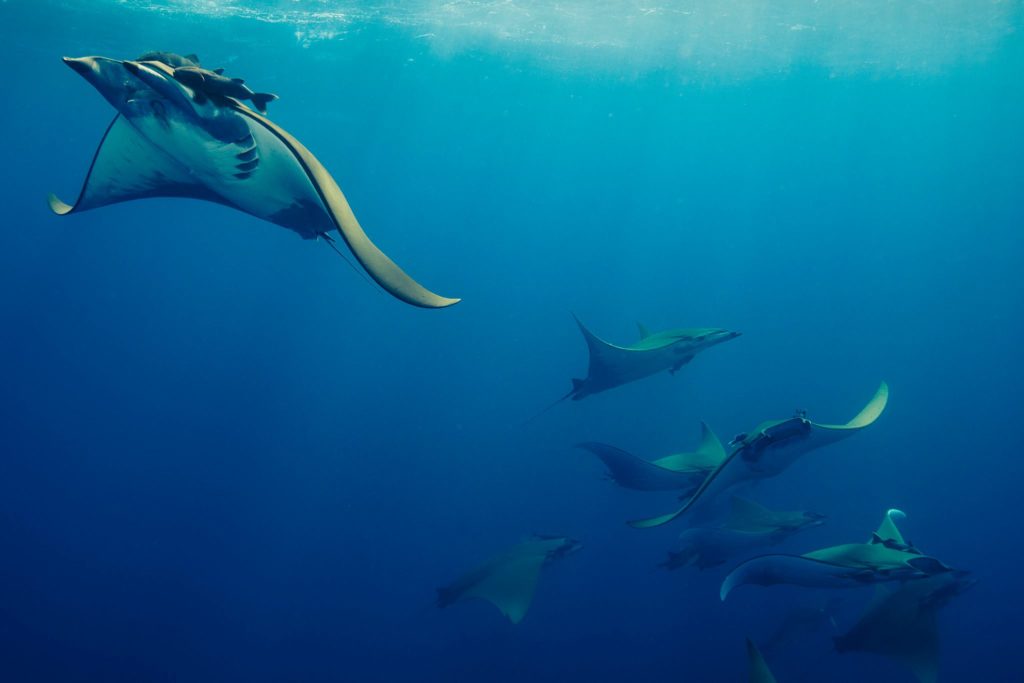
© Daniel Van Duinkerken — http://danielvandphoto.com — Instagram: daniel.van.d
Rays rarely get the same amount of attention as sharks do. Perhaps the most notable exception are the manta rays (genus Manta), which are charismatic, filter-feeding rays that inhabit warm waters throughout the world’s oceans. Their closest relatives, the devil rays (genus Mobula), are not nearly as “famous” — even though they are the only other members of the family Mobulidae. There are nine species of devil rays found throughout the world’s tropical and temperate oceans, and while they are smaller than mantas (only reach over 3 metres in width), devil and manta rays are so similar that they are sometimes confused with each other. Because devil rays garner less public interest, the are very few studies on their basic biology and ecology, hindering our ability to assess their status.
Devil and manta rays face similar threats. Both are often caught as bycatch in industrial and artisanal fishing operations, which may result in considerable mortality even after being released. On top of this, there has been an increase in the international demand for their gill plates, which are used a health tonic in Chinese medicine. This has increased targeted fishing and bycatch retention in many places around the world. However, because of the lack of information on devil rays, it is very difficult assess whether this level of catch and trade is sustainable. This is the key question we set out to answer.
Read More “The international gill plate trade: a highway to hell for devil rays?” »