Skip to content

Southern Fried Science

Over 15 years of ocean science and conservation online

  • Home
  • About SFS
  • Authors
  • Support SFS

Tag: sperm whale

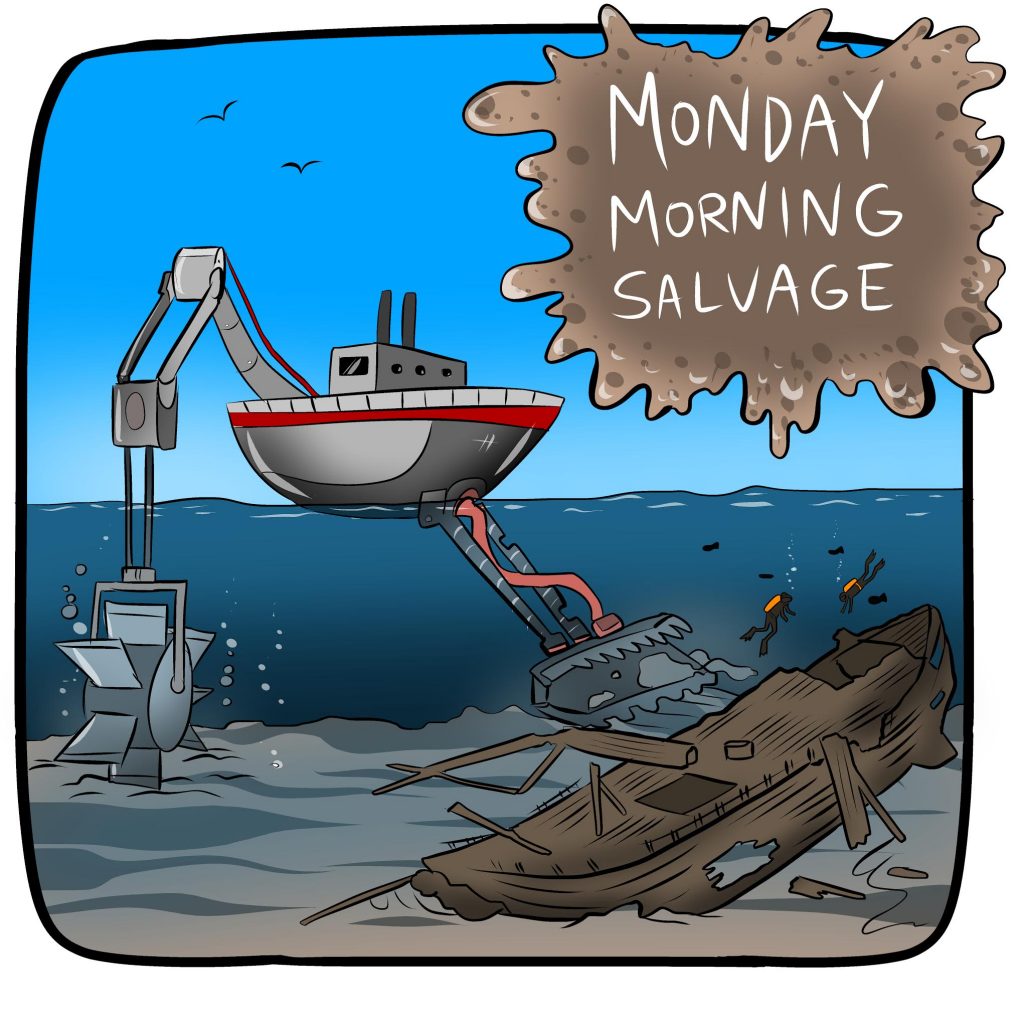
Chesapeake Requiem, the Black Friday for Climate Change, whale earwax, killing the GRE, and more! Monday Morning Salvage: November 26, 2018

Posted on November 26, 2018 By Andrew Thaler
Weekly Salvage

Foghorn (A Call to Action!)

  • Friend of the blog and submarine legend Erika Bergman is leading an expedition to Belize’s Blue Hole! Follow along as she maps this unique ocean feature: Belize Blue Hole 2018. Some dudes are tagging along, too.

Flotsam (what we’re obsessed with right now)

  • The Fourth National Climate Assessment is out and it is grim.

Climate change affects the natural, built, and social systems we rely on individually and through their connections to one another. These interconnected systems are increasingly vulnerable to cascading impacts that are often difficult to predict, threatening essential services within and beyond the Nation’s borders.

  • Meanwhile: The Trump Administration’s Attempt to Bury a New Climate Report on Black Friday Totally Backfired.
  • Government Climate Report Lays Out How Screwed We Are If We Don’t Act Now.

The Gam (conversations from the ocean-podcasting world)

  • Speak Up for the Blue on art and the ocean.
Read More “Chesapeake Requiem, the Black Friday for Climate Change, whale earwax, killing the GRE, and more! Monday Morning Salvage: November 26, 2018” »

Six ways the new Old Spice ad violates the Marine Mammal Protection Act

Posted on February 15, 2016February 16, 2016 By Andrew Thaler 9 Comments on Six ways the new Old Spice ad violates the Marine Mammal Protection Act
Education

This is art. Maybe. Probably. Old Spice has taken it upon themselves to ask the all-important question: How many different violations of the Marine Mammal Protection act can we demonstrate in a single minute and fifteen second commercial? As it turns out, quite a few.

https://www.youtube.com/watch?v=5hteeecX1oQ

The Marine Mammal Protection Act expressly forbids the “taking” of marine mammals, a “take” being defined as:

“To harass, hunt, capture, collect, or kill, or attempt to harass, hunt, capture, collect, or kill any marine mammal. This includes, without limitation, any of the following:

  • the collection of dead animals, or parts thereof
  • the restraint or detention of a marine mammal, no matter how temporary
  • tagging a marine mammal
  • the negligent or intentional operation of an aircraft or vessel
  • the doing of any other negligent or intentional act which results in disturbing or molesting a marine mammal
  • feeding or attempting to feed a marine mammal in the wild.” 

Source.

Broadly, this include any actions that may interfere with a marine mammal’s behavior or cause it undue stress. Fines can be… severe.

Read More “Six ways the new Old Spice ad violates the Marine Mammal Protection Act” »

Release the Karaqan! How does Aquaman’s latest foe stack up against real ocean giants?

Posted on January 31, 2014January 31, 2014 By Andrew Thaler 1 Comment on Release the Karaqan! How does Aquaman’s latest foe stack up against real ocean giants?
Popular Culture
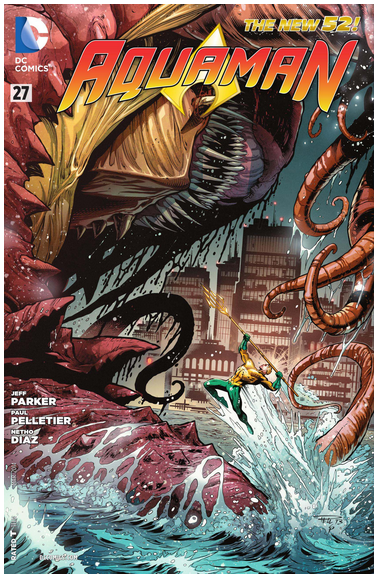
Aquaman #27. DC Comics.

It’s been more than 2 months since we last discussed the patron saint of Southern Fried Science, the one and only Aquaman. The Atlantean übermensch has a new lead writer, Jeff Parker, who’s teamed up with Aquaman veteran Paul Pelletier to produce an engaging and visually stunning story. After the epic conclusion to Throne of Atlantis, Aquaman is off on an entirely new adventure. Unfortunately, this new quest puts our hero in the path of a gargantuan guardian of ancient Atlantis, the Karaqan!

The Karaqan is big, but just how big is it? How does the Karaqan stack up against living sea creatures? Could an arthropod ever get as big as the Karaqan? Most important, if Aquaman does successfully slay the Karaqan, just how much Old Bay would we need to steam it?

Read More “Release the Karaqan! How does Aquaman’s latest foe stack up against real ocean giants?” »

The Sex Lives of Spoonworms: 10 marine animals with parasitic, dwarf, and otherwise reduced males

Posted on May 31, 2013September 19, 2013 By Andrew Thaler 8 Comments on The Sex Lives of Spoonworms: 10 marine animals with parasitic, dwarf, and otherwise reduced males
Science

Earlier this week, Fox News commentator and all-around terrific guy* Erick Erickson, while discussing a recent Pew Study that revealed that women were the sole breadwinners in 40% of US households that contain children, had this to say:

“I’m so used to liberals telling conservatives that they’re anti-science. But liberals who defend this and say it is not a bad thing are very anti-science. When you look at biology—when you look at the natural world—the roles of a male and a female in society and in other animals, the male typically is the dominant role. The female, it’s not antithesis, or it’s not competing, it’s a complementary role.”

source

headshot-thalerSMALL

I’m not sure where Erickson got his science education from, but it’s pretty clear he should have spent a little more time shopping around on the free market, because he sure is wrong. How wrong? I managed to assemble this list of 10 marine species with dwarf, parasitic, or otherwise reduced males (including an entire female-only class) while waiting for my toast**. So have a seat and let me show you how much weirder and more wonderful the world is than Erickson’s Disney-esque misinterpretation of biology.

1. Anglerfish

The deep-sea Anglerfish is among the most common examples of parasitic males in the marine world. Anglerfish comprise a variety of taxa in the order Lophiiformes. Almost all (females) possess a specialized appendage that acts as a lure to attract unwary prey. Life in the deep sea is rough–even though it is the largest and most diverse ecosystem on Earth, biomass is fairly low–so finding a mate is a struggle for these slow swimming fishes. The solution: carry your partner with you.

Male anglerfish are tiny, often less than 5% the size of the female, but they possess powerful olfactory receptors, allowing them to seek out females. Once a mate is located, the male anglerfish latches on to her abdomen, fuses his circulatory system with hers, and is then slowly digested until there’s nothing left but a sac of gonads surrounded by basic life-supporting tissues. Female anglerfish are not monogamous, either. At any given time she could be covered by a half-dozen parasitic males. Kinky.

Read More “The Sex Lives of Spoonworms: 10 marine animals with parasitic, dwarf, and otherwise reduced males” »

A brief example of asymmetry in Sperm Whales

Posted on March 23, 2011 By Andrew Thaler 1 Comment on A brief example of asymmetry in Sperm Whales
Science

In the lecture we just posted, Keith Rittmaster mentioned that Sperm Whales are highly asymmetric. Below is just one examples of this dramatic asymmetry, the size difference between the left and right nostrils in the cranium.

Read More “A brief example of asymmetry in Sperm Whales” »

Bonehenge: The afterlife of a Sperm Whale

Posted on March 23, 2011 By Andrew Thaler
Science

Keith Rittmaster discusses Bonehenge. For more on Bonehenge, check out http://bonehenge.org/ Read our previous posts about the project: Visiting Bonehenge and Bonehenge – Community action in science outreach

Finding Melville’s Whale – Cetology (Chapter 32)

Posted on November 16, 2010November 6, 2010 By Andrew Thaler 10 Comments on Finding Melville’s Whale – Cetology (Chapter 32)
Uncategorized

Chapter 32 of Herman Melville’s classic – Moby Dick. Read along with us and discuss this chapter or the book as a whole in the comments. Visit this page for the complete collection to date: Finding Melville’s Whale. Cetology Let this be the book of the whale, chronicle of tortured naturalists. For who could fathom those … Read More “Finding Melville’s Whale – Cetology (Chapter 32)” »

Visiting Bonehenge

Posted on July 8, 2010June 16, 2010 By Andrew Thaler 2 Comments on Visiting Bonehenge
Science

The following is a repost from the old Southern Fried Science WordPress blog. The original can be found here.

Keith Rittmaster presenting spermaceti oil to my Southern Fried Students

I finally had the chance to visit the the legendary Bonehenge. For those of you who aren’t longtime followers of this blog, Bonehenge is Keith Rittmaster’s vision to rearticulate a Sperm Whale skeleton and put it on display at the North Carolina Maritime Museum. We blogged about Bonehenge last year, and raised $200 for the project this summer.

Read More “Visiting Bonehenge” »

Bonehenge – Community action in science outreach

Posted on July 5, 2010June 15, 2010 By Andrew Thaler
Science

The following is a repost from the old Southern Fried Science WordPress blog. The original can be found here.

spermwhalelyd501-135

If a 33.5 foot Sperm Whale (Physeter macrocephalus) stranded on your beach, what would you do with it? Leave it to rot? Drag it out to sea? Blow it up? Keith Rittmaster of the North Carolina Maritime Museum decided to do one better.

This blog has never been known for heaping praise on marine mammals, but these creatures are the exception. Sperm whales are extremely strange animals. There are some fantastic online resources available that do a great job covering basic sperm whale biology, so I’d like to skip the intro and talk about some sperm whale features I find fascinating.

Read More “Bonehenge – Community action in science outreach” »

Popular Posts

Shark scientists want their research to help save threatened species, but don’t know how. Our new paper can help.Shark scientists want their research to help save threatened species, but don’t know how. Our new paper can help.December 1, 2025David Shiffman
Norway and Cook Islands put their deep-sea mining plans on pause.Norway and Cook Islands put their deep-sea mining plans on pause.December 3, 2025Andrew Thaler
What Ocean Ramsey does is not shark science or conservation: some brief thoughts on "the Shark Whisperer" documentaryWhat Ocean Ramsey does is not shark science or conservation: some brief thoughts on "the Shark Whisperer" documentaryJuly 2, 2025David Shiffman
The Trouble with Teacup PigsThe Trouble with Teacup PigsOctober 14, 2012Andrew Thaler
What we know we don't know: impacts of deep-sea mining on whales, dolphins, sharks, turtles, and other migratory species.What we know we don't know: impacts of deep-sea mining on whales, dolphins, sharks, turtles, and other migratory species.November 20, 2025Andrew Thaler
2025: My year in writing, public speaking, and media interviews2025: My year in writing, public speaking, and media interviewsDecember 3, 2025David Shiffman
Urea and Shark OsmoregulationUrea and Shark OsmoregulationNovember 15, 2010David Shiffman
Shark of Darkness: Wrath of Submarine is a fake documentaryShark of Darkness: Wrath of Submarine is a fake documentaryAugust 10, 2014Michelle Jewell
How tiny satellites are tracking marine wildlifeDecember 1, 2025Andrew Thaler
Build a dirt cheap, tough-as-nails field computer in a Pelican caseBuild a dirt cheap, tough-as-nails field computer in a Pelican caseJuly 21, 2015Andrew Thaler
Subscribe to our RSS Feed for updates whenever new articles are published.

We recommend Feedly for RSS management. It's like Google Reader, except it still exists.

Southern Fried Science

  • Home
  • About SFS
  • Authors
  • Support SFS


If you enjoy Southern Fried Science, consider contributing to our Patreon campaign.

Copyright © 2025 Southern Fried Science.

Theme: Oceanly Premium by ScriptsTown