
In 2013, Kersey Sturdivant and I embarked upon a quixotic quest to create an open-source CTD — the core tool of all oceanographic research that measures the baseline parameters of salinity, temperature, and depth. We weren’t engineers; neither of us had any formal training in electronics or sensing. And, full confession, we weren’t (and still aren’t) even oceanographers! What we were were post-doc marine ecologists working with tight budgets who saw a desperate need among our peers and colleagues for low-cost alternatives to insurmountably expensive equipment. And we had ties to the growing Maker and DIY electronics movements: Kersey through his work developing Wormcam and me through my involvement with OpenROV.
We had no idea what we were getting ourselves into.
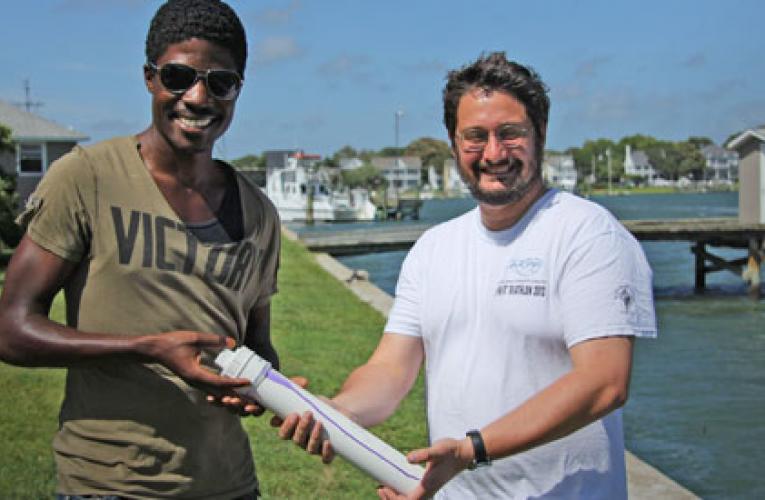
Seven years and five iterations later, we are releasing the long anticipated OpenCTD rev 2 as well as the comprehensive Construction and Operation Manual! OpenCTD rev 2 builds on over half a decade of iteration and testing, consultation with oceanographers, engineers, developers, and makers around the world, extensive coastal and sea trials, and a series of workshops designed to test and validate the assembly process.
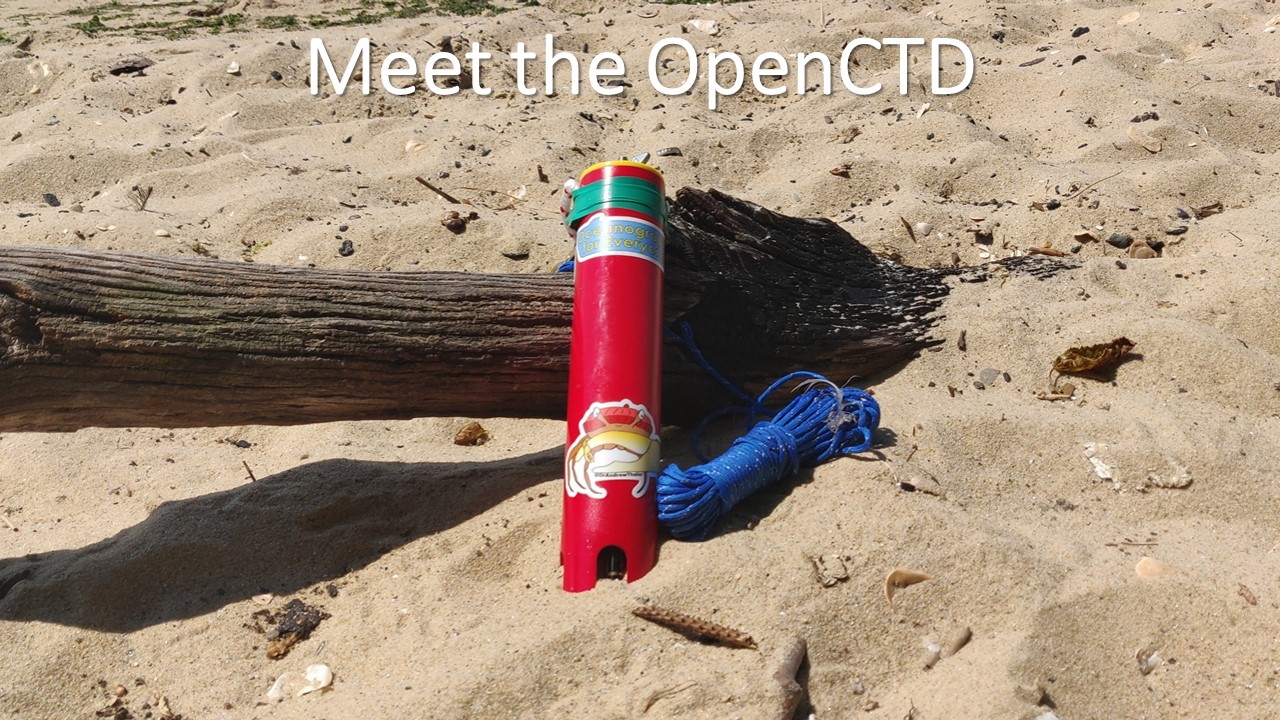
The OpenCTD can be built in two days by someone with no electronics experience using parts available from hardware stores and major online retailers and electronics suppliers as well as a few 3D-printed components for about $300. It is rated to depths of 140 meters, providing access to the majority of the world’s continental shelf for a fraction the cost of a traditional research cruise. It can be deployed by hand from any vessel. Data is stored as tab delimited text files that can be accessed by almost all major analytical software, from R to Excel.
And rev 2 has an external magnetic switch! Which means you no longer have to open the housing to turn the device on and off.
Everything can be found in the OpenCTD GitHub Repository. A citable pre-print of the OpenCTD Construction and Operation Manual has been uploaded to MarXiv if you use it in your research.
Our goal has always been to provide a platform for other ocean stakeholders to build upon and expand. While the last revisions of the OpenCTD software pushed the limits of the tiny Arduino computer, the new build has a massive amount of headroom for adding custom software to support new sensors, enhanced onboard analytics, incorporate new features, and expanding its capabilities in novel and exciting ways. We release the software open-source with no restrictions on use, modification, or commercialization.
And of course, we’re not even close to being finished. The OpenCTD rev 2 represents the most minimal stable iteration of what the platform can become. It’s a foundation with unlimited potential for expansion. We focused on simplicity, reliability, and accessibility to provide a core device that you can trust, that teaches the basics of DIY instrumentation development, and that allows for unrestricted adaptation to suit your needs.
This year we’re working on establishing 501(c)3 non-profit status for Oceanography for Everyone so that we can continue growing and supporting the community working on OpenCTD as well as our other tools. We’re working on a module that will increase the OpenCTD’s depth rating to 300 meters. We want to add Bluetooth for data access, charging options for long-term deployments, faster, more accurate temperature probes, and, as always, more sensors. Russell may finally get his bucket speaker communication module.
I’ve also made it my personal mission to build and deliver 100 OpenCTDs to individuals, groups, and organizations around the world. If you want to support that effort, subscribe to my Patreon campaign (which also helps keep this site running). There’s even a reward tier if you want me to build you an OpenCTD.
We started this project with a very simple mission: The Ocean belongs to Everyone and everyone should be able to access the tools to study it. With the OpenCTD rev 2, for the first time I finally feel like we’re liking up to that ideal.
There are hundreds of people to thank, but a huge thanks goes out to David Lang and Eric Stackpole at Sofar Ocean, Jake Levenson, Kim Martini, Amy Freitag, Ian Black, our co-developer Russell Neches, and all the students who have participated in the last year of construction workshops, including David Shiffman (who graciously volunteered to test our claim that “someone with no electronics experience whatsoever could build one of these in 2 days”).
This is fantastic, Andrew! Thanks again for keeping up with this.