Skip to content

Southern Fried Science

Over 15 years of ocean science and conservation online

  • Home
  • About SFS
  • Authors
  • Support SFS
Seagull swallowed by tuna

The tuna that ate a seagull, and other bird swallowing marine megafauna

Posted on April 26, 2016April 28, 2016 By Michelle Jewell 2 Comments on The tuna that ate a seagull, and other bird swallowing marine megafauna
Uncategorized

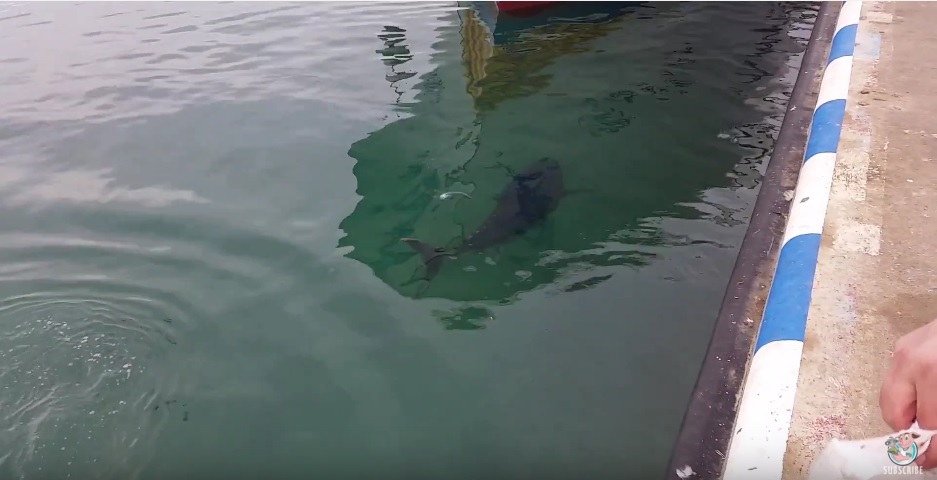
Once again, the internet is in a fervour over a rarely documented, but pretty common, animal interaction.  The video below shows fishermen at a pier in L’Escala, Spain tossing small fish to a tuna.  A nearby seagull went for the same fish and was ingested by the tuna, much to everyone’s surprise.  Naturally, the tuna spat out the seagull, luckily uninjured, and it flew away to dive another day:

Seabirds are often ingested by marine megafauna since both groups forage in the same areas, often on the exact same prey.  This video was an artificial overlap of foraging animals created by the people tossing fish from the pier, but in natural settings where two animals feed on the same prey and one of those animals is considerably larger than the other, the smaller animal faces a pretty high risk of being swallowed.

This is especially true for lunge-feeding whales that take in large mouthfuls of fish, water, and anything else at the surface.  Haynes et al. identified three Glaucous-winged gulls in the fecal remains of foraging humpback whales in Glacier Bay, Alaska.  The birds were mostly intact, suggesting that humpback whales aren’t capable of digesting birds well (we’ve all been there).

All of the examples above are accidental ingestion, but some marine animals deliberately target birds for food, too.  Tiger sharks seasonally aggregate at the Hawaiian Islands of French Frigate Shoals to forage on albatross fledglings.  Fledglings are fat, slow, and naïve, making them easy and profitable prey.  This foraging strategy is common among sharks and is the same reason white sharks target seal colonies during South African winters.

The alien giant catfish of the river Tarn in southwestern France is an aquatic example.  They have also acquired a taste for feathered food and learned to ambush aloof pigeons, with a success rate of 28%:

https://www.youtube.com/watch?v=pwlJO789k-A

Although not mega- megafauna, the Hilaire’s Side-necked turtles of Brazil have been documented consuming pigeons in a scene that honestly rivals Jaws.  Who’s slow now? (Edit: Thanks to @mattkeevil for the reference!)

Marine and aquatic animals do indeed eat birds, accidentally and deliberately.  Exactly how regularly this happens is unknown, but this antipodean pairing is essentially the chocolate shake and fries of the natural world.  The bottom line is, if you are in the same space where something bigger than you is foraging, you might get swallowed.  Birds, and humans, alike:

Share this:

  • Click to share on Bluesky (Opens in new window) Bluesky
  • Click to share on Facebook (Opens in new window) Facebook
  • Click to share on Reddit (Opens in new window) Reddit
  • Click to share on Threads (Opens in new window) Threads
  • Click to share on WhatsApp (Opens in new window) WhatsApp
  • Click to share on Mastodon (Opens in new window) Mastodon

Related

Tags: animal videos tuna eats pigeon

Post navigation

❮ Previous Post: The Science of Aquaman: Understanding Dead Water
Next Post: Big ideas and little robots: Using the OpenROV in interdisciplinary STEM projects ❯

2 thoughts on “The tuna that ate a seagull, and other bird swallowing marine megafauna”

  1. albertonykus says:
    April 26, 2016 at 11:09 am

    Perhaps even more remarkable are records of goosefish and octopuses preying on seabirds. There are also records of sea anemones eating birds, though those may have been scavenged.

  2. Michelle Jewell says:
    April 28, 2016 at 5:50 am

    Yes! I have also seen waders become trapped and drowned by large cockles. Although the birds obviously are not consumed by the cockles, it’s definite a case of kill or be killed!

Comments are closed.

Popular Posts

Florida angler catches (and likely kills) Endangered great hammerhead sharkFlorida angler catches (and likely kills) Endangered great hammerhead sharkFebruary 13, 2012David Shiffman
Shark of Darkness: Wrath of Submarine is a fake documentaryShark of Darkness: Wrath of Submarine is a fake documentaryAugust 10, 2014Michelle Jewell
Full video of injured shark shows numerous natural injuriesFull video of injured shark shows numerous natural injuriesMay 3, 2011David Shiffman
Severely injured great white shark found, are scientists responsible?Severely injured great white shark found, are scientists responsible?March 29, 2011David Shiffman
What Ocean Ramsey does is not shark science or conservation: some brief thoughts on "the Shark Whisperer" documentaryWhat Ocean Ramsey does is not shark science or conservation: some brief thoughts on "the Shark Whisperer" documentaryJuly 2, 2025David Shiffman
The Urgency Does Not Exist: My statement on Deep-sea Mining to the Subcommittee on Energy and Mineral ResourcesThe Urgency Does Not Exist: My statement on Deep-sea Mining to the Subcommittee on Energy and Mineral ResourcesJanuary 24, 2026Andrew Thaler
I'm getting married! Want to honor us? Here are some great charities you can donate to.I'm getting married! Want to honor us? Here are some great charities you can donate to.January 23, 2026David Shiffman
Bipartisan Concern Expressed Over Deep Sea Mining at Congressional HearingBipartisan Concern Expressed Over Deep Sea Mining at Congressional HearingJanuary 23, 2026Angelo Villagomez
10 Tips for grad students to make the most of a scientific conference10 Tips for grad students to make the most of a scientific conferenceAugust 21, 2013David Shiffman
At least 74 practicing shark researchers: How a silly thing I said online raised thousands for conservationAt least 74 practicing shark researchers: How a silly thing I said online raised thousands for conservationFebruary 26, 2025David Shiffman
Subscribe to our RSS Feed for updates whenever new articles are published.

We recommend Feedly for RSS management. It's like Google Reader, except it still exists.

Southern Fried Science

  • Home
  • About SFS
  • Authors
  • Support SFS


If you enjoy Southern Fried Science, consider contributing to our Patreon campaign.

Copyright © 2026 Southern Fried Science.

Theme: Oceanly Premium by ScriptsTown