Skip to content

Southern Fried Science

Over 15 years of ocean science and conservation online

  • Home
  • About SFS
  • Authors
  • Support SFS

We need to know more about microplastics in the deep sea.

Posted on March 28, 2023March 28, 2023 By Andrew Thaler
Science
Establishing a baseline for microplastic accumulation in deep-sea animals using an historical sample archive: https://experiment.com/projects/establishing-a-baseline-for-microplastic-accumulation-in-deep-sea-animals-using-an-historical-sample-archive

Most of the plastic that enters our oceans in unaccounted for. While large, charismatic macroplastics float on or just beneath the surface, making for dramatic scenes of vast swaths of garbage littering the sea, the bulk of the plastic in the ocean exists as tiny particles of degraded plastics that sink to the bottom, enter food chains, and accumulate not just in the ecosystem, but within the tissue of marine animals.

The deep sea is a hotspot for microplastic accumulation. While we are just beginning to understand how microplastics accumulate in deep ocean sediments, precious few studies have investigated microplastic accumulation within organisms at vents and seeps.

  • Microplastic sink that cannot be ignored in chemosynthetic organisms

Microplastics are now ubiquitous in the world’s oceans. Though they have been found in the tissues of shallow water species and isolated from deep-sea sediment, only a few studies have investigated the extent to which microplastics have accumulated in the tissues of deep sea macrofauna, especially those associated with hydrothermal vents and methane seeps. These ecosystems are not only deep, dark, and diverse, but rely on chemosynthesis for primary production.

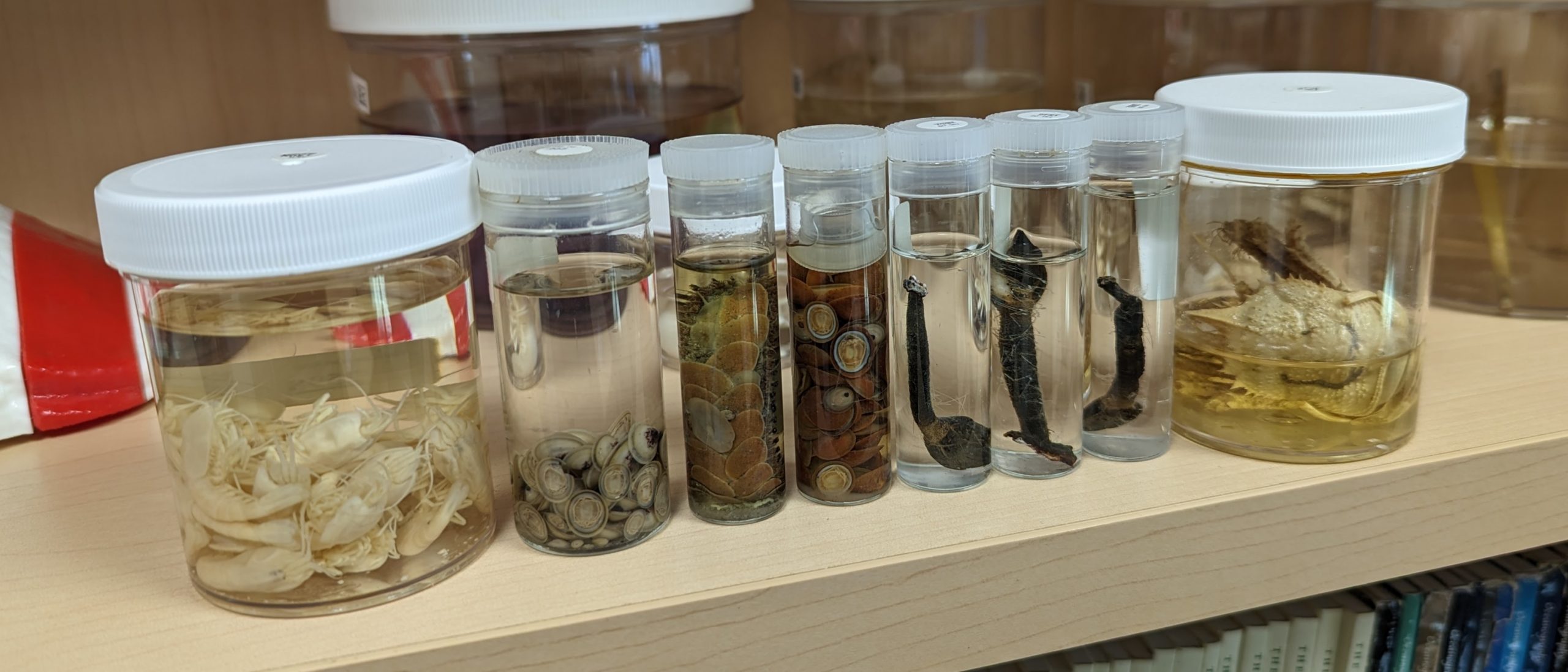
If you’ve been following along with my adventures across social media, you may have seen that I recently inherited a massive collection of biological specimens from the deep sea. In addition to all the samples from my PhD work, I now have an archive that covers hydrothermal vents and methane seeps around the world collected over the last 20 years. This unique archive of biological samples provides a once-in-a-generation opportunity to establish a baseline for microplastic accumulation in hydrothermal vent and methane seep species.

So that’s what I’m doing. But! I need your help.

Today, I launched Establishing a baseline for microplastic accumulation in deep-sea animals using an historical sample archive on Experiment, a crowdfunding platform for scientific research.

My objective is to establish a baseline for microplastic accumulation in deep-sea macrofauna from hydrothermal vents and methane seeps. This baseline will allow us to address key questions about the accumulation of microplastics in the deep sea.

Do microplastics accumulate in species that derive their food from the chemical energy in the plume of a hydrothermal vent? Does microplastic accumulation differ among non-chemosynthetic species associated with vents and seeps? Do patterns of microplastic accumulation vary among distinct deep-sea ecosystems and the general abyssal plane?

Consider heading over to Experiment and contributing a few dollars towards helping us better understand how human impacts are impacting some of the rarest and least understood ecosystems on the planet.

Over the next few weeks, I’ll be sharing with you some of the weird and wonderful creatures that are part of this collection, including, of course, the iconic Giant Deep-sea Isopod (don’t worry, this particular specimen is staying on display).
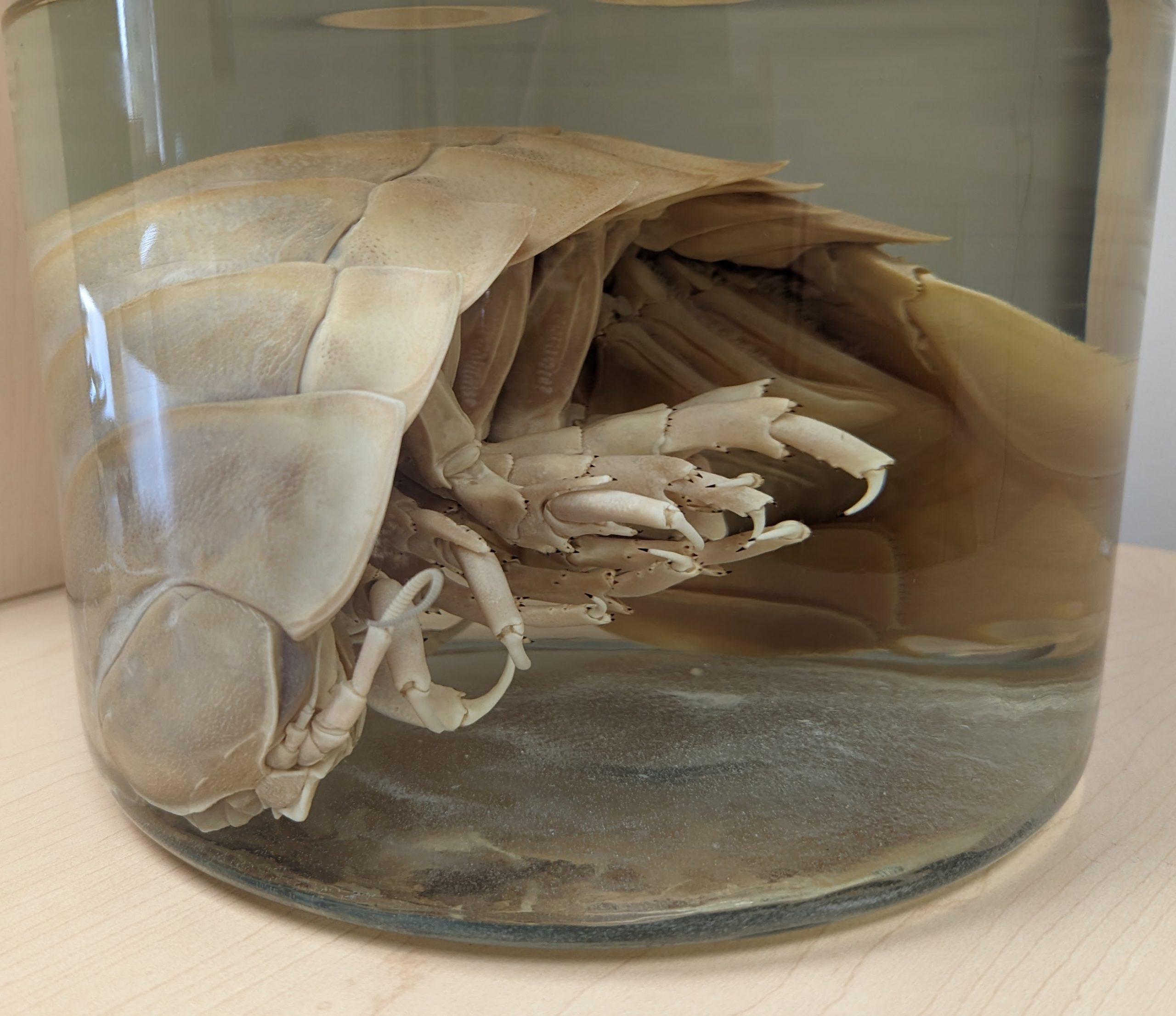
Giant Deep-sea Isopod, Bathynomus giganteus

Hey, Andrew, don’t you have a Patreon? Yes, yes I do. And I realize it’s super confusing to have two different fundraising platforms running simultaneously. Patreon supports this website, OpenCTD development, and my other weird projects. Experiment will be used to fund this microplastics study, exclusively. And, just to make things more confusing, everything I raise from Patreon this month will also go toward the Experiment microplastic project.

Share this:

  • Share on Bluesky (Opens in new window) Bluesky
  • Share on Facebook (Opens in new window) Facebook
  • Share on Reddit (Opens in new window) Reddit
  • Share on Threads (Opens in new window) Threads
  • Share on WhatsApp (Opens in new window) WhatsApp
  • Share on Mastodon (Opens in new window) Mastodon

Related

Tags: hydrothermal vents methane seep microplastic pollution microplastics plastics

Post navigation

❮ Previous Post: A wild week for the future of the ocean
Next Post: No, the deep-sea mining debate is not “gone” ❯

You may also like

Science
Chemistry of the Great Big Blue: Plastics
August 17, 2010
Uncategorized
Snot Bots for whale health, critical dolphins, lobster considerations, and more! Monday Morning Salvage: January 15, 2018.
January 15, 2018
Conservation
Updates from the Deep: New and Noteworthy in Hydrothermal Vent Research
January 10, 2012
Conservation
Interridge code of conduct for resposible research at hydrothermal vents
July 29, 2010

Popular Posts

How close did the world's first deep-sea mining come to the dredging the world's largest cold-water coral reef?How close did the world's first deep-sea mining come to the dredging the world's largest cold-water coral reef?March 17, 2026Andrew Thaler
At least 74 practicing shark researchers: How a silly thing I said online raised thousands for conservationAt least 74 practicing shark researchers: How a silly thing I said online raised thousands for conservationFebruary 26, 2025David Shiffman
What Ocean Ramsey does is not shark science or conservation: some brief thoughts on "the Shark Whisperer" documentaryWhat Ocean Ramsey does is not shark science or conservation: some brief thoughts on "the Shark Whisperer" documentaryJuly 2, 2025David Shiffman
That's not a blobfish: Deep Sea Social Media is Flooded by AI SlopThat's not a blobfish: Deep Sea Social Media is Flooded by AI SlopDecember 19, 2025Andrew Thaler
Urea and Shark OsmoregulationUrea and Shark OsmoregulationNovember 15, 2010David Shiffman
Here's what I teach my students about finding jobs in marine biology and conservationHere's what I teach my students about finding jobs in marine biology and conservationApril 10, 2024David Shiffman
Here are some ocean conservation technologies that I'm excited aboutHere are some ocean conservation technologies that I'm excited aboutFebruary 19, 2026David Shiffman
I turned my woodshop into a personal solar farm.I turned my woodshop into a personal solar farm.June 21, 2021Andrew Thaler
Alberta, Canada is the proud owner of the largest man-made pyramid on the planetAlberta, Canada is the proud owner of the largest man-made pyramid on the planetOctober 16, 2012Andrew Thaler
Shark of Darkness: Wrath of Submarine is a fake documentaryShark of Darkness: Wrath of Submarine is a fake documentaryAugust 10, 2014Michelle Jewell
Subscribe to our RSS Feed for updates whenever new articles are published.

We recommend Feedly for RSS management. It's like Google Reader, except it still exists.

Southern Fried Science

  • Home
  • About SFS
  • Authors
  • Support SFS


If you enjoy Southern Fried Science, consider contributing to our Patreon campaign.

Copyright © 2026 Southern Fried Science.

Theme: Oceanly Premium by ScriptsTown