Skip to content

Southern Fried Science

Over 15 years of ocean science and conservation online

  • Home
  • About SFS
  • Authors
  • Support SFS

What we’ve missed in the Abyss: Mining 40 years of cruise reports for biodiversity and research effort data from deep-sea hydrothermal vents.

Posted on August 6, 2019August 6, 2019 By Andrew Thaler
Science

“When the RV Knorr set sail for the Galapagos Rift in 1977, the geologists aboard eagerly anticipated observing a deep-sea hydrothermal vent field for the first time. What they did not expect to find was life—abundant and unlike anything ever seen before. A series of dives aboard the HOV Alvin during that expedition revealed not only deep-sea hydrothermal vents but fields of clams and the towering, bright red tubeworms that would become icons of the deep sea. So unexpected was the discovery of these vibrant ecosystems that the ship carried no biological preservatives. The first specimens from the vent field that would soon be named “Garden of Eden” were fixed in vodka from the scientists’ private reserves.”

Thaler and Amon 2019

In the forty years since that first discovery, hundreds of research expedition ventured into the deep oceans to study and understand the ecology of deep-sea hydrothermal vents. In doing so, they discovered thousands of new species, unraveled the secrets of chemosynthesis, and fundamentally altered our understanding of what it means to be alive on this planet. Now, as deep-sea mining crawls slowly towards production, we must transform those discoveries into conservation and management principles to safeguard the diversity and resilience of life in the deep sea.
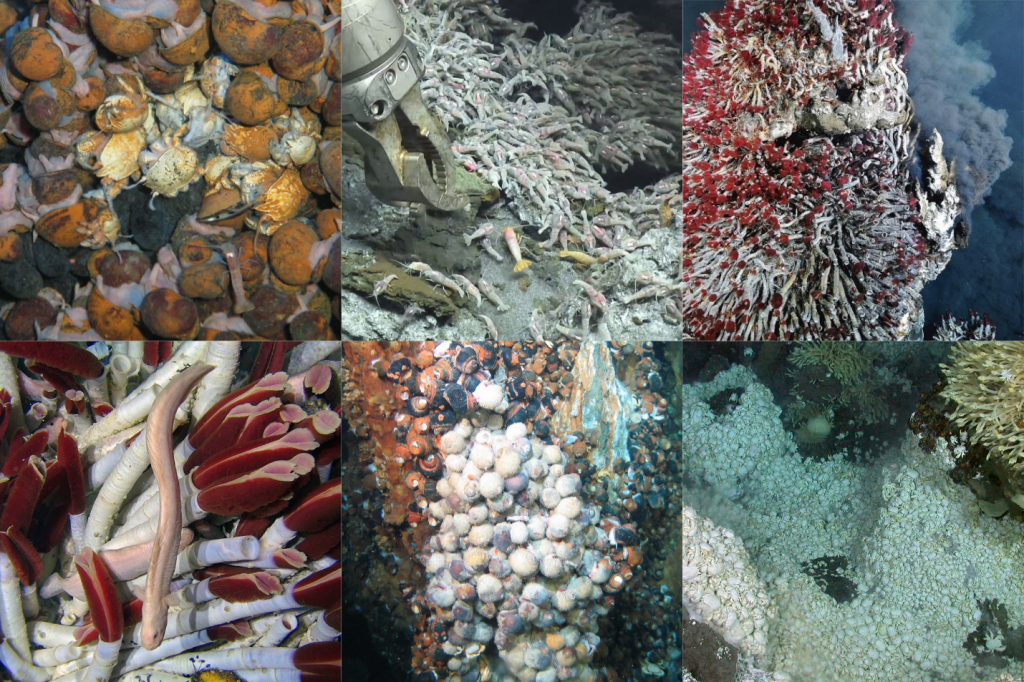
Biodiversity of hydrothermal vents from around the world. Top: Indian Ocean, Mid-Atlantic Ridge, Juan de Fuca Ridge. Bottom: East Pacific Rise, Southwest Pacific, Southern Ocean. Photo credits (top left to bottom right): University of Southampton; Woods Hole Oceanographic Institute; Ocean Networks Canada; Woods Hole Oceanographic Institute; Nautilus Minerals; University of Southampton.

Though research at hydrothermal vents looms large in the disciplines of deep-sea science, relative to almost any terrestrial system, they are practically unexplored. Over the last 2 years, Drs. Andrew Thaler and Diva Amon have poured through every available cruise report that made a biological observation at the deep-sea hydrothermal vent to assess how disproportionate research effort shapes or perception of hydrothermal vent ecosystems and impacts how we make management decisions in the wake of a new form of anthropogenic disturbance.

In a paper published today, they report on the results of this multi-year endeavor examining the history of deep-ocean exploration from the primary documents produced from each voyage. “A few major regions are disproportionately represented in the expedition data,” says Dr. Thaler, “Places like the Mid-Atlantic Ridge and East Pacific Rise have received the sea lion’s share of research effort, which places like the Southern and Indian Oceans are practically unexplored. When we go to make environmental assessments of the impact of mining on hydrothermal vents, we’re drawing on data from very different ecosystems. It’s like trying to understand the impacts of logging in a tropical rainforest, but only using forestry data from the Pacific Northwest.”
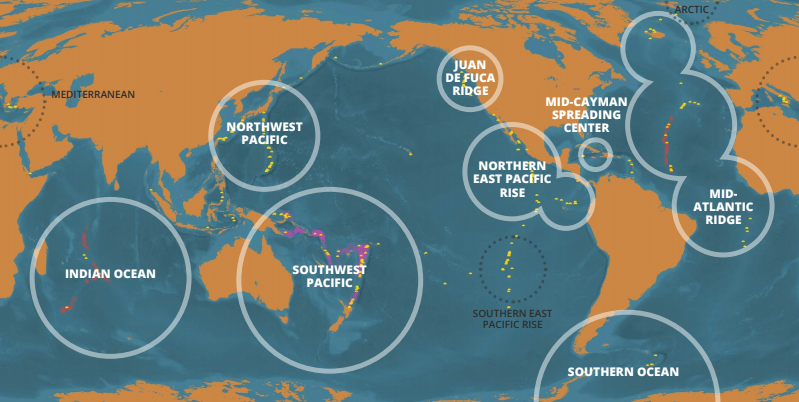
They examined 262 cruise reports covering the global extent of hydrothermal vent ecosystems and compiled the first global assessment of vent biodiversity normalized against research effort. In doing so, they revealed critical exploration priorities, particularly the Indian Ocean, which is both relatively unexplored and currently threatened by deep-sea mining (recently, the scaly-foot snail received an IUCN Red Listing for potential threats posed by deep-sea mining of hydrothermal vents).
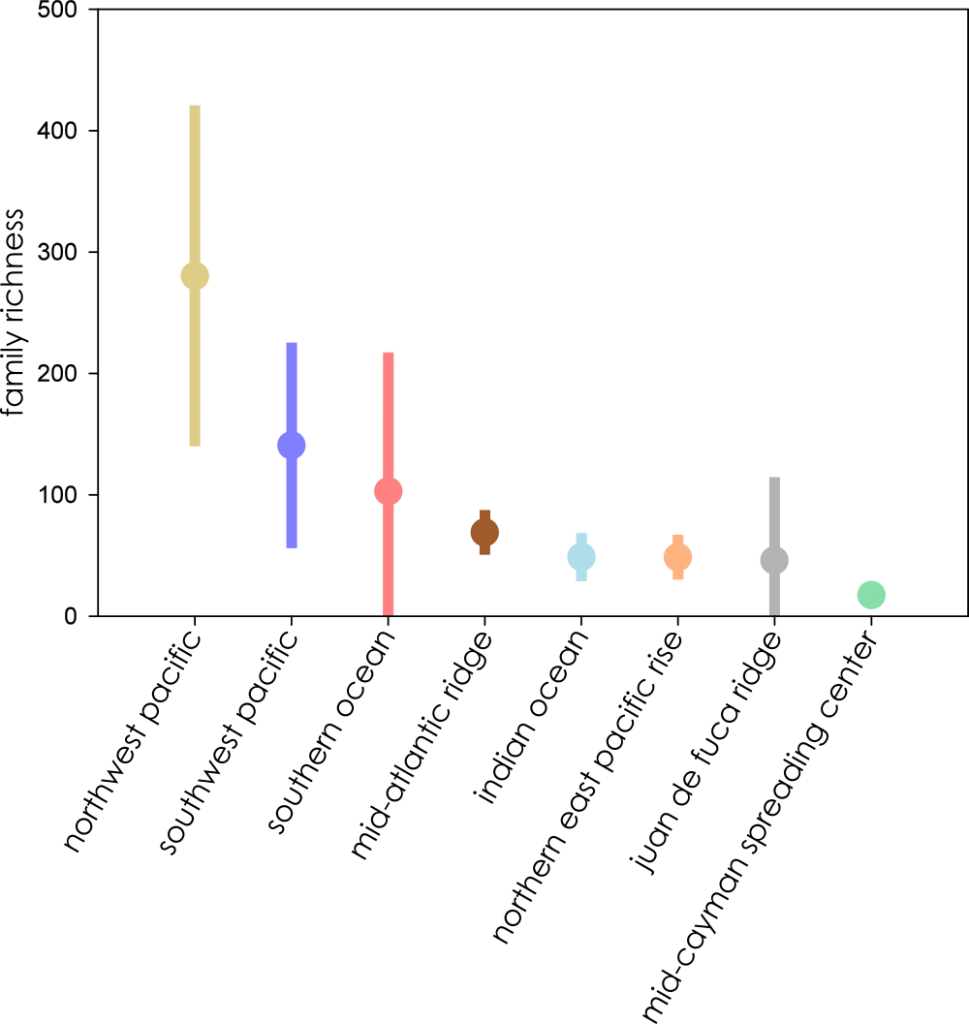
Family richness of all eight biogeographic provinces ranked by mean richness from highest (left) to lowest) where all extrapolations reached asymptote. Bars represent extent of 95% confidence intervals.

In reviewing these cruise reports, Thaler and Amon also made some interesting observations about the history of deep-sea exploration. On two separate occasions, researchers almost discovered hydrothermal vent a decade earlier than the 1977 Knorr cruise. In one case, an expedition to the Indian Ocean Triple Junction was taking chemical measurements almost directly on top of a known vent field, but they had to abort operations and return to port when a crewmember became ill. On another expedition, the RV Eltanin photographed the periphery of a hydrothermal vent community in the Southern Ocean, but they failed to capture the plume, and since they didn’t know what they were looking at, they simply noted the increased biomass and moved on.

“It’s fascinating to think what the history of deep-sea vent exploration would look like if the first discoveries occurred in the Indian and Southern Oceans, rather than the East Pacific Rise and Mid-Atlantic Ridge,” says Thaler.

The most dramatic result was the observation of a stark North/South divide among research effort and mining priorities. The Northern Hemisphere was disproportionately represented among the research data, and all current marine protected areas that contain hydrothermal vents are found in the North. However, though a few mining exploration leases have been issued for the Mid-Atlantic Ridge, the overwhelming majority of vents threatened by deep-sea mining are in the Southern Hemisphere.

Says Thaler, “We study the North. We protect the North. But, overwhelmingly, we’re planning to mine the South.”

Read the full, open access paper “262 Voyages Beneath the Sea: A global assessment of macro- and megafaunal biodiversity and research effort at deep-sea hydrothermal vents” at PeerJ!
Share this:

  • Share on Bluesky (Opens in new window) Bluesky
  • Share on Facebook (Opens in new window) Facebook
  • Share on Reddit (Opens in new window) Reddit
  • Share on Threads (Opens in new window) Threads
  • Share on WhatsApp (Opens in new window) WhatsApp
  • Share on Mastodon (Opens in new window) Mastodon

Related

Tags: biogeography deep-sea mining hydrothermal vents

Post navigation

❮ Previous Post: 262 Voyages Beneath the Sea: the graphical abstract
Next Post: A global assessment of biodiversity and research effort at active Seafloor Massive Sulphides: Transcript from my talk at the International Seabed Authority. ❯

You may also like

Weekly Salvage
Save our Marine Monuments, replace confederates with ocean animals, worlds of plastic, and more! Monday Morning Salvage: July 31, 2017
July 31, 2017
Weekly Salvage
A brutal slog through some of the worst ocean and climate news of the summer. Also, fish cannons. [Tuesday] Morning Salvage: August 13, 2019.
August 13, 2019
Conservation
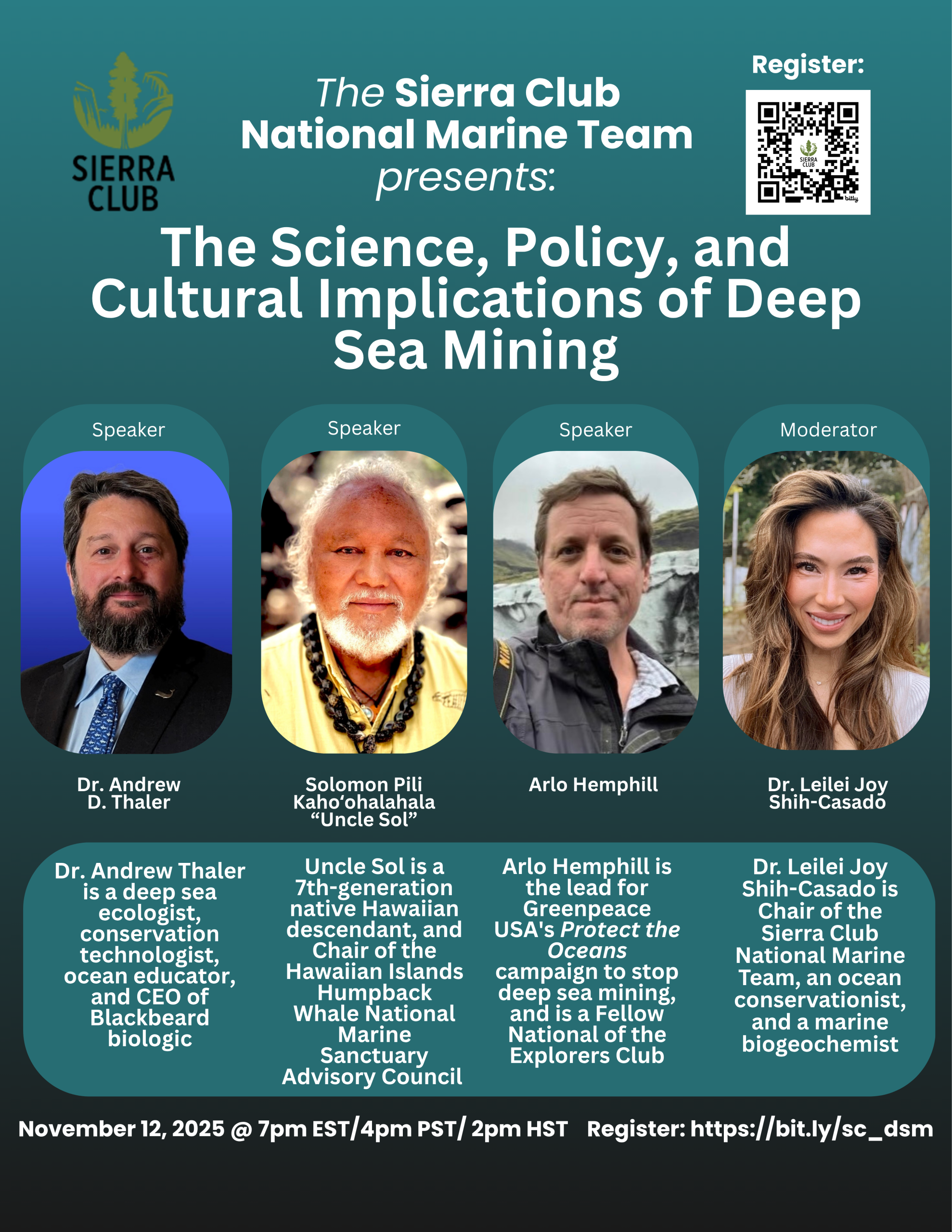
The Science, Policy, and Cultural Implications of Deep Sea Mining
November 17, 2025
Weekly Salvage
Saving the Great Barrier Reef, bolt cutters, bulk cutters, beak scars, and more! Monday Morning Salvage, August 27, 2018.
August 27, 2018

Popular Posts

How close did the world's first deep-sea mining come to the dredging the world's largest cold-water coral reef?How close did the world's first deep-sea mining come to the dredging the world's largest cold-water coral reef?March 17, 2026Andrew Thaler
What Ocean Ramsey does is not shark science or conservation: some brief thoughts on "the Shark Whisperer" documentaryWhat Ocean Ramsey does is not shark science or conservation: some brief thoughts on "the Shark Whisperer" documentaryJuly 2, 2025David Shiffman
That's not a blobfish: Deep Sea Social Media is Flooded by AI SlopThat's not a blobfish: Deep Sea Social Media is Flooded by AI SlopDecember 19, 2025Andrew Thaler
Urea and Shark OsmoregulationUrea and Shark OsmoregulationNovember 15, 2010David Shiffman
Here's what I teach my students about finding jobs in marine biology and conservationHere's what I teach my students about finding jobs in marine biology and conservationApril 10, 2024David Shiffman
I turned my woodshop into a personal solar farm.I turned my woodshop into a personal solar farm.June 21, 2021Andrew Thaler
Alberta, Canada is the proud owner of the largest man-made pyramid on the planetAlberta, Canada is the proud owner of the largest man-made pyramid on the planetOctober 16, 2012Andrew Thaler
The story of the pride flag made from NASA imagery: Bluesky's most-liked imageThe story of the pride flag made from NASA imagery: Bluesky's most-liked imageSeptember 27, 2024David Shiffman
America's Second-Largest Estuary is a Lagoon Full of SharksAmerica's Second-Largest Estuary is a Lagoon Full of SharksApril 12, 2018Chuck Bangley
Here are some ocean conservation technologies that I'm excited aboutHere are some ocean conservation technologies that I'm excited aboutFebruary 19, 2026David Shiffman
Subscribe to our RSS Feed for updates whenever new articles are published.

We recommend Feedly for RSS management. It's like Google Reader, except it still exists.

Southern Fried Science

  • Home
  • About SFS
  • Authors
  • Support SFS


If you enjoy Southern Fried Science, consider contributing to our Patreon campaign.

Copyright © 2026 Southern Fried Science.

Theme: Oceanly Premium by ScriptsTown