Transcript below.
Tag: oil
Weekly Salvage
Foghorn (A Call to Action!)
- With ice melting in Canada’s Northwest Passage, the area will soon be a new route for international shipping. Follow Life Under the Ice on OpenExplorer!
Flotsam (what we’re obsessed with right now)
- Legendary submarine pilot Erika Bergman is exploring Belize’s Blue Hole using state-of-the-art SONAR scanning tools and ROVs. A couple floppy-haired dudes are going too.
- DSV Alvin made its 5000th dive. Way to go, little submarine!
- A boon to ocean conservation? Certain fungi can degrade marine plastics.
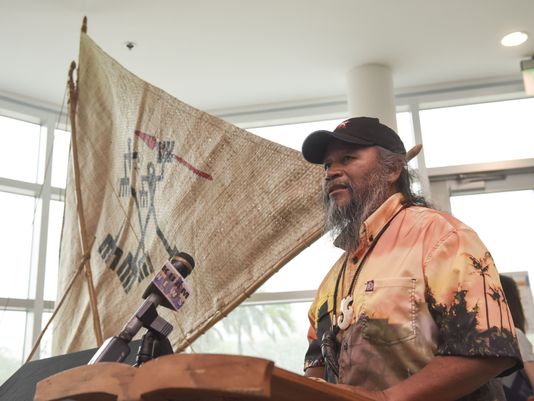
- I missed this over the summer, but Nash was an incredible guide and touring ancient Chamorro caves with him was the highlight of my time in Guam. He will be missed by many: Traditional seafarer Ignacio ‘Nash’ Camacho dies.
Weekly Salvage
Foghorn (A Call to Action!)
- Did you know that oceanbites also published in Spanish? Go check it out!
Flotsam (what we’re obsessed with right now)
- Marine Worms Are Eating Plastic Now. I’m sure this will be fine [Ed: I’m not sure. It won’t be fine.]
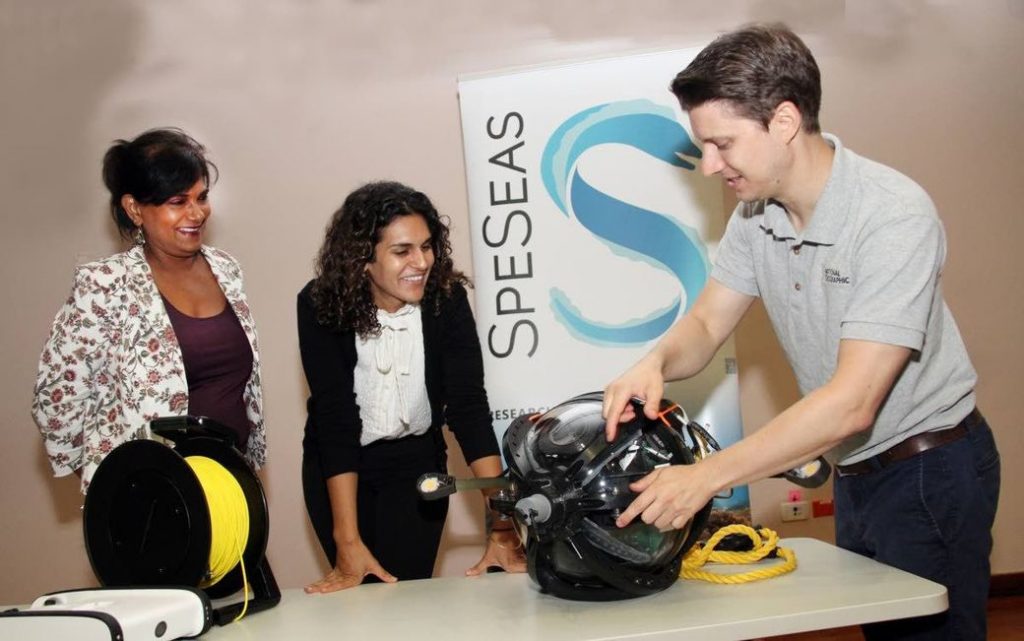
- Are you following Diva Amon’s latest expedition: My Deep Sea, My Backyard in Trinidad and Tobago? Join the adventure!
Weekly Salvage
Foghorn (A Call to Action!)
- Melissa Márquez is fundraising to participate in a women-in-science leadership retreat that culminates in a 2.5 week trip to Antarctica. Help her out! Or back her Patreon!
- The scandal-plagued, utterly ineffective, Scott Pruitt is out, just days after an American patriot told him exactly how she felt about him in a restaurant. Good.
Flotsam (what we’re obsessed with right now)
- Investing in indigenous communities is most efficient way to protect forests, report finds. This should surprise no one but it often does.
- Explore the deep waters around Kiribati with OpenExplorer!
The Levee (A featured project that emerged from Oceandotcomm)
- Virtual Reality Preserves Disappearing Land: Coastal communities are capturing their cultures and landscapes in virtual reality before sea level rise steals them for good.
- Where Did the Oil Go In the Gulf of Mexico? a storymap.
Weekly Salvage
Foghorn (A Call to Action!)
- The Eruption at Kilauea on Hawai’i’s Big Island is truly spectacular, however hundreds of people are displaced from their homes. The mayor has directed those interested in giving donations to contact the Salvation Army at +1 (808) 756-0306.
- Yale study: Newspaper op-eds change minds and The Long-lasting Effects of Newspaper Op-Eds on Public Opinion. Scientists and conservationists, this May, make an effort to publish a Letter to the Editor or OpEd in your local paper. If you’ve done so, please leave a link to it in the comments.
Flotsam (what we’re obsessed with right now)
- Without seasonal workers, the Maryland crab industry is barreling towards a crisis. “Nearly half of the Eastern Shore’s crab houses have no workers to pick the meat sold in restaurants and supermarkets.” Crab crisis: Maryland seafood industry loses 40 percent of work force in visa lottery.
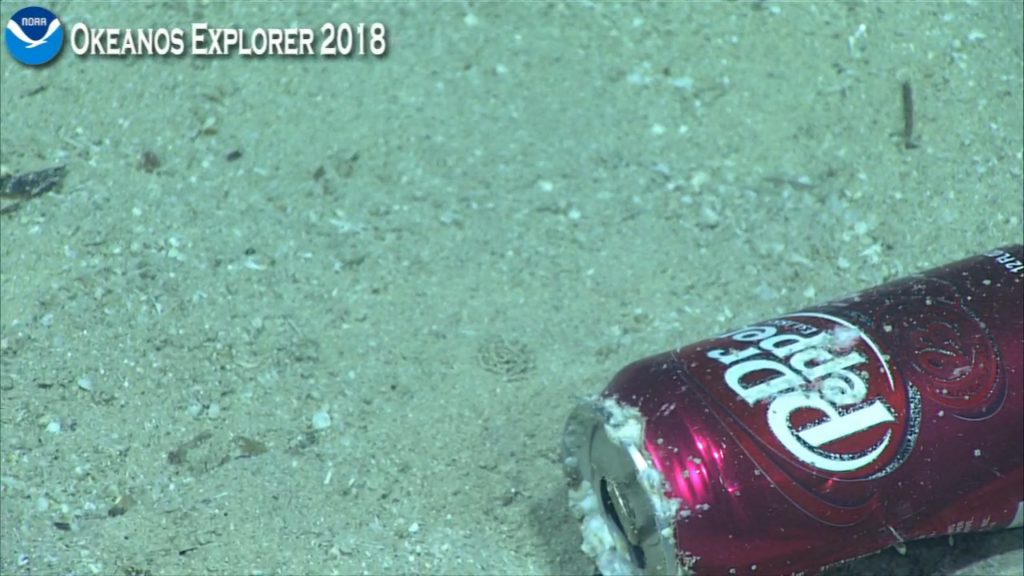
- Trash on the seafloor. Megan McCuller has an eye-opening thread on all the trash they’re finding on the deep seafloor.
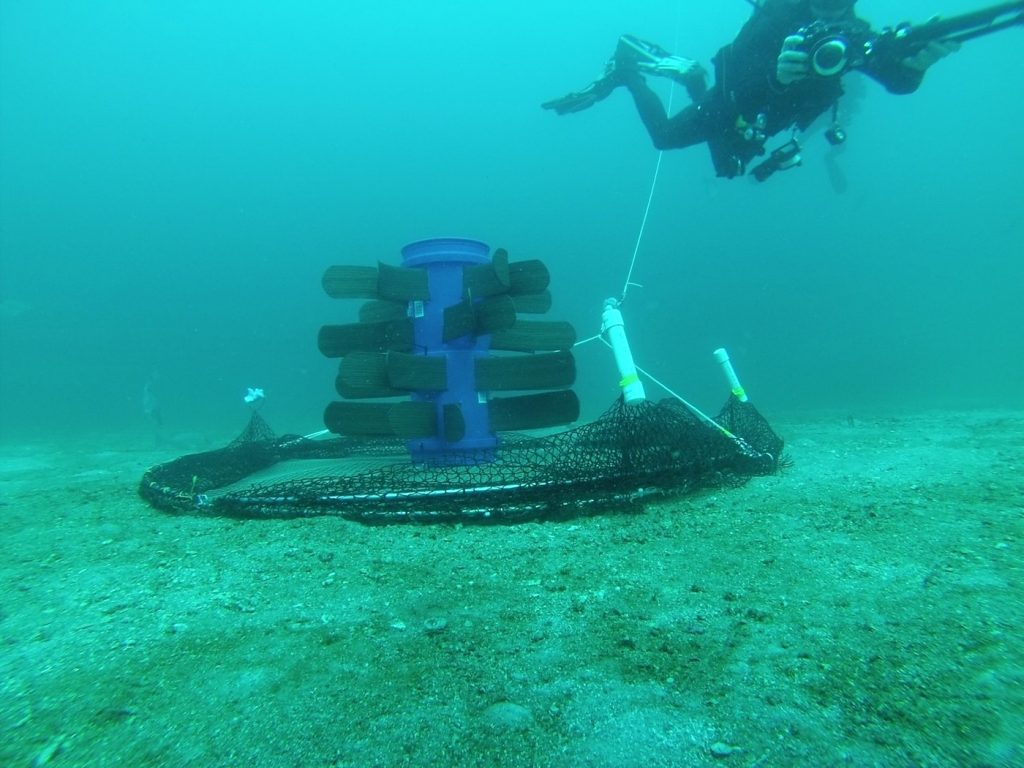
- Lionfish Traps! Jake Levenson has been trying something similar in Dominica. New Weapons in the War on Lionfish, a Beautiful but Deadly Invader.
The Levee (A featured project that emerged from Oceandotcomm)
Weekly Salvage
Fog Horn (A Call to Action)
- Good morning. The time is now 2 minutes to mid-night. Doomsday Has Never Been Closer. Good luck.
Despite the fact that we live in extremely dangerous times, the scientists in charge of the clock said there is hope. The clock has been wound backwards before, in the wake of the Cold War or during times when nuclear superpowers expressed interest in not mutually assuring destruction.
The scientists argue that civil society should turn the screws on government to reduce carbon emissions and push for even more ambitious climate action than what the Paris Agreement calls for. That sounds like a more fruitful plan than huddling in a bunker.
Flotsam (what we’re obsessed with right now)
- Some technology is pretty good, though: Cracking down on poaching with 3D-printed fake turtle eggs
Weekly Salvage
Fog Horn (A Call to Action)
- Hurricane Harvey has passed, but its impacts will continue to be felt for years to come. There’s lots of great organizations to donate to, but in the immediate aftermath,it’s often best to donate to local relief programs that already have a ground team in place, rather than national groups that will take weeks to build up their infrastructure. I’m a fan of the Texas Diaper Bank and Portlight Inclusive Disaster Strategies, both of which serve communities that tend to be particularly vulnerable during natural disasters.
- Gratuitous self promotion! The OpenCTD and Oceanography for Everyone has been selected as a finalist in National Geographic’s Chasing Genius Challenge! Please help me win the People’s Choice award by voting for the OpenCTD. Visit http://www.natgeochasinggenius.com/video/776, create or sign into your Chasing Genius account, and click the yellow star to vote on my video. Thank you!
Flotsam (what we’re obsessed with right now)
- It will take months, if not years, to fully understand the impacts of Hurricane Harvey, which already looks to be the costliest storm in US history. These drone videos give you some idea of the sheer scale of the damage. The Washington Post has an interactive map to help visualize what the equivalent deluge would look like around the world: What the Harvey deluge would look like where you live.
Science
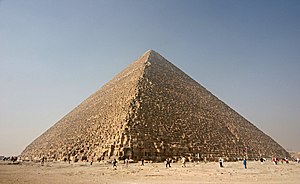
Pharaoh Khufu must be rolling in his monumental grave. Since its construction in 2560 BC, the Great Pyramid of Giza stood as the largest man-made pyramid ever built*. For 3800 years, it held the title of the tallest man-made structure of any kind. It wasn’t until the Industrial Revolution that our buildings began dwarfing this wonder of the ancient world. Even still, the Great Pyramid is massive, with a volume of 2,580,000 cubic meters. But there is another pyramid, more massive than Giza, and it wasn’t built to entomb a mighty king. It’s not a monument of any kind. The largest (by volume) pyramid in the world resides in Alberta, Canada and it’s made entirely of sulfur.
Wait, what?
Read More “Alberta, Canada is the proud owner of the largest man-made pyramid on the planet” »
Conservation, Popular Culture


This weekend I assembled a small team of marine and environmental scientists, including a molecular ecologist, a human geographer with experience in environmental justice, a political ecologist with experience in common-pool resource theory, and a veteran of the US Commission on Ocean Policy with extensive experience in marine spatial planning, to test out the new expansion for Settlers of Catan, Catan: Oilsprings. Settlers of Catan is a popular and expansive board game that focuses on resource management, development, and trading. Oilsprings is designed to add an element of “Tragedy of the Commons” to the game by introducing a new resource, oil, which allows rapid development, but at a cost that affects all players.
Read More “in which four environmental scientists play Oilsprings of Catan, destroy world” »