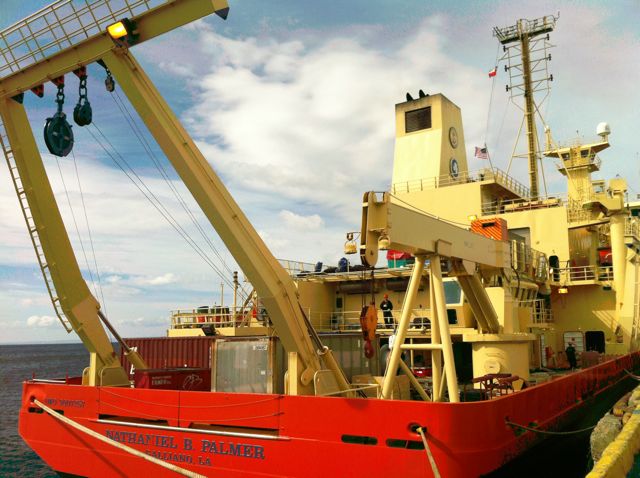
Megumi Shimizu is a graduate student studying microorganisms in marine sediment. She is currently on board the RVIB Nathaniel B. Palmer exploring seafloor communities in a once ice-covered region beneath the Larsen Ice Shelf. Over the next month, she will be updating us from the field.

I’m a PhD student interested in microorganisms and biogeochemistry of marine sediments; how the metabolisms of microorganisms interacting with the surrounding environment, the chemical components in sediments. Microorganisms in subseafloor are universally important because of its large biomass. It is said 50% of prokaryotes are living under the seafloor. This biomass makes large carbon and nutrients reservoir, which are important in biogeochemical cycle. For example, microorganisms play the role of organic carbon decomposition in sediments, as a result, carbon dioxide and methane are produced. In contrast, carbon dioxide and methane are also consumed by microorganisms called chemolithotrophs and methanotrophs in sediments. Therefore, understanding microorganisms in sediments; who they are, what are they doing, is important to reveal the details of global biogeochemical cycle and accurate estimate of budgets (amount of elements converted to different forms of chemicals for example, amount of carbon dioxide converted into organic carbon by carbon fixation). In addition, how microbial community response to environmental changes such as climate warming is also important in terms of the influence of global elemental cycles.
Understanding how the microbial community and carbon source changed after the ice shelf disintegration by using lipid biomarker is my goal in LARISSA. Lipids are the main component of cell membrane. By analyzing lipid, distinguishing types of lipids and 13C isotope analysis, lipids can tell what kind of microorganisms are in the sample and what is the carbon source of them. In addition, it is possible to distinguish the lipids from living cells and dead cells. This may tell the current microbial community and “paleo” microbial community.
I’m on my way to the east side of Antarctic Peninsula on board the RVIB Nathaniel B. Palmer as a part of LARISSA (LARsen Ice Shelf System, Antarctica) project. Where is the Antarctic Peninsula? Get a globe or fire up Google earth. Find the south edge of South America and keep going to south, you’ll find the peninsula, a part of the Antarctic continent.
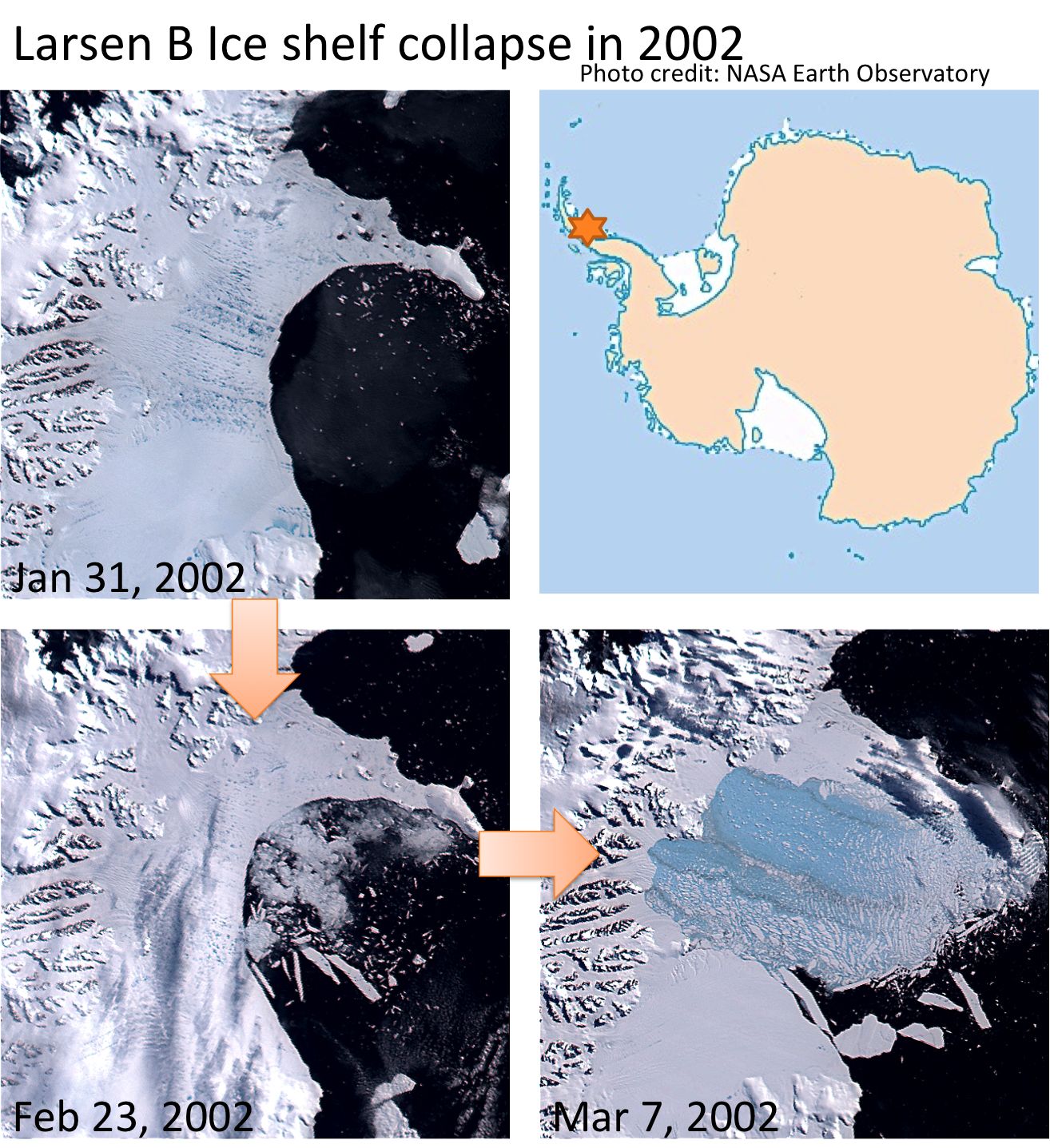
The Antarctica Peninsula is experiencing rapid climate warming. Temperature is increasing at a rate six times greater than the global mean. The warmer climate is changing the ice condition in this area. The ice shelf disintegration is remarkable. The Larsen Ice shelf is hundreds of meters thick and extends from the continent, covering the ocean surface. There used to be three ice shelf regions on the east side of the peninsula, called Larsen A, B and C. At this moment, only Larsen C and a tiny part of Larsen B ice shelf are left. The largest collapse in Larsen B was caught by satellite in 2002. It is estimated that 3200 square-km of ice shelf, which is almost same size as Rhode Island, disintegrated during two months. Ice shelf disintegration caused a shift from ice covered, dark ocean environment to light, open ocean environment.
LARISSA project is an interdisciplinary research project to understand the influence of ice shelf collapse on the Larsen B region in the context of marine ecology, geology, and oceanography. Scientists in the US teamed up to integrate their research results from Larsen B. The team collaborates with Korean research groups and four of them are joining us this cruise.
Our sampling is going to start in about three days. Are you curious about how we are going to collect sediment 800m below the ocean surface? Stay tuned for the next blog post on how our sampling will work and how scientists are living on the ship!
Polar TREC high school teacher, Amber Lancaster is blogging about our expedition here.
I’d just like to add that I’m really excited for this series. The Larsen Ice Shelf collapse is one of the most dramatic climate-driven changes yet documented, and the shift from dark-dominated to light-dominated deep benthos with photosynthetically-derived particulate organic matter flux is going to be fascinating to document.