
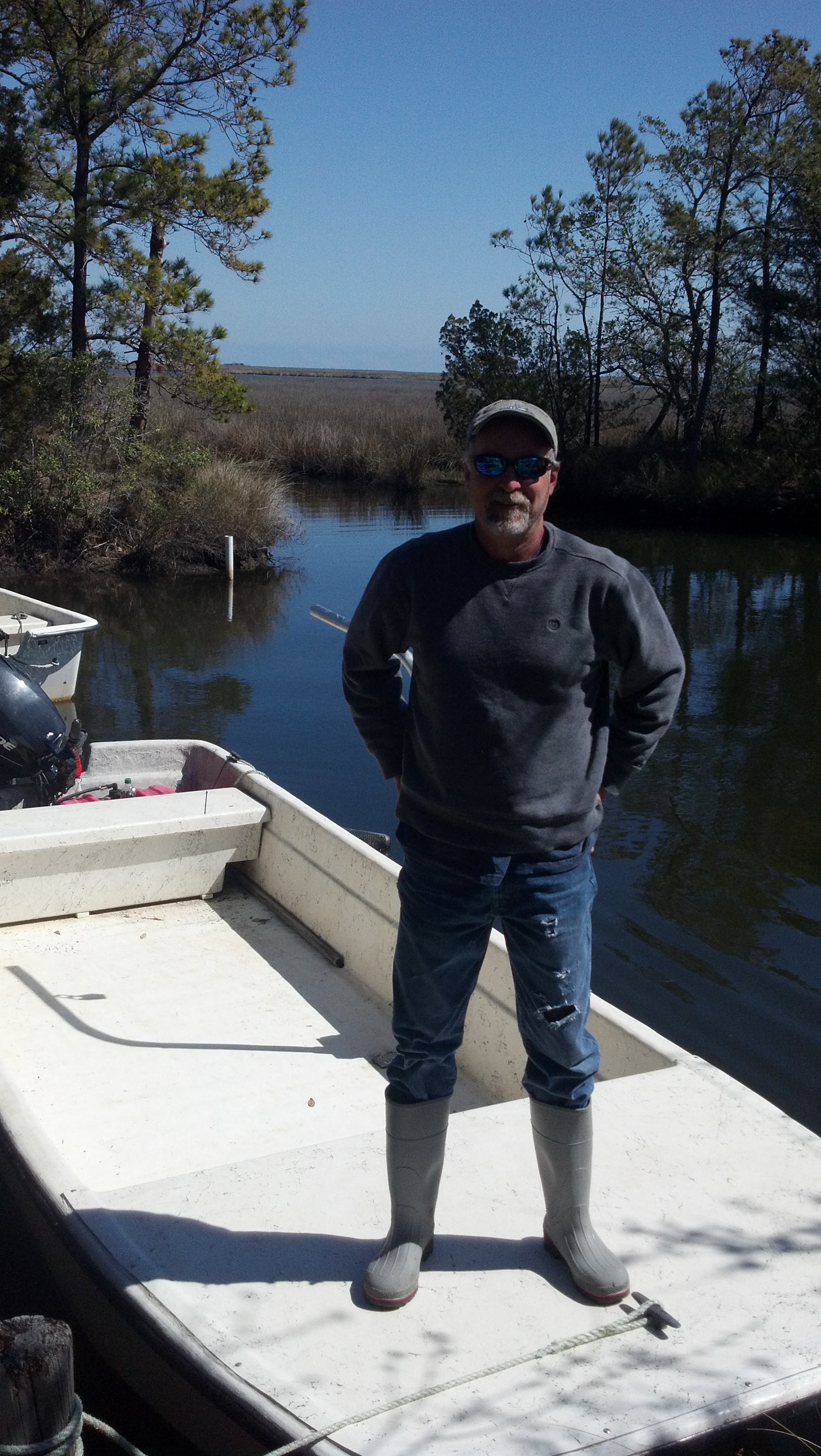
Though oyster mariculture isn’t new to places like the Chesapeake Bay, Jay Styron’s Carolina Mariculture Company, based in Cedar Island, NC, is a shining vision of the future in North Carolina. Much of the state’s efforts in aquaculture are directed at tilapia, catfish, and hybrid striped bass, which are grown in ponds on traditional farm land. These are often grown as a means of diversifying an existing farm economy. Mariculture, though, blends this type of aquaculture with commercial fishing to grow seafood in estuaries and inshore regions, creating a saltier crop. In many ways mariculture should be embraced by both farming and fishing communities but is often instead viewed as the strange uncle of the food production family. Enter pioneer Jay Styron, who grows oysters not only for food but also demonstration purposes – and he proudly creates delicious oysters.
When asked why he first stared down the mariculture path, Jay responded “I know I won’t work for the state forever”. That, plus family connections to both Carteret County fishing and the well-loved Cedar Island oysters, made mariculture a good option. Many hands helped getting the small farm up and running. Mentor Jim Swartzenberg from nearby Stump Sound and a team of graduate and undergraduates paid from a state fisheries resource grant were critical support in the early days. The first few years held experiments to find the best strain of oyster for the area and the best cage setup for holding the oysters in place in the water.
The Carolina Mariculture oysters are grown in floating cages, suspended on the water on rope lines. Oysters suspended in the water column don’t get covered in the mud familiar to harvesters of wild oysters and allow oysters to grow as singletons instead of attached to a reef. They emerge from their cages nearly perfectly round, clean oysters best for display on the halfshell. Plus, Jay uses triploid oysters that spend all their energy growing rather than reproducing, so they grow in 2 years rather than 3. But the farm was not only created to produce pretty oysters – it is intended to teach local fishers that there are options outside the wild catch to support them in the future.
Jay says he gets visitors, but none have taken up the challenge. Most say “if I were younger…” but there are other legitimate challenges that face startup mariculture operations no matter your age. First is the capital required to start a mariculture operation – and currently there aren’t too many grant or loan opportunities to help out here. In addition, mariculture hasn’t been able to piggyback on other efforts for synergistic development. A logical partner would be the state’s oyster restoration efforts, but the two groups rarely talk to one another. Finally, though mariculture is adaptable and scalable to growers’ desires, there is an economy of scale that helps big growers but may scare away beginners. The global market dictates prices that talk only to large growers, often in other countries. And particular to North Carolina, leased bottom is hard to come by.
So what does a mariculture operation look like from spawn to dinner plate? Jay buys babies 2-4mm across and places them in fine-mesh cages. They spend the next 2 years happily eating and growing with the occasional hitchhiker in the cages. Jay gets his spat, as the babies are called, from a farm in Virginia – noting that it would be wonderful if there were local sourcing options for this as there once was. Expect half of those spat to die on their way to adulthood from natural causes or the occasional cage floating free. Adults only get harvested when someone orders them so they can be the freshest possible product. Then they’re bagged in groups of 100 in plastic mesh bags and delivered to the customer or retail store.
Carolina Mariculture doesn’t meet industry “farm” standards – it’s too small. If Jay increases his production 10-fold, he’ll get there. But he’ll also have to hire someone to help take care of them. It’s a conscious decision to stay small at this point, but demand far exceeds his supply. Is this a good way to make a living? Using his system, a farmer stands to make $70,000 an acre annually. Especially as the local food movement grows, Jay sees further market development for “the sea version of grapes” with “mariorre” instead of the winery’s terriore. Cedar Island oysters stand to be the Down East version of Champagne.