Skip to content

Southern Fried Science

Over 15 years of ocean science and conservation online

  • Home
  • About SFS
  • Authors
  • Support SFS

The Ocean belongs to everyone. Shouldn’t we all have access to the tools needed to study it?

Posted on August 12, 2013October 27, 2013 By Andrew Thaler
The Open CTD Project

Oceanography for Everyone – The OpenCTD

I believe that scientific research should have as few barriers to participation as possible. I believe that not only should the results of scientific research be freely available to the public, but that the tools–software, hardware, and expertise–of science should be made as accessible as possible. In many cases, this is not possible. A sequencer costs what a sequencer costs. Stable isotope analysis comes with a heavy price tag. A Ph.D. requires a massive investment in time and energy and subsequently comes with implicit authority over a subject matter. But where the gates can be thrown open, they should be thrown open.

The Ocean belongs to everyone. Above almost any other resource, the ocean is the common property of all humankind. The tools to study the ocean–vessels and instruments–are expensive, and this expense creates an unacceptably high barrier to entry for anyone interested in studying the ocean.

I genuinely believe that all ocean stakeholders–scientists, commercial fishers, recreational users, industry, conservation NGO’s, mariners of all stripes–have something valuable to contribute to our ongoing understanding of the ocean. For this reason, above all else, myself and a small team are building open-source oceanographic instruments that are low-cost and accurate enough for robust, scientific studies.

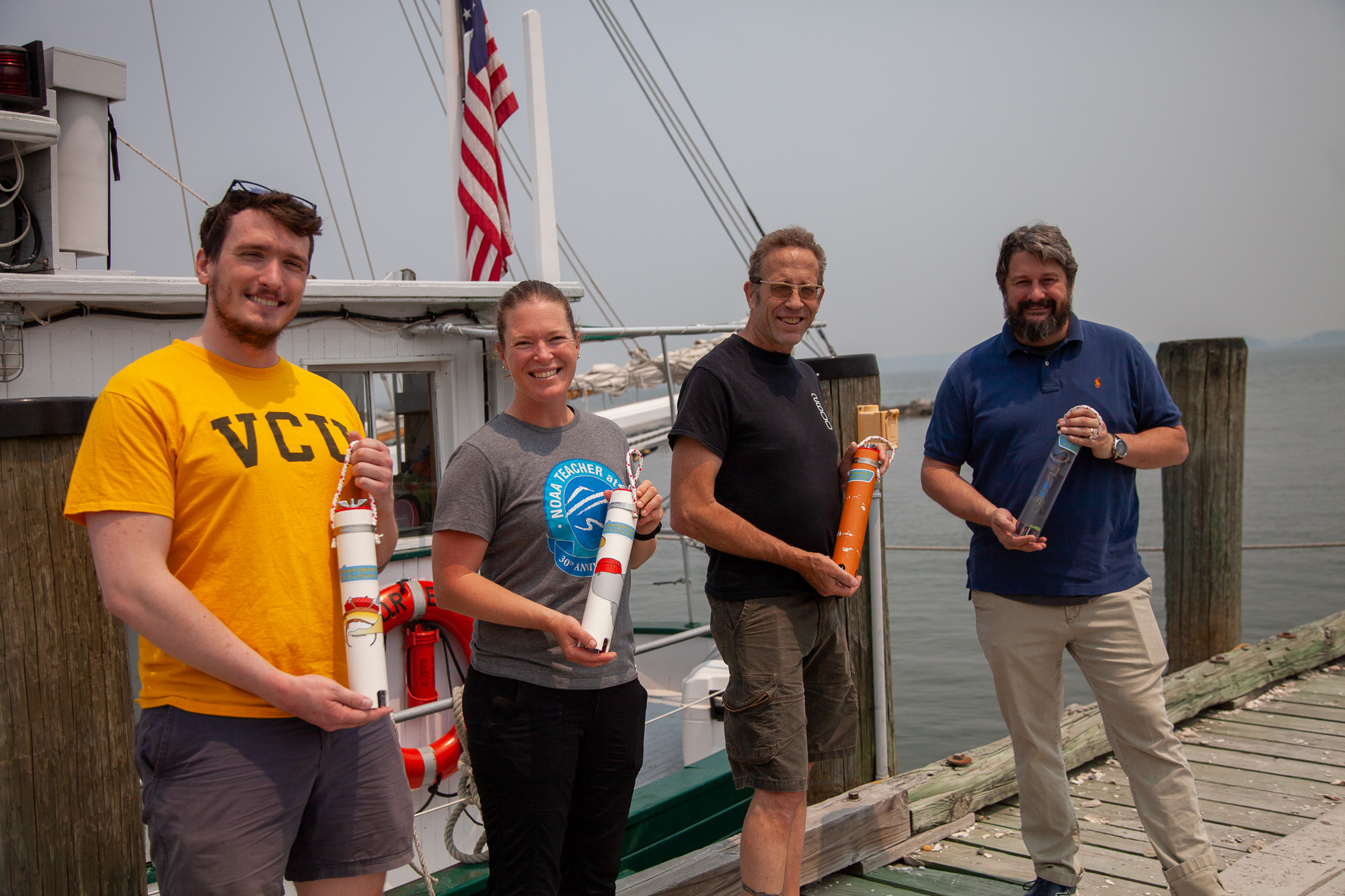
The first device, which has been mentioned numerous times here and elsewhere, is the OpenCTD.

Conductivity, temperature, and depth (CTD). With these three measurements, marine scientists can unlock ocean patterns hidden beneath the waves. The ocean is not uniform, it its filled with swirling eddies, temperature boundaries, layers of high and low salinity, changing densities, and many other physical characteristics. To reveal these patterns, oceanographers use a tool called the CTD. A CTD is found on almost every major research vessel. Rare is the scientific expedition–whether it be coastal work in shallow estuaries or journeys to the deepest ocean trenches–that doesn’t begin with the humble CTD cast.

The CTD is not cheap. Commercial CTD’s start at more the $5,000 and can climb as high as $25,000 or more.

We believe that the prohibitive cost of a CTD is an unacceptable barrier to open science. The price tag excludes individuals and groups who lack research grants or significant private funds from conducting oceanographic research. We want to make this tool–the workhorse of oceanographic research–available to anyone with an interest in the oceans.

We’re building a CTD. 

We have reached the final week of our fund raising campaign, having raised slightly more than 50% of our goal, and we need your help. If you believe in open-source oceanography and open science, please consider donating to Oceanography for Everyone. Every dollar helps.

Together, we can explore the open ocean.
Oceanography for Everyone – The OpenCTD

Share this:

  • Share on Bluesky (Opens in new window) Bluesky
  • Share on Facebook (Opens in new window) Facebook
  • Share on Reddit (Opens in new window) Reddit
  • Share on Threads (Opens in new window) Threads
  • Share on WhatsApp (Opens in new window) WhatsApp
  • Share on Mastodon (Opens in new window) Mastodon

Related

Tags: crowdfunding OpenCTD

Post navigation

❮ Previous Post: A Shark Week 2013 retrospective…with memes!
Next Post: Shark Regulation Updates ❯

You may also like

Uncategorized
Watch Blue Pints Episode 6: Science Online Oceans and Hacking the Ocean
April 30, 2013
Science
Two weeks left to Support the OpenCTD and help us build an oceanographic tool for everyone!
August 5, 2013
Education
Taking Initiative: My 2023 year in environmental education, outreach, and activism
January 19, 2024
Conservation
Emerging technologies for exploration and independent monitoring of seafloor extraction in Areas Beyond National Jurisdiction
September 3, 2019

Popular Posts

What Ocean Ramsey does is not shark science or conservation: some brief thoughts on "the Shark Whisperer" documentaryWhat Ocean Ramsey does is not shark science or conservation: some brief thoughts on "the Shark Whisperer" documentaryJuly 2, 2025David Shiffman
What is a Sand Shark?What is a Sand Shark?November 12, 2017Chuck Bangley
Shark of Darkness: Wrath of Submarine is a fake documentaryShark of Darkness: Wrath of Submarine is a fake documentaryAugust 10, 2014Michelle Jewell
My Journey Into Researching Historical Erasure on Public LandsMy Journey Into Researching Historical Erasure on Public LandsJuly 31, 2026Angelo Villagomez
Marine Biology Career AdviceMarine Biology Career AdviceMay 30, 2025David Shiffman
Please Help This Little Dumbo Octopus Travel Across AmericaPlease Help This Little Dumbo Octopus Travel Across AmericaAugust 3, 2026Angelo Villagomez
That's not a blobfish: Deep Sea Social Media is Flooded by AI SlopThat's not a blobfish: Deep Sea Social Media is Flooded by AI SlopDecember 19, 2025Andrew Thaler
Why would a serious scientist agree to participate in a nonsense Shark Week show?Why would a serious scientist agree to participate in a nonsense Shark Week show?July 15, 2025David Shiffman
I turned my woodshop into a personal solar farm.I turned my woodshop into a personal solar farm.June 21, 2021Andrew Thaler
When universities puts $$$ before science and ethicsWhen universities puts $$$ before science and ethicsAugust 3, 2026Al Gaster
Subscribe to our RSS Feed for updates whenever new articles are published.

We recommend Feedly for RSS management. It's like Google Reader, except it still exists.

Southern Fried Science

  • Home
  • About SFS
  • Authors
  • Support SFS


If you enjoy Southern Fried Science, consider contributing to our Patreon campaign.

Copyright © 2026 Southern Fried Science.

Theme: Oceanly Premium by ScriptsTown