 Coral reefs provide critical habitat to countless unique species of animals and plants. However, many reefs are in trouble, being hammered by climate change, destructive fishing techniques, pollution, disease, and other threats. A coral restoration project at the University of Miami’s (UM) RJ Dunlap Marine Conservation Program aims to rescue Florida’s reefs through coral restoration. The research focuses on an important and endangered reef-building coral called staghorn.
How coral reef restoration works
UM researchers grow staghorn coral in an underwater nursery to create a sustainable source of healthy coral colonies. Once a colony reaches the right size, the researchers transplant these new corals onto a damaged wild reef through a process called “outplanting”. This creates a new population of corals that helps restore and conserve the natural reef.
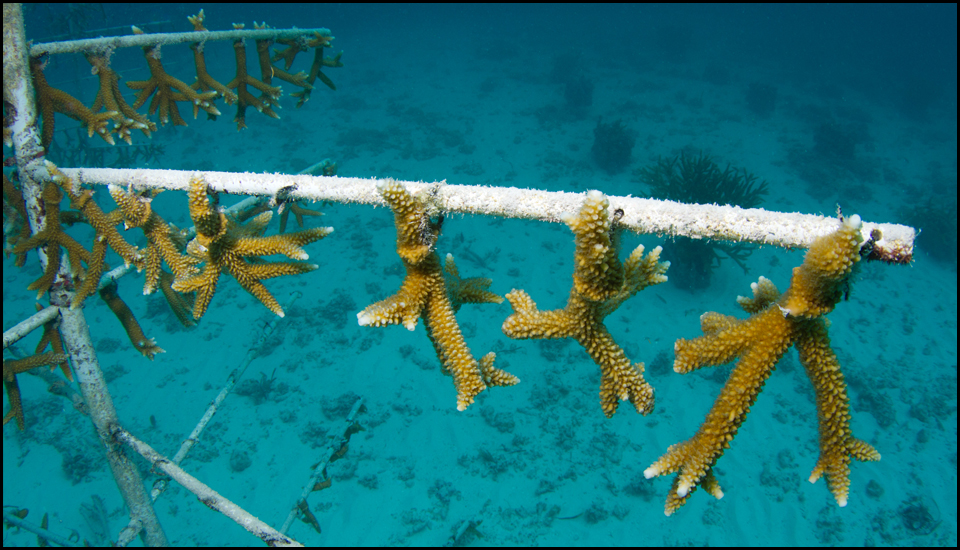
Dr. Diego Lirman, a professor at the University of Miami and a lead scientist of the Rescue a Reef program, said, “working on active coral reef restoration makes us feel part of the solution. After watching populations of important reef-building corals decline over the past three decades, we have an opportunity to contribute to their persistence and recovery. Using very simple techniques and inexpensive materials, we are exploiting a key attribute of the life history of branching corals (i.e., propagation by fragmentation) to create a sustainable and genetically diverse source of coral colonies for reef restoration and population recovery.”
This method of coral reef restoration has been used for decades and has been shown to be effective. Dr. Lirman’s team has outplanted over 2,500 staghorn coral colonies in recent years, and over 90% of them have survived.
How you can help
Donate! This project is supported by donations from the interested public, and you can donate here. Any amount helps, but larger donations have associated rewards, including:
1) Naming a patch of restored reef
or
2) Participating in a citizen science coral restoration trip, where you will be able to SCUBA dive with the Rescue a Reef research team and actively help plant and maintain coral nurseries!