Skip to content

Southern Fried Science

Over 15 years of ocean science and conservation online

  • Home
  • About SFS
  • Authors
  • Support SFS

Newly-build robots face many sea trials: an update from #ROV2PNG

Posted on November 10, 2014 By Andrew Thaler
Science

Note: we’re home after an exceptional 3 weeks of work in Papua New Guinea. Sadly, the course was so intense that we weren’t able to produce updates during the program. Instead, please accept these time-shifted updates from #ROV2PNG.
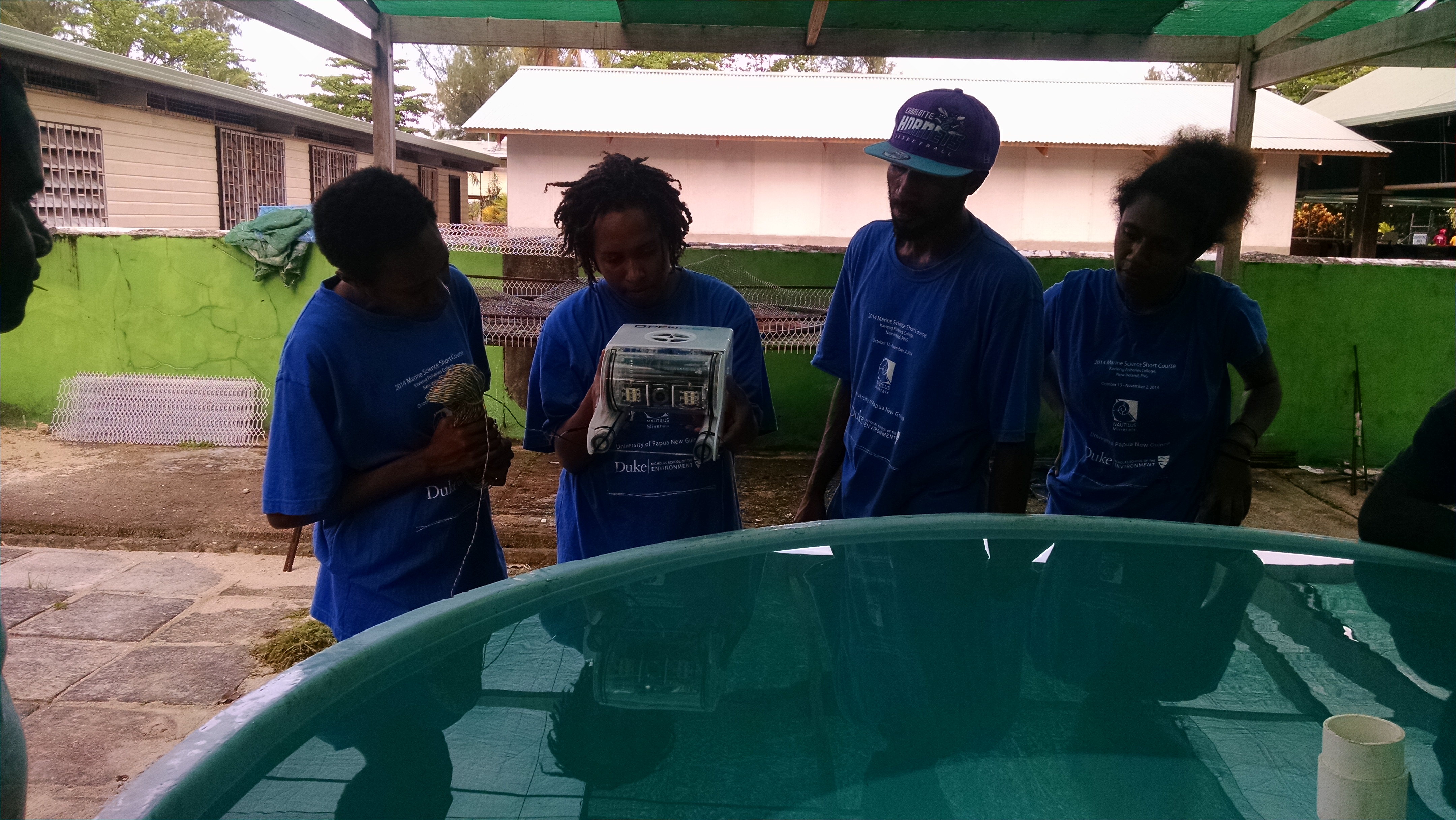
Students prepare for Pilot Academy.

With a week of robot building behind us, it’s time to put our robots, and our newly minted robot pilots to the test. Monday began with a day of tether management and pilot training. The OpenROV does not come with its own, pre-built tether management system; operators must design their own and adapt it to the unique challenges of their field environment. So we set the team off to develop their own tether management systems and the results were astounding, artistic, and clever.
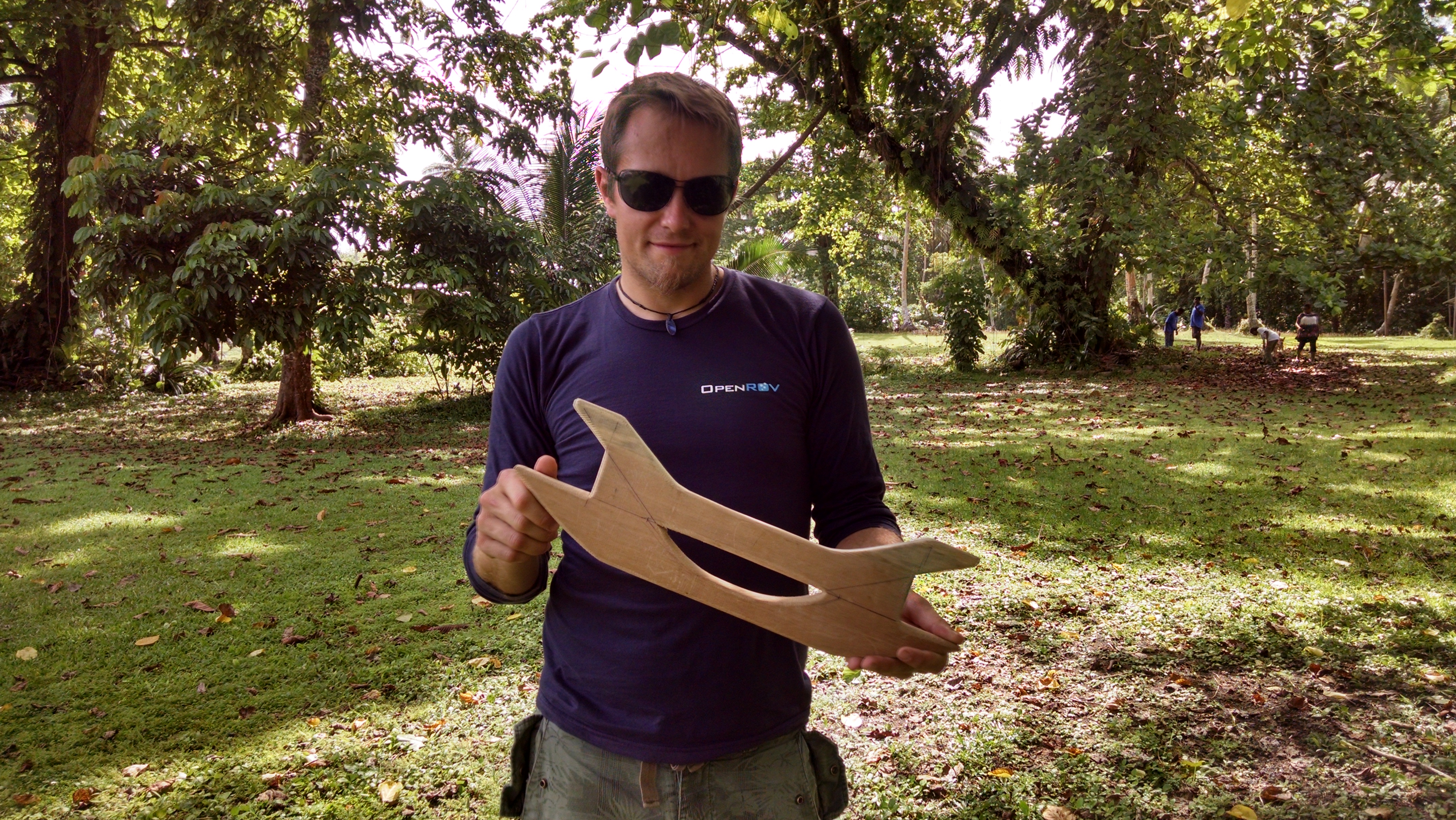
One of several innovative tether management systems.

With tethers securely managed, it was time for Erika’s Pilot Academy. As some teams continued to perform maintenance and troubleshooting, and some worked on their ecology projects, others were led, group by group, to the test tank, where Erika and Dominik had built a challenge course for them to fly. Without looking at the tank or robot, each student had to pilot an ROV around the tank, collect a weighted target, and bring it to the surface. Even for veteran OpenROV pilots, this exercise can be challenging. We closed out the first day of pilot training with 23 skilled pilots.

Salt water testing began the next morning, as each group, now divided into their ecology teams rather than their ROV build teams, set up their command center at one of three stations around the island. Instructors sat back, allowing the students to go through the complete pre-dive start-up routine, unaided. We felt tremendous pride as, one-by-one, each robot entered the waters and navigated around the reef, sand flats, and seagrass beds. Though we found a few bugs in a couple of robots, all were able to perform in salt water without failure.
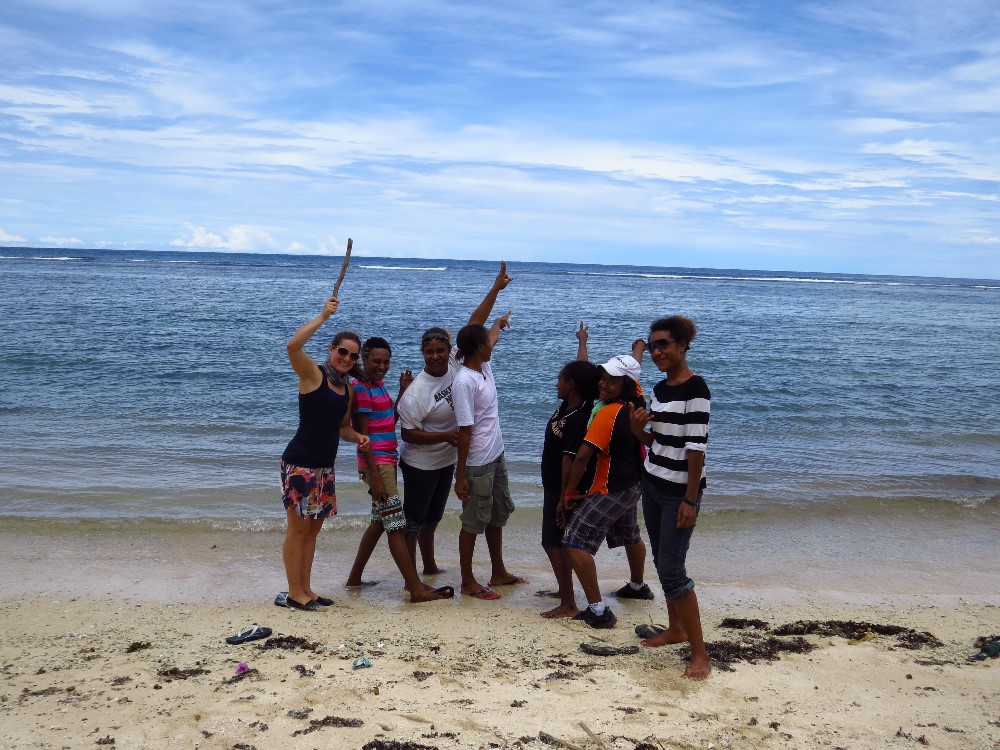
We still have time for some fun.

And that’s a good thing, because that afternoon, we began the final phase of the program: ecology projects.
 

Share this:

  • Share on Bluesky (Opens in new window) Bluesky
  • Share on Facebook (Opens in new window) Facebook
  • Share on Reddit (Opens in new window) Reddit
  • Share on Threads (Opens in new window) Threads
  • Share on WhatsApp (Opens in new window) WhatsApp
  • Share on Mastodon (Opens in new window) Mastodon

Related

Tags: #ROV2PNG Kavieng OpenROV Papua New Guinea

Post navigation

❮ Previous Post: Watch Outbreak Wednesday at 8 and tweet along with public health experts!
Next Post: Marine Ecology via Remote Observation: an update from #ROV2PNG ❯

You may also like

Weekly Salvage
#IAmSeaGrant, Octopus Beats Dolphins, Deep-sea Mining, and more! Monday Morning Salvage: May 29, 2017
May 29, 2017
Weekly Salvage
“The internet may be a series of tubes, but those tubes are mostly underwater” – Weekly Salvage: September 23, 2019
September 23, 2019
Conservation
From Sea and Sky: Hacking the Chesapeake with #BayBots
April 27, 2015
Education
Ocean Kickstarter of the Month: The OpenROV Trident
September 14, 2015

Popular Posts

What Ocean Ramsey does is not shark science or conservation: some brief thoughts on "the Shark Whisperer" documentaryWhat Ocean Ramsey does is not shark science or conservation: some brief thoughts on "the Shark Whisperer" documentaryJuly 2, 2025David Shiffman
Alberta, Canada is the proud owner of the largest man-made pyramid on the planetAlberta, Canada is the proud owner of the largest man-made pyramid on the planetOctober 16, 2012Andrew Thaler
That's not a blobfish: Deep Sea Social Media is Flooded by AI SlopThat's not a blobfish: Deep Sea Social Media is Flooded by AI SlopDecember 19, 2025Andrew Thaler
Shark of Darkness: Wrath of Submarine is a fake documentaryShark of Darkness: Wrath of Submarine is a fake documentaryAugust 10, 2014Michelle Jewell
Here are some ocean conservation technologies that I'm excited aboutHere are some ocean conservation technologies that I'm excited aboutFebruary 19, 2026David Shiffman
The story of the pride flag made from NASA imagery: Bluesky's most-liked imageThe story of the pride flag made from NASA imagery: Bluesky's most-liked imageSeptember 27, 2024David Shiffman
Here's what I teach my students about finding jobs in marine biology and conservationHere's what I teach my students about finding jobs in marine biology and conservationApril 10, 2024David Shiffman
A quick and dirty guide to making custom feeds on BlueskyA quick and dirty guide to making custom feeds on BlueskyFebruary 7, 2024Andrew Thaler
Oarfish: The true tale of the fish we can’t seem to get enough ofOarfish: The true tale of the fish we can’t seem to get enough ofAugust 19, 2015Guest Writer
The Urgency Does Not Exist: My statement on Deep-sea Mining to the Subcommittee on Energy and Mineral ResourcesThe Urgency Does Not Exist: My statement on Deep-sea Mining to the Subcommittee on Energy and Mineral ResourcesJanuary 24, 2026Andrew Thaler
Subscribe to our RSS Feed for updates whenever new articles are published.

We recommend Feedly for RSS management. It's like Google Reader, except it still exists.

Southern Fried Science

  • Home
  • About SFS
  • Authors
  • Support SFS


If you enjoy Southern Fried Science, consider contributing to our Patreon campaign.

Copyright © 2026 Southern Fried Science.

Theme: Oceanly Premium by ScriptsTown