I spent last week in Saba in the Dutch Caribbean with the Dutch Elasmobranch Society, St. Maarten Nature Foundation, and the Saba Conservation Foundation serving as a research assistant to an international team of shark scientists participating in the Save Our Sharks Expedition 2019.

I previously wrote about some of the goals of the expedition, and our first day out on the water tagging small Caribbean reef and silky sharks. I also interviewed several of the expedition participants on their views on sharks and shark conservation. Yesterday I posted my interview with Tadzio Bervoets. Today, I’m posting my interview with expedition lead Irene Kingma.
I first met Irene in 2014 when she invited me to give a keynote speech at the European Elasmobranch Association and have kept in touch with her through the years, mostly through Twitter. Irene has been working in shark conservation for 15 years, both in Europe and the Caribbean. She runs the Dutch Elasmobranch Society, which she founded together with Dr. Paddy Walker in 2010.
From 2015 to 2018 she worked as the Netherlands project lead in the Save our Sharks project of the Dutch Caribbean Nature Alliance. This project aimed to improve all aspects of shark protection in the Dutch Caribbean through legislation, education, management, and science. The project has ended but the Save our Sharks brand is still used for shark science and conservation work in the islands.
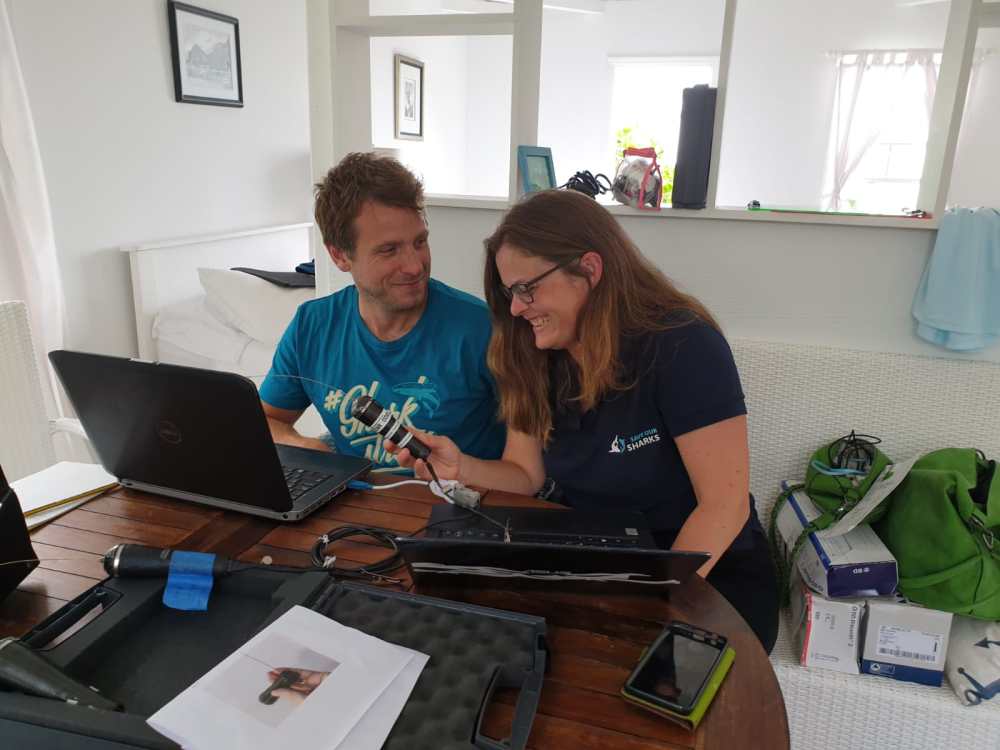
I sat down with Irene and asked her five questions:
Bucky: What is your role on this expedition?
Irene: I am the expedition leader. I’m in charge of making sure everyone knows where they have to be and what they need to do. I do this together with Dr. Walker, who took on the lead role after I left the expedition a few days before the official end. Paddy and I founded the Dutch Elasmobranch Society together in 2010, a science-based NGO dedicated to the management and protection of elasmobranchs in the Dutch Kingdom.
Bucky: How does the work you do contribute to global efforts to protect sharks?
Irene: My main job is helping policy makers to take the right decision on shark and fisheries management. For example, here in the Dutch Caribbean the Dutch Elasmobranch Society is the main adviser to the Dutch government on shark management and the measures needed to make the Yarari Shark Sanctuary a success. Together with local partners we wrote the proposals to get several sharks and ray species listed on the SPAW protocol, the only cross border legal protection instrument for the Caribbean region.

Bucky: Why are sharks important to you?
Irene: My background is in ecology, so when I think of heathy oceans that should include all parts of the ecosystem. Sharks are a really good indicator of ecosystem wellbeing; to be able to sustain healthy, diverse shark and ray populations all elements of the system need be to in good shape. We need to protect everything from the corals and to whale sharks.
Bucky: How are we going to save the world’s sharks?
Irene: I am a firm believer in a holistic approach to management. Putting a species on a list like CITES, CMS, SPAW is an important first step. But you also need to have sensible implementation on the ground linked to effective control and enforcement. Plus, to ensure you get buy in by the people who are affected or have to carry out the protective work you need to communicate on what you want to achieve and why throughout the chain. And lastly all needs to be grounded in sound science to ensure what you do actually makes a difference in the water and for sharks. My mantra is we need to get the science we need to deliver the policy we want.
Bucky: What advice would you give to young scientists interested in a conservation careers?
Irene: Dream big! Here I am, a girl from Amsterdam who started out as a malacologist (snail specialist) leading an expedition to one of the most interesting places in the world to start up research projects which will help us protect sharks. Somebody pinch me! There’s no clear path that led me here, the only clear thread I see is that I tend not to take the safe option when it comes to career choices and I never gave up.
The Save Our Sharks Expedition 2019 runs from July 15-25. You can also follow the expedition on social media using the hashtag #SabaShark2019, or by following the Save Our Sharks social media accounts on Facebook, Instagram and Twitter.