Skip to content

Southern Fried Science

Over 15 years of ocean science and conservation online

  • Home
  • About SFS
  • Authors
  • Support SFS

Adopt the giant deep-sea isopod, Bathynomus giganteus, as the National Deep-sea Animal of the United States.

Posted on November 3, 2016November 7, 2016 By Andrew Thaler
Education, Science

Picture a pill bug, roly poly, woodlouse, or doodle bug, an animal found under rocks and logs throughout the United States. Now picture an animal similar to that pill bug, but as big as a cat, crawling across the Gulf of Mexico. That is the giant deep-sea isopod.
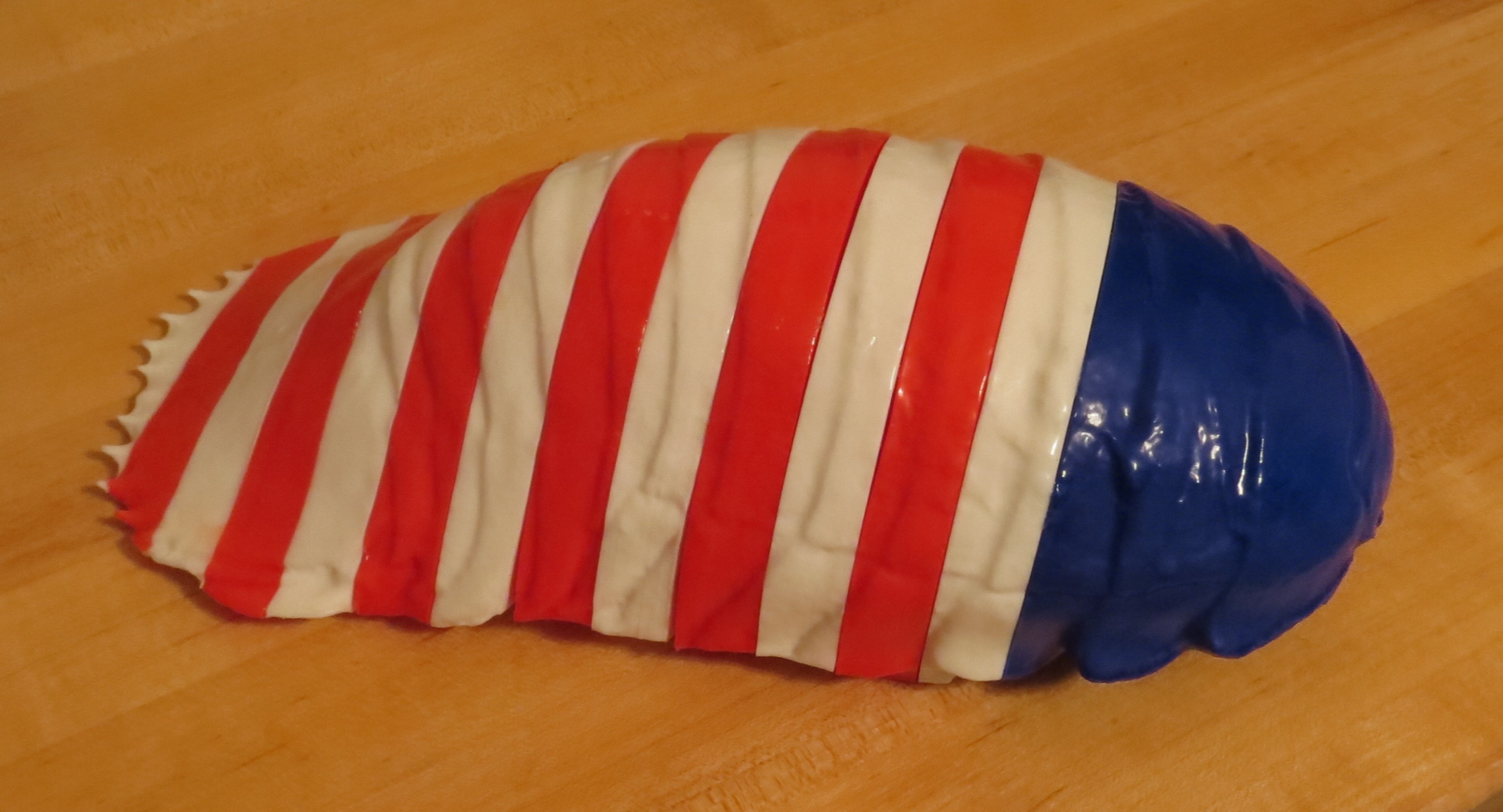
allamerican

The deep waters of the United States’ Exclusive Economic Zone is home to this large, recognizable animal, which can reach almost 2 feet in length. Since their discovery in the late 19th century, giant isopods have captured the public’s imagination, acting as an Ambassador Species for deep-sea ecosystems. Ambassador Species are important for education, exploration, and conservation as they provide a charismatic icon to help introduce people to new and unfamiliar places.

WHEREAS:
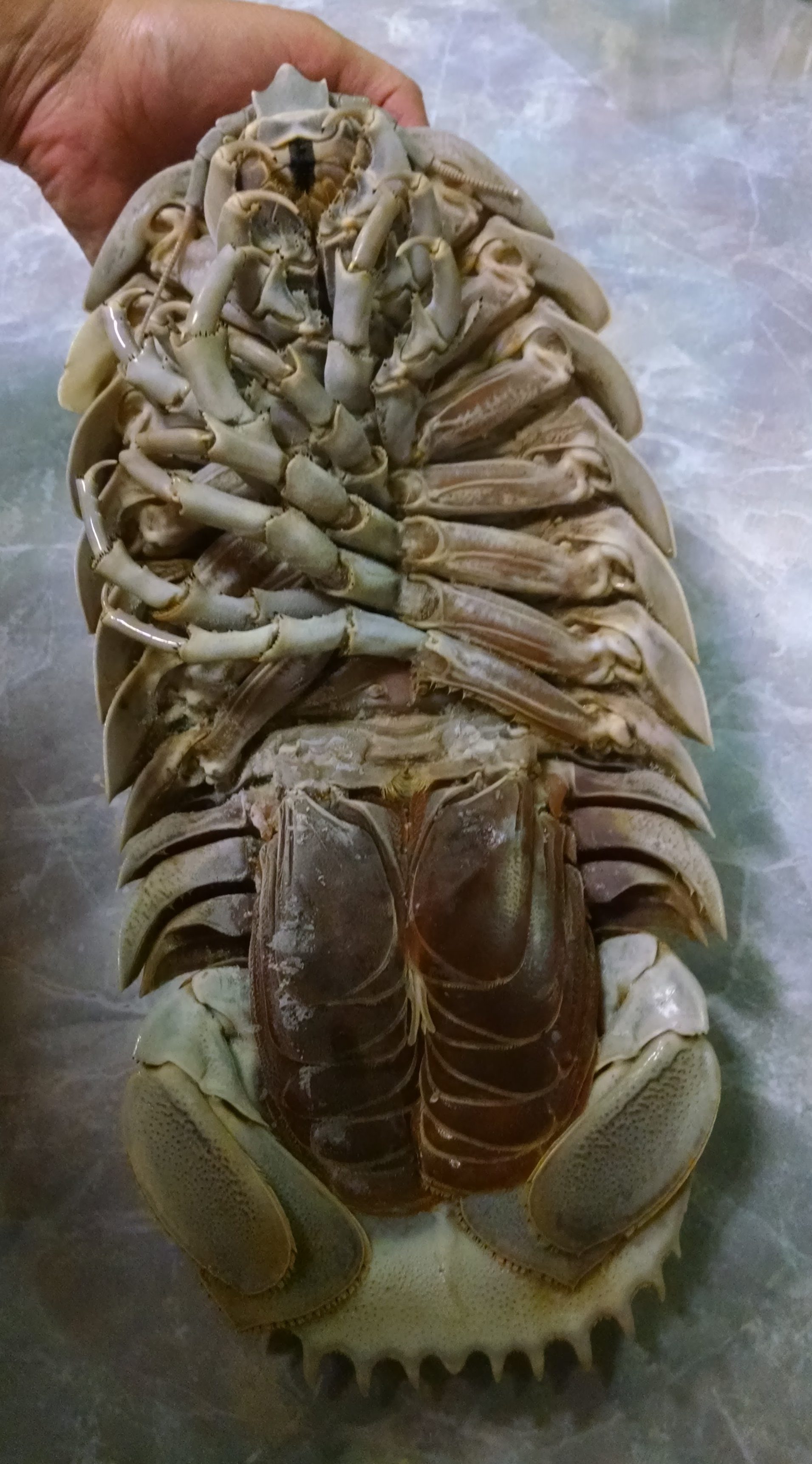
Giant Isopod. Photo by author.

(1) The giant deep-sea isopod is a charismatic, iconic deep-sea species commonly found in the deep waters of the United States, particularly the Gulf of Mexico and Southern Atlantic;

(2) The giant deep-sea isopod has attained a level of popular culture awareness in recent years that is unrivaled by most enigmatic deep-sea animals, with a small but persistent presence in art, film, and music;

(3) The first specimen was collected from the Gulf of Mexico in 1879 by renowned American scientist Alexander Agassiz;

(4) The discovery of the giant deep-sea isopod provided important early evidence to disprove the Azoic Hypothesis–that the ocean was lifeless beyond a few hundred feet;

(5) The pill bug, a closely-related, physically similar, common, terrestrial animal, provides a familiar touchstone to help better connect people to this deep-sea animal;

(6) The giant deep-sea isopod, being at times either fiercely independent or collectively powerful, capable of surviving and thriving in the food-limited deep ocean through tenacity and resourcefulness, models many shared American values.

(7) The 3D-modeled and printed All-American Giant Isopod highlights the creativity and skill of the Maker Movement and represents the collaboration between science, technology, and art promoted by the Congressional Maker Caucus.

(8) The worldwide demand for seafloor precious metals, rare earth elements, and oil and natural gas is increasing such that humans are seeking these limited resources in the deep ocean and thereby threatening unique and sensitive deep-sea ecosystems;

(8) The giant deep-sea isopod can serve as an Ambassador Species for deep-sea ecosystems within the territorial waters of the United States, inspiring the public to explore and learn about this unseen world.

THEREFORE:

We call upon the Congress of the United States of America to establish the giant deep-sea isopod, Bathynomus giganteus, as our National Deep-sea Animal.

Sign the Petition!


Share this:

  • Click to share on Bluesky (Opens in new window) Bluesky
  • Click to share on Facebook (Opens in new window) Facebook
  • Click to share on Reddit (Opens in new window) Reddit
  • Click to share on Threads (Opens in new window) Threads
  • Click to share on WhatsApp (Opens in new window) WhatsApp
  • Click to share on Mastodon (Opens in new window) Mastodon

Related

Tags: deep-sea isopod Giant Isopod National Deep-sea Animal

Post navigation

❮ Previous Post: The plague-busting, prairie-dog-vaccinating, ferret-saving drone
Next Post: We love giant isopods and America should love them too! ❯

You may also like

Popular Culture
A deep-sea ecologist over-analyzes Aquaman #25
November 27, 2013
Weekly Salvage
Unprecedented destruction in the deep Gulf of Mexico, The Ocean Cleanup’s River Pivot, and More! Weekly Salvage: October 28, 2019.
October 28, 2019
Weekly Salvage
Hurricane Irma, the Manatee Sheriff, climate change, and more! Monday Morning Salvage: September 11, 2017
September 11, 2017
Science
Six things I learned about Giant Isopods while Sizing Ocean Giants
January 13, 2015

Popular Posts

Shark scientists want their research to help save threatened species, but don’t know how. Our new paper can help.Shark scientists want their research to help save threatened species, but don’t know how. Our new paper can help.December 1, 2025David Shiffman
Norway and Cook Islands put their deep-sea mining plans on pause.Norway and Cook Islands put their deep-sea mining plans on pause.December 3, 2025Andrew Thaler
What Ocean Ramsey does is not shark science or conservation: some brief thoughts on "the Shark Whisperer" documentaryWhat Ocean Ramsey does is not shark science or conservation: some brief thoughts on "the Shark Whisperer" documentaryJuly 2, 2025David Shiffman
The Trouble with Teacup PigsThe Trouble with Teacup PigsOctober 14, 2012Andrew Thaler
What we know we don't know: impacts of deep-sea mining on whales, dolphins, sharks, turtles, and other migratory species.What we know we don't know: impacts of deep-sea mining on whales, dolphins, sharks, turtles, and other migratory species.November 20, 2025Andrew Thaler
2025: My year in writing, public speaking, and media interviews2025: My year in writing, public speaking, and media interviewsDecember 3, 2025David Shiffman
Urea and Shark OsmoregulationUrea and Shark OsmoregulationNovember 15, 2010David Shiffman
Shark of Darkness: Wrath of Submarine is a fake documentaryShark of Darkness: Wrath of Submarine is a fake documentaryAugust 10, 2014Michelle Jewell
How tiny satellites are tracking marine wildlifeDecember 1, 2025Andrew Thaler
Build a dirt cheap, tough-as-nails field computer in a Pelican caseBuild a dirt cheap, tough-as-nails field computer in a Pelican caseJuly 21, 2015Andrew Thaler
Subscribe to our RSS Feed for updates whenever new articles are published.

We recommend Feedly for RSS management. It's like Google Reader, except it still exists.

Southern Fried Science

  • Home
  • About SFS
  • Authors
  • Support SFS


If you enjoy Southern Fried Science, consider contributing to our Patreon campaign.

Copyright © 2025 Southern Fried Science.

Theme: Oceanly Premium by ScriptsTown