Skip to content

Southern Fried Science

Over 15 years of ocean science and conservation online

  • Home
  • About SFS
  • Authors
  • Support SFS

Author: Bluegrass Blue Crab

Political Ecology at Home – Lessons from Abroad?

Posted on February 28, 2011February 22, 2011 By Bluegrass Blue Crab
Uncategorized

Political ecology within the First World came from a gradual realization that the definition of the field did not only apply to exotic cultures abroad, but had resonance domestically. As first defined by Blaikie and Brookfield (1987), political ecology combines “the concerns of ecology and a broadly defined political economy. Together this encompasses the constantly shifting dialectic between society and land-based resources, and also within classes and groups within society itself” (17). Scholars returning from research in the Third World observed this shifting dialectic in their own countries, complete with struggles over power and access between sectors of society.

The first call to the political ecology community to consider applying their principles to the First World came from Louise Fortmann (1996) in her article “Bonanza! The unasked questions: Domestic land tenure through international lenses.” Although she admitted there are vast differences between home and abroad, she identifies six lessons from the international land tenure debate that could have traction in the United States: property as social process, customary tenures, common property and community management of resources, gender, the complexity of tenancy relationships, and land concentration.

Read More “Political Ecology at Home – Lessons from Abroad?” »
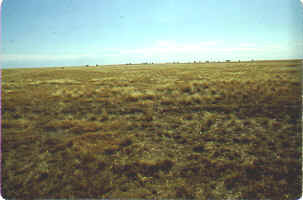
Biodiversity Wednesday: Shortgrass Prairie

Posted on February 23, 2011February 23, 2011 By Bluegrass Blue Crab
Uncategorized
from www.tarleton.edu/

The middle of America boasts some of the best soils in the world, making it “the breadbasket of America”, if not the world. However, that soil is both a blessing and a curse – native species of grasses and the birds, bugs, and bison that depended on the area have been pushed out in favor of human food production. The ecosystem of middle America looks today like miles upon miles of rows of corn and soy, not the shortgrass prairie that once inhabited the area.

Read More “Biodiversity Wednesday: Shortgrass Prairie” »

State of the Field: Pay for that Particulate!

Posted on February 22, 2011February 22, 2011 By Bluegrass Blue Crab
Uncategorized
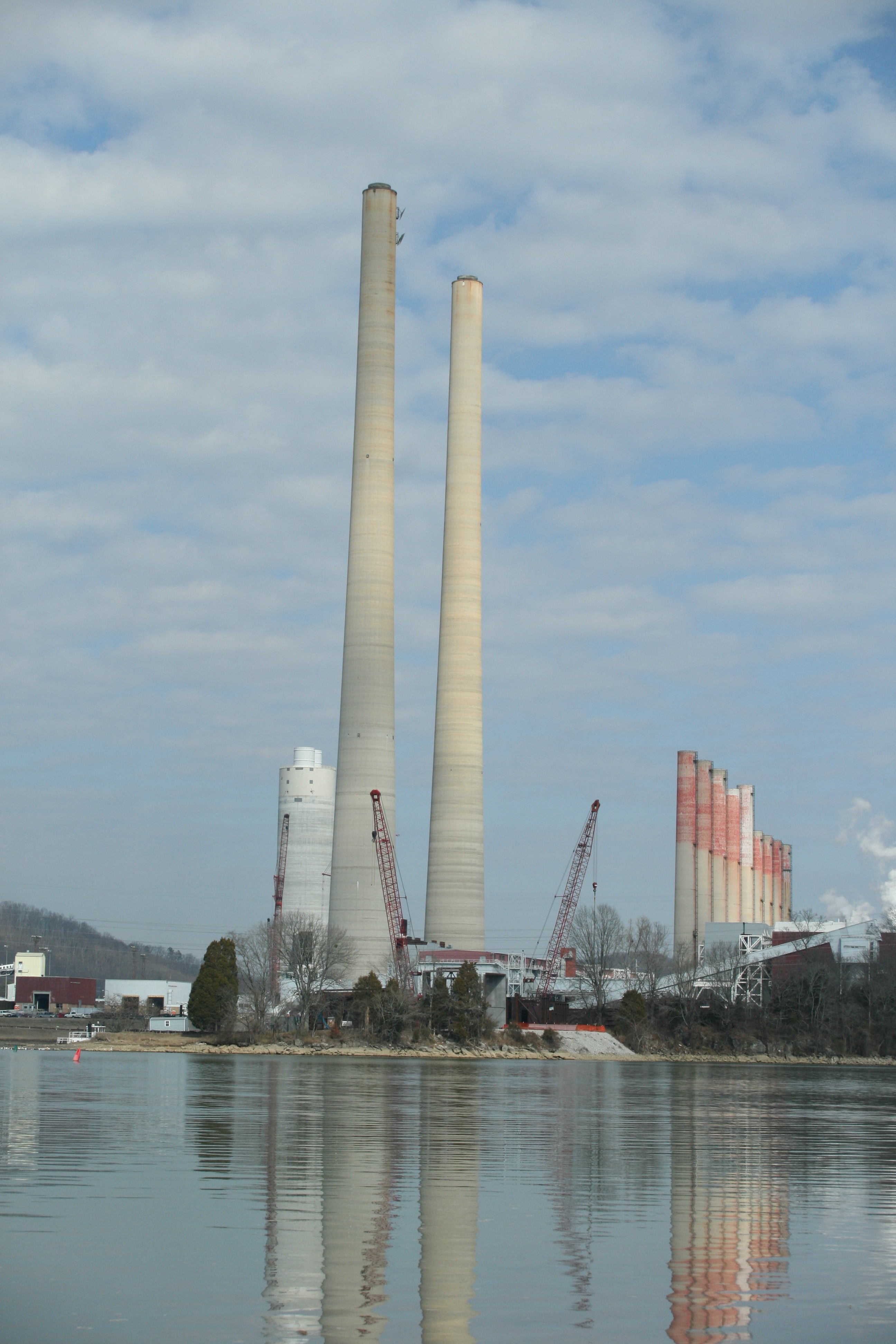
What are the true costs of power? photo by author

Ever wonder why coal-fired power is so much cheaper than the alternatives? Coal-producing communities aren’t paid for their personal health impacts, the environment is not paid for streams turned acid, and mountains are not paid for their removal. More subtle costs are also passed on: rising rates of asthma from particulates in the air, introduction of malaria into previously unaffected areas from a warming world, and the relocation of whole countries due to sea level rise.

Pollution is a classic example of an economic externality – companies choosing not to sequester chemicals in their effluent pass the cost of pollution and remediation on to those downstream. Therefore the cost of production signaled by price does not represent the true cost of production. The contradiction is deeper, however, and forms one of the main critiques of capitalism – the “second contradiction of capitalism”. Capitalism relies on the continual growth of the market, costs determined by the raw material and labor inputs. However, these costs assume limitless availability of what Marx calls “conditions of production” – the infrastructure and environmental services that are required for production. These, however, are not limitless and therefore not cost-free. Rising costs will eventually outpace price and production will therefore cease (O’Connor 1998).

Read More “State of the Field: Pay for that Particulate!” »

Terrible Terminal Groins

Posted on February 21, 2011February 21, 2011 By Bluegrass Blue Crab 7 Comments on Terrible Terminal Groins
Conservation

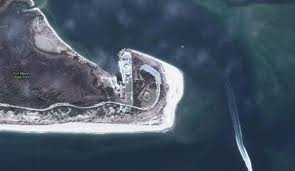
check out the sand loss on Ft. Macon, which has a historic terminal groin, www.sierraclubnc.blogspot.com

Tomorrow a bill will be introduced into the NC House that allows the use of terminal groins to protect private property along the coast, overturning the 1979 ban on hardened structures along the coast. Although NC would join all of the other eastern seaboard states in allowing such protections, the bill, if passed, would also end a long history of attempting to maintain a natural coastline. This natural coastline is why the Outer Banks have become such a popular tourist destination, bringing millions into the state economy each year.

So why might North Carolina leaders turn their back on historical decisions? This year’s General Assembly is under a new majority – for the first time since 1898, led by Republicans. Rising populations along the coast are using this as an opportunity to demand more permanent solutions to shoreline erosion. Previous strategies of beach restoration, inlet channel realignment, and sandbagging are no longer adequate to coastal property owners. However, though terminal groins may seem like an easy solution, they are not as simple as they seem at first glance. It’s these nuances that make them a really bad idea, both for maritime ecology we’ve worked so hard to protect and for the wallets of North Carolinian taxpayers.

Read More “Terrible Terminal Groins” »

Call to Agendize

Posted on February 17, 2011February 17, 2011 By Bluegrass Blue Crab
Uncategorized

According to the National Science Foundation, social scientists might be useful in a multitude of new ways, especially in long-term research. Following on the heels of astronomy and astrophysics, NSF recently sought suggestions for planning the research agenda of social scientists for the next decade. Working on a relatively short time frame, there were three guiding principles for setting this new agenda:

– “big underlying questions” that thus far have been underappreciated

– capacity issues: which stages of the educational process need the most help?

– infrastructure issues, eg. setting up longitudinal surveys on important topics

In response to this challenge, a team at Harvard came up with the “top ten social science research issues“, recently published in Nature. A few of us sitting on the social-ecological divide have noted that there is a distinct lack of environmental issues in the list. In all fairness, the original challenge emphasized that existing research programs would be supported and showcased recent funding for the social aspects of environmental issues as a prime example of ways this research is already headed in a favorable direction. The more optimistic of this bunch note that each of the ten social issues is actually intricately linked with the need for a healthy environment and therefore the environmental link is  an underlying grand challenge, if you will.

Read More “Call to Agendize” »

Biodiversity Wednesday: Great Smoky Salamanders

Posted on February 2, 2011February 1, 2011 By Bluegrass Blue Crab 2 Comments on Biodiversity Wednesday: Great Smoky Salamanders
Uncategorized
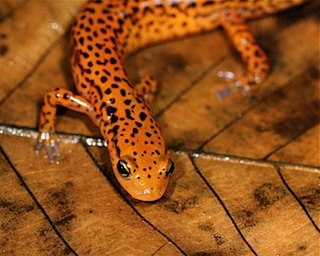
herpetology.us

The Great Smoky Mountains are one of those places of wonder right in our own backyard. Not only have the coal and timber communities cultivated the banjo, bluegrass, and moonshine, but they are one of the most unique habitats in the world due to their forest canopy chemistry. As one of the oldest mountains chains on earth, their caps are often rounded and covered in trees, providing sheltered habitat at a variety of altitudes for critters great and small. In fact, it’s the small ones that actually deserve the most notoriety – the mountain chain boasts the highest diversity of amphibians in the world and herpetologists travel long distances to find the many salamanders hiding under the Smokies’ logs and leaf litter. This kind of refuge is increasingly important in the struggle to keep amphibians alive.

Read More “Biodiversity Wednesday: Great Smoky Salamanders” »

State of the Field: Policy is not just for policymakers anymore

Posted on February 1, 2011 By Bluegrass Blue Crab 1 Comment on State of the Field: Policy is not just for policymakers anymore
Uncategorized
Even the Governator believes in public participation, thanks cdcr.ca.gov

Continuing this series’ recent theme of ways to make policy work, let’s consider a broader view of what policy is and therefore who gets to create policy. It’s not just the elected officials with legislation in their job description. For one, those people are accountable to the people who elected them. Second, formal written policy is not the only kind that is effective – informal rules, community traditions, and other forms of policy are often best. Plus, these types of policy offer the general public a change to be involved in creation and implementation.

There is a large literature on the value of participation in policymaking, especially in fisheries (Silver and Campbell 2005). Here I will focus on three particularly important aspects of participation to management at the scale of an estuary, where I work: a) additional knowledge creation, b) community buy-in, and c) tighter feedback loops. These are important for relatively large-scale systems with several communities and many variables that could affect management.

Read More “State of the Field: Policy is not just for policymakers anymore” »

Weekly Dose of TED – Ed Burtynsky photographs the landscape of oil

Posted on January 28, 2011January 17, 2011 By Bluegrass Blue Crab
Uncategorized

Ed Burtynsky, perhaps most famous for his movie Manufactured Landscapes, takes a moment to show what he sees as “symbols of how we use the land”. Do you agree that oil is the dominant landscape feature nowadays? Is the use of photography and other art media helpful in gaining new perspective for exactly how humans … Read More “Weekly Dose of TED – Ed Burtynsky photographs the landscape of oil” »

State of the Field: Too big, too small, just right – the Goldilocks Conundrum of Conservation

Posted on January 25, 2011January 28, 2011 By Bluegrass Blue Crab
Science

This post was chosen as an Editor's Selection for ResearchBlogging.org

scale can really change perspective... take this fruit fly eye, for example, at scanning electron microscope scale - it looks like an army of hairs

Scale seems like a simple term with a simple definition, a concept certainly not up for debate. Well, digging just a little deeper we find that the nuances of a term that is used in almost every discipline make it important to make sure everyone’s on the same page. Furthermore, it’s important to make sure that the concept gets some attention, some time on the agenda, and some problem-solving energy.

In the world of conservation, scale mismatches are often a visible failure of policies, leading to recent calls for ecosystem-based management that trace scales of governance according to ecosystem boundaries instead of political boundaries. This has led to the existence of “peace parks” protecting wildlands that cross national borders, watershed management plans, and attention to habitat protection in environmental species conservation, to name a few examples. However, matching governance to ecosystem scale is only one type of scale adjustment that needs to occur.

Read More “State of the Field: Too big, too small, just right – the Goldilocks Conundrum of Conservation” »

State of the Field: Modergasm – The flaccid finality of modern erections

Posted on January 18, 2011January 18, 2011 By Bluegrass Blue Crab 2 Comments on State of the Field: Modergasm – The flaccid finality of modern erections
Uncategorized
FDR, sometimes credited as a benevolent dictator, brought the US out of the Great Depression through his New Deal

Effective management of any landscape or seascape must attend to context such as unique attributes of the ecosystem, local cultural values and norms, and broader governance constructs. Conservation managers often joke that the best way to incorporate this context is to install a benevolent dictator at the helm. His or her role would be to see the big picture and make decisions based on expected community benefits. Others would call the term benevolent dictator an oxymoron – but there have been some documented cases of such idealistic planning. Sadly, it seems such “high modernism” is not the answer. In his book Seeing Like A State, James Scott documents cases of agricultural land, cityscapes, and whole communities that ended up having unexpected consequences to high modernist rule due to incomplete foresight and incorrect prediction of people’s reactions. He cites these examples as warnings for the modern conservation movement as they choose between philosophies to move forward.

Read More “State of the Field: Modergasm – The flaccid finality of modern erections” »

Posts pagination

Previous 1 … 9 10 11 … 24 Next

Popular Posts

Playing God - How the ESA "God Squad" just voted for the extinction of a uniquely American whalePlaying God - How the ESA "God Squad" just voted for the extinction of a uniquely American whaleApril 9, 2026Southern Fried Science
The story of the pride flag made from NASA imagery: Bluesky's most-liked imageThe story of the pride flag made from NASA imagery: Bluesky's most-liked imageSeptember 27, 2024David Shiffman
Here's how to join my IMCC8 symposium, "Ocean Science Communication: What's New and What's Next?"Here's how to join my IMCC8 symposium, "Ocean Science Communication: What's New and What's Next?"April 22, 2026David Shiffman
What Ocean Ramsey does is not shark science or conservation: some brief thoughts on "the Shark Whisperer" documentaryWhat Ocean Ramsey does is not shark science or conservation: some brief thoughts on "the Shark Whisperer" documentaryJuly 2, 2025David Shiffman
Our favorite sea monsters – Ningen (#4)Our favorite sea monsters – Ningen (#4)September 7, 2010Andrew Thaler
Join Me at Upwell: A Wave of Ocean Justice — Our Fourth Year!Join Me at Upwell: A Wave of Ocean Justice — Our Fourth Year!March 24, 2026Angelo Villagomez
On the clarity of animals: the art and science of clearing and stainingOn the clarity of animals: the art and science of clearing and stainingDecember 17, 2013Guest Writer
Shark of Darkness: Wrath of Submarine is a fake documentaryShark of Darkness: Wrath of Submarine is a fake documentaryAugust 10, 2014Michelle Jewell
What can the funniest shark memes on the internetz teach us about ocean science and conservation?What can the funniest shark memes on the internetz teach us about ocean science and conservation?November 8, 2013David Shiffman
That's not a blobfish: Deep Sea Social Media is Flooded by AI SlopThat's not a blobfish: Deep Sea Social Media is Flooded by AI SlopDecember 19, 2025Andrew Thaler
Subscribe to our RSS Feed for updates whenever new articles are published.

We recommend Feedly for RSS management. It's like Google Reader, except it still exists.

Southern Fried Science

  • Home
  • About SFS
  • Authors
  • Support SFS


If you enjoy Southern Fried Science, consider contributing to our Patreon campaign.

Copyright © 2026 Southern Fried Science.

Theme: Oceanly Premium by ScriptsTown