Skip to content

Southern Fried Science

Over 15 years of ocean science and conservation online

  • Home
  • About SFS
  • Authors
  • Support SFS

Author: Bluegrass Blue Crab

Biodiversity Wednesday – The Sundarbans

Posted on January 12, 2011January 12, 2011 By Bluegrass Blue Crab 1 Comment on Biodiversity Wednesday – The Sundarbans
Uncategorized
http://www.somen2020world.com/

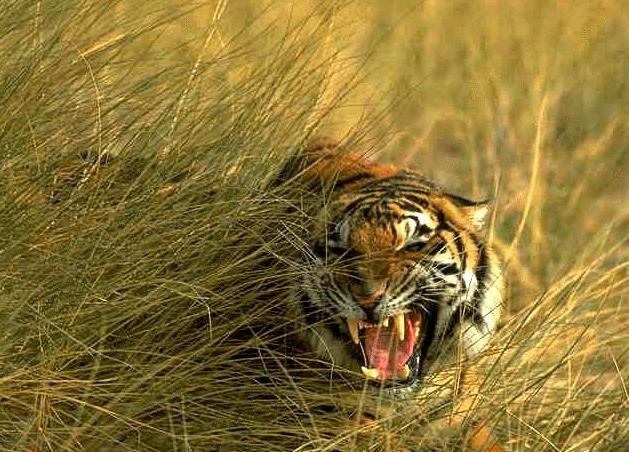
This week for Biodiversity Wednesday, we bring you to the Sundarbans of Bangladesh and eastern India. They’re wild, wet, and full of mangroves and tigers. In fact, it’s the world’s largest mangrove forest at 140,000 hectares and is a UNESCO World Heritage Site for cultural and ecological value. The area is perhaps most famous for housing the charismatic Bengal tiger, estuarine crocodile and Indian python among a habitat of endangered flora and fauna.

The Sundarbans are protected primarily for their unique ecological processes, making it on our list for their special kind of biodiversity. These processes include monsoon rains, flooding, delta formation, tidal influence, and plant colonization that are all part of the life of a dynamic mangrove forest.

Read More “Biodiversity Wednesday – The Sundarbans” »

State of the Field: Hybridity

Posted on January 11, 2011January 11, 2011 By Bluegrass Blue Crab
Uncategorized

Hybridity refers to any object that crosses a conceptual divide. The term is remarkably general and used to investigate the nature of the divide as well as the form of linkages that make the cross. One of the most famous (and relevant to me) is the separation between nature and culture. While there are many scholars that argue that no such divide exists, modern society still likes to separate the human from the habitat. Examples of important hybrid objects to nature-society relations are elk, water, forests, particular mountains, and really anything natural that has importance to society.

Perhaps the most important reason to know about hybrid objects is to be able to recognize them. Some scholars say that investigation of hybrids is the only way to understand the complicated relation between binaries such as nature and society – an understanding necessary for goals such as conservation. Another distinct benefit is that recognizing the hybrid nature of and object provides the ability to also recognize the many aspects of said object. Reversing this logic, understanding how hybrid objects are constructed and function may allow creation of new, interesting and important objects, often from the deepest parts of the imagination.

Read More “State of the Field: Hybridity” »

State of the Field: The Reality of Earth

Posted on January 4, 2011January 4, 2011 By Bluegrass Blue Crab
Science

This post is the first of a new series here at Southern Fried Science called “State of the Field”. The series is meant to introduce key ideas, methods, and theories to support later research posts and to spread these concepts across disciplines. For the first month, I’ll be covering what’s known as “big T” theory to my lab group – that is, grand social theory about how the world works and also the theory that guides research question and method development. Please discuss!

Is there an ultimate reality of earth?

Somewhere in the introduction of most social science papers is a short statement about the author’s philosophy. Scholars in physics have long recognized that you cannot observe something without perturbing the something. In a research world where that something is a person, the subject can tell you how much a researcher is perturbing the observed system. This realization then begs the question – since we can’t observe a pristine system, is there a single reality out there to describe? Or will each researcher have a slightly different, though correct, description of reality based on their interactions with that reality? Or, taking the idea farther, is there no reality at all but instead a world completely constructed by those who describe it? These philosophies are called positivist, critical realist, and social constructionist, respectively.

Depending on the philosophy chosen, there are lots of things at stake such as objective methodology, legitimacy of certain types of knowledge, and the authority of science. Stay tuned for further discussion of these – first let’s get into more detail about the philosophies themselves.

Read More “State of the Field: The Reality of Earth” »

Wicked Problems

Posted on November 30, 2010November 30, 2010 By Bluegrass Blue Crab 3 Comments on Wicked Problems
Science

A little editing back-and-forth today introduced me to a fun new policy word: wicked problems. My initial reaction was that the author was writing informally and taking cues from Boston, but it turns out he was using a legitimate vocabulary word. Wikipedia has a few good definitions, but the Australian Public Service Commissioner described it … Read More “Wicked Problems” »

365 Days of Darwin: November 19, 2010

Posted on November 19, 2010October 27, 2013 By Bluegrass Blue Crab
Uncategorized

A recipe for the evolution of smaller fish stocks?

Posted on November 11, 2010November 11, 2010 By Bluegrass Blue Crab
Science

fish face a tradeoff of where to use their energy, much like the polluted fish in the Lorax by Dr. Suess

Overfishing is most often implicated as the cause of decreasing fish stocks and that makes a lot of logical sense if you’ve ever seen a large commercial trawler unload its catch. But there very well might be another force at work in the precipitous decline in fish stocks worldwide: pollution. The basic premise is that it takes resources to deal with pollutants that normally would be given to growth and reproduction. Through polluting the ocean, we have selected for the fish individuals that can most effectively divert those resources, inadvertently also selecting for smaller fish that reproduce less. That has huge implications for the fish’s population dynamics and potentially total fish stock. More details below the fold…

Read More “A recipe for the evolution of smaller fish stocks?” »

365 Days of Darwin: November 3, 2010

Posted on November 3, 2010October 23, 2010 By Bluegrass Blue Crab
Uncategorized

Charlie makes friends with some pelicans

365 Days of Darwin: November 2, 2010

Posted on November 2, 2010October 23, 2010 By Bluegrass Blue Crab
Uncategorized

Charlie finds the Ocracoke Watermen’s road sign

365 Days of Darwin: November 1, 2010

Posted on November 1, 2010October 23, 2010 By Bluegrass Blue Crab
Uncategorized

Charlie checks out the Ocracoke waterfront

365 days of Darwin: October 31, 2010

Posted on October 31, 2010October 28, 2010 By Bluegrass Blue Crab
Uncategorized

Charlie situates himself for some people watching – Happy Halloween!

Posts pagination

Previous 1 … 10 11 12 … 24 Next

Popular Posts

Playing God - How the ESA "God Squad" just voted for the extinction of a uniquely American whalePlaying God - How the ESA "God Squad" just voted for the extinction of a uniquely American whaleApril 9, 2026Southern Fried Science
The story of the pride flag made from NASA imagery: Bluesky's most-liked imageThe story of the pride flag made from NASA imagery: Bluesky's most-liked imageSeptember 27, 2024David Shiffman
Here's how to join my IMCC8 symposium, "Ocean Science Communication: What's New and What's Next?"Here's how to join my IMCC8 symposium, "Ocean Science Communication: What's New and What's Next?"April 22, 2026David Shiffman
What Ocean Ramsey does is not shark science or conservation: some brief thoughts on "the Shark Whisperer" documentaryWhat Ocean Ramsey does is not shark science or conservation: some brief thoughts on "the Shark Whisperer" documentaryJuly 2, 2025David Shiffman
Our favorite sea monsters – Ningen (#4)Our favorite sea monsters – Ningen (#4)September 7, 2010Andrew Thaler
Join Me at Upwell: A Wave of Ocean Justice — Our Fourth Year!Join Me at Upwell: A Wave of Ocean Justice — Our Fourth Year!March 24, 2026Angelo Villagomez
On the clarity of animals: the art and science of clearing and stainingOn the clarity of animals: the art and science of clearing and stainingDecember 17, 2013Guest Writer
Shark of Darkness: Wrath of Submarine is a fake documentaryShark of Darkness: Wrath of Submarine is a fake documentaryAugust 10, 2014Michelle Jewell
What can the funniest shark memes on the internetz teach us about ocean science and conservation?What can the funniest shark memes on the internetz teach us about ocean science and conservation?November 8, 2013David Shiffman
That's not a blobfish: Deep Sea Social Media is Flooded by AI SlopThat's not a blobfish: Deep Sea Social Media is Flooded by AI SlopDecember 19, 2025Andrew Thaler
Subscribe to our RSS Feed for updates whenever new articles are published.

We recommend Feedly for RSS management. It's like Google Reader, except it still exists.

Southern Fried Science

  • Home
  • About SFS
  • Authors
  • Support SFS


If you enjoy Southern Fried Science, consider contributing to our Patreon campaign.

Copyright © 2026 Southern Fried Science.

Theme: Oceanly Premium by ScriptsTown