Skip to content

Southern Fried Science

Over 15 years of ocean science and conservation online

  • Home
  • About SFS
  • Authors
  • Support SFS

Author: Bluegrass Blue Crab

Chemistry of the Great Big Blue: Sewage

Posted on September 28, 2010 By Bluegrass Blue Crab 3 Comments on Chemistry of the Great Big Blue: Sewage
Uncategorized

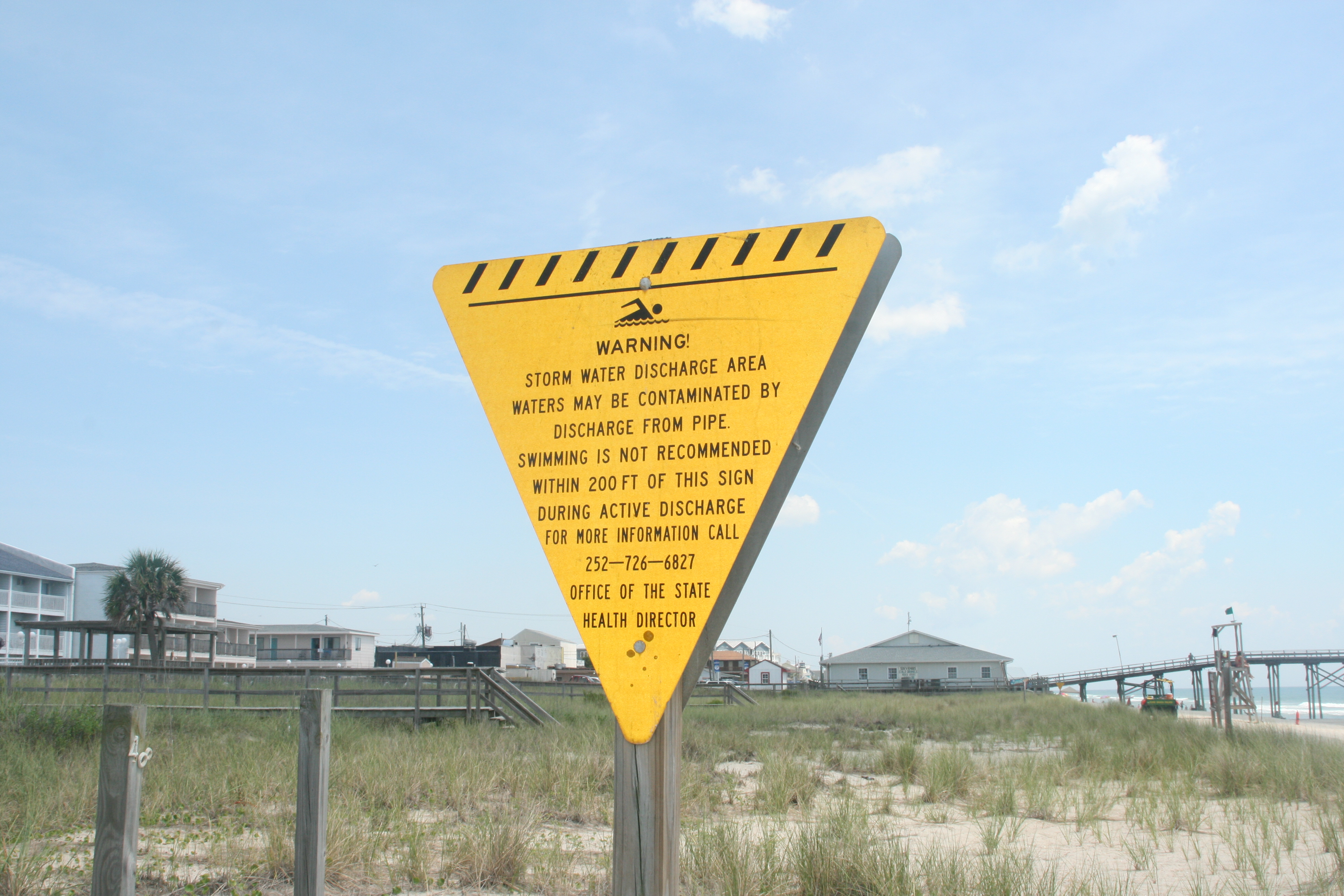
"Warning! Stormwater discharge area may be contaminated by discharge from pipe. Swimming is not recommended within 200 feet of this sign during active discharge"

You live on a rural island. You poop. You flush. Does your island have a sewage treatment plant? Is your plant large enough to deal with the influx of tourists that increases the population of your island by an order of magnitude in the summer? Ever stop to look at the metal pipes on your island’s beach to see what was coming out? More than likely, there’s an ocean outfall involved in your island’s wastewater treatment plan. It may only be for overflow, but it’s an option.

What does “ocean outfall” really mean? Well, often it means raw sewage is dumped into the coastal environment that we all love to swim in.

Read More “Chemistry of the Great Big Blue: Sewage” »

Vignette from the Anthropology of Knowledge: Cree Hunting

Posted on September 24, 2010September 24, 2010 By Bluegrass Blue Crab
Science

Scientific knowledge comes in many forms, some not explicitly science. Social scientists call this “ways of knowing” – you can think of it as a framework on which you hang the specifics as you learn them. The framework is set up early in life and historically, scientific knowledge was held within a religious ‘way of … Read More “Vignette from the Anthropology of Knowledge: Cree Hunting” »

Chemistry of the Great Big Blue: Sedimentation

Posted on September 21, 2010September 21, 2010 By Bluegrass Blue Crab
Science

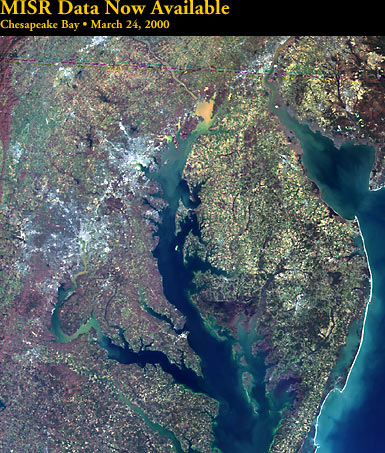
Sedimentation in the Chesapeake - look at the brown toward the headwaters. Found at nasa.gov

Rocks erode, travel down rivers and eventually in the form of small particles, settle in river deltas and estuaries. Even smaller pieces can be carried hundreds of miles into the ocean. It’s all part of the natural process of sedimentation, but like many other natural cycles, this one has been hijacked by human activities. Development, agriculture, channelization of streams, damming and many other practices change the natural course of sediment in the coastal oceans more than the ecosystem can handle.

These changes can either be a drastic increase in sediment runoff from upstream sources or a complete deprivation of naturally occurring deltas. In addition, many pollutants cling to these sediment particles so that changing the location of the sediment also shifts the location of pollution.

Read More “Chemistry of the Great Big Blue: Sedimentation” »

Real Monsters – Viperfish

Posted on September 11, 2010September 10, 2010 By Bluegrass Blue Crab
Uncategorized

The deep-sea, by virtue of no light, cold temperatures, and high pressures, leaves an environment ripe for evolving some pretty strange critters. One of my personal favorites, mostly because of the crazy teeth it boasts, is the viperfish. To me, the viperfish looks like a dessicated version of some sort of alien. In reality, it’s … Read More “Real Monsters – Viperfish” »

The Ocean Is Infinite

Posted on September 10, 2010September 7, 2010 By Bluegrass Blue Crab
Uncategorized

People used to think that the sea’s bounty was infinite. Looking across the vast ocean, it was hard for any single fisherman to believe they could be contributing to the loss of species.

Hugo Grotius, commonly referred to as the founder of natural resources law, described the inexhaustible nature of the ocean:

“The sea is common to all, because it is so limitless that it cannot become a possession of any one, and because it is adapted for the use of all, whether we consider it from the point of view of navigation or of fisheries” (Grotius 1916)

Read More “The Ocean Is Infinite” »

Ocean of Pseudoscience Shorty – Iron Fertilization: The Cure for Global Warming

Posted on September 10, 2010September 2, 2010 By Bluegrass Blue Crab 1 Comment on Ocean of Pseudoscience Shorty – Iron Fertilization: The Cure for Global Warming
Uncategorized

If the marine productivity is iron limited, then adding iron should increase phytoplankton growth. This growth will absorb carbon dioxide from the atmosphere in order to fuel photosynthesis and on a global scale, has the potential to mitigate global warming by absorbing the extra carbon dioxide emitted by human activities. But is it really that … Read More “Ocean of Pseudoscience Shorty – Iron Fertilization: The Cure for Global Warming” »

Ocean of Pseudoscience Shorty – The Montauk Monster

Posted on September 9, 2010February 2, 2012 By Bluegrass Blue Crab 4 Comments on Ocean of Pseudoscience Shorty – The Montauk Monster
Uncategorized

The headlines read: “Dead Monster Washes Ashore in Montauk” So what exactly was this crazy dead thing? Some call it a marketing scheme and no one can deny that it brought attention to the town of Montauk. Others say it might have been a prank by a local filmmaker to bring attention to his movie. … Read More “Ocean of Pseudoscience Shorty – The Montauk Monster” »

Our favorite sea monsters – Scylla and Charybdis (#2)

Posted on September 9, 2010September 2, 2010 By Bluegrass Blue Crab
Popular Culture

Scylla and Charybdis team up to make passing through the Straight of Messina impossible – to be a safe distance from one meant being too close to the other. They were one of Odysseus’ many challenges during his epic journey. Scylla is a six-headed monster storied to have become that way after poisoning by the jealous wife of Poseidon who captured sailors off their boats and ate them. Charybdis is best described as a whirlpool bringing ships to the bottom of the sea. She was the daughter of Poseidon and converted by Zeus.

Read More “Our favorite sea monsters – Scylla and Charybdis (#2)” »

Ocean of Pseudoscience Shorty – Pickles for Seasickness

Posted on September 8, 2010September 8, 2010 By Bluegrass Blue Crab
Uncategorized

My grandfather, who was on board Marine ships from 1928 through the Korean War, used to suggest eating pickles for seasickness. During my recent cruise in the Sargasso Sea, I finally had a chance to test his theory and it worked. Was it just a placebo effect, was it the vitamin C, or something else … Read More “Ocean of Pseudoscience Shorty – Pickles for Seasickness” »

Maximum (un)Sustainable Yield

Posted on September 8, 2010December 20, 2011 By Bluegrass Blue Crab 10 Comments on Maximum (un)Sustainable Yield
Science

This post was chosen as an Editor's Selection for ResearchBlogging.orgIn 1954 and 1957 Gordon and Schaefer respectively described the idea of maximum sustainable yield (MSY) – that is, the amount of fish that could be taken by commercial fishing operations to maximize reproduction by the system year after year. Since then, it has been heralded as the mathematical panacea to fisheries management.

Gordon and Schaefer also described the maximum economic yield which threw price relations into the mix.  It describes the point at which the fishers will make the most money, accounting for revenue and their expenses. Note in the graph below the fold that the maximum economic yield (MEY) is below the MSY in terms of effort. Gordon and Schaefer imagined a private manager or government overseer that could calculate the MEY and regulate fisher behavior in order to meet it. The idea was meant to be win-win for the fishers and the fish.

Read More “Maximum (un)Sustainable Yield” »

Posts pagination

Previous 1 … 12 13 14 … 24 Next

Popular Posts

Playing God - How the ESA "God Squad" just voted for the extinction of a uniquely American whalePlaying God - How the ESA "God Squad" just voted for the extinction of a uniquely American whaleApril 9, 2026Southern Fried Science
The story of the pride flag made from NASA imagery: Bluesky's most-liked imageThe story of the pride flag made from NASA imagery: Bluesky's most-liked imageSeptember 27, 2024David Shiffman
Here's how to join my IMCC8 symposium, "Ocean Science Communication: What's New and What's Next?"Here's how to join my IMCC8 symposium, "Ocean Science Communication: What's New and What's Next?"April 22, 2026David Shiffman
What Ocean Ramsey does is not shark science or conservation: some brief thoughts on "the Shark Whisperer" documentaryWhat Ocean Ramsey does is not shark science or conservation: some brief thoughts on "the Shark Whisperer" documentaryJuly 2, 2025David Shiffman
Our favorite sea monsters – Ningen (#4)Our favorite sea monsters – Ningen (#4)September 7, 2010Andrew Thaler
Join Me at Upwell: A Wave of Ocean Justice — Our Fourth Year!Join Me at Upwell: A Wave of Ocean Justice — Our Fourth Year!March 24, 2026Angelo Villagomez
On the clarity of animals: the art and science of clearing and stainingOn the clarity of animals: the art and science of clearing and stainingDecember 17, 2013Guest Writer
Shark of Darkness: Wrath of Submarine is a fake documentaryShark of Darkness: Wrath of Submarine is a fake documentaryAugust 10, 2014Michelle Jewell
What can the funniest shark memes on the internetz teach us about ocean science and conservation?What can the funniest shark memes on the internetz teach us about ocean science and conservation?November 8, 2013David Shiffman
That's not a blobfish: Deep Sea Social Media is Flooded by AI SlopThat's not a blobfish: Deep Sea Social Media is Flooded by AI SlopDecember 19, 2025Andrew Thaler
Subscribe to our RSS Feed for updates whenever new articles are published.

We recommend Feedly for RSS management. It's like Google Reader, except it still exists.

Southern Fried Science

  • Home
  • About SFS
  • Authors
  • Support SFS


If you enjoy Southern Fried Science, consider contributing to our Patreon campaign.

Copyright © 2026 Southern Fried Science.

Theme: Oceanly Premium by ScriptsTown