Over 15 years of ocean science and conservation online
Author: Andrew Thaler
Marine science and conservation. Deep-sea ecology. Population genetics. Underwater robots. Open-source instrumentation. The deep sea is Earth's last great wilderness.
[The following is a transcript from a talk I gave at the 2019 Minerals, Materials, and Society Symposium at the University of Delaware in August, 2019. It has been lightly edited for clarity.]
Good afternoon and thank you all for
coming. I want to change tracks for a bit and scan the horizon to think about
what the future of exploration and monitoring in the high seas might look like
because ocean and conservation technology is in the midst of an evolutionary
shift in who has access to the tools necessary to observe the deep ocean.
This is the Area. Areas Beyond National
Jurisdiction, International Waters, the High Seas, the Outlaw Ocean. It’s the
portion of the ocean that falls outside of national EEZs and is held in trust
by the UN under the Convention on the Law of the Sea as the Common Heritage of
Humankind. It covers 64% of the ocean and nearly half of the total surface of
the Earth. It’s also the region in which most major deep-sea mining ventures
intend to operate.
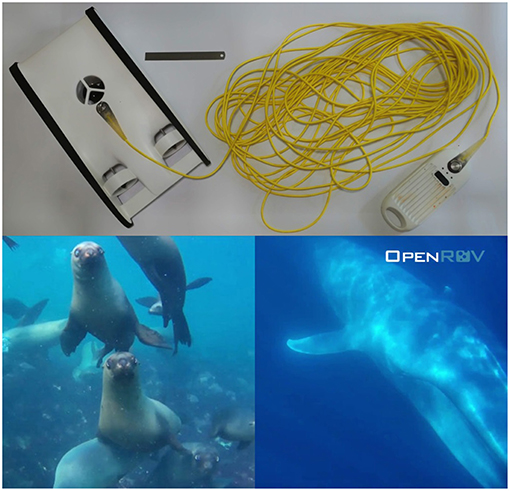
An example of a microROV system. From Thaler et al. (2019)
Today, there are more robots exploring the ocean than ever before. From autonomous ocean-crossing gliders to massive industrial remotely operated vehicles to new tools for science and exploration that open new windows into the abyss, underwater robots are giving people a change to experience the ocean like never before. The fastest growing sector of this new robotic frontier? Small, recreational, observation class ROVs.