Skip to content

Southern Fried Science

Over 15 years of ocean science and conservation online

  • Home
  • About SFS
  • Authors
  • Support SFS

Author: Andrew Thaler

Marine science and conservation. Deep-sea ecology. Population genetics. Underwater robots. Open-source instrumentation. The deep sea is Earth's last great wilderness.

A global assessment of biodiversity and research effort at active Seafloor Massive Sulphides: Transcript from my talk at the International Seabed Authority.

Posted on August 6, 2019August 6, 2019 By Andrew Thaler
Conservation, Science

[The following is a transcript from a talk I gave at a side event during Part II of the 25th Session of the International Seabed Authority in July, 2019. It has been lightly edited for clarity.]

I want to change gears this afternoon and talk about a very different kind of mining. For the last two years, Diva and I have been engaged in a data mining project to discover what we can learn and what we still need to learn about biodiversity at hydrothermal vents from the 40-year history of ocean exploration in the deep sea.

Read More “A global assessment of biodiversity and research effort at active Seafloor Massive Sulphides: Transcript from my talk at the International Seabed Authority.” »

What we’ve missed in the Abyss: Mining 40 years of cruise reports for biodiversity and research effort data from deep-sea hydrothermal vents.

Posted on August 6, 2019August 6, 2019 By Andrew Thaler
Science

“When the RV Knorr set sail for the Galapagos Rift in 1977, the geologists aboard eagerly anticipated observing a deep-sea hydrothermal vent field for the first time. What they did not expect to find was life—abundant and unlike anything ever seen before. A series of dives aboard the HOV Alvin during that expedition revealed not only deep-sea hydrothermal vents but fields of clams and the towering, bright red tubeworms that would become icons of the deep sea. So unexpected was the discovery of these vibrant ecosystems that the ship carried no biological preservatives. The first specimens from the vent field that would soon be named “Garden of Eden” were fixed in vodka from the scientists’ private reserves.”

Thaler and Amon 2019

In the forty years since that first discovery, hundreds of research expedition ventured into the deep oceans to study and understand the ecology of deep-sea hydrothermal vents. In doing so, they discovered thousands of new species, unraveled the secrets of chemosynthesis, and fundamentally altered our understanding of what it means to be alive on this planet. Now, as deep-sea mining crawls slowly towards production, we must transform those discoveries into conservation and management principles to safeguard the diversity and resilience of life in the deep sea.

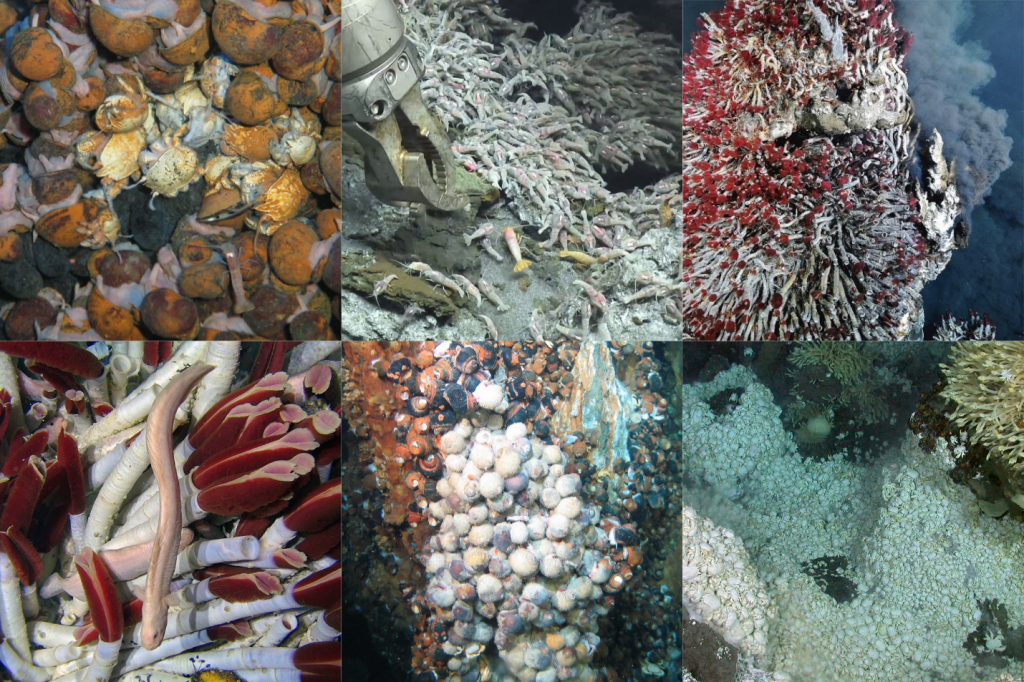
Biodiversity of hydrothermal vents from around the world. Top: Indian Ocean, Mid-Atlantic Ridge, Juan de Fuca Ridge. Bottom: East Pacific Rise, Southwest Pacific, Southern Ocean. Photo credits (top left to bottom right): University of Southampton; Woods Hole Oceanographic Institute; Ocean Networks Canada; Woods Hole Oceanographic Institute; Nautilus Minerals; University of Southampton.

Though research at hydrothermal vents looms large in the disciplines of deep-sea science, relative to almost any terrestrial system, they are practically unexplored. Over the last 2 years, Drs. Andrew Thaler and Diva Amon have poured through every available cruise report that made a biological observation at the deep-sea hydrothermal vent to assess how disproportionate research effort shapes or perception of hydrothermal vent ecosystems and impacts how we make management decisions in the wake of a new form of anthropogenic disturbance.

Read More “What we’ve missed in the Abyss: Mining 40 years of cruise reports for biodiversity and research effort data from deep-sea hydrothermal vents.” »

262 Voyages Beneath the Sea: the graphical abstract

Posted on August 6, 2019August 6, 2019 By Andrew Thaler
Science, Uncategorized

Read the full, open access paper “262 Voyages Beneath the Sea: A global assessment of macro- and megafaunal biodiversity and research effort at deep-sea hydrothermal vents” at PeerJ!

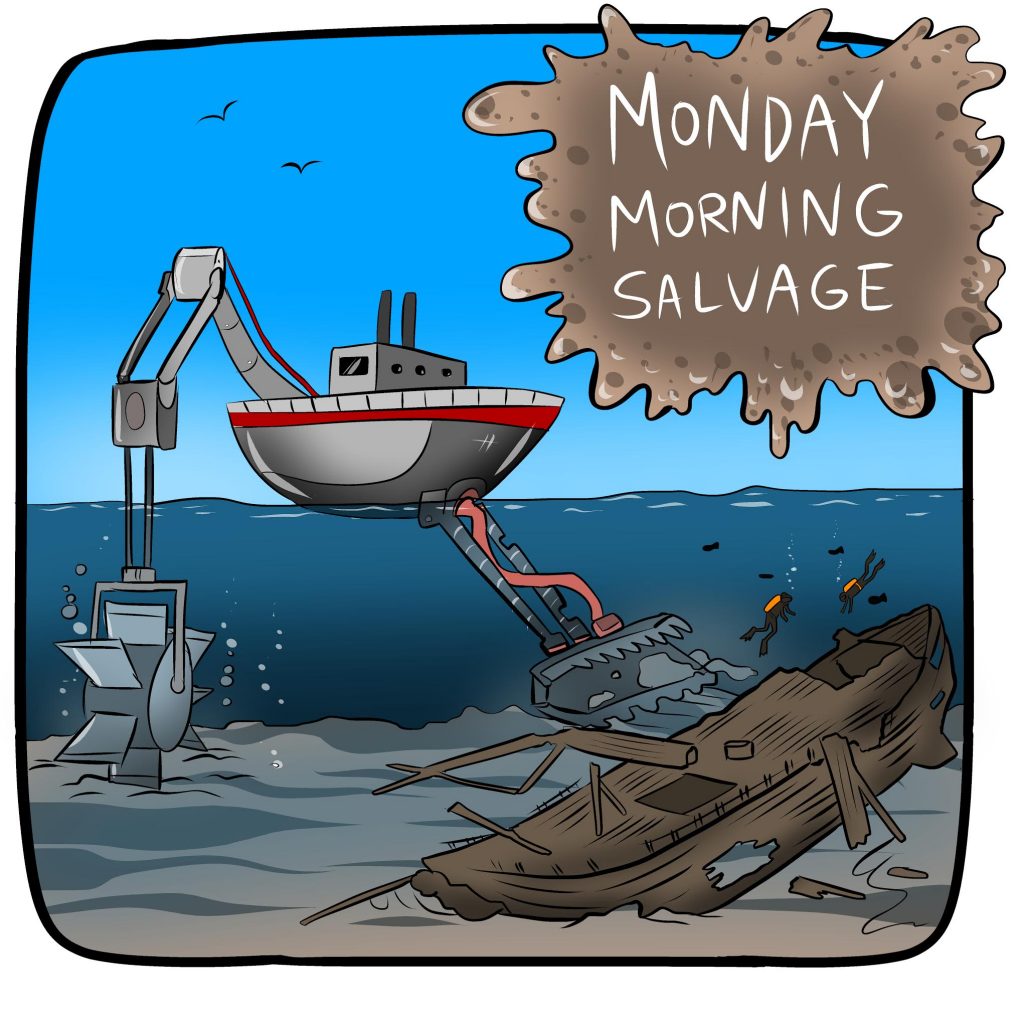
Protecting the Iron Snail, more then meets the eye, ROV-bot in disguise, saying farewell to a glacier, and more! Monday Morning Salvage: July 29, 2019.

Posted on July 29, 2019July 28, 2019 By Andrew Thaler
Weekly Salvage

Foghorn (A Call to Action!)

  • For US Citizens: Call your representatives and demand Impeachment Hearings. Now. It is, in point of fact, the absolute least you can do.

Flotsam (what we’re obsessed with right now)

  • I can’t speak to the practicality of this beyond a few very niche applications, but it is still awesome. Aquanaut, an autonomous submarine that transforms into a humanoid robot.
  • Scientists Just Discovered a 310-Mile Coral Reef Corridor in the Gulf of Mexico.
  • The Trek to Bid Farewell to an Icelandic Glacier: A plaque will soon mark the site of Okjökull, one of Iceland’s dearly departed.
The copper plaque will be installed on Ok in August 2019. COURTESY RICE UNIVERSITY.

Read More “Protecting the Iron Snail, more then meets the eye, ROV-bot in disguise, saying farewell to a glacier, and more! Monday Morning Salvage: July 29, 2019.” »

A big-hearted iron snail is the first deep-sea species to be declared endangered due to seabed mining.

Posted on July 22, 2019July 22, 2019 By Andrew Thaler
Conservation, Science

[Note: this article originally appeared on the Deep-sea Mining Observer. It is republished here with permission.]

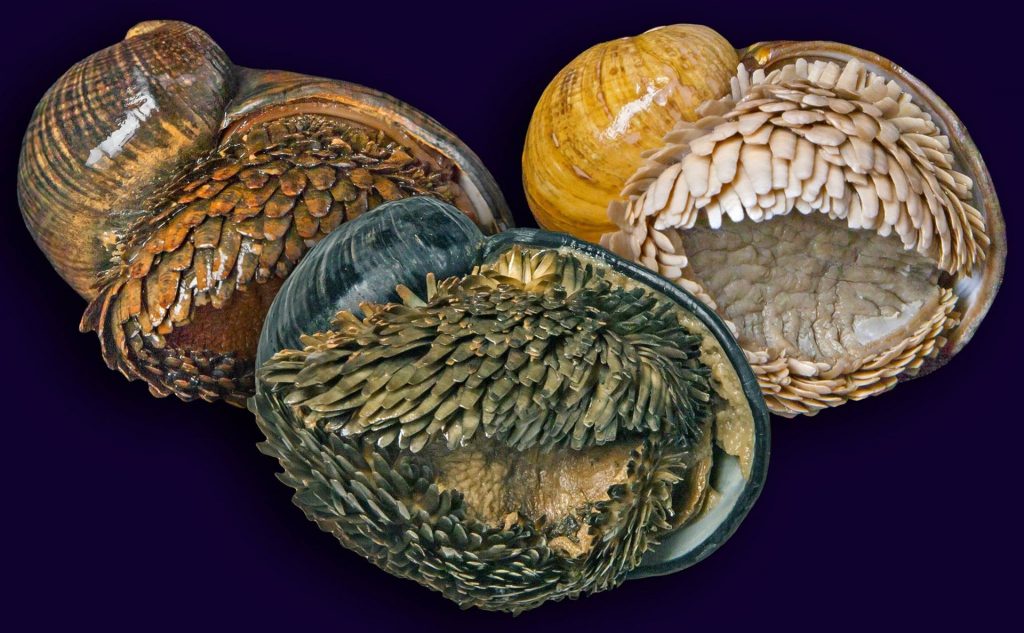
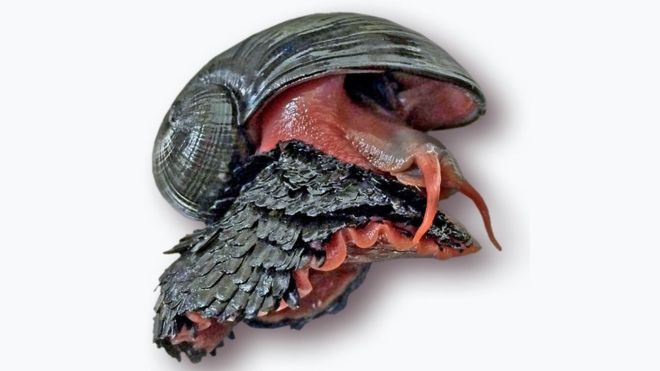
In 2001, on an expedition to hydrothermal vent fields in the Indian Ocean, researchers made a bizarre discovery. Clustered in small aggregations around the base of a black smoker was an unusual snail, seemingly clad in a suit of armor. Rather than a single, hard, calcareous structure, the snail’s operculum was covered in a series of tough plates. On recovery to the surface, those plates, as well as the snail’s heavy shell, began to rust. This was an Iron Snail.

Individuals from the three known populations of C. squamiferum: Kairei, Longqi, Solitaire (left to right). Chong Chen.

Read More “A big-hearted iron snail is the first deep-sea species to be declared endangered due to seabed mining.” »

Saving the Iron Snail, Ghosts of the Potomac, Invasion of the Land Crabs, and More! Monday Morning Salvage: July 22, 2019.

Posted on July 22, 2019July 22, 2019 By Andrew Thaler
Weekly Salvage

Foghorn (A Call to Action!)

This week in deep-sea mining:

  • Seabed-Mining Foes Press U.N. to Weigh Climate Impacts. Minerals used in electronics are found on the seafloor, but disturbing them could release carbon.
  • Red List: Extinction threat to overlooked species.
The scaly-foot snail lives only at hydrothermal vent sites. Chong Chen.

Flotsam (what we’re obsessed with right now)

SPACE!

  • One Small Step for Man, One Giant Leap for the Merchant Marine
  • Discard Studies with an incredibly important dissection of the Tragedy of the Commons: The Tragedy of the Tragedy of the commons.

Read More “Saving the Iron Snail, Ghosts of the Potomac, Invasion of the Land Crabs, and More! Monday Morning Salvage: July 22, 2019.” »

Negotiating the future of the deep sea, a new National Marine Sanctuary in the heart of the Potomac, nom-nomming crabs, running subs, and more! Monday Morning Salvage: July 15, 2019.

Posted on July 15, 2019July 22, 2019 By Andrew Thaler
Weekly Salvage

Foghorn (A Call to Action!)

Once again, delegates from around the world will gather in Kingston, Jamaica to negotiate the future of the deep sea. It’s Part II of the 25th Session of the International Seabed Authority. Watch, Live!

http://bit.ly/ISA25-Live

Need to catch upon the last 25 years of deep-sea mining, exploration, and policy? The Deep-sea Mining Observer has you covered! Read through archives and back-issues, here: Deep-sea Mining Observer.

http://dsmobserver.com/

Flotsam (what we’re obsessed with right now)

  • It’s been over 15 years since we’ve had a new National Marine Sanctuary. Say hello to Mallows Bay-Potomac River National Marine Sanctuary.
  • Russian nuclear submarine: Norway finds big radiation leak. Good thing we had our favorite nuclear anthropologist discuss what to do when you find a nuke in the ocean for last month’s Deep-sea Mining Observer.

Read More “Negotiating the future of the deep sea, a new National Marine Sanctuary in the heart of the Potomac, nom-nomming crabs, running subs, and more! Monday Morning Salvage: July 15, 2019.” »

Japan returns to commercial whaling, octopuses are probably smarter than you, oil companies are burning oil to refreeze permafrost, and more! Monday Morning Salvage: July 8, 2019.

Posted on July 8, 2019July 7, 2019 By Andrew Thaler
Weekly Salvage

Flotsam (what we’re obsessed with right now)

  • The women fish sellers of West Africa, a great video from China Dialogue.
  • How smart are octopuses? So smart! For Smart Animals, Octopuses Are Very Weird.

Read More “Japan returns to commercial whaling, octopuses are probably smarter than you, oil companies are burning oil to refreeze permafrost, and more! Monday Morning Salvage: July 8, 2019.” »

Alexa, open the pod bay doors; or how I learned to stop worrying and hack the wiretap in my home.

Posted on June 26, 2019June 26, 2019 By Andrew Thaler
Popular Culture

Confession: I have an Amazon Echo. I really like Amazon Echo. I use Amazon Echo almost every day.

Everything about the Amazon Echo is great, except for the primary feature of the Amazon Echo: it is always listening. When I received the Echo nearly five years ago, as a gift, Amazon was not quite the Surveillance Capitalism behemoth that it is now. They packaged their new smart speaker with lots of information about privacy and what Echo can and can’t and won’t do.

Of course, none of that turned out to be true. In just the last year, Echos have been turned into permanent recording devices, listened to a couple’s conversations and then inexplicably sent those conversations to the husband’s employer, and sent 1,700 voice recordings to a totally random stranger. Amazon hasn’t exactly done much to help the image of Echos as Bradburian household horrors, unveiling an Echo Dot for Kids, filling patents for true always-on recording, releasing recordings to outside contractors, and, perhaps most egregious of all, embedding Alexa into a Big Mouth Billy Bass.

It’s reached the point where no one should feel comfortable having an always-on speaker in their home, but damn if these little things aren’t just so convenient. On top of being useful for quick searches, playing Baby Shark on repeat 40 times, checking the weather, and dozens of other little things, the original Echo was a really good speaker. It seems a waste to throw the whole thing away just because one feature is unacceptable.

Read More “Alexa, open the pod bay doors; or how I learned to stop worrying and hack the wiretap in my home.” »

Boaty McBoatface triumphs, Narluga ascends, Sharks decline, too many bro-authors, and more! Monday Morning Salvage: June 24, 2019

Posted on June 24, 2019June 23, 2019 By Andrew Thaler
Weekly Salvage

Foghorn (A Call to Action!)

In every issue of the Monday Morning Salvage, we try to highlight 2 to 5 papers from the scientific literature. In doing so, we attempt to provide a broad and diverse cross-section of the diversity of people conducting scientific research. However, our priority is in highlighting papers of particular interest to ocean science, and occasionally that means that we end up recommending papers that are exclusively authored by men. A new paper by Salerno and friends highlights the extreme extent to which papers led by men excludes women co-authors.

To do our small part to push back against this phenomenon, we are adopting a new style guide for paper citations. Conventionally, at Southern Fried Science, we use the colloquial “and friends” instead of “et al.” to make paper citations more approachable and less jargon-y. Going forward, in cases where a paper contains only male co-authors, we will instead replace “et al.” with “and some other dudes“.

Flotsam (what we’re obsessed with right now)

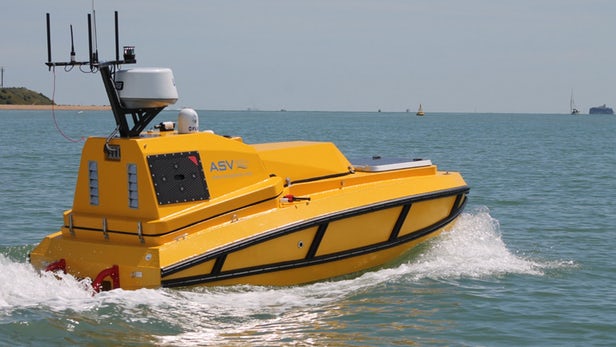
  • It is the hero we deserve. Boaty McBoatface Just Helped Solve a Deep-Sea Mystery.
Boaty McBoatface, fresh off of doing science. Photo: NOC
  • Shark populations in NC coastal waters are down, despite uninformed opinions based on absolutely nothing.
  • It may be formed from rock and plastic, but ‘plasticrust’ is by far the most Metal name they could have come up with. A Strange New Blend of Rock and Plastic Is Forming on a Portuguese Island.
“Plasticrust” sticking to rocks on the shores of Madeira. Photo: Ignacio Gestoso

Read More “Boaty McBoatface triumphs, Narluga ascends, Sharks decline, too many bro-authors, and more! Monday Morning Salvage: June 24, 2019” »

Posts pagination

Previous 1 … 19 20 21 … 149 Next

Popular Posts

The story of the pride flag made from NASA imagery: Bluesky's most-liked imageThe story of the pride flag made from NASA imagery: Bluesky's most-liked imageSeptember 27, 2024David Shiffman
"Why Sustainable Seafood Matters" is now available for preorder! Here's what it's about, and why I decided to write it."Why Sustainable Seafood Matters" is now available for preorder! Here's what it's about, and why I decided to write it.June 8, 2026David Shiffman
What Ocean Ramsey does is not shark science or conservation: some brief thoughts on "the Shark Whisperer" documentaryWhat Ocean Ramsey does is not shark science or conservation: some brief thoughts on "the Shark Whisperer" documentaryJuly 2, 2025David Shiffman
Tackling the least important debate in deep-sea mining: the desultory hyphenTackling the least important debate in deep-sea mining: the desultory hyphenJune 8, 2026Andrew Thaler
Deep-sea Mining, Domestic Cats, Star Trek, and Ocean Exploration: Andrew's mid-year podcast round-up.Deep-sea Mining, Domestic Cats, Star Trek, and Ocean Exploration: Andrew's mid-year podcast round-up.June 6, 2026Andrew Thaler
Shark of Darkness: Wrath of Submarine is a fake documentaryShark of Darkness: Wrath of Submarine is a fake documentaryAugust 10, 2014Michelle Jewell
What is a Sand Shark?What is a Sand Shark?November 12, 2017Chuck Bangley
I just told 850 shark scientists a hard truth: We’re not communicating shark conservation correctly.I just told 850 shark scientists a hard truth: We’re not communicating shark conservation correctly.June 1, 2026David Shiffman
That's not a blobfish: Deep Sea Social Media is Flooded by AI SlopThat's not a blobfish: Deep Sea Social Media is Flooded by AI SlopDecember 19, 2025Andrew Thaler
Why ocean science is still one of the worst-funded scientific fields worldwideWhy ocean science is still one of the worst-funded scientific fields worldwideJune 3, 2026Chris Parsons
Subscribe to our RSS Feed for updates whenever new articles are published.

We recommend Feedly for RSS management. It's like Google Reader, except it still exists.

Southern Fried Science

  • Home
  • About SFS
  • Authors
  • Support SFS


If you enjoy Southern Fried Science, consider contributing to our Patreon campaign.

Copyright © 2026 Southern Fried Science.

Theme: Oceanly Premium by ScriptsTown