Skip to content

Southern Fried Science

Over 15 years of ocean science and conservation online

  • Home
  • About SFS
  • Authors
  • Support SFS

Author: Andrew Thaler

Marine science and conservation. Deep-sea ecology. Population genetics. Underwater robots. Open-source instrumentation. The deep sea is Earth's last great wilderness.

A precautionary approach to health and safety while using awesome, awesome laser cutters in the home.

Posted on February 15, 2018March 11, 2018 By Andrew Thaler
Uncategorized

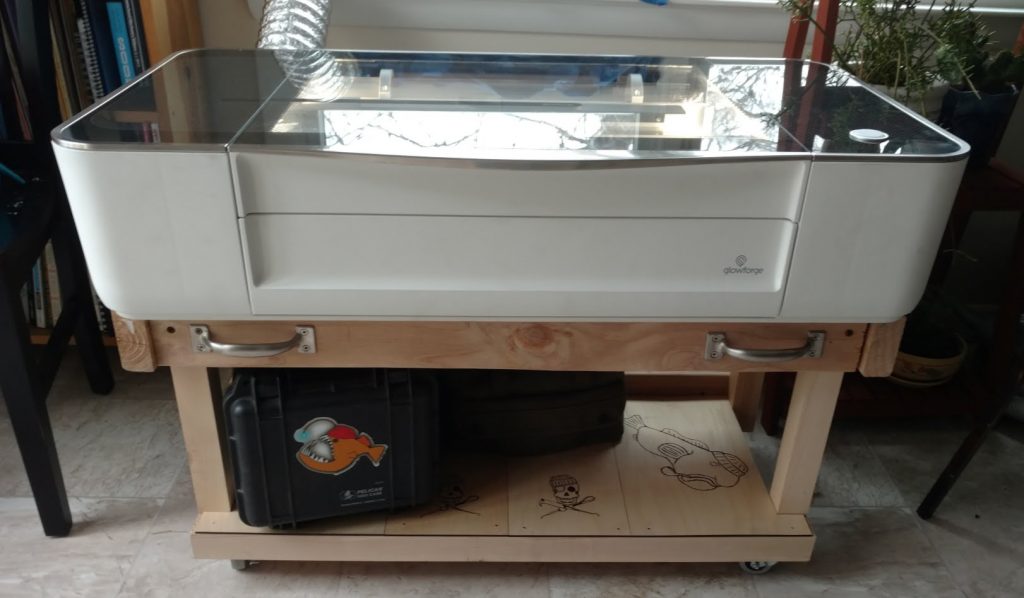
Holy Mola, Laser Cutters! If you follow me on Instagram, you’ve probably seem some pretty cool projects coming out of my freshly arrived Glowforge laser cutter.

But laser cutters are not all sunshine and cool, wooden hinges. Laser cutters were, until very recently, the domain of industrial fabrication shops with extensive safety systems. As a new generation of low(er) cost, hobby and household cutters enter the market, we need to step back an think critically about the potential health and safety impacts of these incredible machines.

Like I did with 3D printers a few years back, I’m taking a deep dive into the hazards of laser cutters in the home and how to avoid them.
First, the issues of least concern (not because they aren’t bad, just that they’re far less likely to occur).

Fire. Lots of materials can catch fire, including, to no one’s surprise, wood. A fire safety plan will go a long way, but you can avoid ruining your laser cutter by being aware of what materials frequently catch fire. ABS, HDPE, polystyrene and polypropylene, and anything with poor thermal properties is going to ignite rather than cut cleanly. And then you’re going to have a bad day.

Beam escape. If your machine is not well taken care of and well shielded, there’s a small chance the wrong materials or loose connections can result in a beam escape, which can injure the user, bystanders, pets, or anything else that gets in the laser’s path. Most hobby grade lasers have good safety features to prevent this (although cheap knock-off machines are starting to hit the markets that may not be up to par), but monitoring you equipment and keeping it properly maintained will go a long way to avoiding this.

But those aren’t the biggest concerns. Th biggest concern with laser cutters is the byproduct that happens every time you cut, no mater what. That’s right, I’m talking about:

Fumes! 

This is the big one and the issue that I’m most concerned about. Laser cutters haven’t really left industrial settings until now, so we don’t have very good data on chronic exposures of laser cutting fumes, especially on young children and pregnant people. What we do know is that the fumes produced by laser cutter depend heavily on the materials you choose to cut.

All materials will produce fumes when cut, which is why it’s essential that your set-up is well-ventilated. Most hobby cutters have a vent port that you can connect to a dryer vent or to the outside. I actually don’t recommend using a dryer vent. In all the rental houses I’ve lived in, not one has ever had the dryer properly vented, and hooking up to your dryer port might mean that you’re just venting into the crawlspace or the wall, rather than out of you house. Go for the window. There’s no hard and fast rule for how much ventilation you need, other than as much as possible. For 3D printers we recommended that your ventilation system moves 3 times as much air as the volume of the room per hour. For laser cutters, it should probably be more.

Everything you cut is going to release volatile organic compounds (VOCs), which is why ventilation is essential. For things like hardwoods and paper products, the VOCs released are comparable to a woodburning stove, frying too much bacon, or sitting around a campfire (though sitting around a campfire will give you a much higher dose). Prolonged exposure can cause respiratory problems and asthma. More complex materials like plywoods and plastics can have some pretty nasty compounds, so you want to make absolutely sure you know what’s going into your laser cutter, be aware of what materials should never, ever go into you household cutter, and always ventilate, ventilate, ventilate.
Read More “A precautionary approach to health and safety while using awesome, awesome laser cutters in the home.” »

Conservation has a Trolley Problem

Posted on February 13, 2018February 13, 2018 By Andrew Thaler
Conservation

A train screams down the tracks. Dead ahead, a pile of of giant pandas frolic, inexplicably, through a bamboo stand growing through the rails. But wait! There’s a switch. Pulling it will divert the train onto another track, where a tank containing one of the last 30 vaquita will surely be crushed. Do you pull the lever, dooming the vaquita, or hold the line, flattening the frolicking pandas? Do you stammer indecisively, wondering how you ended up in this situation as you careen, inexorably, into into an increasingly unavoidable outcome?

What if, rather than the conductor’s seat, you’re at the helm of a conservation organization? What if the train wasn’t a hundred tons of steel and steam, but the relentless press of public will, funding, and focus upon which it is your duty to shape and direct into action?

What if conservation has a Trolley Problem?

Ah the Trolley Problem, the thought experiment turned pop-philosophy darling whose use and misuse is, at best, an annoyance to every ethicist I know. Regrettably, I do them no favors here.

Read More “Conservation has a Trolley Problem” »

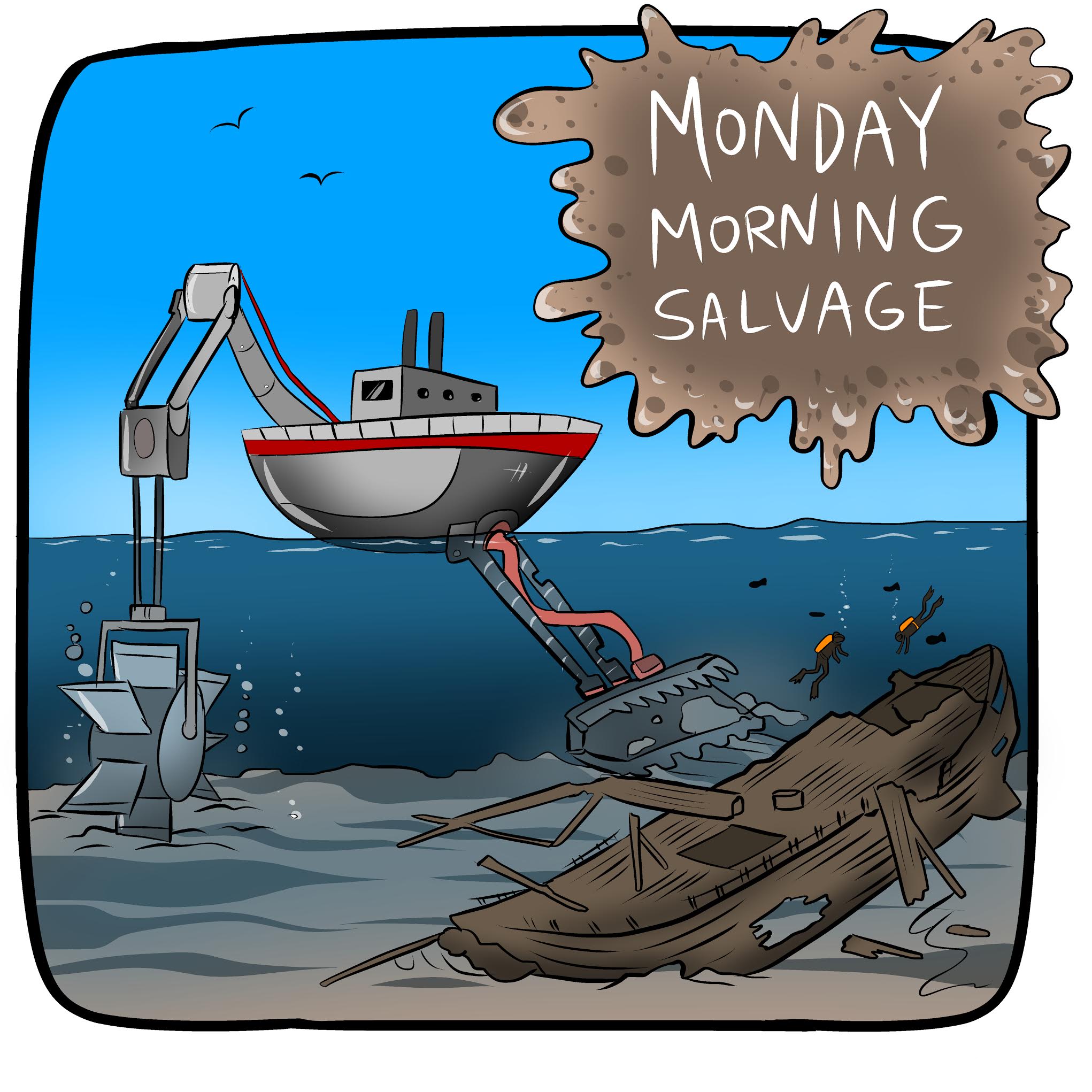
Skate saunas, clone armies, deep news from deep-sea mining, an ocean of plastic, and more! Monday Morning Salvage: February 12, 2018.

Posted on February 12, 2018February 13, 2018 By Andrew Thaler
Weekly Salvage

Flotsam (what we’re obsessed with right now)

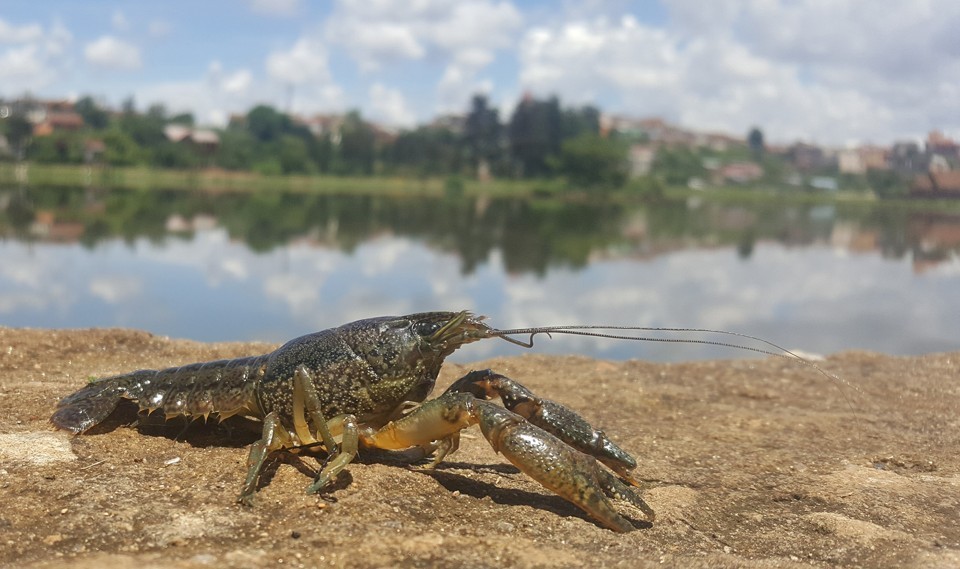
  • Attack of the clones! A Pet Crayfish Can Clone Itself, and It’s Spreading Around the World!
Ranja Andriantsoa/The Atlantic
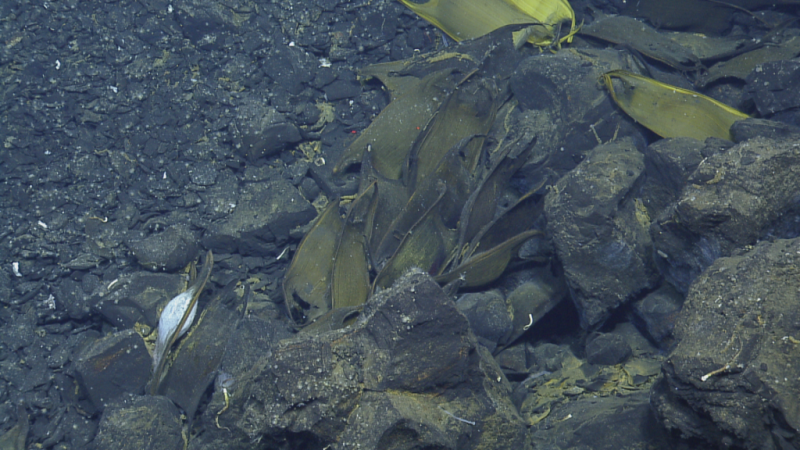
  • One of the take-home points in the talk I gave last Friday is that we barely know anything about the services hydrothermal vents provide to the rest of the ocean ecosystems. Deep-sea hydrothermal vents are nurseries for skates.
ROV framegrab of Pacific white skate egg sacs near a black smoker in the Galapagos. Photo Courtesy Ocean Exploration Trust

Read More “Skate saunas, clone armies, deep news from deep-sea mining, an ocean of plastic, and more! Monday Morning Salvage: February 12, 2018.” »

Hacking tractors, foraging in the surf, mini-boats, Mardi Gras beads, and more! Monday Morning Salvage: February 5, 2018.

Posted on February 5, 2018 By Andrew Thaler
Weekly Salvage

Flotsam (what we’re obsessed with right now)

  • This little video is a master class in natural history: Foraging on a beach in Wales.
  • Tractor Hacking: The Farmers Breaking Big Tech’s Repair Monopoly.

Read More “Hacking tractors, foraging in the surf, mini-boats, Mardi Gras beads, and more! Monday Morning Salvage: February 5, 2018.” »

2 minutes to midnight, 3D printed turtle eggs, awkward fiddlers, Egyptian welders, and more! Monday Morning Salvage: January 29, 2018.

Posted on January 29, 2018January 29, 2018 By Andrew Thaler
Weekly Salvage

Fog Horn (A Call to Action)

  • Good morning. The time is now 2 minutes to mid-night. Doomsday Has Never Been Closer. Good luck.

Despite the fact that we live in extremely dangerous times, the scientists in charge of the clock said there is hope. The clock has been wound backwards before, in the wake of the Cold War or during times when nuclear superpowers expressed interest in not mutually assuring destruction.

The scientists argue that civil society should turn the screws on government to reduce carbon emissions and push for even more ambitious climate action than what the Paris Agreement calls for. That sounds like a more fruitful plan than huddling in a bunker.

Source.

Flotsam (what we’re obsessed with right now)

  • Some technology is pretty good, though: Cracking down on poaching with 3D-printed fake turtle eggs

Read More “2 minutes to midnight, 3D printed turtle eggs, awkward fiddlers, Egyptian welders, and more! Monday Morning Salvage: January 29, 2018.” »

6 Essential Tips for the 3D Printing Newbie.

Posted on January 23, 2018 By Andrew Thaler
Education
It’s meta.

If you’re like me, you’ve probably been enjoying watching David Shiffman and Craig McClain take their first steps into 3D printing. For a small subset of people, small consumer 3D printers can be an incredibly useful tool, for a larger subset, 3D printing has fantastic teaching applications, but for most enthusiasts, it’s a fun hobby. Fortunately, the 3D printing hype train has slowed down in the last few years and it is now much easier to separate the wheat from the chaff and drill down into the applications where 3D printing really shines.

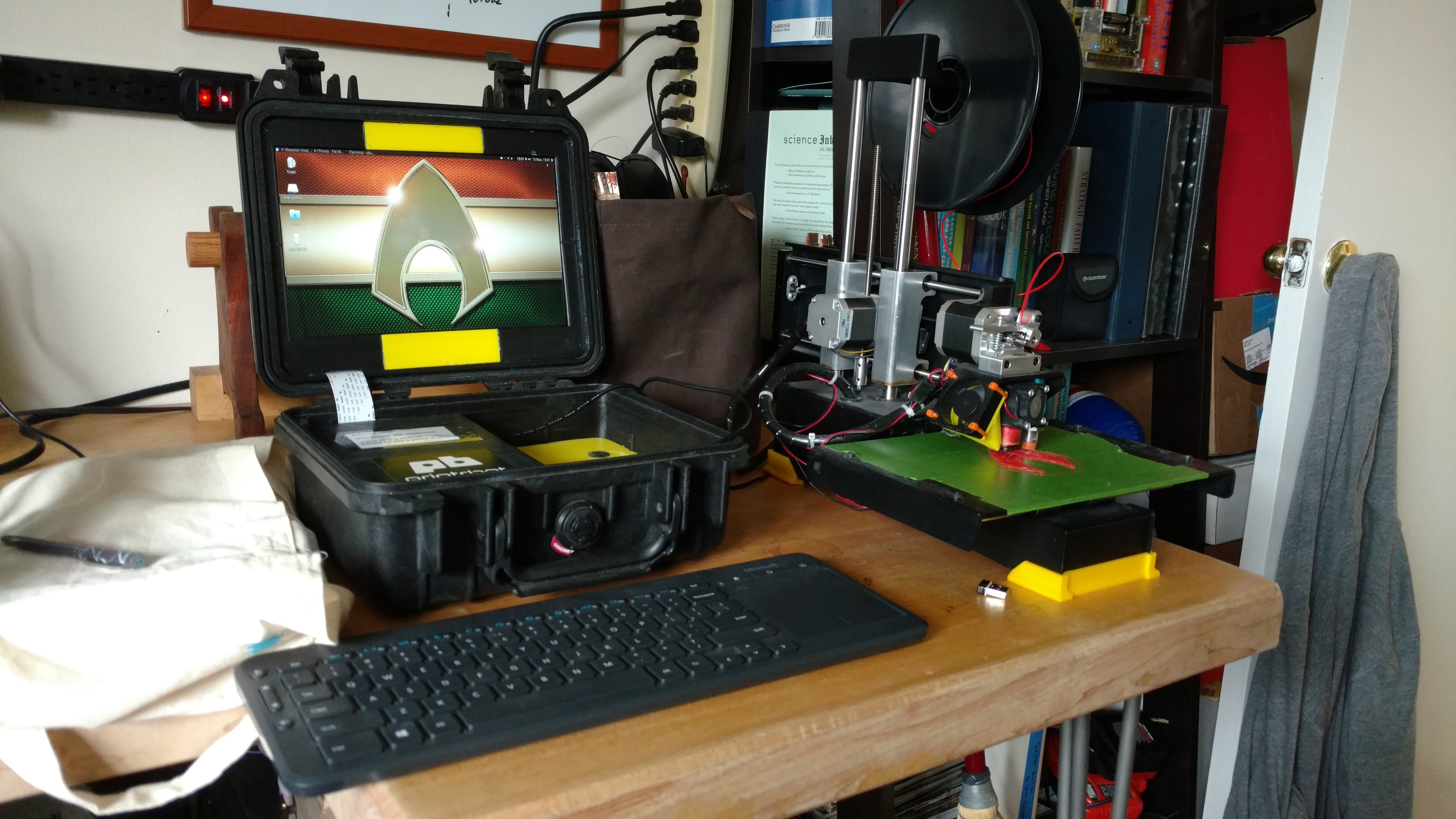
3D printers are fairly inexpensive now. You can get a pretty okay 3D printer like the Monoprice Mini (which we used at various hack-a-thons and maker events) for around $220 USD on Amazon. I’ve worked a bit with that particular printer and it’s good. It won’t blow you away but it will do everything you’d expect a solid 3D printer to do. My in house machine is a Printrbot Simple Metal, which has since been replaced by the Simple Pro. It’s not the cheapest one out there, but it’s an absolute beast, taking all the abuse I can throw at it. It’s even been to sea.

Read More “6 Essential Tips for the 3D Printing Newbie.” »

Science as graphic novel, baby eels, anglerfish emoji, drone ocean rescue, and more! Monday Morning Salvage: January 22, 2018.

Posted on January 22, 2018January 21, 2018 By Andrew Thaler 1 Comment on Science as graphic novel, baby eels, anglerfish emoji, drone ocean rescue, and more! Monday Morning Salvage: January 22, 2018.
Weekly Salvage

Fog Horn (A Call to Action)

  • The US Government is shut down. This is not great news for science (at the moment, my project to train ROV technicians and deliver 5 – 10 observation-class underwater robots to the Commonwealth of the Northern Mariana Islands is on hold pending resolution). Call you congressperson and give them an earful. Call you senator and give them an earful.

Flotsam (what we’re obsessed with right now)

  • Women Writing About the Wild: 25 Essential Authors: A primer on who to start reading and who you’ve been overlooking for too long.
Nan Shepherd. (Wikimedia Commons)
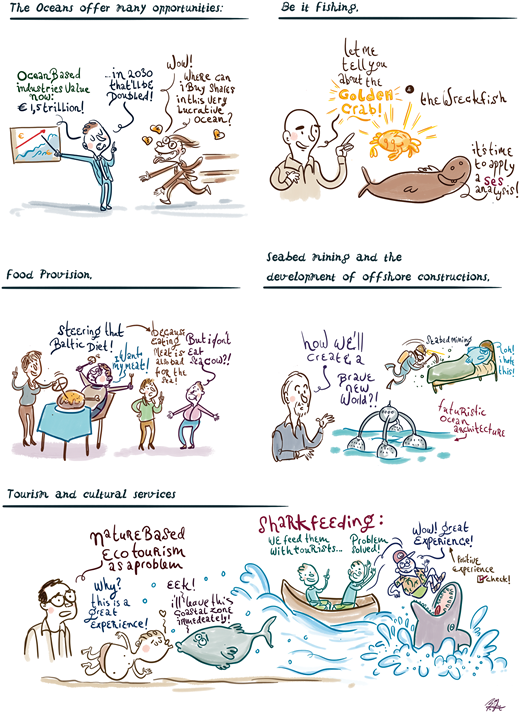
  • This paper: Managing marine socio-ecological systems: picturing the future, which, holy mola, is written in graphic novel format!
Managing marine socio-ecological systems: picturing the future
Managing marine socio-ecological systems: picturing the future.

Read More “Science as graphic novel, baby eels, anglerfish emoji, drone ocean rescue, and more! Monday Morning Salvage: January 22, 2018.” »

Snot Bots for whale health, critical dolphins, lobster considerations, and more! Monday Morning Salvage: January 15, 2018.

Posted on January 15, 2018January 19, 2018 By Andrew Thaler
Uncategorized, Weekly Salvage

Fog Horn (A Call to Action)

  • 2018 is almost certainly going to be a record year for FOIA requests. Learn how to do them right and get results thanks to Pro Publica: I’ve Sent Out 1,018 Open Records Requests, and This Is What I’ve Learned.

Flotsam (what we’re obsessed with right now)

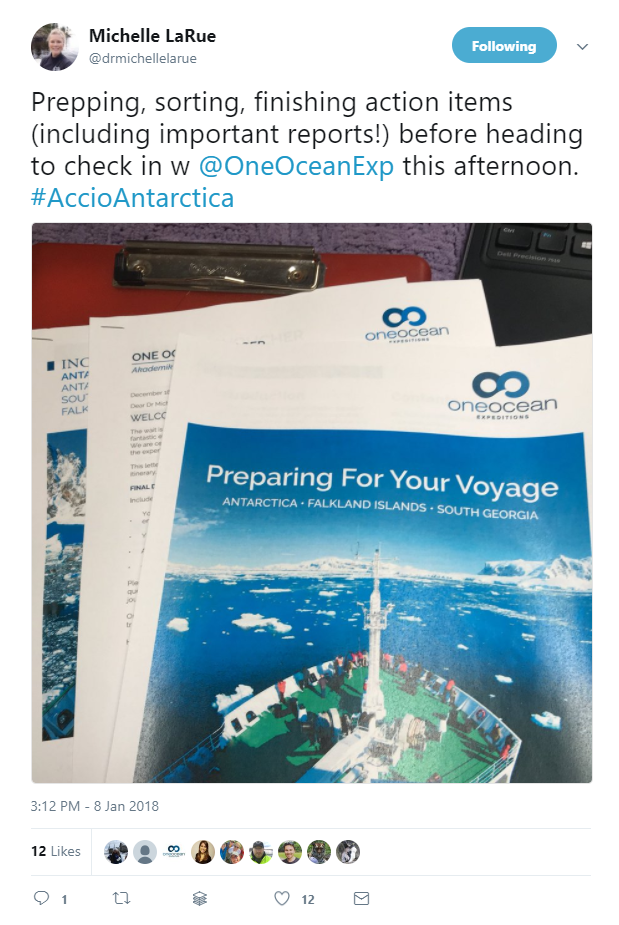
  • Dr. Michelle LaRue is off to Antarctica and you can follow along through the magic of Twitter. #AccioAntarctica!

Screen cap of linked tweet.

  • The Cinematic Legacy of Jacques Cousteau: The man, the myth, the legend, and his persistent influence on screen.
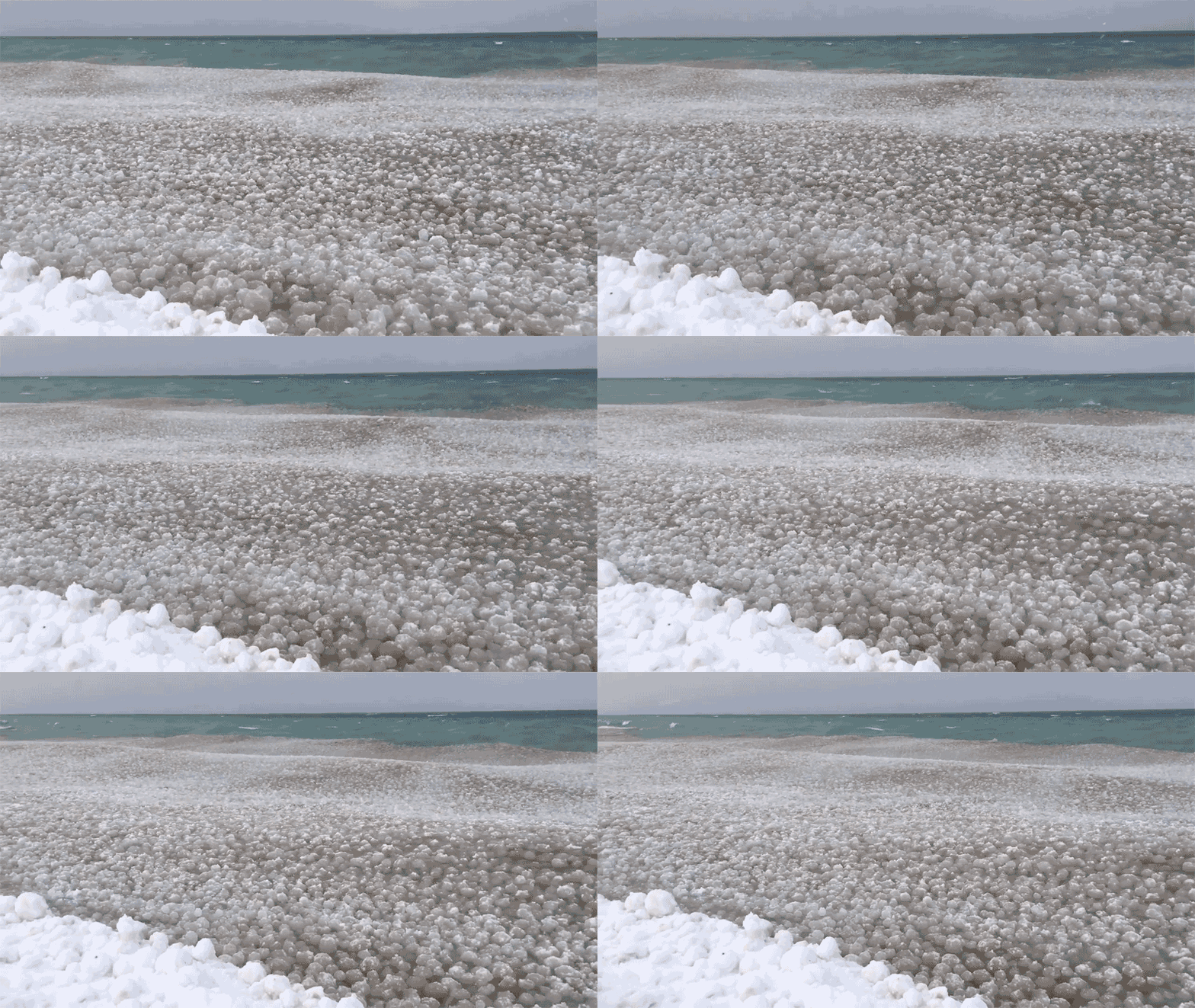
  • Lake Michigan’s Latest Ice Ball Outbreak Was Incredible. Earther has the best GIF game in town.
Ice balls and slush waves.
Paul May via Storyful.

Read More “Snot Bots for whale health, critical dolphins, lobster considerations, and more! Monday Morning Salvage: January 15, 2018.” »

Fish feel pain, mining feels the pressure, sea lions feel excluded, and science publishing feels like an old boys club. It’s the Monday Morning Salvage: January 8, 2018!

Posted on January 8, 2018January 7, 2018 By Andrew Thaler
Weekly Salvage

Fog Horn (A Call to Action)

  • Abstract submission open for the 2018 International Marine Conservation Congress in Kuching, Sarawak this summer! Get your abstracts in early!

Flotsam (what we’re obsessed with right now)

  • This is a pretty big deal: The Year Climate Change Began to Spin Out of Control. The loop is closing fast and if we don’t break the cycle, things will get much worse much faster.

Jetsam (what we’re enjoying from around the web)

  • Fish Feel Pain. Now What? New research raises big questions about humane treatment of sea life.
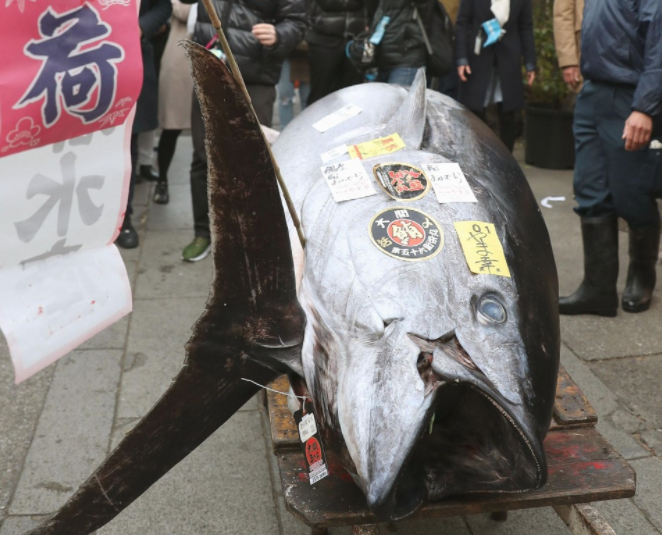
  • The final first-of-year Bluefin Tuna auction at the Tsukiji Fish Market marks the end of an era. It sold for $323,000, far below historic highs.
https://english.kyodonews.net/news/2018/01/7d362d3cdd9b-tsukiji-fish-market-holds-final-new-year-auction.html

Read More “Fish feel pain, mining feels the pressure, sea lions feel excluded, and science publishing feels like an old boys club. It’s the Monday Morning Salvage: January 8, 2018!” »

How to support your favorite Southern Fried Science writers in 2018

Posted on January 2, 2018 By Andrew Thaler
Blogging

Southern Fried Science is growing! Thanks to Patreon and a few passive income streams, for the first time in almost a decade, we’re able to begin paying our volunteer writers for their outreach efforts. This year, we’ve established the Southern Fried Science Writers’ Fund to begin paying out compensation for all the incredible work that … Read More “How to support your favorite Southern Fried Science writers in 2018” »

Posts pagination

Previous 1 … 29 30 31 … 150 Next

Popular Posts

REPORT: Trump rolling back 87% of the nation’s highly protected ocean watersREPORT: Trump rolling back 87% of the nation’s highly protected ocean watersOctober 22, 2026Angelo Villagomez
What Ocean Ramsey does is not shark science or conservation: some brief thoughts on "the Shark Whisperer" documentaryWhat Ocean Ramsey does is not shark science or conservation: some brief thoughts on "the Shark Whisperer" documentaryJuly 2, 2025David Shiffman
Our favorite sea monsters – Ningen (#4)Our favorite sea monsters – Ningen (#4)September 7, 2010Andrew Thaler
That's not a blobfish: Deep Sea Social Media is Flooded by AI SlopThat's not a blobfish: Deep Sea Social Media is Flooded by AI SlopDecember 19, 2025Andrew Thaler
Our favorite sea monsters – The Kraken (#1)Our favorite sea monsters – The Kraken (#1)September 10, 2010Andrew Thaler
What is a Sand Shark?What is a Sand Shark?November 12, 2017Chuck Bangley
Jumping the shark: New study reviews the breaching behavior of sharks and raysJumping the shark: New study reviews the breaching behavior of sharks and raysSeptember 19, 2024David Shiffman
Have we found the city of Atlantis?Have we found the city of Atlantis?September 1, 2026Chris Parsons
What can the funniest shark memes on the internetz teach us about ocean science and conservation?What can the funniest shark memes on the internetz teach us about ocean science and conservation?November 8, 2013David Shiffman
Shark of Darkness: Wrath of Submarine is a fake documentaryShark of Darkness: Wrath of Submarine is a fake documentaryAugust 10, 2014Michelle Jewell
Subscribe to our RSS Feed for updates whenever new articles are published.

We recommend Feedly for RSS management. It's like Google Reader, except it still exists.

Southern Fried Science

  • Home
  • About SFS
  • Authors
  • Support SFS


If you enjoy Southern Fried Science, consider contributing to our Patreon campaign.

Copyright © 2026 Southern Fried Science.

Theme: Oceanly Premium by ScriptsTown