Skip to content

Southern Fried Science

Over 15 years of ocean science and conservation online

  • Home
  • About SFS
  • Authors
  • Support SFS

Author: David Shiffman

Obama’s ocean monuments, deep diving seals, and sustainable US fisheries: Thursday Afternoon Dredging, May 24th, 2018

Posted on May 24, 2018May 24, 2018 By David Shiffman
Uncategorized

Cuttings (short and sweet):  Follow Canadian ocean science communicator Kayla Glynn on twitter. NOAA’s status of stocks. By Steve Midway, for the Fisheries Blog. Antarctic seals recruited to measure the effects of climate change. By Alex Fox, for Nature News. 15,000 lionfish removed from Florida waters. By Ed Killer, for the Treasure Coast Palm. Plastic bag … Read More “Obama’s ocean monuments, deep diving seals, and sustainable US fisheries: Thursday Afternoon Dredging, May 24th, 2018” »

Plastic Free Fish, Chainsaw Lobsters, and Artificial Horseshoe Crab Blood: Thursday Afternoon Dredging, May 17th 2018

Posted on May 17, 2018May 17, 2018 By David Shiffman
Uncategorized

Cuttings (short and sweet):  Follow the Pacific salmon network on twitter! Looking for plastic free fish? Here’s one to put on the menu! By Maggie Gillis, for CBC news Scientists find new deep sea species off Java. BBC slideshow. Unexpected walruses crowd Alaska beach. By the Associated Press. The bigger the mother fish, the more babies … Read More “Plastic Free Fish, Chainsaw Lobsters, and Artificial Horseshoe Crab Blood: Thursday Afternoon Dredging, May 17th 2018” »

Seafaring neanderthals and switchblade fish: A mega Thursday Afternoon Dredging, May 10th, 2018

Posted on May 10, 2018May 9, 2018 By David Shiffman
Uncategorized

After two weeks off, we’re back and bigger than ever! Cuttings (short and sweet):  Follow Archaeologist makes case for seafaring Neanderthals. By Christopher Ingraham, for Scientific American. Larson Creek trout may have been wiped out. By Randy Shore, for the Vancouver Sun. US Coast Guard steps up efforts to protect right whales. From GCaptain. The US … Read More “Seafaring neanderthals and switchblade fish: A mega Thursday Afternoon Dredging, May 10th, 2018” »

Ocean apps and beluga migrations: Thursday Afternoon Dredging, April 19th, 2018

Posted on April 19, 2018 By David Shiffman
Uncategorized

Cuttings (short and sweet):  Follow marine scientist and public educator Maeva Gauthier on twitter! Want to save the ocean? There’s an app for that! By Tim Fitzgerald, for the EDF blog. Historic deal to curb shipping emissions. By Anna Hirtenstein, for Bloomberg. Spoils (long reads and deep dives): How culture guides belugas arctic odyssey. By Joshua … Read More “Ocean apps and beluga migrations: Thursday Afternoon Dredging, April 19th, 2018” »

This month’s 3D printed reward is a horn shark and horn shark egg case!

Posted on April 18, 2018April 17, 2018 By David Shiffman
Science

I recently unveiled a new tier of Patreon rewards: 3D printed shark and ray models! For $17 per month, you will get a monthly 3D printed educational model of different shark or ray parts in the mail, and you’ll be supporting my efforts to provide these models to schools for free.

This month’s reward is a model of a horn shark (Heterodontus francisci) and a horn shark egg case!
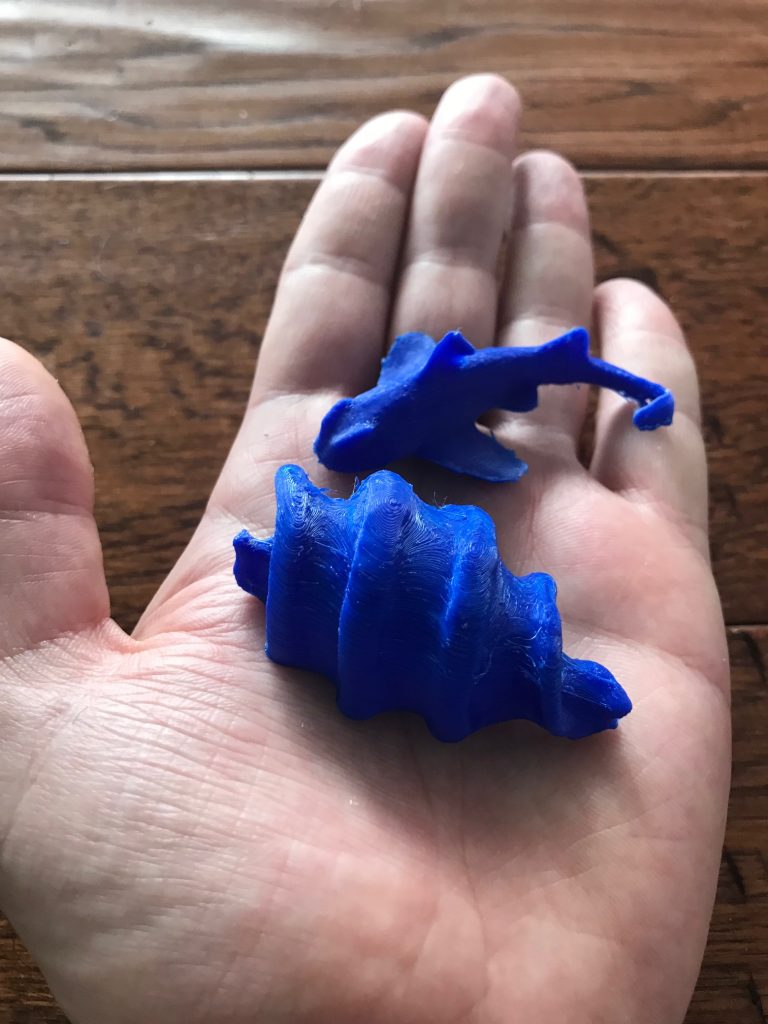
It comes from Alex Warneke, the Science Education Coordinator of Cabrillo National Monument! “”Using 3D printing technology has not only changed the way we educate the public, but it has broadened our perspective on what is possible in National Parks,” Alex told me. “We have been able to connect students to nature from an entirely different angle and provide them the tools and context they will need to succeed as scientists of the next generation.” This individual horn shark comes from the ichthyology collection at Cabrillo, and has been used for public education as well as research. The egg case is one of many that wash up on California beaches.
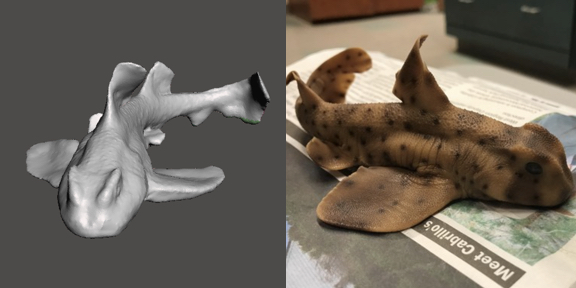
The original horn shark specimen and the 3D model of it, courtesy Alex Warneke, Cabrillo National Monument

Learn more about horn sharks and their egg cases below!

Read More “This month’s 3D printed reward is a horn shark and horn shark egg case!” »
An open letter to the Florida Fish and Wildlife Conservation Commission on revising land-based recreational shark fishing regulations

Posted on April 17, 2018 By David Shiffman
Conservation, Science

Note: The Florida Fish and Wildlife Conservation Commission (FWC) is holding a public meeting on April 25th which will include the issue of land-based recreational shark fishing. Part of my dissertation research focused on this topic, so I am submitting expert testimony, but since I no longer live in Florida I am submitting it remotely. I am sharing my testimony here. Anyone else who is interested in attending the meeting in person (Fort Lauderdale Marriott on April 25th), or submitting testimony remotely, is free to quote my talking points below if the appropriate references are cited. 

Dear Chair Rivard, Vice Chair Spottswood, Commissioner Kellam, Commissioner Lester, Commissioner Nicklaus, Commissioner Rood, and Commissioner Sole of the Florida Fish and Wildlife Conservation Commission (FWC),

My name is Dr. David Shiffman, and I studied land-based shark fishing in Florida as part of my Ph.D. dissertation at the University of Miami’s Abess Center for Ecosystem Science and Policy. This research was published in the peer-reviewed scientific journal Fisheries Research (here’s a link to an open access copy) and covered in major media outlets including National Geographic, Nature, and the Miami Herald. Accordingly, I would like to provide expert testimony for your April 25th public hearing on this topic. Since I no longer reside in Florida I am submitting this testimony remotely. As a conservation biologist who spent years studying harmful practices among some elements of the land-based Florida shark fishing community, I am grateful to see FWC holding a public meeting that includes this important issue, and I am grateful for the opportunity to contribute.

Overall, the scientific evidence is clear and overwhelming that while many anglers are rule-following and conservation-minded, many common land-based shark fishing practices represent a significant conservation threat to threatened, protected shark species in Florida. Additionally, the evidence is clear and overwhelming that in many cases anglers are breaking existing laws and regulations, and that in some of those cases the anglers are aware that they are breaking the law and are explicitly stating that they don’t care. Finally, the evidence is clear and overwhelming that many of the arguments put forward by land-based anglers in support of the status quo are not argued in good faith, and are intentionally crafted to misrepresent the facts of the situation.

It is obvious to me, and to many expert colleagues with whom I have discussed this issue, that the FWC can and must do more to protect threatened sharks, building off of early successes that made Florida a leader in shark conservation. Specifically, the FWC can and must do more to regulate these harmful practices, enforce clear violations of existing regulations, and educate anglers about these issues. Below I will elaborate on each of these points and propose specific regulatory, enforcement, and public education changes that can be made to protect sharks without significantly infringing on anyone’s rights. I will also counter several common arguments that are put forth by bad actors in the recreational angling community.

Read More “An open letter to the Florida Fish and Wildlife Conservation Commission on revising land-based recreational shark fishing regulations” »

Sea monsters and saving kelp: Thursday Afternoon Dredging, April 12, 2018

Posted on April 12, 2018April 11, 2018 By David Shiffman 1 Comment on Sea monsters and saving kelp: Thursday Afternoon Dredging, April 12, 2018
Uncategorized

Cuttings (short and sweet):  Follow graduate student Justine Hudson, who studies arctic marine mammals, on twitter. Prehistoric “sea monster” could be largest that ever lived. By John Pickrell, for National Geographic. Right whales think before they speak. By Jason Goldman, for Scientific American. UK could create 5,000 jobs by improving seafood sustainability. By Fiona Harvey, for … Read More “Sea monsters and saving kelp: Thursday Afternoon Dredging, April 12, 2018” »

Dear Shark Man, what’s the deal with those notches on shark tails?

Posted on April 11, 2018April 11, 2018 By David Shiffman
Uncategorized

Welcome to  Dear Shark Man, an advice column inspired by a ridiculous e-mail I received. You can send your questions to me via twitter (@WhySharksMatter) or e-mail (WhySharksMatter at gmail). Dear Shark Man, Why do sharks tend to have those little notches in their tail fin? Is it like an aerodynamic thing? If you were to fill … Read More “Dear Shark Man, what’s the deal with those notches on shark tails?” »

A scene-by-scene breakdown of the first trailer of “The Meg”

Posted on April 10, 2018April 10, 2018 By David Shiffman 1 Comment on A scene-by-scene breakdown of the first trailer of “The Meg”
Blogging, Popular Culture

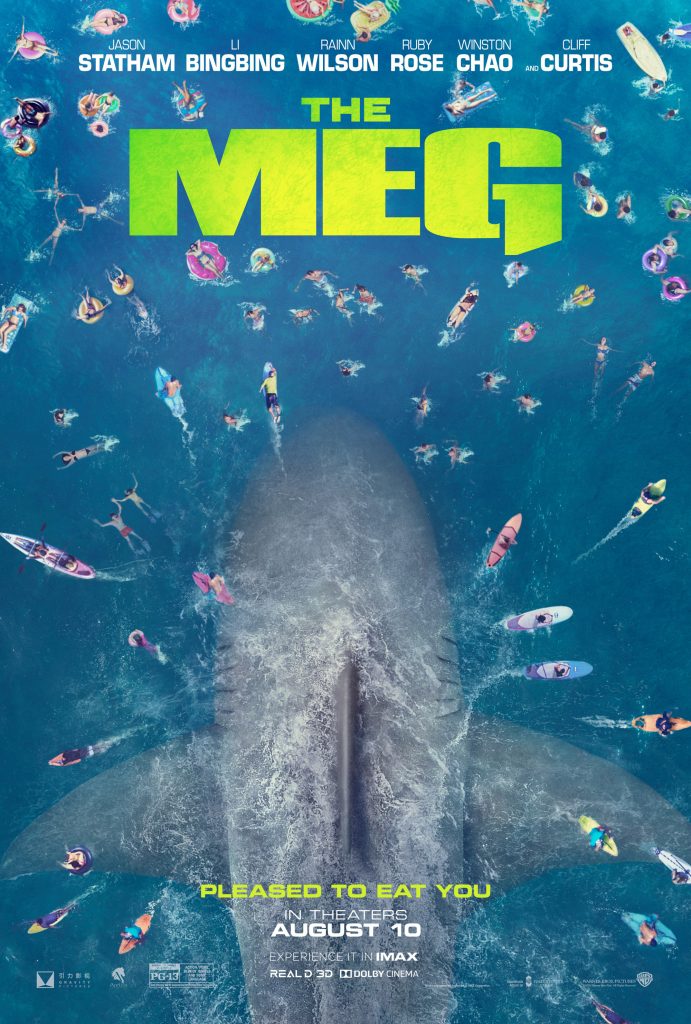
Yesterday, the trailer for “the Meg” was released online.  This movie is based on a popular book series that claims that megalodon is actually not extinct, just hiding. (I’m in the 4th book).


I have a love-hate relationship with movies like this, by which I mean that I love them and I hate myself for loving them. While movies like “Jaws” had a measurable negative effect on public perception of sharks, I don’t believe that more obviously ridiculous movies like SharkNado have a similar effect.  Jason Statham playing a marine biologist in a movie that includes Rainn Wilson? Sign me up.

If not for the people who believe that these movies are real and therefore decide to yell at marine biologists on twitter about it, I’d be all for this.  Let’s be totally clear here- Carcharocles megalodon is extinct, and here’s how we know. Shark Week lied to you about it. Actresses from this movie asking about it are not experts. This movie is completely fictional. You can certainly watch it and enjoy it, but please don’t cite it as evidence that a 50 foot long whale-eating shark that used to live in shallow coastal waters near what are now populated areas is not extinct.

Anyway, here is a scene-by scene breakdown of what’s in the first trailer. From it, we can tell that this is an action-packed movie with a great cast that does not stick too closely to the books, and is also not particularly interested in scientific accuracy even with respect to issues unrelated to the “giant extinct animals are actually not extinct”central conceit.

Read More “A scene-by-scene breakdown of the first trailer of “The Meg”” »

Thoughts on the Sustainable Shark Fisheries and Trade Act

Posted on April 5, 2018 By David Shiffman
Conservation, Science

A few weeks ago, H.R. 5248, The Sustainable Shark Fisheries and Trade Act, was introduced into Congress. The purpose of this bill is to “encourage a science-based approach to significantly reduce the overfishing and unsustainable trade of sharks, rays and skates around the world and prevent shark finning,” according to a press release from Mote Marine Lab. 

Though the devil is always in the details, and I’ll get into those below, here is a general overview of how this would work. The Sustainable Shark Fisheries and Trade Act would direct NOAA Fisheries to evaluate the fisheries management practices of other shark and ray fishing nations. This is similar in principle to other things NOAA is already doing, and a similar role for NOAA was included in the 2010 Shark Conservation Act (but has yet to be implemented).

Nations that have sustainable fisheries management practices comparable to ours (or certain fisheries associated with those nations, even if other fisheries are less well managed) will get a formal certification of their sustainable management practices, and nothing will change for them. Nations (or fisheries) that are found to not have sustainable fisheries management practices comparable to ours will not be allowed to have those products imported into the US and sold in our markets until their management practices improve. In the meantime, they’ll have access to NOAA’s existing capacity building resources and expertise to improve their own practices.

I support much of what this bill is trying to do, but I have some significant concerns about some of the current phrasing and plan for implementation.

Read More “Thoughts on the Sustainable Shark Fisheries and Trade Act” »

Posts pagination

Previous 1 … 9 10 11 … 68 Next

Popular Posts

Here are some ocean conservation technologies that I'm excited aboutHere are some ocean conservation technologies that I'm excited aboutFebruary 19, 2026David Shiffman
What Ocean Ramsey does is not shark science or conservation: some brief thoughts on "the Shark Whisperer" documentaryWhat Ocean Ramsey does is not shark science or conservation: some brief thoughts on "the Shark Whisperer" documentaryJuly 2, 2025David Shiffman
That's not a blobfish: Deep Sea Social Media is Flooded by AI SlopThat's not a blobfish: Deep Sea Social Media is Flooded by AI SlopDecember 19, 2025Andrew Thaler
Shark of Darkness: Wrath of Submarine is a fake documentaryShark of Darkness: Wrath of Submarine is a fake documentaryAugust 10, 2014Michelle Jewell
Bipartisan Concern Expressed Over Deep Sea Mining at Congressional HearingBipartisan Concern Expressed Over Deep Sea Mining at Congressional HearingJanuary 23, 2026Angelo Villagomez
The horrifying physiological and psychological consequences of being AquamanThe horrifying physiological and psychological consequences of being AquamanJuly 18, 2012Andrew Thaler
The story of the pride flag made from NASA imagery: Bluesky's most-liked imageThe story of the pride flag made from NASA imagery: Bluesky's most-liked imageSeptember 27, 2024David Shiffman
What is a Sand Shark?What is a Sand Shark?November 12, 2017Chuck Bangley
5 things to know about stingray barbs, this month's 3D printed reward!5 things to know about stingray barbs, this month's 3D printed reward!May 29, 2018David Shiffman
Cascading planetary-wide ecosystem effects of the extirpation of apex predatory Krayt dragons on TatooineCascading planetary-wide ecosystem effects of the extirpation of apex predatory Krayt dragons on TatooineJuly 22, 2014David Shiffman
Subscribe to our RSS Feed for updates whenever new articles are published.

We recommend Feedly for RSS management. It's like Google Reader, except it still exists.

Southern Fried Science

  • Home
  • About SFS
  • Authors
  • Support SFS


If you enjoy Southern Fried Science, consider contributing to our Patreon campaign.

Copyright © 2026 Southern Fried Science.

Theme: Oceanly Premium by ScriptsTown