Skip to content

Southern Fried Science

Over 15 years of ocean science and conservation online

  • Home
  • About SFS
  • Authors
  • Support SFS

Author: David Shiffman

New paper: What happened to the world’s first certified sustainable shark fishery?

Posted on June 26, 2023 By David Shiffman
Conservation, Science

In 2011, the world’s first fishery for sharks was certified as sustainable by the Marine Stewardship Council*. The British Columbia spiny dogfish fishery made major news in fisheries management and ocean conservation world, where the possible existence of sustainable shark fisheries has been debated intensely. A few years later, the fishery voluntarily withdrew their certification, and never publicly said why.
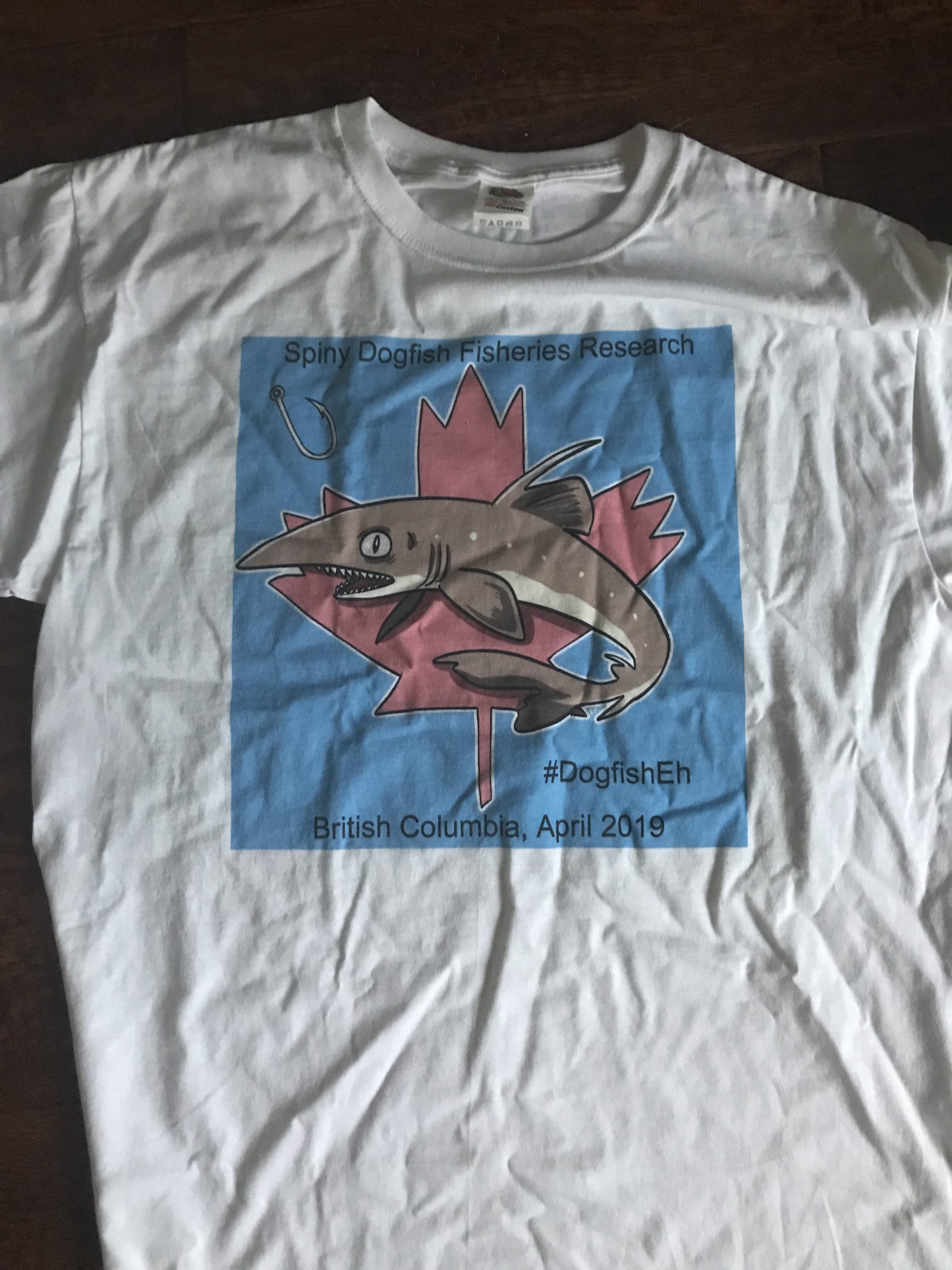
I wanted to know what happened with this scientific mystery. So, with the help of Chuck Bangley and Catherine Macdonald and funding support from the Liber Ero Postdoctoral Fellowship program, I organized a research expedition to find out. The results of our expedition can be found in our new paper (LINK,) (OPEN ACCESS AUTHOR COPY) but in this blog post, I’d like to explain what we did, what we found, and why we think it’s important.

Read More “New paper: What happened to the world’s first certified sustainable shark fishery?” »

One year of “Why Sharks Matter:” What’s different in shark science and conservation now?

Posted on May 24, 2023 By David Shiffman
Conservation, Science

One year ago today, my book “Why Sharks Matter: A Deep Dive with the World’s Most Misunderstood Predator” was released. Science moves (relatively) rapidly and changes often, with new discoveries every day, and the conservation landscape is similar. This means that it is impossible for anything written about these topics at a discrete moment in time to remain accurate forever.

So, in the interest of accountability, in the interest of continuing to make my book useful for public education about shark science and conservation even as the science and policy landscape changes, and in the interest of keeping notes for myself for any future updated versions of the book, I have been keeping track of things that I wrote at the time that are no longer true, or weren’t quite right at the time. (Please note that some of these facts and figures were already out of date at the time the book was pubished, but that was well after the final text was turned in).

Read More “One year of “Why Sharks Matter:” What’s different in shark science and conservation now?” »

22 things scientists learned about sharks in 2022

Posted on December 16, 2022 By David Shiffman
Science

2022 has been a weird year for humans, but it was a very interesting year for sharks! Shark species representing 90% of the global shark fin trade got listed on CITES Appendix II, which will require strict regulation, documentation, and dramatically improved sustainability of their fisheries. The once-every-four-years Sharks International conference was held in Valencia, Spain, and recordings of all talks are available until summer 2023. And sharks even made it into one of those “what Fox News is showing instead of current events that are bad for Republicans” memes!

There were also a lot of fascinating scientific discoveries, which this post will round up for you. As always, this is not meant to be a “best” or “top” list, so if your science isn’t included here please do not send angry letters. This is just some cool stuff I learned this year thanks to my amazing colleagues, in no particular order. Whenever possible I’ll also provide links to further reading on the topic. I hope you enjoy!

Read More “22 things scientists learned about sharks in 2022” »

Soon may the explainer come: Everything you’ve always wanted to know about sea shanties but were afraid to ask

Posted on November 22, 2022January 8, 2024 By David Shiffman
Soon may the explainer come: Everything you’ve always wanted to know about sea shanties but were afraid to ask
Featured

The hot new thing on the internet is the latest revival of a centuries-old musical tradition. The humble sea shanty has taken the internet by storm, with remixes of remixes getting millions of views. The phenomenon written up in The New York Times, the Wall Street Journal, the Washington Post, and CNN, and inspired an SNL skit.

As a marine biologist who learned to sing many of these songs to pass time on research vessels while honoring maritime traditions, I’ve loved watching this style of music spill all over my social media feeds, letting a new generation experience them. (Watch this man’s skepticism quickly fade to joy as he listens to Wellerman and tell me it’s not one of the purest things you’ve ever seen).

Illustration of sailors hauling on halyard, from an article on sailor chanteys. Image from W Symons, via WikiMedia Commons

However, reading people’s explanations of why Sea Shanties are The Next Big Thing has made me realize something important: I didn’t know as much of the history of this style of music as I thought I did, and I’m not alone—much of the information contained in the articles I linked to above is oversimplified or even incorrect (Wellerman is a maritime song, but isn’t really a sea shanty, for one egregious example). As I began to ask around, I realized that there isn’t a single authoritative and thorough article about the history and culture of the sea shanty written for lay audiences anywhere on Al Gore’s internet. So I decided to dig into the literature, speak to experts, and write one myself. I hope you enjoy it!

Read More “Soon may the explainer come: Everything you’ve always wanted to know about sea shanties but were afraid to ask” »

Shark Conservation: What’s New and What’s Next? The text of my UN Early Career Ocean Professionals Day talk

Posted on June 1, 2021June 3, 2021 By David Shiffman 1 Comment on Shark Conservation: What’s New and What’s Next? The text of my UN Early Career Ocean Professionals Day talk
Uncategorized

On June 1, 2021, I was invited to speak at Early Career Ocean Professionals Day, part of the kickoff for the United Nations Decade of the Ocean. The text of my remarks, with links to relevant references, is provided below.

Greetings to everyone watching virtual Early Career Ocean Professionals Day around the world! My name is Dr. David Shiffman, and I’m an interdisciplinary marine conservation biologist based in Washington, DC. I study threatened species of sharks, and how to effectively protect them. I also study the causes and consequences of public misunderstanding of these issues. In addition to research and teaching, I am a public science educator, and I invite you to follow me on twitter, Instagram, and Facebook @ WhySharksMatter, where I’m always happy to answer any questions anyone has about sharks.

Today I’d like to talk to you a little bit about my work on why we should protect sharks, how we can most effectively do that, what people think about this issues, and why all of this is important. First of all, no, sharks are not a threat to you or your family, despite what you may hear in inflammatory fearmongering news reports. Hundreds of millions of humans enter the ocean every year, and a few dozen are bitten—more people are killed by flowerpots falling on their heads from above in a typical year than are killed by sharks. Sharks also play vital roles in the healthy functioning of marine and coastal ecosystems, ecosystems that humans depend on for food security, livelihoods, and recreation. In short, people are better off with healthy shark populations off our coasts than we are without them.

Read More “Shark Conservation: What’s New and What’s Next? The text of my UN Early Career Ocean Professionals Day talk” »

Inauguration-induced landsickness: what you feel when the shaky world beneath your feet suddenly stabilizes, and how to feel better

Posted on January 22, 2021January 22, 2021 By David Shiffman 1 Comment on Inauguration-induced landsickness: what you feel when the shaky world beneath your feet suddenly stabilizes, and how to feel better
Blogging

For the past few days I, like many of you, have felt a variety of intense emotions. First and foremost I’ve felt an overwhelming sense of relief. No matter what happens next, Donald Trump is no longer President of the United States, and he and his enablers can no longer work to destroy so much of what we love and value (at least not as easily). We can start the hard work of fixing so many things that have been awful and growing worse every day. I’ve felt hope that we can start to make things better, and I’ve even felt a little bit of joy at the noteworthy progress that’s already been made. All of this was expected, but one thing I haven’t expected is how much of a particular sensation I’m feeling, and have seen other people report feeling as well. For some of my friends it was a totally unfamiliar sensation, but as a marine scientist I recognized it immediately: many of us are basically experiencing landsickness, also called “dock rock” or “mal de debarquement syndrome”.

Read More “Inauguration-induced landsickness: what you feel when the shaky world beneath your feet suddenly stabilizes, and how to feel better” »

#IMCCsharks : An IMCC Symposium on Current and Emerging Issues in European Shark Conservation

Posted on August 13, 2020August 14, 2020 By David Shiffman
Uncategorized

On Tuesday, August 18th please join us for a (now virtual) European shark conservation symposium as part of the (now virtual) 6th International Marine Conservation Congress (IMCC!) IMCC is a once-every-two-years event that brings together ocean scientists, conservation and management professionals, and educators from all over the world- register here for just $25 for the virtual version. Follow along on twitter with #IMCCsharks

We have 11 speakers from all over Europe and North America speaking on a variety of issues related to the conservation and management of sharks and their relatives in European waters, and ongoing efforts to scientifically study especially threatened species. The symposium will also feature a panel discussion and informal mingling via a Zoom happy hour with some of the speakers after the symposium ends. The symposium is broken into two 90 minute parts, be sure to check out them both!

Read More “#IMCCsharks : An IMCC Symposium on Current and Emerging Issues in European Shark Conservation” »

Science and Conservation Media Literacy 101

Posted on February 25, 2020February 25, 2020 By David Shiffman
Uncategorized

Author’s note: This blog post is part of a multi-week assignment for students taking my introduction to marine biology course at Arizona State University, and also part of an exercise in my professional development training workshops on communicating science to the popular press. I am sharing the background information publicly because I believe it’s a topic that is of broad interest.

The internet in general and social media specifically have made it easier than ever before in human history for experts to share information relevant to their area of expertise with the interested public, with journalists, and with policymakers. Unfortunately, these same communications tools have also made it easier than ever before in human history for misinformation to be widely shared. When wrong information goes viral, it can lead to the destruction of democracy and civilization as we know it people believing factually incorrect things about fish.

Therefore, it’s important for anyone and everyone who cares about the future of democracy and civilization as we know it my marine biology students and media training workshop participants to be aware of how to find reliable and accurate news, and how to spot misleading or inaccurate news. If you can do this effectively, you may well save democracy and civilization as we know it do well in my course.

Something need not be actual “fake news,” a term we should consider using less because it’s become politically charged to the point that it’s nearly meaningless and people don’t hear what you actually mean to say, to be inaccurate and problematic. There are many different ways that a news article can be biased, misleading, and/or wrong.

First, I’ll go through some elements of a reliable, accurate science or environment news story. Then I’ll go through red flags of inaccurate, problematic news stories. Throughout, I’ll highlight representative examples. (Students, after reading this you’ll be assigned some articles to look for these elements and red flags in).

Read More “Science and Conservation Media Literacy 101” »

What the hell is the DC Metro’s “climate change will increase shark bites” ad talking about? An investigation

Posted on January 14, 2020January 14, 2020 By David Shiffman
Blogging, Climate change

Ever since I moved to Washington, DC last summer, I’ve been fascinated by an ad campaign for the DC Metro. The premise of the campaign is simple: taking public transit reduces your carbon footprint compared with driving yourself. It highlights various negative consequences of climate change, and points out how riding the Metro can help fight them.

Many of these ads highlight well-known consequences of climate change:

Photos by David Shiffman

Others highlight less well-known consequences of climate change, but are still on solid scientific ground:

Photo via DC Metro twitter account

But one ad in particular has been perplexing me for months:

Read More “What the hell is the DC Metro’s “climate change will increase shark bites” ad talking about? An investigation” »

Shark Week 2019 reviews and thoughts

Posted on December 24, 2019December 24, 2019 By David Shiffman
Popular Culture, Reviews and Interviews, Science

I wasn’t able to watch live this year, but I DVR-ed all 18 specials and watched them eventually! Here are my reviews, ratings, and thoughts. I did not watch the feature-length movie, which they claim is the first fictional entertainment content they’ve ever produced… causing me to stare in megalodon. Overall, this was not a strong year for science, facts, or diversity (of either sharks or shark researchers).

As a reminder, I grade on the following aspects of a show: is there actual science or natural history educational content / is there made up nonsense, are actual credentialed experts with relevant expertise featured or are they self-proclaimed “shark experts” who say wrong nonsense all the time, what species are featured (with bonus points for species we rarely or never see), and do they feature diverse experts or just the same white men (reminder: my field is more than 50% women)? It’s not a perfect rubric, but it’s better than this actual system for ranking shark news introduced this year in “sharks gone wild 2:”

Rankings appear in no particular order, if you care about the order the shows actually aired in please see this Discovery press release.

Read More “Shark Week 2019 reviews and thoughts” »

Posts pagination

Previous 1 … 5 6 7 … 68 Next

Popular Posts

Here are some ocean conservation technologies that I'm excited aboutHere are some ocean conservation technologies that I'm excited aboutFebruary 19, 2026David Shiffman
What Ocean Ramsey does is not shark science or conservation: some brief thoughts on "the Shark Whisperer" documentaryWhat Ocean Ramsey does is not shark science or conservation: some brief thoughts on "the Shark Whisperer" documentaryJuly 2, 2025David Shiffman
That's not a blobfish: Deep Sea Social Media is Flooded by AI SlopThat's not a blobfish: Deep Sea Social Media is Flooded by AI SlopDecember 19, 2025Andrew Thaler
Bipartisan Concern Expressed Over Deep Sea Mining at Congressional HearingBipartisan Concern Expressed Over Deep Sea Mining at Congressional HearingJanuary 23, 2026Angelo Villagomez
Shark of Darkness: Wrath of Submarine is a fake documentaryShark of Darkness: Wrath of Submarine is a fake documentaryAugust 10, 2014Michelle Jewell
The horrifying physiological and psychological consequences of being AquamanThe horrifying physiological and psychological consequences of being AquamanJuly 18, 2012Andrew Thaler
The story of the pride flag made from NASA imagery: Bluesky's most-liked imageThe story of the pride flag made from NASA imagery: Bluesky's most-liked imageSeptember 27, 2024David Shiffman
What is a Sand Shark?What is a Sand Shark?November 12, 2017Chuck Bangley
Cascading planetary-wide ecosystem effects of the extirpation of apex predatory Krayt dragons on TatooineCascading planetary-wide ecosystem effects of the extirpation of apex predatory Krayt dragons on TatooineJuly 22, 2014David Shiffman
Marine Biology Career AdviceMarine Biology Career AdviceMay 30, 2025David Shiffman
Subscribe to our RSS Feed for updates whenever new articles are published.

We recommend Feedly for RSS management. It's like Google Reader, except it still exists.

Southern Fried Science

  • Home
  • About SFS
  • Authors
  • Support SFS


If you enjoy Southern Fried Science, consider contributing to our Patreon campaign.

Copyright © 2026 Southern Fried Science.

Theme: Oceanly Premium by ScriptsTown