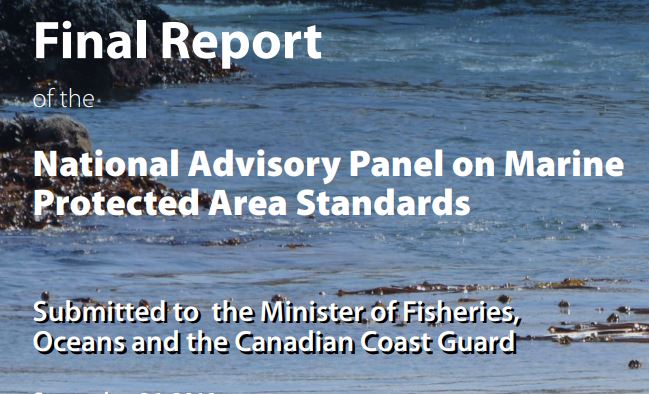
Recently, the Canadian government released the Final Report of the National Advisory Panel on Marine Protected Area Standards. This report is a set of guidelines and goals for the creation of new marine protected areas in Canada, and comes as Canada is hoping to greatly increase the number and quality of MPAs. I reached out to MPA experts and environmental nonprofits to ask what they think.
Author: David Shiffman
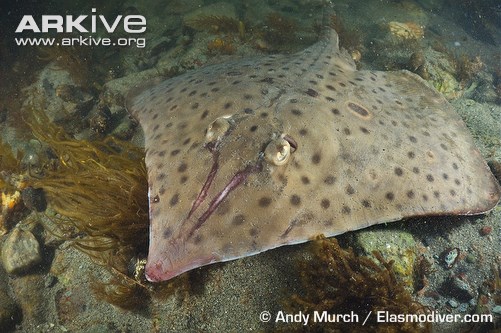
Barndoor skates were once thought to be so overfished that a highly-publicized paper from 1998 noted that they had been “driven to near extinction without anyone noticing.” One of the largest skates, barndoor skates can reach over 5 feet in wingspan, which is large enough that their diet includes small sharks like spiny dogfish; for a skate, that’s about as close as it gets to charismatic megafauna!
Recently, NOAA Fisheries announced that Barndoor skate populations off the Northeastern United States had finally recovered enough that fishing for them could resume. This move comes after a 2009 NOAA Fisheries report showed that the species had begun to recover enough that they could be removed from the species of concern list, though they remained protected at the time. “This is good news,” Mike Ruccio, a Supervisory Fishery Policy Analyst for NOAA Fisheries Greater Atlantic Regional Fisheries Office, told me. “Rebuilding overfished stocks is one of the cornerstones of the US domestic policy on fisheries.”
Cuttings (short and sweet): Follow everyone in this amazing thread of twitter wildlife biologists started by David Steen. Ancient Egyptians farmed fish thousands of years ago. By the New Arab. This is a neat story about a new archaeological study, which tells us about ancient humans’ relationship with the sea. Fun fish festivals around the … Read More “Ancient fish farming and popular invasive species: Thursday Afternoon Dredging, October 18th 2018” »
Cuttings (short and sweet): Follow fisheries biologist Justin Rizzari on twitter! Commercial fishing banned across much of the Arctic. By Fiona Harvey, for the Guardian. Slavery with your seafood. By the Save Our Seas Foundation blog. The top fish books for kids. By Abigail Lynch, for the Fisheries Blog. Spoils (long reads and deep dives): … Read More “Banning Arctic fishing and protecting public beach access: Thursday Afternoon Dredging, October 4th, 2018” »
Welcome to Dear Shark Man, an advice column inspired by a ridiculous e-mail I received. You can send your questions to me via twitter (@WhySharksMatter) or e-mail (WhySharksMatter at gmail). Dear Shark Man, Are Daddy and Grandpa sharks really morphologically bigger than Mommy and Grandma sharks? Sincerely, Addicted to “Baby Shark” in Arizona Dear Addicted, Thank you … Read More “Dear Shark Man, are the relative sizes of sharks in the “baby shark” dance scientifically accurate?” »
Two weeks ago, tragedy struck in New England as a boogie boarder was killed by a great white shark. Though shark bites* in general and fatal shark bites* specifically are incredibly rare (Mr. Medici was the first person killed by a great white shark in Massachusetts waters in 82 years), emotions are running high. Some Cape Cod residents are explicitly calling for a cull (targeted killing) of great white sharks.
Such a cull would be devastating for a recovering but still protected shark species, has been shown not to effectively reduce shark bites, and is opposed by shark experts around the world, but what, if anything, should local governments do instead? I’ve written in the past about alternatives to lethal shark control here and here, but not every solution is applicable for every location; local oceanographic conditions vary, as well as local laws and cultural norms. I reached out to three experts to ask what, if anything, they think should be done here. Here’s what they had to say:
It’s a special Friday morning edition of Thursday Afternoon Dredging because I was traveling! Cuttings (short and sweet): Follow Nova the White Shark, a great white shark tagged in Canada by OCEARCH, on twitter! The day after Nova was tagged, I spent a day with the OCEARCH team- check out this Facebook live interview. … Read More “Angry Canadian Crabs and Extinct Australian Sea Stars: Thursday Afternoon Dredging, September 27(8)th 2018” »

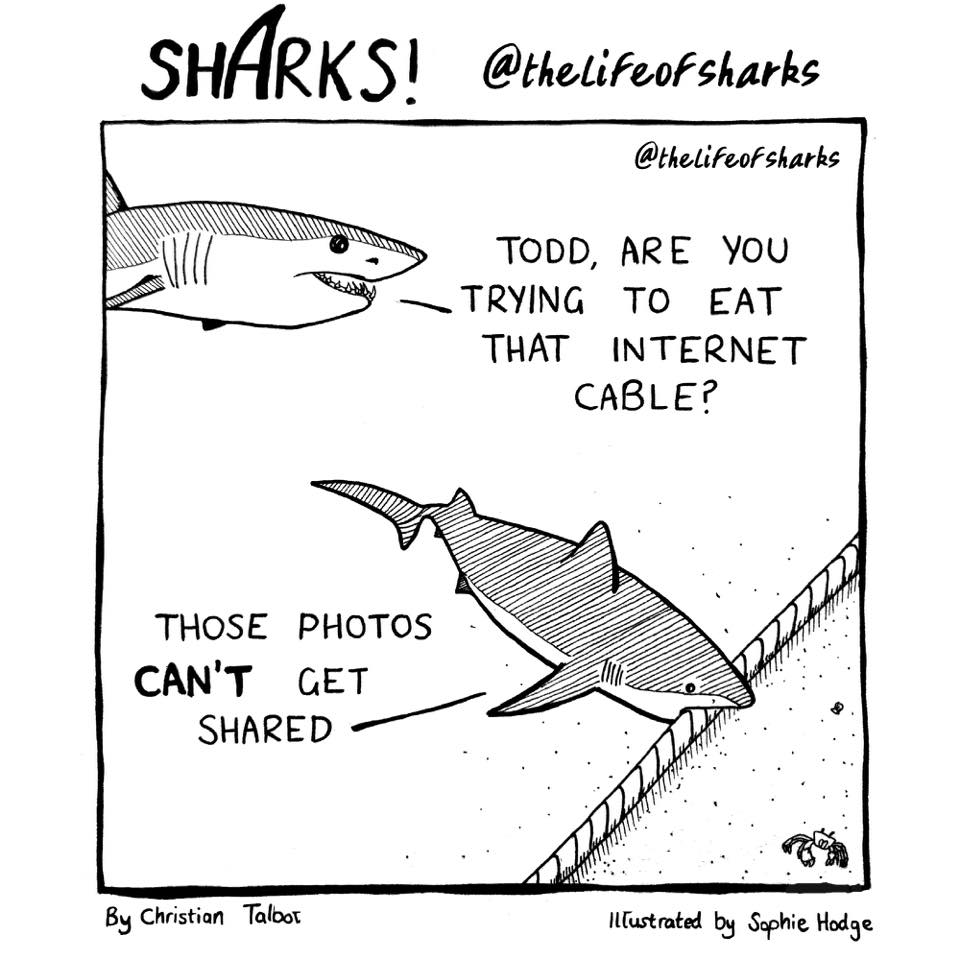
The “life of sharks” webcomic, which features real facts about sharks along with clever humor, is taking the internet by storm! Creators Christian Talbot (writer) and Sophie Hodge (Illustrator) were kind enough to answer some of my questions about their comic and where they get their ideas. Be sure to follow them on Facebook, Twitter, and Instagram, and check out their online store. Responses are lightly edited for length and clarity.
David: Tell me about your comic. Why sharks?
Sophie: Mostly the comic is about the minutiae of everyday life, relationships and emotions. That’s kind of funny when you put it into the mouths of fish that are perceived to be cold hearted killers.
Christian: They can be about anything, really. I just like the way we can anthropomorphize the sharks. Sharks just seemed like the funniest animal to try and give human emotions to and put into relationships because they’re seen as being cold, solitary, killing machines. Plus sharks are just cool. Also, sharks can’t claim royalties.

Read More “Don’t boop the snoot: an interview with the creators of the “life of sharks” webcomic” »
Cuttings (short and sweet): Follow marine biologist (and research tech in the lab I’m in) Wade VanderWal on twitter! The science behind the International Coastal Cleanup. By George Leonard, for the Ocean Conservancy blog. Here’s a plastic pollution reduction program that works! The hidden lives of deep-sea creatures caught on camera. By Amy Maxmen, for … Read More “Cleaning beaches and saving right whales: Thursday Afternoon Dredging, September 13, 2018” »
Cuttings (short and sweet): Follow COSEWIC, the Committee on the Status of Endangered Wildlife in Canada, on twitter. ‘Scallop wars’: UK offers olive branch as French navy threatens to act. By Pippa Crerar, for the Guardian. Brexit is complicating some existing relationships between the UK and European nations, including some fishing rights issues. Don’t worry, … Read More “Scallops, barnacles, and oysters- oh my! Thursday Afternoon Dredging, September 6th, 2018” »