Skip to content

Southern Fried Science

Over 15 years of ocean science and conservation online

  • Home
  • About SFS
  • Authors
  • Support SFS

Category: Conservation

Check out Musingo, the music trivia app that helps save the ocean

Posted on November 21, 2013 By David Shiffman
Conservation

MusingoThis week saw the launch of Musingo, an interactive music trivia app for iOS. The developer, Good World Games, lets users make an impact in the real world through the game apps they play, and Musingo is no different.

Though the app is free, there are opportunities for in-game purchases of additional game tokens, as well as the opportunity to buy the songs you hear through iTunes. 50% of the profits from those in-game purchases are donated to my lab, the RJ Dunlap Marine Conservation Program, where they will be used to help support our many ongoing research projects.


GHOF-Musingo-ad05


Read More “Check out Musingo, the music trivia app that helps save the ocean” »

What does the new species of hammerhead mean for shark science and conservation?

Posted on November 11, 2013 By David Shiffman 3 Comments on What does the new species of hammerhead mean for shark science and conservation?
What does the new species of hammerhead mean for shark science and conservation?
Conservation, Science

In the year 2000, Dr. William Driggers, now of the National Marine Fisheries Service’s Southeast Fisheries Science Center in Mississippi, was sampling for sharks in South Carolina. Dr Driggers recalls that “at the time I was collecting samples from various species of sharks for life history studies and also collecting tissues for Dr. [Joseph] Quattro’s genetics work.” Dr. Quattro, a professor at the Marine Science Program and Department of Biological Sciences at the University of South Carolina, had been working on a project to characterize the population genetics of fish in South Carolina by “working my way down river systems to the coast,” he told me. “Even sturgeons were showing population differentiation, so I thought the next animal would be marine, but estuarine dependent – sharks.” Analysis of the samples Dr. Driggers collected led to a surprising result.

“I was asked “what are the chances that I would misidentify a ‘scalloped hammerhead’ and answered that there was no chance as they are very morphologically distinctive (looks like I was wrong),” Dr. Driggers told me. “I was then informed that genetic sequences indicated that some of the specimens I had labeled as ‘scalloped hammerhead’ were distinctly different from known S. lewini sequences. At Dr. Quattro’s request, I began bringing back whole specimens so they could be archived and morphometric analyses conducted. The first whole specimen that was vouchered and shown to be the new species was collected in Bulls Bay in July of 2001.”


In 2006,  Dr. Quattro and his team published a paper entitled “Genetic evidence of cryptic speciation within hammerhead sharks,” showing that there may be a previously-unknown species hiding within scalloped hammerheads. When genetic samples of scalloped hammerheads, great hammerheads, and bonnethead sharks were phylogenetically mapped, the team found an unexpected result. Dr. Quattro, told me that “while doing the population genetics of this animals, we found two divergent genetic lineages within what were morphologically scalloped hammerheads.  We gathered sequences and specimens from other known species and didn’t find a match – that’s what got us on the whole cryptic species [defined by Bickford et al. 2007 as “two or more distinct species erroneously classified and hidden under one species name”] thing.”

Read More “What does the new species of hammerhead mean for shark science and conservation?” »

Happy Fun Science Friday – Blinky, the 3-Eyed Crab

Posted on November 8, 2013November 10, 2013 By Kersey Sturdivant
Conservation
Blinky! The three-eyed crab from the Simpsons. Photo Credit: Matt Groening
Blinky! The three-eyed crab from the Simpsons.
Photo Credit: Matt Groening

Happy FSF everyone, this week we bring you Blinky! For the Simpsons aficionados amongst you, we are unfortunately not referring to the affable 3-Eyed fish, indicative of the radioactive influence of Springfield’s nuclear power plant.

No Blinky is a real-life, 3-eyed crab, discovered and documented by German researcher Gerhard Scholtz and colleagues while working in New Zealand’s Hoteo River. Scholtz and co stumbled upon this 3-eyed organism, and must have wonder during their cursory inspection if they had discovered a new species, one that was defying the principles of bilateral animals. However, upon closer anatomical inspection Scholtz realized that the mystery crab was not a 3-eyed wonder species, but conjoined twins of the already identified Amarinus lacustris crab species.

Read More “Happy Fun Science Friday – Blinky, the 3-Eyed Crab” »

What can the funniest shark memes on the internetz teach us about ocean science and conservation?

Posted on November 8, 2013November 11, 2013 By David Shiffman 4 Comments on What can the funniest shark memes on the internetz teach us about ocean science and conservation?
Conservation, Science

In recent years, some of my favorite ocean predators have started to show up in memes. As part of our tradition of using internet humor to educate our readers, I’ve selected the funniest shark memes on the internetz, and I’ve tried to explain what’s going on in the photos used for those memes. I’m happy to discuss these science and conservation issues in the comments if you have any questions, but my selection of what constitutes that funniest shark memes  is obviously correct and beyond dispute.

12) Ferocious planktivore is ferocious

4d7m1

Original image source: Flickr user Yohancha.
What’s going on? This shows a basking shark, the second largest shark in the world, with its mouth open wide. While this gaping maw may appear to be menacing, like whale sharks, the basking shark is a strict planktivore.

Read More “What can the funniest shark memes on the internetz teach us about ocean science and conservation?” »

10 components of a sustainable shark fishery, and how you can help implement them

Posted on November 7, 2013November 7, 2013 By David Shiffman 1 Comment on 10 components of a sustainable shark fishery, and how you can help implement them
Conservation, Science

x3170e00In 1999, government officials from all over the world gathered in Rome for a meeting of the United Nations Food and Agricultural Organization’s Committee on Fisheries. The Committee meets every two years,  but one of the numerous outputs of this meeting was particularly significant, at least for sharks. Based on years of consultation and discussion by experts, the group agreed on a formal set of general principles that should make up sustainable and well-managed shark fisheries.

These 10 principles, part of a larger International Plan of Action for Sharks (IPOA-Sharks) , have helped shape more than a decade of scientific research and management priorities for the chondrichthyan fishes. When properly implemented and enforced, they allow people to use sharks (and rays and skates and chimeras, included in the IPOA-Sharks definition of “sharks”) as a natural resource while keeping populations healthy and allowing depleted stocks to recover.

According to the IPOA-Sharks, a national shark plan should aim to:

Read More “10 components of a sustainable shark fishery, and how you can help implement them” »

One-fifth of all known hydrothermal vents are threatened by deep-sea mining

Posted on November 6, 2013November 6, 2013 By Andrew Thaler
Conservation, Science
Tube worms and anemones on the Galapagos Rift. NOAA Ocean Explorer.
Tube worms and anemones on the Galapagos Rift. Photo Credit: NOAA Ocean Explorer.

Few moments have so profoundly altered our understanding of what it means to be a living thing on Planet Earth as the discovery of deep-sea hydrothermal vents and the organisms that thrive around them. The first vents visited were dominated by Riftia pachyptila, the giant tube worm, whose magnificent ruby plumage parted to reveal an entire community adapted to harness the chemical energy that poured from the vents. It is almost poetic that the first vents were found on the Galapagos Rift; the same tectonic feature contributed to another great, formative moment in biology — the Voyage of the Beagle. Hydrothermal vents provided the first evidence that the sun was not the only source of energy that living organisms could harness. They opened our eyes to the potential of chemosynthesis and hinted at an ocean of unfathomable wonders waiting to be discovered.

Read More “One-fifth of all known hydrothermal vents are threatened by deep-sea mining” »

A Primer on Ethics in the Human Dimensions of Conservation

Posted on October 30, 2013October 31, 2013 By Bluegrass Blue Crab 4 Comments on A Primer on Ethics in the Human Dimensions of Conservation
Conservation

Think about the word ‘ethics’ for a moment. For some, the word creates images of smiling people sitting around a table, the picture of diversity, happily planning a future in which no one is ever taken advantage of. For others, the image may be of nun-like ascetics peering over your shoulder with an armful of paperwork tied together with a pretty bow of red tape. For still others, it’s something heartily discussed in a liberal arts course or late-night dorm philosophizing during doe-eyed college days. In reality, though, practicing ethics is never as clear-cut an image and making ethics part of daily research life is still a distant goal.

Some fields, like genetics and medicine, have had to confront ethical conundrums head-on and consequently, create a precedent for how we think about ethics in a research and institutional context. Sadly, this precedent is full of angry conflict, covering ethical missteps after-the-fact, and millions of dollars worth of lawsuits. This precedent rightfully leaves many people jumpy about addressing ethics head-on, like the proverbial third-rail of program management that no one dare touch for fear of inviting the flak created in these precedent cases. To use another cliched analogy, ethics then becomes the elephant in the room, except this elephant is staring at you over your cubicle wall and periodically sticking its trunk over the wall to search for peanuts. In reality, choosing to not address ethics amounts to consciously deciding to accept whatever emerges organically, whether you like it or not. So what does this mean for less life-or-death fields that work with stakeholders, like the marine sciences? Let’s start with the foundation that’s already laid.

Read More “A Primer on Ethics in the Human Dimensions of Conservation” »

28 fallacies about the Fukushima nuclear disaster’s effect on the US West Coast

Posted on October 29, 2013November 4, 2013 By Andrew Thaler 51 Comments on 28 fallacies about the Fukushima nuclear disaster’s effect on the US West Coast
Conservation, Science

The Fukushima Daiichi nuclear power plant is back in the news, with recent reports of continued leaks. Coming on the heels of these new reports is a viral blog post entitled 28 Signs That The West Coast Is Being Absolutely Fried With Nuclear Radiation From Fukushima. The article is a paranoid, poorly reasoned attempt to link the tragedy of the Fukushima disaster to just about every environmental issue facing the US west coast in the last few months. At its best, it’s an illogical piece of post-modern absurdism. At its worst, its empirically false and intentionally misleading, rife with out-of-context quotes and cherry-picked data. The author had 28 chances to make a single reasonable point, and every single one rang hollow.

Of course it went viral.

Read More “28 fallacies about the Fukushima nuclear disaster’s effect on the US West Coast” »

Farming Salmon in Hiddenfjord, Faroe Islands

Posted on September 30, 2013September 30, 2013 By Bluegrass Blue Crab 5 Comments on Farming Salmon in Hiddenfjord, Faroe Islands
Conservation

amysquareIf you treat yourself to a salmon dinner in Manhattan, that delicious fish most likely came from the Faroe Islands. Should you be scratching your head and trying to remember your geography, you’re not alone. Yet, this tiny country in the North Atlantic is one of the world leaders in salmon aquaculture. While in the Faroes, I had the good fortune  of a tour of a site run by the company Hiddenfjord in the town of Vestmanna by Jogvan Egholm. Since aquaculture is still a new and developing field, it’s always nice to see how things are done. Once I learned of the market connections to the US, however, I began to consider the tour the story of our food as well.

Salmon happily jumping for food in their pen. Soon to be on a plate near you. Credit: Andrew Thaler

The salmon we visited  were destined for the US and China, countries with the best market price. Recently, we’ve had salmon on the brain after a controversial taste-test by the Washington Post revealed testers preferred frozen, farmed salmon. Bottom line of the controversy: understand where your fish come from and the environmental and health implications of certain production styles. Not all farming is created equal – Europe does a much better job using salmon from their native range than us westerners. So here’s a story of a fish. After fully grown in the Faroes, they’ll be shipped to the UK by boat and flown the rest of the way by plane. Smaller fish stay in the European market. But it starts with an egg…

Read More “Farming Salmon in Hiddenfjord, Faroe Islands” »

A photo of people eating a shark is upsetting activists for some silly reason

Posted on September 26, 2013September 30, 2013 By David Shiffman 42 Comments on A photo of people eating a shark is upsetting activists for some silly reason
Conservation, Science

davesquare

Photo via activist Andy Gray on Facebook, original photographer unknown

A photo of a single thresher shark being served for dinner at a resort is making the rounds among shark conservation activists. The photo, shown on the right, has been shared more than 12,000 times. A petition written in response to the image  (in French) has over 1,000 signatures. The story has even made it into the mainstream media. The original caption refers to this scene as “shameful and disgraceful”, while follow-up comments refer to it as “shocking,” “sickening,” “disgusting,” “beyond words,” “shameful,” and “barbaric.”  12,000 shares and a 1,000 signature petition is significantly more outrage than I’ve ever seen for any issue involving a single individual shark. Why, exactly, are activists so upset about it?

It can’t simply be reaction to the death of a single shark. If you believe that no sharks should be eaten ever (or that no animals should be eaten ever), that’s a perfectly valid belief system. You should be (and likely are) aware, however, that the overwhelming majority of the world, including almost all governments, the majority of the scientific community, and many NGOs, completely disagree with you. People have encountered photos of individual sharks being killed before, or pictures of sharks on a menu or for sale in grocery stores, and not reacted this strongly.

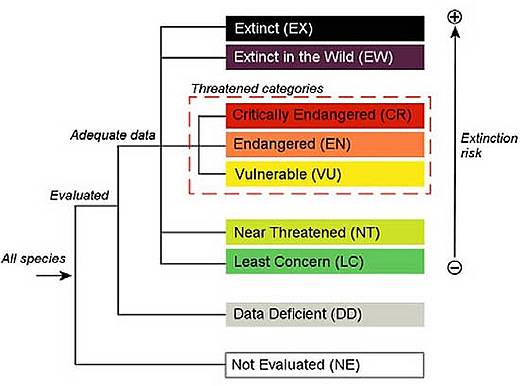
It likely isn’t the species of shark in question, either. This shark is either a pelagic thresher or a common thresher, and while both are considered Vulnerable to extinction by the IUCN Red List, they’re common components of shark fisheries. Thresher fisheries in U.S. waters are considered well managed (and that population is only “Near-Threatened”). Some of the comments say that “sharks are an endangered species,” which is nonsense, as there are over 500 species of sharks and most are not even Threatened. Regardless, a single individual animal doesn’t impact the population in any significant way.

Read More “A photo of people eating a shark is upsetting activists for some silly reason” »

Posts pagination

Previous 1 … 20 21 22 … 48 Next

Popular Posts

What Ocean Ramsey does is not shark science or conservation: some brief thoughts on "the Shark Whisperer" documentaryWhat Ocean Ramsey does is not shark science or conservation: some brief thoughts on "the Shark Whisperer" documentaryJuly 2, 2025David Shiffman
Save the seals.  Congress is trying to shoot its way to salmon recoverySave the seals.  Congress is trying to shoot its way to salmon recoveryJuly 22, 2026Southern Fried Science
Shark of Darkness: Wrath of Submarine is a fake documentaryShark of Darkness: Wrath of Submarine is a fake documentaryAugust 10, 2014Michelle Jewell
What is a Sand Shark?What is a Sand Shark?November 12, 2017Chuck Bangley
Why would a serious scientist agree to participate in a nonsense Shark Week show?Why would a serious scientist agree to participate in a nonsense Shark Week show?July 15, 2025David Shiffman
What can the funniest shark memes on the internetz teach us about ocean science and conservation?What can the funniest shark memes on the internetz teach us about ocean science and conservation?November 8, 2013David Shiffman
That's not a blobfish: Deep Sea Social Media is Flooded by AI SlopThat's not a blobfish: Deep Sea Social Media is Flooded by AI SlopDecember 19, 2025Andrew Thaler
The “Conservation Paywall”: why saving the planet has become a luxury sportThe “Conservation Paywall”: why saving the planet has become a luxury sportJuly 23, 2026Chris Parsons
Jumping the shark: New study reviews the breaching behavior of sharks and raysJumping the shark: New study reviews the breaching behavior of sharks and raysSeptember 19, 2024David Shiffman
Our favorite sea monsters – Ningen (#4)Our favorite sea monsters – Ningen (#4)September 7, 2010Andrew Thaler
Subscribe to our RSS Feed for updates whenever new articles are published.

We recommend Feedly for RSS management. It's like Google Reader, except it still exists.

Southern Fried Science

  • Home
  • About SFS
  • Authors
  • Support SFS


If you enjoy Southern Fried Science, consider contributing to our Patreon campaign.

Copyright © 2026 Southern Fried Science.

Theme: Oceanly Premium by ScriptsTown