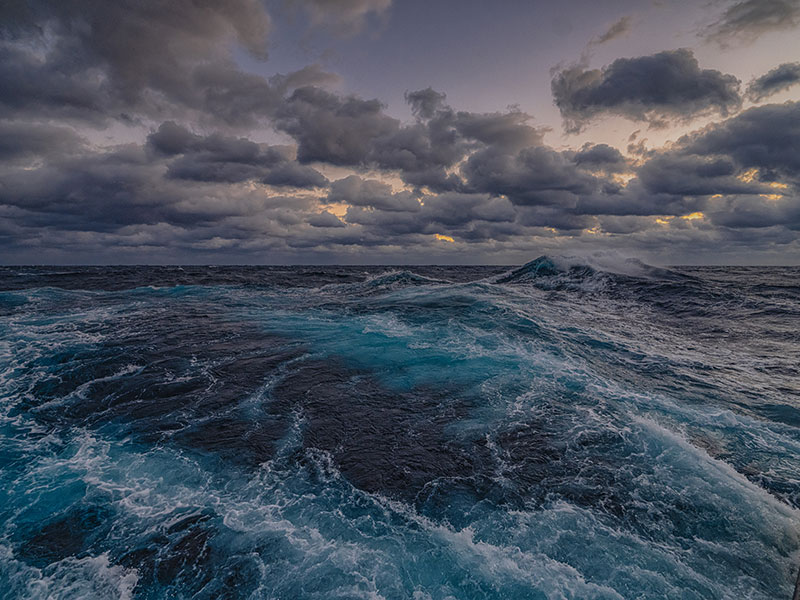
For a planet that is 71% ocean, humanity spends a surprisingly small amount of time (and money) trying to understand it. Ocean science sits in a strange place in the research ecosystem. It underpins climate science, fisheries management, biodiversity conservation, and coastal economies. It’s essential for understanding everything from hurricanes to heatwaves to global carbon cycles. Yet, compared with other major scientific fields, oceanography remains chronically underfunded.
This isn’t just a perception among marine scientists complaining over conference coffee. Multiple analyses from organizations like the Intergovernmental Oceanographic Commission suggest that less than ~2% of national research spending globally goes toward ocean science. Which raises a fairly obvious question. Why?
Ocean science is expensive in ways grant funders hate
Most research fields run on a familiar model: labs, equipment, grad students, and publishing papers. Whereas oceanography runs on ships. A modern research vessel can cost $30,000–$70,000 per day to operate. Deep-sea submersibles cost millions. Long-term mooring arrays and autonomous vehicles require constant maintenance and replacement. Even relatively simple oceanographic surveys require large crews, specialized equipment, lots of fuel and logistical support, and long expedition timelines.
Then contrast that to the laboratory sciences where the entire annual operating budget might be equivalent to just two weeks of ship time. Funding agencies are often structured around short grant cycles and modest budgets, which makes sustained ocean observation systems difficult to support. You can’t monitor a changing ocean with three-year grants and occasional cruises.
Ocean science doesn’t fit nicely in a small box
Another problem is bureaucratic geography. Ocean science touches a huge range of policy domains such as: climate science; fisheries management; biodiversity conservation; shipping and maritime safety; and energy development. However, funding structures tend to be siloed. Climate agencies fund atmospheric science. Fisheries agencies fund stock assessments. Defense departments fund naval research. Environmental agencies fund conservation. Oceanography sits awkwardly between all of them.
Organizations such as the National Science Foundation and the National Oceanic and Atmospheric Administration (NOAA) do fund ocean research in the United States, but the budgets involved are small compared with other major scientific activities. The result is fragmentation: lots of small programs, very few large, coordinated ones.
The ocean is out of sight (and out of mind)
There’s also a basic psychological problem. Most people never see the ocean as a system. They might visit a beach, go on a boat, or watch whales. But the processes oceanographers study (i.e., deep currents, nutrient cycles, benthic ecosystems, climate feedbacks) are largely invisible. Contrast that with:
- Space science, which produces spectacular images from telescopes and spacecraft.
- Biomedical research, which connects directly to human health.
- Particle physics, which has enormous flagship facilities such as CERN.
Ocean science discoveries are often subtle and incremental. They rarely produce the kind of headline-grabbing imagery that drives public and political excitement. Despite the ocean being, arguably, more important to the stability of Earth’s climate than many better-funded fields.
Funding infrastructure isn’t sexy
Ocean science depends on infrastructure such as seafloor observatories, research vessels, monitoring buoys, and autonomous vehicle networks. But maintaining infrastructure isn’t terribly glamorous.
Governments love funding new initiatives. They’re less enthusiastic about paying for the long-term maintenance of systems that quietly collect data year after year. Programs such as the Global Ocean Observing System rely on international cooperation to maintain networks of floats, buoys, and monitoring stations. But these systems are often funded piecemeal, leaving gaps in coverage and long-term uncertainty.
Ironically, the most valuable datasets in oceanography are often the ones that run for decades. Unfortunately, these are exactly the kinds of programs most vulnerable to budget cuts.
Ocean science doesn’t have a “moonshot”
Big scientific funding tends to follow big narratives.
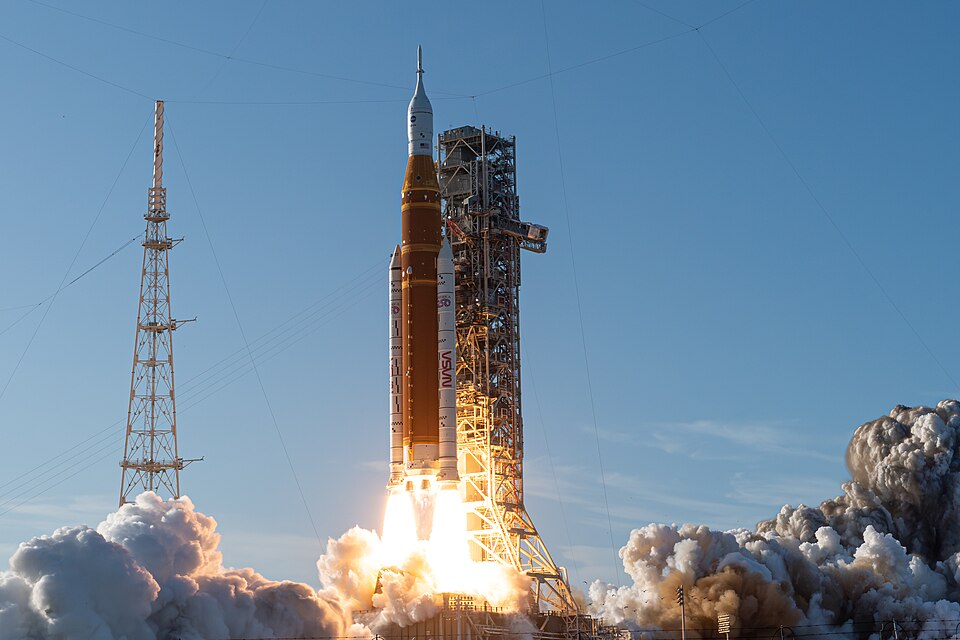
- The Apollo program drove investment in space exploration through NASA.
- The Human Genome Project transformed genetics.
- Particle physics has megaprojects such as the particle accelerator at CERN.
Oceanography has had bursts of ambition. Programs such as the Census of Marine Life and the International Geophysical Year produced remarkable discoveries. But it hasn’t had a sustained, large-scale international mission that captures political imagination. The closest recent attempt is the UN Decade of Ocean Science for Sustainable Development. But as discussed in a previous article, the Decade launched without the significant amount of funding needed to really drive transformative change.
Inequality in global ocean science
Funding disparities also affect who gets to do ocean science. Most research vessels, deep-sea technology, and long-term monitoring systems are concentrated in a handful of wealthy nations. Meanwhile, many coastal states have limited capacity to study their own marine ecosystems. International organizations such as the Partnership for Observation of the Global Ocean and the Scientific Committee on Oceanic Research work to support training and collaboration. However, the amount of funding required to truly level the playing field would be enormous.
Ocean science capacity gaps aren’t just a fairness issue. They’re also a data problem. Large portions of the global ocean remain poorly monitored because the countries closest to them lack the infrastructure to conduct research.
We’re studying a changing ocean with incomplete data
The tragedy here is that ocean science has never been more important. The ocean regulates the planet’s climate by absorbing heat, storing carbon and driving weather patterns. At the same time, marine ecosystems are facing rapid change due to:
- marine heatwaves;
- coral bleaching;
- shifting species distributions;
- deep-sea mining pressures; and
- coastal development.
Understanding these processes requires long-term monitoring and global observation systems. Instead, oceanographers often find themselves trying to piece together global trends from patchy datasets and sporadic surveys. It’s a little like trying to monitor the global economy by checking a few bank accounts once every five years.
Tell me why they don’t like oceans
The deeper question isn’t why ocean science is underfunded. It’s why the most important system regulating Earth’s climate (and supporting global fisheries) receives so little scientific investment. Humanity spends tens of billions annually exploring space. Meanwhile, the ocean (the largest ecosystem on Earth) gets a tiny fraction of that.
Which is fine, if you believe the ocean will remain stable and predictable no matter what we do. But if you suspect that rapid climate change might make understanding the ocean more important than ever, then maybe it’s time to rethink the status quo. Because, currently, we’re trying to understand the planet’s largest system with a remarkably small research budget. But the ocean, rather inconveniently, is not getting any simpler…