Skip to content

Southern Fried Science

Over 15 years of ocean science and conservation online

  • Home
  • About SFS
  • Authors
  • Support SFS

Category: Conservation

Genetics study reveals 79 potentially new species of sharks and rays: what does it mean for science and conservation?

Posted on July 3, 2012July 3, 2012 By David Shiffman 3 Comments on Genetics study reveals 79 potentially new species of sharks and rays: what does it mean for science and conservation?
Conservation, Science

When Dr. Gavin Naylor and his team started a genetic survey of existing shark and ray species, they didn’t expect the results of their project to make international news.  Their recent paper (which, at over 250 pages and complete with more than 100 figures, is nothing short of epic), however, is too striking to ignore. The results indicate that there may be as many as 79 previously unrecognized cryptic species of sharks and rays.

A cryptic species is defined as a group that looks almost exactly like another, and may even live in the same region, but is genetically distinct. We’ve known that cryptic species of sharks and rays exist for some time, such as manta rays and scalloped hammerhead sharks, but 79 is a lot; as of the paper’s publication, only 1,221 species of sharks and rays were recognized.

According to Dr. Naylor,

“Organisms become genetically differentiated over time through the cumulative effects of mutation and recombination mediated via drift and selection. When they differentiate in isolation they eventually become so different from the parental stock from which they were derived that they can no longer produce fertile offspring when crossed with them.  Some biologists use the point of reproductive inviability as the point at which new species should be recognized…..  For practical purposes we recognize “new species” as being genetically or morphologically distinctive from previously recognized forms.”

The study’s methods, though enormous in scope, were relatively basic. According to Dr. Naylor, the study utilized a technique very familiar to geneticists: “standard DNA extraction, PCR, Sanger sequencing, alignment and analysis of a protein coding mitochondrial  gene”. To achieve the goals of understanding both evolutionary relationships of sharks and rays and parasite host specificity ( where certain parasites associated only with one species), Dr. Naylor and his team obtained and analyzed samples from as many species as they could. The numbers are impressive- 56 of 57 known families of elasmobranchs were represented among the 4,283 samples from 305 species of sharks and 269 species of batoids. In other words, this study included approximately half of all known elasmobranch species, including many that had never been analyzed genetically before. Since 1986, when the project began, samples have been obtained in more than 50 countries, mostly through the team’s own field work!

Read More “Genetics study reveals 79 potentially new species of sharks and rays: what does it mean for science and conservation?” »

Saving Bimini: A campaign to protect a Bahamian gem

Posted on June 19, 2012October 27, 2013 By Guest Writer 11 Comments on Saving Bimini: A campaign to protect a Bahamian gem
Conservation

Kristine Stump is a PhD candidate in Marine Biology and Fisheries at the University of Miami’s Rosenstiel School of Marine and Atmospheric Science (RSMAS).  Her dissertation focuses on the effects of anthropogenic nursery habitat loss on juvenile lemon sharks in Bimini, Bahamas.  She was the Principal Investigator of the Bimini Biological Field Station (BBFS, or Sharklab) from 2008 – 2011 while collecting field data for her degree and has been heavily involved in the process of establishing a Marine Protected Area in Bimini.  Kristine has an M.A. in Marine Policy from RSMAS, and prior to entering the doctoral program, she spent five years working in Washington, DC at Ocean.US – the National Office for Integrated and Sustained Ocean Observations (now the NOAA IOOS Program).  In addition, she has worked for the Census of Marine Life program office at the Consortium for Ocean Leadership in Washington, DC. 


There is an apex predator roaming the seas.  For hundreds of thousands of years, this beast has hunted in the waters of the world’s oceans.  Relentless is it in its search along the shorelines for that which satisfies its primal urges.  Its numbers ever on the rise, the destruction in its path knows no bounds.  And now, in 2012, it wants to dominate the sea more than ever before: it wants glass-bottom bungalows.  It needs yacht dockage at its vacation home.  It craves manicured fairways.  IT MUST HAVE AN INFINITY POOL!

If you haven’t already guessed, the apex predator here is man.  Throughout history, the environment has shaped man, but now more than ever, man is shaping the environment.  In the current era of environmental awareness, however, we have learned that there are limits to the anthropogenic changes ecosystems can withstand while still maintaining ecosystem function.  Luckily, we have learned to implement mitigation strategies to offset, to some degree, the negative effects of human expansion.

Read More “Saving Bimini: A campaign to protect a Bahamian gem” »

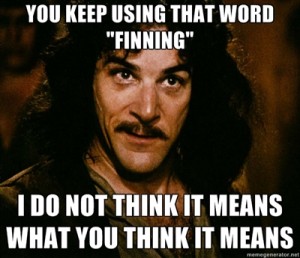
What shark finning means (and doesn’t mean): a primer and quiz

Posted on June 18, 2012June 26, 2012 By David Shiffman 82 Comments on What shark finning means (and doesn’t mean): a primer and quiz
Conservation, Science

Shark finning, one of the most wasteful, unsustainable, and inhumane methods of gathering food in the history of human civilization, has rightly become a hot topic in the marine conservation movement. However, there is a great deal of confusion among activists concerning this problem and the best way to solve it. Those of you who follow me on twitter have seen me point out numerous recent anti-finning “awareness campaigns” which feature photographs of sharks that have not actually been finned.

Shark finning does not mean removing the fins from a shark. This is really important and seems to be a source of some confusion- not every shark fin for sale in markets is the result of shark finning! Shark finning means removing the fins from a shark while still on the fishing vessel and dumping the rest of the shark overboard. This is a problem because its wasteful (less than 10% of the weight of a shark is used), because its easy to quickly overfish a population even from a small boat (fins don’t take up a lot of space on board), and because its almost impossible for managers to know how many of each species were harvested. As stated above, this practice is also shockingly inhumane, as the sharks are often still alive when they are dumped overboard.

Read More “What shark finning means (and doesn’t mean): a primer and quiz” »

Understanding Sea Level Rise: Why a linear extrapolation is the least reasonable predictor of future changes

Posted on June 14, 2012June 18, 2012 By Andrew Thaler 2 Comments on Understanding Sea Level Rise: Why a linear extrapolation is the least reasonable predictor of future changes
Conservation, Science

The Division of Coastal Management shall be the only State agency authorized to develop rates of sea-level rise and shall do so only at the request of the Commission. These rates shall only be determined using historical data, and these data shall be limited to the time period following the year 1900. Rates of sea-level rise may be extrapolated linearly to estimate future rates of rise but shall not include scenarios of accelerated rates of sea-level rise.

source (emphasis mine)

This is the text of the notorious, anti-science, anti-coastal community bill that was originally floated in the North Carolina state senate. A revised version of that bill is now under review, with new language that now mandates that:

The Commission and the Division of Coastal Management may collaborate with other State agencies, boards, commissions, other public entities, or institutions when defining sea-level rise or developing rates of sea-level rise. These rates shall be determined using statistically significant, peer-reviewed historical data generated using generally accepted scientific and statistical techniques. Historic rates of sea-level rise  may be extrapolated to estimate future rates of rise but shall not include scenarios of accelerated rates of sea-level rise unless such rates are from statistically significant, peer-reviewed data and are consistent with historic trends.

source (emphasis mine)

While this new language is almost certainly an improvement over the old bill, which was heavily supported by a lobbying group for coastal developers and heavily opposed by organizations that actually care what happens to the Carolina coastline and its historic communities, it is still problematic. By problematic, I mean wrong. And by wrong I mean that by refusing to allow accelerated estimates of sea level rise, it explicitly ignores all the best available science and contradicts 130 millenia of historic precedent.

Read More “Understanding Sea Level Rise: Why a linear extrapolation is the least reasonable predictor of future changes” »

Kangaroo court: an unjust criminal justice system for animals in National Parks?

Posted on June 12, 2012June 12, 2012 By David Shiffman 6 Comments on Kangaroo court: an unjust criminal justice system for animals in National Parks?
Conservation, Science

On August 25th of last year, a man was brutally killed while vacationing in Montana. An expert forensics team was called in to the scene of the crime, and quickly determined from blood patterns next to a half-eaten PowerBar that the victim had been surprised and attacked from behind while taking a break from a hike. His badly damaged body was found partially buried nearby, with wounds indicating that he tried to fight back against his attacker.

A search of the area resulted in locating hair, which was soon found to belong to a suspect in another local killing from a few weeks prior to this attack.  Footprints found at the scene were the same size as those of the suspect in the earlier killing as well. DNA samples were taken for future analysis. The suspect and her two small children were taken into custody.

The case was rapidly brought not before a jury of the suspect’s peers, but before a panel of local experts, including members of the forensics team that investigated the case. The suspect was found guilty even before all of the samples from the crime scene had been processed. The penalty was death for the suspect and life imprisonment for her children. The accused was not represented by a lawyer,  no appeals were permitted, and she was dead within a few weeks of the attack on the unfortunate tourist. Once the DNA evidence had been processed, the detection of another suspect at the scene of the crime raised some doubt that the correct individual had been taken into custody, but it was too late to stop the execution.

How could such a trial happen in the United States of America in the 21st century? We are a nation of laws! We pride ourselves on suspects being innocent until proven guilty!  The answer is simple. The now-executed suspect in this series of grisly deaths was, in fact, a grizzly herself- a grizzly bear. The series of attacks has focused public attention not just on the dangers associated with hiking in areas where large wild predators live, but on the bizarre system of pseudo-justice  used by the National Parks Service to determine what to do with animals that kill or injure humans.

Read More “Kangaroo court: an unjust criminal justice system for animals in National Parks?” »

Climbing Mount Chernobyl: a repost for World Ocean Day

Posted on June 8, 2012June 10, 2012 By Andrew Thaler 2 Comments on Climbing Mount Chernobyl: a repost for World Ocean Day
Conservation, Science

Originally published on August 30th, 2011, Climbing Mount Chernobyl is one of my personal favorite posts. It feels appropriate to re-post it today for World Ocean Day.

Read More “Climbing Mount Chernobyl: a repost for World Ocean Day” »

Shark fin bans: A storify of this week’s twitter discussion

Posted on May 8, 2012 By David Shiffman 20 Comments on Shark fin bans: A storify of this week’s twitter discussion
Conservation, Science

Earlier this week, I asked my twitter followers what they thought about shark fin bans, which prompted a long and stimulating discussion. What follows is my first attempt at “Storify”, shared in the hopes that the discussion can continue here.

As I’ve said before, I’m not a big supporter of shark fin bans because they don’t allow for sustainable, well-managed fisheries to supply the market. Additionally, they promote the common (and false) belief that shark fin soup is the only major problem facing sharks, and don’t address many of the other important issues associated with shark conservation.

Instead, I favor a comprehensive approach to shark management, including requiring that sharks be landed with fins attached (i.e. a ban on “finning” but the fins can still be used if the shark is landed whole), special protections for threatened and endangered species, science-based fisheries quotas for species that can sustain fishing, time/area closures or gear restrictions when necessary, and  careful monitoring (including requiring that all fishing nations report the species composition of their catch).

Check out the great discussion if you missed it, and let me know what you think of this important issue in the comments of this post.

Read More “Shark fin bans: A storify of this week’s twitter discussion” »

How severe are shark population decreases, and how do we know?

Posted on April 19, 2012April 19, 2012 By David Shiffman 21 Comments on How severe are shark population decreases, and how do we know?
Conservation, Science

John Shepherd once said that counting fish is like counting trees, except that fish move and you can’t see them because they’re underwater. This is true with sharks as well. It’s basically impossible to know how many sharks there are. Fortunately, a variety of methods exist that can be used to determine population trends. In other words, even if we can’t know how many sharks there are, we can tell if there are more or less than there used to be. Presented here are brief descriptions of some of these methods and the conclusions of major shark conservation studies that used them. Though no one method is perfect, the fact that so many different methods have such similar conclusions is quite telling.

Read More “How severe are shark population decreases, and how do we know?” »

VentBase – securing the conservation of deep-sea hydrothermal vent ecosystems

Posted on April 16, 2012April 17, 2012 By Andrew Thaler 3 Comments on VentBase – securing the conservation of deep-sea hydrothermal vent ecosystems
Conservation, Science

As a marine biologists just beginning my deep-sea education, conservation as a priority was an alien concept. The deep sea was the last true wilderness, distant and alien, impossibly difficult to access. We knew that exploitation was coming, companies had been exploring the potential of deep-sea mining for decades, but they always seemed to be generation away. Conservation was a question for my scientific descendants. For my peers and me, we still had a few good decades left in the golden age of exploration that began in the 1970’s with the first discovery of deep-sea hydrothermal vents. That age is about to end.

The reality of deep-sea exploitation is imminent. The first hydrothermal vent mining lease has been issued in the territorial waters of Papua New Guinea. The International Seabed Authority, which regulates seafloor extraction in international waters, has approved the first two mining exploration permits for seafloor massive sulfides in international waters. Manganese nodule extraction, once quashed by a global decline in metal prices, has recently reappeared. Crustal metal deposits are fast becoming a viable resource. The isolation of rare earth elements from the seafloor, a newcomer in deep-sea exploitation, could open up new, massive deposit for critical electronic components. All of these are likely to occur within the next few decades.

Read More “VentBase – securing the conservation of deep-sea hydrothermal vent ecosystems” »

Good intentions and negative transfer effects: The California swordfish fishery

Posted on March 13, 2012October 27, 2013 By Guest Writer 25 Comments on Good intentions and negative transfer effects: The California swordfish fishery
Conservation, Science
Image courtesy Wikimedia Commons, via the National Marine Fisheries Service historic collection

A press release circulating on Twitter, which claims that a “deadly expansion” of a California fishery will negatively affect critically endangered leatherback sea turtles, has been making waves in the marine conservation and fisheries communities, inspiring a series of interesting discussions. Is it better to buy US-caught seafood with some bycatch than foreign-caught seafood from fleets with less strict environmental regulations? Is the current “Pacific leatherback conservation area”, a large region of the ocean where no fishing is allowed, too much of a restriction on U.S. fisheries? Can there be a balance between fisheries and conservation? I invited Jonathan Gonzalez, a California graphic designer with a strong interest in marine conservation issues, to write a guest post about the swordfish fishery in question. You can follow him on Twitter here, and he’s happy to answer your questions about this issue in the comments section of this post. In addition to his graphic design work, Jonathan has served as the assistant director of the Santa Barbara Marine Mammal center, and has worked with the California Shark Coalition to gather support from fishermen for the state’s recent ban on shark fins. 

by Jonathan Gonzalez

Fisheries are complicated and often misunderstood. We often see conflicting information about what fish we should or should not eat and we see general statements about certain gear types that over simplify an extremely complex issue. But don’t be discouraged, learning about fisheries can be very fun and can lead to eating seafood with confidence, free of any guilt or confusion. One particular fishery I want to talk about that is not only complicated, but in my opinion it is California’s most misunderstood fishery. I’m talking about the drift gillnet (DGN) fishery for swordfish and common thresher sharks (CTS). Swordfish, CTS and mako sharks caught in Hawaiian set longlines are also landed in California, but I am not going to talk about that here.  I am going to focus on the DGN fishery because this fishery has been in the headlines a bit lately because of recent motions that were voted on at a Pacific Fisheries Management Council (PFMC) meeting. Here is a press release you may have seen that in my opinion is full of factual errors and a few downright slanderous statements. I’m not going to point them all out and I’m not going to try to tell you what to do. Instead I am going to give you some background about the fishery and provide you with information that will hopefully help you to make an informed decision for yourself.

Read More “Good intentions and negative transfer effects: The California swordfish fishery” »

Posts pagination

Previous 1 … 25 26 27 … 48 Next

Popular Posts

What Ocean Ramsey does is not shark science or conservation: some brief thoughts on "the Shark Whisperer" documentaryWhat Ocean Ramsey does is not shark science or conservation: some brief thoughts on "the Shark Whisperer" documentaryJuly 2, 2025David Shiffman
Shark of Darkness: Wrath of Submarine is a fake documentaryShark of Darkness: Wrath of Submarine is a fake documentaryAugust 10, 2014Michelle Jewell
Save the seals.  Congress is trying to shoot its way to salmon recoverySave the seals.  Congress is trying to shoot its way to salmon recoveryJuly 22, 2026Southern Fried Science
What is a Sand Shark?What is a Sand Shark?November 12, 2017Chuck Bangley
Why would a serious scientist agree to participate in a nonsense Shark Week show?Why would a serious scientist agree to participate in a nonsense Shark Week show?July 15, 2025David Shiffman
What can the funniest shark memes on the internetz teach us about ocean science and conservation?What can the funniest shark memes on the internetz teach us about ocean science and conservation?November 8, 2013David Shiffman
The “Conservation Paywall”: why saving the planet has become a luxury sportThe “Conservation Paywall”: why saving the planet has become a luxury sportJuly 23, 2026Chris Parsons
That's not a blobfish: Deep Sea Social Media is Flooded by AI SlopThat's not a blobfish: Deep Sea Social Media is Flooded by AI SlopDecember 19, 2025Andrew Thaler
Jumping the shark: New study reviews the breaching behavior of sharks and raysJumping the shark: New study reviews the breaching behavior of sharks and raysSeptember 19, 2024David Shiffman
Our favorite sea monsters – Ningen (#4)Our favorite sea monsters – Ningen (#4)September 7, 2010Andrew Thaler
Subscribe to our RSS Feed for updates whenever new articles are published.

We recommend Feedly for RSS management. It's like Google Reader, except it still exists.

Southern Fried Science

  • Home
  • About SFS
  • Authors
  • Support SFS


If you enjoy Southern Fried Science, consider contributing to our Patreon campaign.

Copyright © 2026 Southern Fried Science.

Theme: Oceanly Premium by ScriptsTown