Skip to content

Southern Fried Science

Over 15 years of ocean science and conservation online

  • Home
  • About SFS
  • Authors
  • Support SFS

Category: Conservation

Shark Science Monday: Aurelie Godin discusses shark management in Canada

Posted on January 31, 2011January 30, 2011 By David Shiffman 2 Comments on Shark Science Monday: Aurelie Godin discusses shark management in Canada
Conservation

In this week’s edition of Shark Science Monday, Aurelie Godin discusses Canada’s shark management policies. If you have a question for Aurelie, please leave it as a comment below and I’ll make sure that she gets it.

Send testimony to help protect Guam’s sharks!

Posted on January 26, 2011January 26, 2011 By David Shiffman 14 Comments on Send testimony to help protect Guam’s sharks!
Conservation, Science

The sharks of Guam need your help! Bill number 44-31, which would make selling or possessing shark fins illegal in Guam, was just introduced by members of the Senate. The Natural Resources Committee will hold a hearing on the bill next Tuesday night Guam time, which is Monday night our time.

This bill is expected to face strong opposition from the fishing industry, which has a powerful voice.  However, you can help! You send a letter in support of this policy to Shark Defenders, and they will make sure that it gets into the right hands.  Many of the letters will be read out loud as testimony, and receiving a large number of letters in support of the law will be a big help!

Please send these letters to Info AT SharkDefenders DOT com by Monday afternoon U.S. East Coast time (sooner would be better).

Read More “Send testimony to help protect Guam’s sharks!” »

Pirate fishing: far less awesome then it sounds

Posted on January 25, 2011January 25, 2011 By David Shiffman 6 Comments on Pirate fishing: far less awesome then it sounds
Conservation, Science

Earlier this month, NOAA provided a list of “pirate fishing” countries to Congress. This report identifies Portugal, Italy, Venezuela, Colombia, Ecuador, and Panama as nations whose vessels engage in “illegal, unreported, unregulated” fishing.

Russell Smith, NOAA deputy assistant secretary for international fisheries, explains why this so-called pirate fishing is such a big deal:

“Illegal fishing must be stopped as it subjects our fishermen to unfair competition and undermines efforts to sustainably manage the valuable fish stocks around the world that so many communities depend on for food and jobs.”

The Pew Charitable trusts reports that an estimated 20% of all fish removed from the oceans are fished illegally. NOAA claims that this results in an annual loss of $23 billion to legal fisheries worldwide. Specifically, the six violator countries listed here are guilty of having:

“fishing vessels that did not comply with measures agreed to under various international fishery management organizations, such as closed fishing seasons, vessel registry lists, and a ban on the use of driftnets. Other violations included illegal gear modifications, fishing without authorization, and possession of undersized bluefin tuna.”

Read More “Pirate fishing: far less awesome then it sounds” »

Conservation and the Concept of Species in a Biodiversity Crisis (Part 1)

Posted on January 24, 2011January 23, 2011 By Andrew Thaler 2 Comments on Conservation and the Concept of Species in a Biodiversity Crisis (Part 1)
Conservation, Science

In The Mass Extinction of Scientists Who Study Species, Dr. Craig McClain argues that we are loosing a fundamental unit of biological science – the Taxonomist. He’s right, of course. Taxonomy is a shrinking field. Entire phyla sit, unstudied, as the expertise necessary to understand them retires and expires. With few to train the next generation of taxonomists, the field could slowly vanish. Molecular tools are supplanting traditional taxonomy (once described to me as “the ability to identify hundreds of species of centimeter-long worms by counting ass-hairs under a microscope”) as the de rigueur method for identifying organisms.

I do not disagree with Craig. Losing skilled taxonomists is tragic for the biological sciences. Unlike many leading the charge in support of taxonomy, I did not benefit from a rigorous taxonomic study in my early career. I fall into the same camp as Dr. Holly Bik, relying primarily on molecules, not morphology, to draw the distinctions between my samples. I never identified species by counting the ass-hairs on a worm, and my education is poorer for it.

Read More “Conservation and the Concept of Species in a Biodiversity Crisis (Part 1)” »

Can marine protected areas save the oceans? Under certain circumstances, maybe.

Posted on January 20, 2011December 31, 2011 By David Shiffman 4 Comments on Can marine protected areas save the oceans? Under certain circumstances, maybe.
Conservation, Science

Although marine fish face many threats, one of the greatest is large-scale modern commercial fishing. Technology makes it all too easy for so-called “factory ships” to remove enormous numbers of fish from the oceans, sometimes with devastating effects on the populations of those fish and their habitat.

Marine conservationists have proposed a variety of policies to protect fish populations around the world. Of these, the concept of the marine protected area (MPA) is arguably the most popular. Though technically a marine protected area is any area of the ocean where human activities are restricted in some way, the best known version is an area where fishing is banned with the goal of letting exploited fish stocks recover.

Read More “Can marine protected areas save the oceans? Under certain circumstances, maybe.” »

Lessons from the Death and Life of Monterey Bay

Posted on January 19, 2011February 17, 2011 By Andrew Thaler 3 Comments on Lessons from the Death and Life of Monterey Bay
Conservation, Science

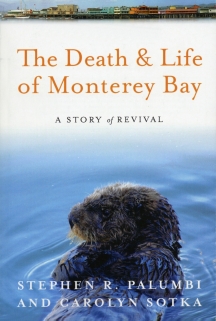
A few weeks ago, Mark Powell at Blogfish posted “Where are conservation success stories?” in which he asks if we have a bias against good news in conservation. Late last year we presented a series of conservation success stories from the IUCN. Whether because we choose to focus only on the doom-and-gloom news stories or because the natural world really is in pretty bad shape, success stories in conservation are few and far between. That is why The Death and Life of Monterey Bay, a new book by Stephen Palumbi and Carolyn Sotka, is so important. Palumbi is a working scientist and director of the Hopkins Marine Station in Monterey Bay and his work has been cited on this blog before. Carolyn Sotka is the project coordinator for COMPASS, an organization that connects scientist to policy makers and journalists.

In The Death and Life of Monterey Bay, Palumbi and Sotka present the history of Monterey Bay, from discovery, to exploitation, to collapse, and ultimately to rebirth. They weave the narratives of many important players, exploring the legacy of a dedicated conservationist who existed before the term was coined, the hunters, fishers, and canneries who found fortune and destruction, the writers and scientists who made Monterey Bay a literary icon, and the Bay itself, which survived by equal parts luck, tenacity, and foresight. The events in the book span hundreds of years, but we can still glean lessons from both the collapse and rebirth of Monterey Bay.

Read More “Lessons from the Death and Life of Monterey Bay” »

Biodiversity Wednesday – Archie Carr National Wildlife Refuge

Posted on January 19, 2011January 19, 2011 By David Shiffman
Conservation
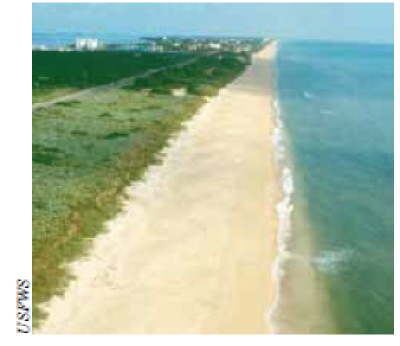
These beaches are narrow, beautiful, and largely undeveloped

On the east coast of Florida lies a thin, 20 mile long stretch of beach. It looks a great deal like the many other beaches in Florida, but one important difference is immediately clear. It is some of the least developed beachfront real estate in the United States, which is particularly jarring considering that it is close to the city of Melbourne and right off of the major A-1-A highway. Why isn’t this beautiful and accessible stretch of beach covered in hotels and luxury apartments?

An enormous number of signs listing the things you can’t do on this beach also grabs your attention. No ATV’s, horses, dogs, or beach chairs are allowed. Feeding wildlife, including seagulls, is strictly prohibited. Under no circumstances can you build a campfire- not that you’d need to, since the public isn’t allowed on the beach at all after dark.

What is this place?

Read More “Biodiversity Wednesday – Archie Carr National Wildlife Refuge” »

Shark Science Monday: Geremy Cliff discusses South Africa’s “shark control” program

Posted on January 10, 2011January 12, 2011 By David Shiffman 2 Comments on Shark Science Monday: Geremy Cliff discusses South Africa’s “shark control” program
Conservation, Science

In this week’s edition of Shark Science Monday, Geremy Cliff of the Kwazulu Natal Sharks Board discusses South Africa’s “shark control” program. If you have a question for Geremy, please leave it as a comment below and I’ll make sure that he receives it.  

Turtle excluder devices: analysis of resistance to a successful conservation policy

Posted on January 7, 2011December 31, 2011 By David Shiffman 9 Comments on Turtle excluder devices: analysis of resistance to a successful conservation policy
Conservation

Conservation efforts often have an associated tradeoff, and many proposed solutions are shot down because the costs are perceived to be too high. A conservation policy that benefited a charismatic endangered species with very little cost should be popular and enthusiastically adopted. However, even though turtle excluder devices greatly reduce sea turtle mortality and have very low costs, they were vigorously opposed by shrimpers. Though many factors contributed to this opposition to turtle excluder devices, analysis of quotes from newspaper articles reveals that one of the major issues was a failure of the conservation community to educate and communicate with shrimpers.

The problem

Most species of sea turtles are either threatened or endangered. Although they face many threats, a 1990 National Academy of Sciences study reached the conclusion that “drowning in shrimp trawls kills more sea turtles than all other human activities combined”. Trawling consists of dragging a large net behind a boat to catch shrimp. This fishing method has one of the highest bycatch rates of any used today, resulting in over 11 million metric tons of bycatch a year. Sea turtles breathe at the surface, and being trapped underwater in a net can be fatal if they aren’t freed in time. Adult loggerhead turtles can hold their breath for up to 45 minutes, but trawlers often wait up to four hours before hauling in their nets. This resulted in an estimated 48,000 sea turtles caught in trawl nets each year from 1973-1984 in U.S. waters, of which 11,000 died . Gulf of Mexico shrimping was particularly hard on loggerhead and kemp’s ridley sea turtles.

Read More “Turtle excluder devices: analysis of resistance to a successful conservation policy” »

Weekly dose of TED – Stephen Palumbi: Following the mercury trail

Posted on January 7, 2011January 7, 2011 By Andrew Thaler
Conservation, Science

For 2011 we’re going to do a bit more with our Weekly dose of TED series. Instead of just posting a video each week, we’re going to include a short discussion of either the entire talk or a point that could be expanded. The idea that, when it comes to seafood, we may not know … Read More “Weekly dose of TED – Stephen Palumbi: Following the mercury trail” »

Posts pagination

Previous 1 … 34 35 36 … 46 Next

Popular Posts

Shark scientists want their research to help save threatened species, but don’t know how. Our new paper can help.Shark scientists want their research to help save threatened species, but don’t know how. Our new paper can help.December 1, 2025David Shiffman
What Ocean Ramsey does is not shark science or conservation: some brief thoughts on "the Shark Whisperer" documentaryWhat Ocean Ramsey does is not shark science or conservation: some brief thoughts on "the Shark Whisperer" documentaryJuly 2, 2025David Shiffman
Norway and Cook Islands put their deep-sea mining plans on pause.Norway and Cook Islands put their deep-sea mining plans on pause.December 3, 2025Andrew Thaler
What can the funniest shark memes on the internetz teach us about ocean science and conservation?What can the funniest shark memes on the internetz teach us about ocean science and conservation?November 8, 2013David Shiffman
What is a Sand Shark?What is a Sand Shark?November 12, 2017Chuck Bangley
Mermaids: The New Evidence is a Fake DocumentaryMermaids: The New Evidence is a Fake DocumentaryMay 28, 2013Andrew Thaler
Build a dirt cheap, tough-as-nails field computer in a Pelican caseBuild a dirt cheap, tough-as-nails field computer in a Pelican caseJuly 21, 2015Andrew Thaler
About Southern Fried ScienceOctober 27, 2013Administrator
Breaking News! "Most Comprehensive Estimate of Mortality": Between 63 and 273 Million Sharks Killed Each YearBreaking News! "Most Comprehensive Estimate of Mortality": Between 63 and 273 Million Sharks Killed Each YearMarch 1, 2013David Shiffman
I spent 50 days working out in Virtual Reality and everything went better than expected.I spent 50 days working out in Virtual Reality and everything went better than expected.May 16, 2019Andrew Thaler
Subscribe to our RSS Feed for updates whenever new articles are published.

We recommend Feedly for RSS management. It's like Google Reader, except it still exists.

Southern Fried Science

  • Home
  • About SFS
  • Authors
  • Support SFS


If you enjoy Southern Fried Science, consider contributing to our Patreon campaign.

Copyright © 2025 Southern Fried Science.

Theme: Oceanly Premium by ScriptsTown