Skip to content

Southern Fried Science

Over 15 years of ocean science and conservation online

  • Home
  • About SFS
  • Authors
  • Support SFS

Category: Popular Culture

What is it like to sail across Titan’s methane seas?

Posted on March 21, 2016March 20, 2016 By Andrew Thaler
Blogging, Popular Culture

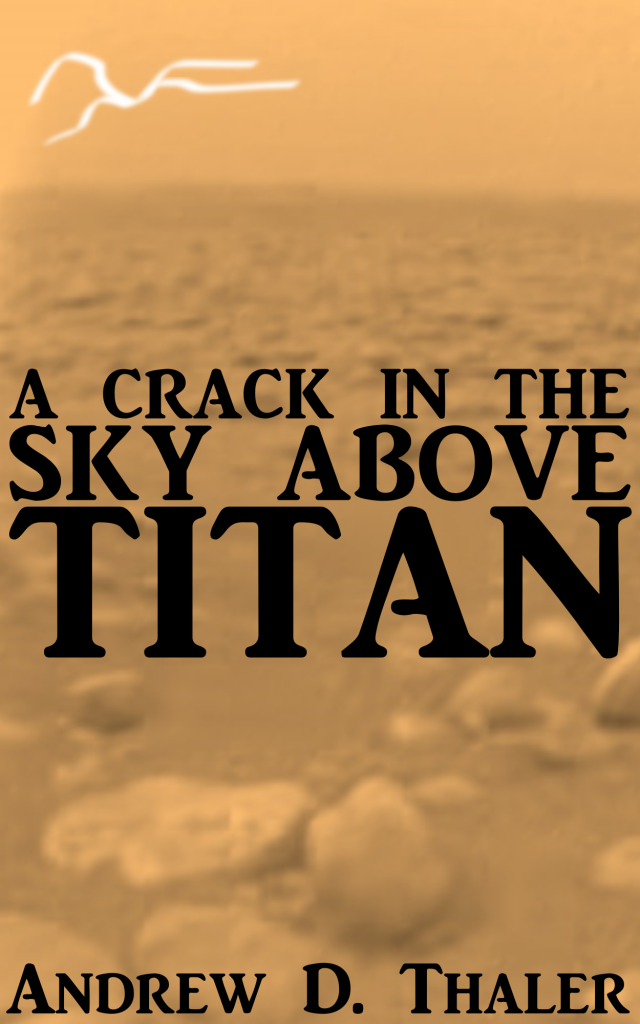
coverTitanA simple writing prompt–what would it be like to sail across Titan?–has taken me on a 20,000-word journey through the intricacies of life on Saturn’s largest moon. Join the Salvager on a journey across Kraken Mare to land the score of a lifetime, if the rest of the universe doesn’t get in their way. Discover the weird, wonderful world of Titan and her coastal colonies and confront the challenges of sailing across an alien world.

A Crack in the Sky above Titan takes a lot of the ideas developed during Field Notes from the Future and extends them out into the extremely distant future. At what point do humans, heavily augmented with hardware and software, stop being human? What rights are retained when a person contains no human parts? How does art evolve in a future obsessed with technology? And how exactly do you sail via celestial navigation with no polar star and an atmosphere of dense haze.

In honor of this new launch, my other novella, Prepared, an adventure in doomsday prepping, seasteading, and catastrophic sea level rise, is free to download all week long.

A Crack in the Sky above Titan.


Read an excerpt from my latest novella, below:

Read More “What is it like to sail across Titan’s methane seas?” »
A Natural History of the Starwhale

Posted on September 21, 2015September 20, 2015 By Andrew Thaler 1 Comment on A Natural History of the Starwhale
Popular Culture, Science
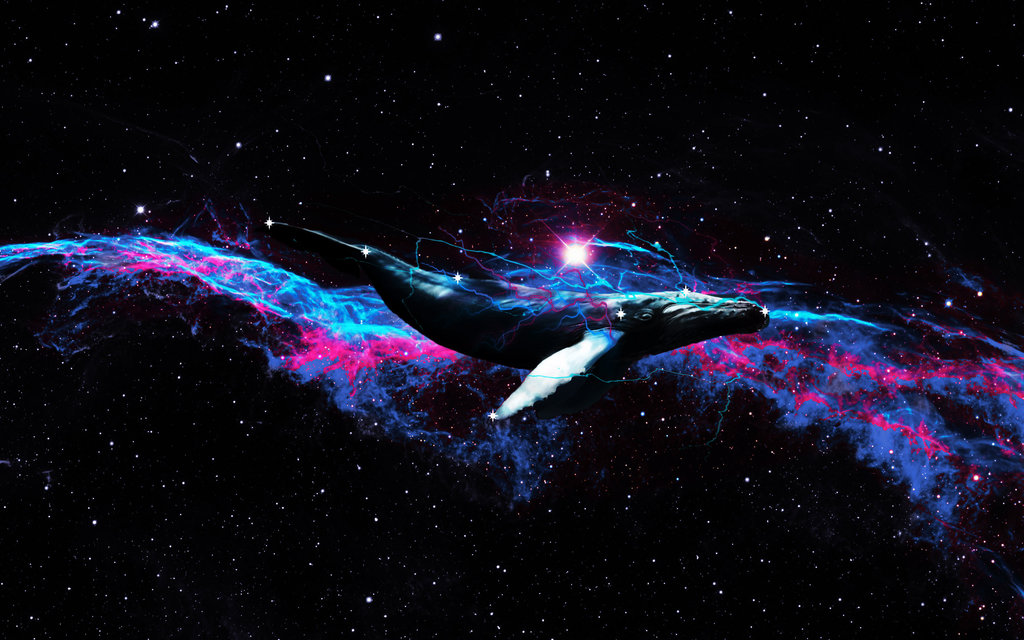
space_whale_by_ovitan-d8cc9en
Space Whale, by OvitaN – http://ovitan.deviantart.com/art/Space-Whale-504456863

Whales, those magnificent leviathans of the deep, have an uncanny knack for ending up in space. Science fiction is flooded with stories of starwhales–sometimes entirely new creatures that happen to resemble terran cetaceans in either behavior or appearance, sometimes evolved leviathans from our own world, and occasionally hapless, confused, ordinary whales. This is no fluke. Space is big, whales are big, so why shouldn’t there be whales in space?

Science fiction loves its tropes, and particularly loves comparing space to the golden age of maritime exploration, to the point where starships sometimes have sails. And then, of course, there’s The Narrative. You know, the one where a captain is consumed by obsession and revenge to hunt some semi-mythical mcguffin. If you’re going to do Moby-Dick-in-Space, you better have a starwhale. SciFi loves the Moby Schtick.

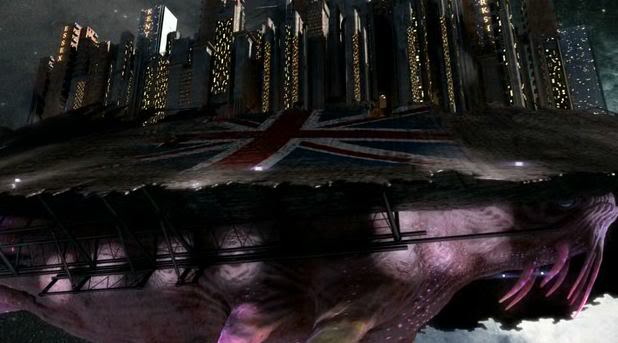
Starship UK, from Doctor Who.

So what is a starwhale, and why is it different from other giant space creatures like the exogorth of Empire Strikes Back? Like terran whales, star whales are intelligent creatures that often exhibit some form of emotion. Unlike other space monsters, they often act with a purpose that goes beyond “eat space people, wreck ship”. Nowhere is this more clearly highlighted than in the Doctor Who episode The Beast Below, in which the Doctor encounters the last living starwhale, now supporting the remnants of the British Empire on its back. In the story, the whale endures tremendous suffering in order to protect ‘the children’, and chooses to stay even after being freed from its captors.

Giant whales providing the backbone for mysterious islands traces its roots back to the ancient Greeks, at least in the Western canon. Aspidochelon was a sea monster said to resemble either a turtle or a whale, with a craggy back the carried sandy beaches and sometimes even trees and jungles. Sailors who wandered ashore would find their ships crushed as they were pulled down into the deep. Later incarnations of the whale-as-island made explicit its connection to Satan, the ultimate deceiver. And, of course, Herman Melville makes explicit the modern civilization rests on the back, or, more accurately, the oil, of the whale.

Interestingly, starwhales are, at worst chaotic neutral, but more often lawful good. Their connection to the devil abandoned back on Earth.

The Star Trek universe is resplendent with starwhales, from numerous Enterprises have encountered numerous starwhales, from benign travelers passing through to confused infants looking to the ship for survival, to aggressive bulls threatened by incursion into their territory. Bull sperm whales were documented by early Earth whalers as solitary, especially aggressive male whales, some of which had tasted the bite of many harpoons and continued to charge. It was a bull sperm whale the sunk the Essex, the inspiration for Moby Dick.

Read More “A Natural History of the Starwhale” »

Does Shark Week portrayal of sharks matter?

Posted on June 29, 2015July 3, 2015 By David Shiffman 6 Comments on Does Shark Week portrayal of sharks matter?
Blogging, Popular Culture, Science

sharkI’ve been critical of factual inaccuracy and fearmongering on Shark Week documentaries for years. But how big of a problem is this, and how do we know? I asked some of the authors of three recent scientific studies*  to summarize the evidence.

Many species of sharks are in desperate need of conservation. Twenty-four percent of all known species of sharks, skates and rays are considered Threatened with extinction by the IUCN Red List. Using a variety of different methods, scientists have documented rapid and severe population declines in many species of sharks all over the world.

Conservation requires public support. In a participatory democracy, new policies and regulations require some public support to pass. It’s easy to get public support to conserve cute and cuddly animals, but ugly animals need protection too. So do animals that scare people, like sharks.

Read More “Does Shark Week portrayal of sharks matter?” »

How a 10 Million Year old fossil, a smart phone, and a 3D printer recharged my #OceanOptimism.

Posted on April 10, 2015 By Andrew Thaler
Popular Culture, Science

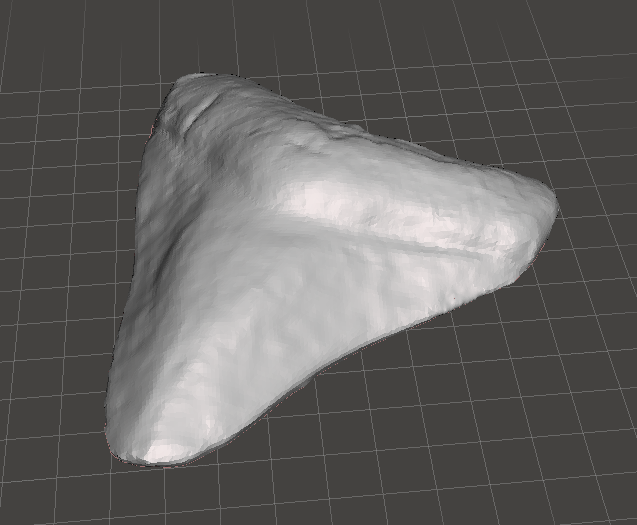
3dtootLast week, we launched a novel little experiment in crowdfunding marine science and conservation – Buy David Shiffman a Less Ugly Pair of Sunglasses – ostensibly about replacing David’s legendarily hideous sunglasses with something a bit more aesthetic. Of course, anyone digging into the stretch goals quickly realized that this was less about sunglasses and more about funding some cool research and outreach projects we’re currently working on; projects like a hammerhead conservation genetics analysis, building a marine ecology drone, and sending students from underserved schools of a shark tagging trip. This was made more explicit when we hit our first goal in the first 36 hours of funding.

With the first funding goal achieved, I decided we needed a cool perk, something not particularly expensive to produce but completely novel and cool enough to justify making a heftier donation. And, of course, it needed to be thematically related to the spirit of the project.

Enter the Megalodon.

Read More “How a 10 Million Year old fossil, a smart phone, and a 3D printer recharged my #OceanOptimism.” »

Hail hydra ! Taking a super villain approach to conservation #scicomm

Posted on February 19, 2015February 20, 2015 By Chris Parsons
Conservation, Popular Culture, Uncategorized

Hydra

Rarely do conservation or environmental issues solely deal with just one group of homogenous people. Most who deal with “on the ground” conservation realize that typically issues have multiple, often conflicting, groups with multiple view points and values. So why do so many attempts as conservation science communication just have one line of attack?

Read More “Hail hydra ! Taking a super villain approach to conservation #scicomm” »

Bioshock Oceanographic: The Problem with Buried at Sea

Posted on February 18, 2015February 17, 2015 By Andrew Thaler
Popular Culture

Previously on “Andrew takes a piece of pop culture and over-analyzes it to death“: we went to Rapture, the city under the sea in Bioshock and Bioshock 2 (and, briefly, Bioshock Infinite) to figure out exactly where and how deep the city was. In the end, I came up with a respectable if underwhelming, maximum depth of 150 meters. Deep, but not crush-your-sub, deep.

And then I played Bioshock Infinite: Burial at Sea 2 and Glomar Challenger, we have a problem.

Read More “Bioshock Oceanographic: The Problem with Buried at Sea” »

Bioshock Oceanographic: How deep is Rapture?

Posted on February 11, 2015February 17, 2015 By Andrew Thaler 5 Comments on Bioshock Oceanographic: How deep is Rapture?
Popular Culture, Science

“To build a city at the bottom of the sea! Insanity. But where else could we be free from the clutching hand of the Parasites? Where else could we build an economy that they would not try to control, a society that they would not try to destroy? It was not impossible to build Rapture at the bottom of the sea. It was impossible to build it anywhere else.”

Andrew Ryan, Bioshock

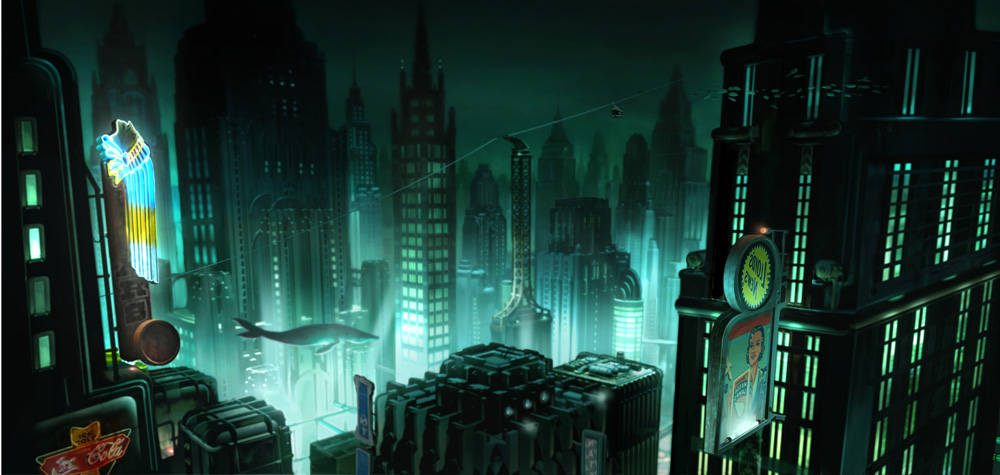
Rapture, a city beneath the sea, the crowning achievement of Randian industrialist Andrew Ryan. This atmospheric world of technological wonder and urban decay serves as the setting for one of the greatest video games of all time, Bioshock. The player, finding themselves stranded at sea in a fiery plane crash, makes their way towards a lonely lighthouse, descends into the sunken, desolate city, and unlocks the mysteries surrounding the creation and destruction of a most unusual city.

Rapture. From Bioshock.

Though many questions are answered as the player journeys into the heart of Rapture, collecting audio diaries of its residents along the way, one question still eludes: How deep is Rapture and where, exactly, is it?

Read More “Bioshock Oceanographic: How deep is Rapture?” »

An open letter to new Discovery Channel President Rich Ross from a shark scientist

Posted on January 9, 2015January 9, 2015 By David Shiffman 1 Comment on An open letter to new Discovery Channel President Rich Ross from a shark scientist
Conservation, Popular Culture, Science

Dear Rich Ross, new President of the Discovery Channel,

I was excited to learn about your commitment to no longer show fake documentaries on the Discovery Channel. These shows have been incredibly damaging not only to Discovery’s goals of being the “number one non-fiction media company in the world” by”telling compelling and accurate stories,” but to public understanding of science and conservation. In recent years, the Discovery Channel has tried hard to actively muddle the fact that these documentaries were fake, including hiding vague disclaimers at the very end.  I’ve spoken to hundreds of schoolchildren about sharks, and every time someone asks me about megalodon or mermaids.  Viewers believed that they were real, and your channel actively bragged about the fact that people believed that they were real.

By claiming that megalodon isn’t extinct and mermaids are real but the government is covering this up, these shows resulted in scientists receiving threats and harassment,  and resulted in important government agencies getting so many angry phone calls that they had to issue public statements. Producers for some of these shows intentionally lied to scientists to convince them to appear onscreen, intentionally lied to journalists about the facts behind them,  and intentionally caused a real-life public panic. They actually showed a documentary about a legendary (read as “fake”)  shark called Hitler. In short, I will be glad to see Shark Week and the Discovery Channel return to your roots of fact-based programming.

However, while “we won’t actively lie to viewers anymore” is an important step that I applaud, Shark Week and other Discovery Communications programs have many other problems that should be addressed. Shark Week 2014’s “Zombie Sharks” glorified wildlife harassment for no reason, as the entire stated goal of the show was for a non-scientist with a history of wildlife harassment to try to answer a question that scientists have known the answer to for decades. This problem is not limited to Zombie Sharks, but pervades Discovery Communications shows.

Read More “An open letter to new Discovery Channel President Rich Ross from a shark scientist” »

Southern California is basically Mordor: Climate forcing effects in Middle Earth

Posted on December 24, 2014December 23, 2014 By Andrew Thaler
Popular Culture, Science

“It is a barren wasteland, riddled with fire and ash and dust, the very air you breathe is a poisonous fume.” Boromir, The Lord of the Rings Mordor, the seat of the Dark Lord’s power, a barren wasteland crawling with orcs, dry and desolate. Or at least, that’s what we’re led to believe thanks to … Read More “Southern California is basically Mordor: Climate forcing effects in Middle Earth” »

Warg extirpation and the destabilization of eagle colonies in Middle Earth

Posted on December 23, 2014December 23, 2014 By Andrew Thaler
Popular Culture, Science

“Eagles! The eagles are coming!” Pippin, Return of the King “I came from the end of bag, but no bag went over me. I am the friend of bears and the guest of eagles. I am Ring-winner and Luckwearer; and I am Barrel-rider.” Bilbo Bagins, The Hobbit Truly, in this late age, is there anything … Read More “Warg extirpation and the destabilization of eagle colonies in Middle Earth” »

Posts pagination

Previous 1 … 4 5 6 … 19 Next

Popular Posts

How close did the world's first deep-sea mining come to the dredging the world's largest cold-water coral reef?How close did the world's first deep-sea mining come to the dredging the world's largest cold-water coral reef?March 17, 2026Andrew Thaler
At least 74 practicing shark researchers: How a silly thing I said online raised thousands for conservationAt least 74 practicing shark researchers: How a silly thing I said online raised thousands for conservationFebruary 26, 2025David Shiffman
What Ocean Ramsey does is not shark science or conservation: some brief thoughts on "the Shark Whisperer" documentaryWhat Ocean Ramsey does is not shark science or conservation: some brief thoughts on "the Shark Whisperer" documentaryJuly 2, 2025David Shiffman
Here are some ocean conservation technologies that I'm excited aboutHere are some ocean conservation technologies that I'm excited aboutFebruary 19, 2026David Shiffman
That's not a blobfish: Deep Sea Social Media is Flooded by AI SlopThat's not a blobfish: Deep Sea Social Media is Flooded by AI SlopDecember 19, 2025Andrew Thaler
I turned my woodshop into a personal solar farm.I turned my woodshop into a personal solar farm.June 21, 2021Andrew Thaler
My "Follow ocean science and conservation experts on Bluesky and Instagram" assignmentMy "Follow ocean science and conservation experts on Bluesky and Instagram" assignmentNovember 19, 2024David Shiffman
Alberta, Canada is the proud owner of the largest man-made pyramid on the planetAlberta, Canada is the proud owner of the largest man-made pyramid on the planetOctober 16, 2012Andrew Thaler
Urea and Shark OsmoregulationUrea and Shark OsmoregulationNovember 15, 2010David Shiffman
Here's what I teach my students about finding jobs in marine biology and conservationHere's what I teach my students about finding jobs in marine biology and conservationApril 10, 2024David Shiffman
Subscribe to our RSS Feed for updates whenever new articles are published.

We recommend Feedly for RSS management. It's like Google Reader, except it still exists.

Southern Fried Science

  • Home
  • About SFS
  • Authors
  • Support SFS


If you enjoy Southern Fried Science, consider contributing to our Patreon campaign.

Copyright © 2026 Southern Fried Science.

Theme: Oceanly Premium by ScriptsTown