Skip to content

Southern Fried Science

Over 15 years of ocean science and conservation online

  • Home
  • About SFS
  • Authors
  • Support SFS

Category: Popular Culture

How to spot a scam shark documentary producer

Posted on July 24, 2017 By Michelle Jewell
Popular Culture

Many aspects of science-ing are not explicitly taught, and scientists become accustomed to mastering the deep end.  While this tactic can make you stronger, there are situations where the deep end is a vulnerable place where nasty critters are very happy to take advantage.

One such area?  How to handle being contacted by “producers.”  In my experience, for every 1 exceptional producer you speak with, you will be contacted by at least 4 scammers.  Scam producers will particularly target naïve early-career scientists, just like white sharks and seal pups.  In light of this week, I’ve put together a guide to aid YOY scientists rising in the ranks of popularity and make the deep end a little safer.  Here are 13 ways to spot scam shark documentary producers, with a few 🚩🚩:

Read More “How to spot a scam shark documentary producer” »

Dear John: Farming and technology in the near future.

Posted on March 29, 2017March 29, 2017 By Andrew Thaler
Popular Culture

I wrote this story a couple of years ago and have been trying to find a home for it ever since. As the issue of proprietary software’s relationship to agricultural technology is back in the news, I figure it’s time to stop shopping this short science fiction story around and put it in front of a real audience. For some real-world background reading, see:

  • Why American Farmers Are Hacking Their Tractors With Ukrainian Firmware.
  • Hacking the Tractor: what the future of farming means for open science.
  • New High-Tech Farm Equipment Is a Nightmare for Farmers.
  • We Can’t Let John Deere Destroy the Very Idea of Ownership.

DEAR JOHN.

It started with the tractor. Or, rather, it stopped with the tractor. John Willis climbed down from the cabin of his dead machine and removed the cowling. Everything looked fine. The diesel engine shined, its green accents still brilliant.

After years trading his skill with a wrench and a soldering iron for access to his neighbors’ equipment, he finally owned a tractor of his own. The latest model, too. Not ostentatious, but with just enough comforts to make up for the last ten years. The tractor was new, bought debt-free through the Farm Act and a decade of careful planning and backbreaking labor. Expensive, but built to last.

Except it didn’t last. For the third time in an hour, the engine seized, the wheels locked, the console went dead. Willis sighed. He had acres to till and he wasn’t in the mood to spend a day stripping the engine, hunting for some tiny defect. He could send it to the service yard, but he couldn’t afford to wait for an authorized repair. The quote alone would set him back a week.

He couldn’t afford another late planting. Not this year.

He started the tractor. It roared back to life, the engine purred but the console beeped and flashed with panic, a thousand different alarms. The manual, a massive, multi-gigabyte document, was sitting on his work computer, back in the barn. For whatever reason, he couldn’t get it to download to his field tablet. He put the tractor in gear and continued down the field.

Fifteen minutes later, the tractor was dead again.

Well, he thought to himself, at least there’s a rhythm to it. He limped down the rows in quarter-hour bursts.

Read More “Dear John: Farming and technology in the near future.” »

Why do wizards go adventuring ? Or …. you thought that your tenure requirements were tough?!

Posted on February 23, 2017February 23, 2017 By Chris Parsons
Academic life, Popular Culture

Something that has been bothering me for a while, is why do wizards go adventuring?

Source: ClipArtLord.com

Now if you are a big geek like me, you’ll know that practically every adventuring party has a wizard. But these wizards are incredibly unprepared for exploring dungeons and have a shockingly high mortality rate. In the dungeons and dragons* of my youth, a starting wizard had a mere 1 to 4 hit points and was equipped with dagger (or is they were luck a staff). Did these budding Gandalfs get armor? Of course not, they faced ogres and basilisks in the fantasy equivalent of sweat pants.

The statistics of a starting wizard meant that they could easily be killed by a house cat. Also they had just one spell. Cast “light” so that your party could see in a cave, and you were done for the day. If you had the most destructive spell of the first level wizard, you would fire a “magic missile” that always hit, but did a miserable 2 to 5 (1d4+1)  points of damage. So if  jumped by  above mentioned angry house cat, you literally had a 50/50 chance of killing it before it killed you**.

So why do all these highly educated, highly intelligent wizards leave their ivory (or mithril) towers and trudge through cold, dank dungeons with groups of characters that generally make the knights in Monty Python and the Holy Grail look like Seal Team 6  in comparison?

Why does every early career academic pursue elusive gold and put their common sense and lives on the line? Why…? To get tenure of course…

Read More “Why do wizards go adventuring ? Or …. you thought that your tenure requirements were tough?!” »

No, there isn’t a UFO sitting in Antarctica.

Posted on February 2, 2017 By Andrew Thaler
Popular Culture

One of my favorite things to do is browse through google maps looking for weird formations and places of historical curiosity. Apparently I’m not alone, as there are hordes of map hunters searching for the bizarre on this increasingly bizarre world. That’s right! It’s time for yet another installment of “this thing on Google maps is not a sea-monster/alien/UFO/ancient pyramid”.

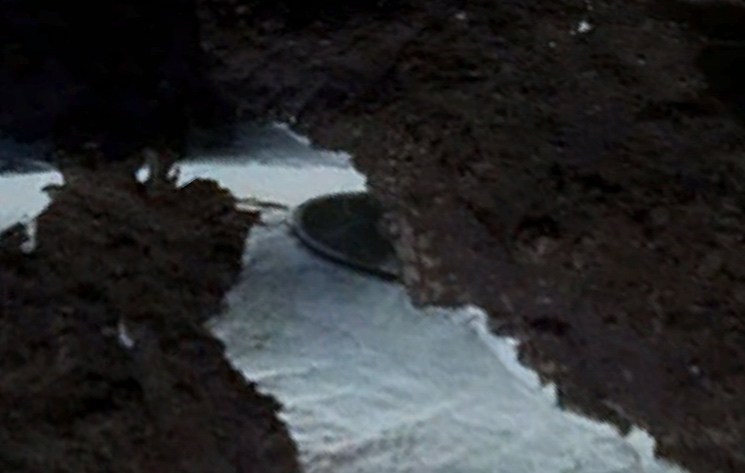
The Object on Google Earth.

This newest discovery comes from Antarctica, where monster hunters have found what looks like a perfect disc sitting on the ice. Could it be a UFO? The image is surprisingly compelling.

It’s very round for one, and it looks like it’s sitting on top of a glacier, partially covered by rock. The 60-foot-wide object looks remarkably like a classic flying saucer.

SPOILERS: It’s not a UFO.

Read More “No, there isn’t a UFO sitting in Antarctica.” »

Micronations and poop dreams: Strange tales from the Guano Islands Act of 1856

Posted on January 11, 2017 By Andrew Thaler
Popular Culture

I’m just going to lay this out there right now: This story ends with Ernest Hemingway’s brother sitting on a 30-foot raft in the middle of the Caribbean.

But first, let’s talk about Bill Warren.

Bill Warren is an entrepreneur, treasure hunter, Frank Sinatra impersonator, former Christian music host, and about 30 other descriptors. He’s probably a huckster, but he’s our kind of huckster. You’ve almost certainly seen something about him: This Treasure Hunter Says He Has Located Bin Laden’s Body. I could spend the next 2,000 words just writing about Bill Warren, but you’re here for the guano, so just read this exhaustive, entertaining, hilarious article bout him by CJ Ciaramella: The Nearly Astonishing Tale Of Bill Warren, Treasure Seeker.

Read More “Micronations and poop dreams: Strange tales from the Guano Islands Act of 1856” »

Disenfranchised Adjuncts Wanted: Flexible Morality a Plus

Posted on October 25, 2016 By Andrew Thaler
Popular Culture

A bit of Academic science fiction for your Tuesday morning enjoyment.

A reminder: Southern Fried Science is entirely supported by contributions from our readers. Head over to Patreon to help keep our servers running and fund new and novel ocean outreach projects. And if you like my occasional forays into fiction, you’ll find a lot more over there. 


Fall Semester

“I’m sorry,” the dean said as he rested his coffee mug on the heavy stack of CV’s littering his desk, “we just don’t have any demand for your class this semester. Maybe in the Spring.”

“What if I add another core credit? I could include a writing module. I could add a history component.”

The dean leaned forward. “You know I can’t do that, Doctor…”

“Thomas, sir.”

“Dr. Thomas. It wouldn’t be fair to the students. We’re not going to pad out a class just so you can get paid. I’m sorry. It’s just not in the cards. Maybe next semester you can stir up some interest in Introduction to Genome Editing.”

“So what do I do now?”

“Well,” the dean paused, earnest and thoughtful, “if you want to keep your office, you’ll have to volunteer to TA one of the chemistry lab units. Otherwise, I’m afraid your campus access expires at midnight this Friday.”

Read More “Disenfranchised Adjuncts Wanted: Flexible Morality a Plus” »

The 3D-Printed Giant Deep-sea Isopod You Always Wanted.

Posted on October 6, 2016 By Andrew Thaler 1 Comment on The 3D-Printed Giant Deep-sea Isopod You Always Wanted.
Popular Culture, Science
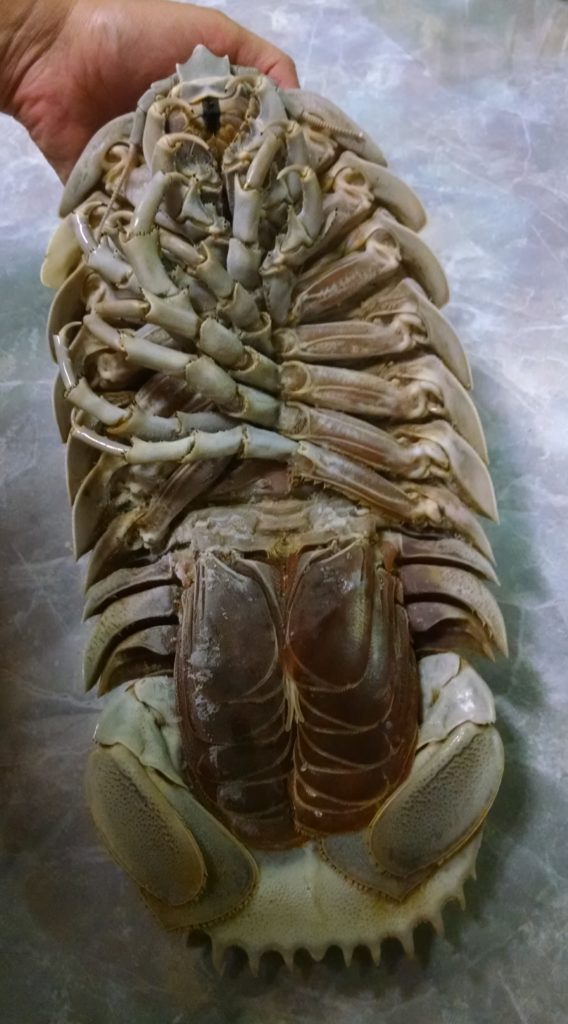
Giant Isopod. Photo by author.

I love giant deep-sea isopods (Bathynomous giganteus if you’re fancy).

I’ve written quite a few articles about giant isopods. Giant isopods were prominently featured in our epic ocean monograph, Sizing Ocean Giants. I’ve even been fortunate enough to observe novel giant isopod behavior in the deep sea. If Southern Fried Science had a mascot, it would have to be the giant isopod.

When I started Scanning the Sea, I knew that a giant isopod would have to be part of the collection. There was just one problem: 3D scanning marine critters is an imprecise art, and you need to start with a very clean specimen. Most of the giant isopods I had access to had been floating in formalin for decades, or came up in pieces, or were preserved in a twisty, roly-poly ball. They weren’t good candidates for scanning.

Read More “The 3D-Printed Giant Deep-sea Isopod You Always Wanted.” »

5 best baby books to launch your child’s ocean education.

Posted on September 15, 2016September 15, 2016 By Andrew Thaler
Education, Popular Culture, Reviews and Interviews

img_20160915_110450570

As a few of you have noticed, we recently added a tiny new member to our little ocean outreach empire. A new baby opens up a chance for us to explore a whole new world of ocean-themed content tailored to our newest explorers. As a family of marine biologists, we very quickly accumulated a massive library of ocean-themed baby books, some amazing, some not-so-amazing.

After critical review by two PhDs in Marine Science and Conservation, for both scientific accuracy and pure delightfulness, here are my top 5 baby books to get your ocean education started off right.

biggestI’m the Biggest Thing in the Ocean by Kevin Sherry.

Sherry must have written this book specifically for me, since Sizing ocean giants: patterns of intraspecific size variation in marine megafauna is already my most widely distributed paper. I know a few things about giant squids. I really love this book. The art is colorful and engaging. The story has a hilarious twist. It’s grounded in real ocean critters (though there’s something funky going on with that jellyfish). And there’s an important lesson about hubris and trophic position in marine food webs. 

Read More “5 best baby books to launch your child’s ocean education.” »

Dying for Reason in the Rational Utopia

Posted on August 10, 2016August 10, 2016 By Andrew Thaler
Conservation, Popular Culture

When Neil deGrasse Tyson proposed his “Rationalia” thought experiment several months ago, I thought is was cute but misguided. Now that he’s doubled down on the concept, I can see exactly why it is such a naively flawed idea. Rationalia would be a disaster for conservation. This short science fiction story illustrates why.


ration

“Oyez, oyez, oyez!  This, the 107th session of the 16th Superior District Court, is hereby gavelled to order. Please be seated.”

Cope Johns remained standing. He surveyed the crowd, an odd assortment of bystanders, tourists, and his few supporters. Chief Justice Carlsson entered the hall, climbed onto his podium, and looked down on the assembled masses. Somewhere amid the crush of bodies, an elderly lawyer took his seat. All eyes turned to him. He timidly rose to his feet.

“Today we hear Dr. Cope Johns, on behalf of the Vaquita (Phocoena sinus), versus the Free Republic of Rationalia. Make note that, as evidence suggests that timeliness is required in this decision, we have elected to expedite deliberations. The court has been briefed extensively on this case and requires no additional background. Dr. Johns, your opening statement?”

Cope approached the stand. The bailiff placed his left hand on the near-field ID scanner, confirming his identity. Cope raised his right hand to nothing and swore under his breath.

“Thank you, your honor. The Vaquita is a tiny porpoise that has been on the verge of extinction for the better part of a century. Its only remaining habitat is in the Gulf of Reason, where the Free Republic of Rationalia intends to establish the Lost Lobos tidal energy farm. This farm will displace the Vaquita breeding grounds and will likely drive the species over the brink to extinction.”

Read More “Dying for Reason in the Rational Utopia” »

The Science of Aquaman: Understanding Dead Water

Posted on April 22, 2016April 23, 2016 By Andrew Thaler
Popular Culture, Science

Update: legendary oceanographer Dr. Kim Martini stops by to set the record straight on the challenging subject of internal waves. Her comments in bold. 

It has been a long time since I’ve made an entry into our long-running, world-famous, Science of Aquaman series. The last few runs have been heavy on high adventure, but light on ocean tidbits for me to nerd out on. I don’t like to force ocean fact into comic fiction unless the opportunity presents itself.

So, with the newest run of Aquaman, starting with issue #50, focusing around a villain named Dead Water, I thought it was the perfect moment to talk about some physical oceanography. And then…

Dead Water. From Aquaman #51.

My hat’s off to Dan Abnett, who beat me to the science punchline. If I had to explain the phenomenon of dead water in a single tweet, it would have been pretty close to this. Well played, sir. Well played.

So what is dead water and why does it make maneuvering a vessel so challenging?

Read More “The Science of Aquaman: Understanding Dead Water” »

Posts pagination

Previous 1 … 3 4 5 … 20 Next

Popular Posts

The story of the pride flag made from NASA imagery: Bluesky's most-liked imageThe story of the pride flag made from NASA imagery: Bluesky's most-liked imageSeptember 27, 2024David Shiffman
"Why Sustainable Seafood Matters" is now available for preorder! Here's what it's about, and why I decided to write it."Why Sustainable Seafood Matters" is now available for preorder! Here's what it's about, and why I decided to write it.June 8, 2026David Shiffman
What Ocean Ramsey does is not shark science or conservation: some brief thoughts on "the Shark Whisperer" documentaryWhat Ocean Ramsey does is not shark science or conservation: some brief thoughts on "the Shark Whisperer" documentaryJuly 2, 2025David Shiffman
Shark of Darkness: Wrath of Submarine is a fake documentaryShark of Darkness: Wrath of Submarine is a fake documentaryAugust 10, 2014Michelle Jewell
I just told 850 shark scientists a hard truth: We’re not communicating shark conservation correctly.I just told 850 shark scientists a hard truth: We’re not communicating shark conservation correctly.June 1, 2026David Shiffman
Deep-sea Mining, Domestic Cats, Star Trek, and Ocean Exploration: Andrew's mid-year podcast round-up.Deep-sea Mining, Domestic Cats, Star Trek, and Ocean Exploration: Andrew's mid-year podcast round-up.June 6, 2026Andrew Thaler
Why ocean science is still one of the worst-funded scientific fields worldwideWhy ocean science is still one of the worst-funded scientific fields worldwideJune 3, 2026Chris Parsons
What is a Sand Shark?What is a Sand Shark?November 12, 2017Chuck Bangley
Tackling the least important debate in deep-sea mining: the desultory hyphenTackling the least important debate in deep-sea mining: the desultory hyphenJune 8, 2026Andrew Thaler
That's not a blobfish: Deep Sea Social Media is Flooded by AI SlopThat's not a blobfish: Deep Sea Social Media is Flooded by AI SlopDecember 19, 2025Andrew Thaler
Subscribe to our RSS Feed for updates whenever new articles are published.

We recommend Feedly for RSS management. It's like Google Reader, except it still exists.

Southern Fried Science

  • Home
  • About SFS
  • Authors
  • Support SFS


If you enjoy Southern Fried Science, consider contributing to our Patreon campaign.

Copyright © 2026 Southern Fried Science.

Theme: Oceanly Premium by ScriptsTown