Skip to content

Southern Fried Science

Over 15 years of ocean science and conservation online

  • Home
  • About SFS
  • Authors
  • Support SFS

Category: Popular Culture

Megalodon: the New Evidence is a fake documentary

Posted on August 7, 2014 By David Shiffman 3 Comments on Megalodon: the New Evidence is a fake documentary
Blogging, Popular Culture, Science

So was last year’s “Megalodon: the monster shark lives.”  Both Shark Week specials claim to show evidence that Carcharocles megalodon, the largest predatory shark that ever lived, is still alive. In both cases, the evidence is 100% completely and totally fake. A disclaimer from “the monster shark lives” Video evidence is CGI, images are photoshopped, and … Read More “Megalodon: the New Evidence is a fake documentary” »

Cascading planetary-wide ecosystem effects of the extirpation of apex predatory Krayt dragons on Tatooine

Posted on July 22, 2014 By David Shiffman
Blogging, Conservation, Popular Culture, Science

Author’s note: this post is part of the “Science of Tatooine” blog carnival. Though obviously about science fiction and not the real world, it includes real ecological theories,  and it uses some real peer-reviewed scientific papers as references. Whenever possible, I’ve linked to accessible copies of those papers and explainers of these ecological terms. Many of the same issues are associated with shark population declines. 

ABSTRACT

Predators play an important role in structuring ecosystems, with predator population declines being linked to a variety of negative ecological effects. Here, we present evidence that the planet Tatooine, famous throughout the Galaxy for being a desert planet, experienced desertification as a result of unintended changes in herbivore populations caused by the intentional large-scale killing of apex predators by offworld colonists. Fossil evidence and interviews showing traditional ecological knowledge suggest that once-abundant Krayt dragons were hunted to near extinction by early human colonists. As a result of the decline in predation, populations of large herbivorous banthas populations grew out of control and overgrazed the plants once found throughout Tatooine.

INTRODUCTION

Studies of numerous ecosystems have consistently shown the importance of intact populations predators to healthy ecosystems, with a recent review (Estes et al. 2011 “trophic downgrading of planet Earth”) noting that “the loss of apex consumers is arguably humankind’s most pervasive influence on the natural world.” Population declines of top predators can cause a trophic cascade, resulting in unintended consequences that ripple through a food chain. Sea otter population declines in the Pacific Northwest of the United States resulted in predation release of otter prey (sea urchins), and an overabundance of sea urchins destroyed entire kelp forest ecosystems by overgrazing (Estes et al. 1998 “killer whale predation on sea otters linking oceanic and nearshore systems.) Wolf population declines in Yellowstone National Park resulted in predation release of wolf prey (elk,) and an overabundance of elk destroyed aspen pine forests by overgrazing (Ripple et al. 2011 “trophic cascades among wolves, elk, and aspen on Yellowstone National Park’s northern range.”)  Ecosystem-wide effects stemming from the loss of predators has also been listed as the proximate cause of disease outbreaks (Pongsiri et al. 2009 “biodiversity loss affects global disease ecology,”), increasing destructive wildfires (Perrings et al. 1997 “biodiversity resilience and the control of ecological-economic systems: the case of fire-driven rangelands,”) and overall biodiversity loss (Paine 1969, “Pisaster-tegular interaction: prey patches, predator food preference, and intertidal community structure.”)

Though the planet Tatooine in the Tatoo system of the Outer Rim is known by researchers to have once been covered by oceans and lush vegetation, it is commonly known now as a desert planet (source). While it is famous in Republic circles primarily for being the home of Jedi Master Skywalker, Tatooine also has native sentient species, including Jawas and Tusken Raiders (the latter are derisively referred to by locals as “sand people” ).  Native non-sentient animals include banthas (large herbivores used as beasts of burden) and the now mostly extinct Krayt dragon (a large predatory species that fed on banthas).
Read More “Cascading planetary-wide ecosystem effects of the extirpation of apex predatory Krayt dragons on Tatooine” »

The incredible biodiversity of Aquaman: the grand finale

Posted on May 12, 2014May 12, 2014 By Andrew Thaler
Popular Culture, Science
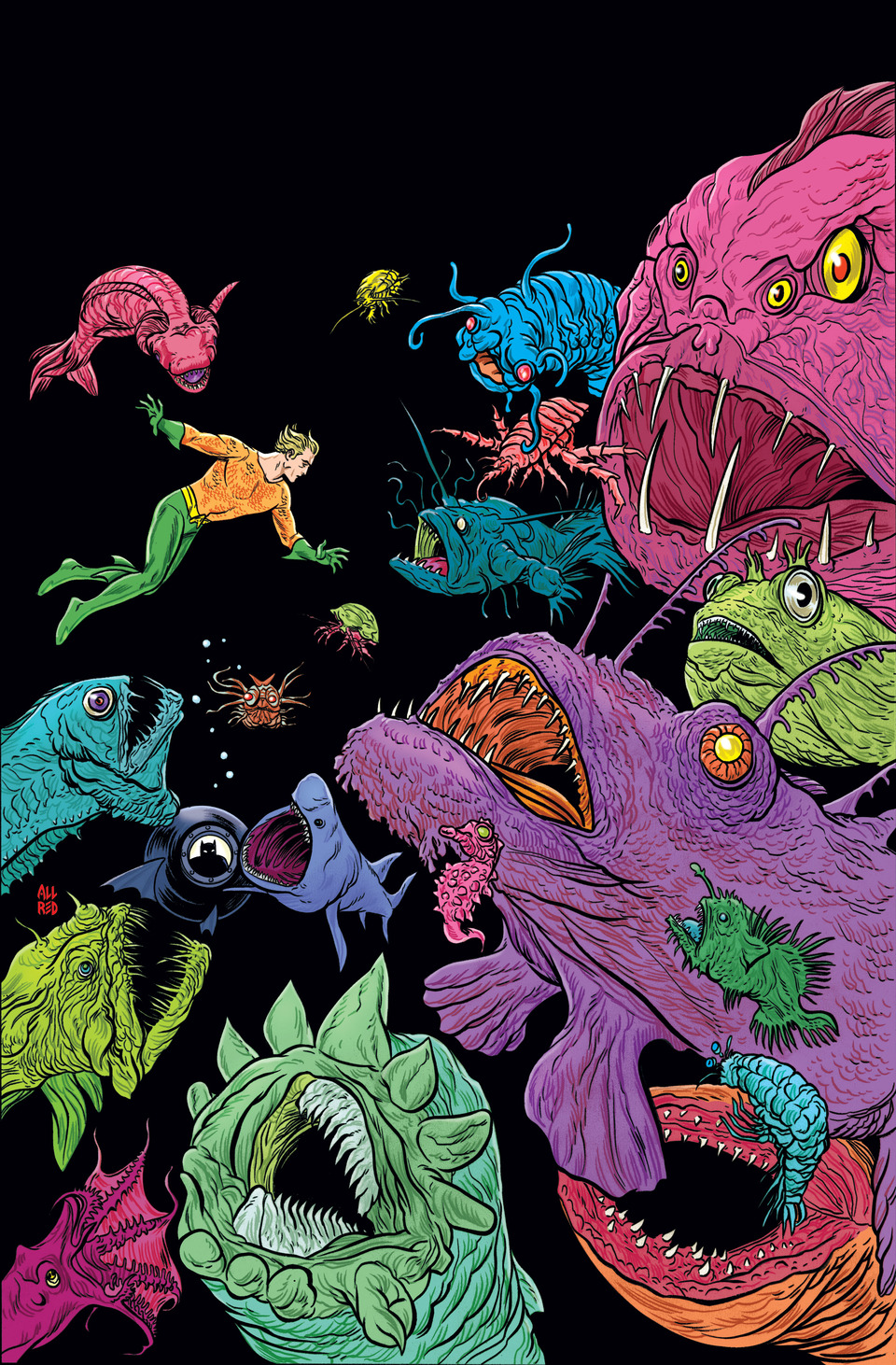
Aquaman #31 variant cover. Art by Mike Allred.

We’ve traveled far, this last week. From gentle basking sharks gliding across the surface of the North Sea to titanically tiny worms dwelling in the deep. The variant cover for Aquaman #31 is a fantastically diverse sampling of real ocean organisms, many of them not only profoundly weird but also almost entirely unstudied. Mike Allred’s is a small taste of the unknown still waiting to be explored.

I saved the best for last, including my favorite squid and scale worm. Before we dive into these final identifications, let’s take a moment to review.

Read More “The incredible biodiversity of Aquaman: the grand finale” »

The penultimate installment of the incredible biodiversity of Aquaman’s variant cover

Posted on May 9, 2014May 9, 2014 By Andrew Thaler
Popular Culture, Science

aquapurged5We are approaching the home stretch, with the second to last installment of our tour through this amazing Aquaman cover. Have you been following along? How many have you guessed so far?

If you haven’t been following along, you can catch up with the previous installments, below:

  • The incredible biodiversity of Aquaman’s variant cover
  • The incredible biodiversity of Aquaman’s variant cover: Episode 2
  • The incredible biodiversity of Aquaman’s variant cover: Halfway Home
  • The incredible biodiversity of Aquaman’s variant cover: Part four of a six part trilogy

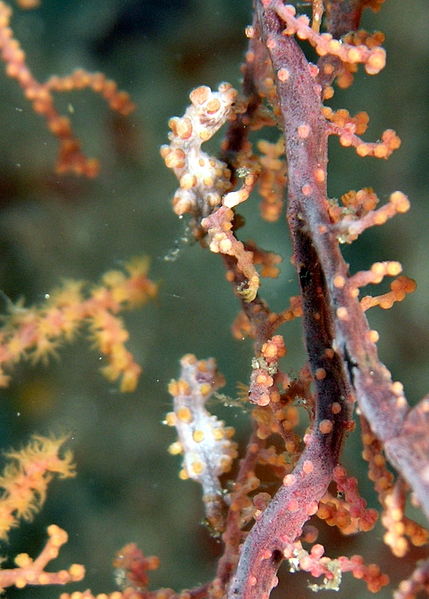
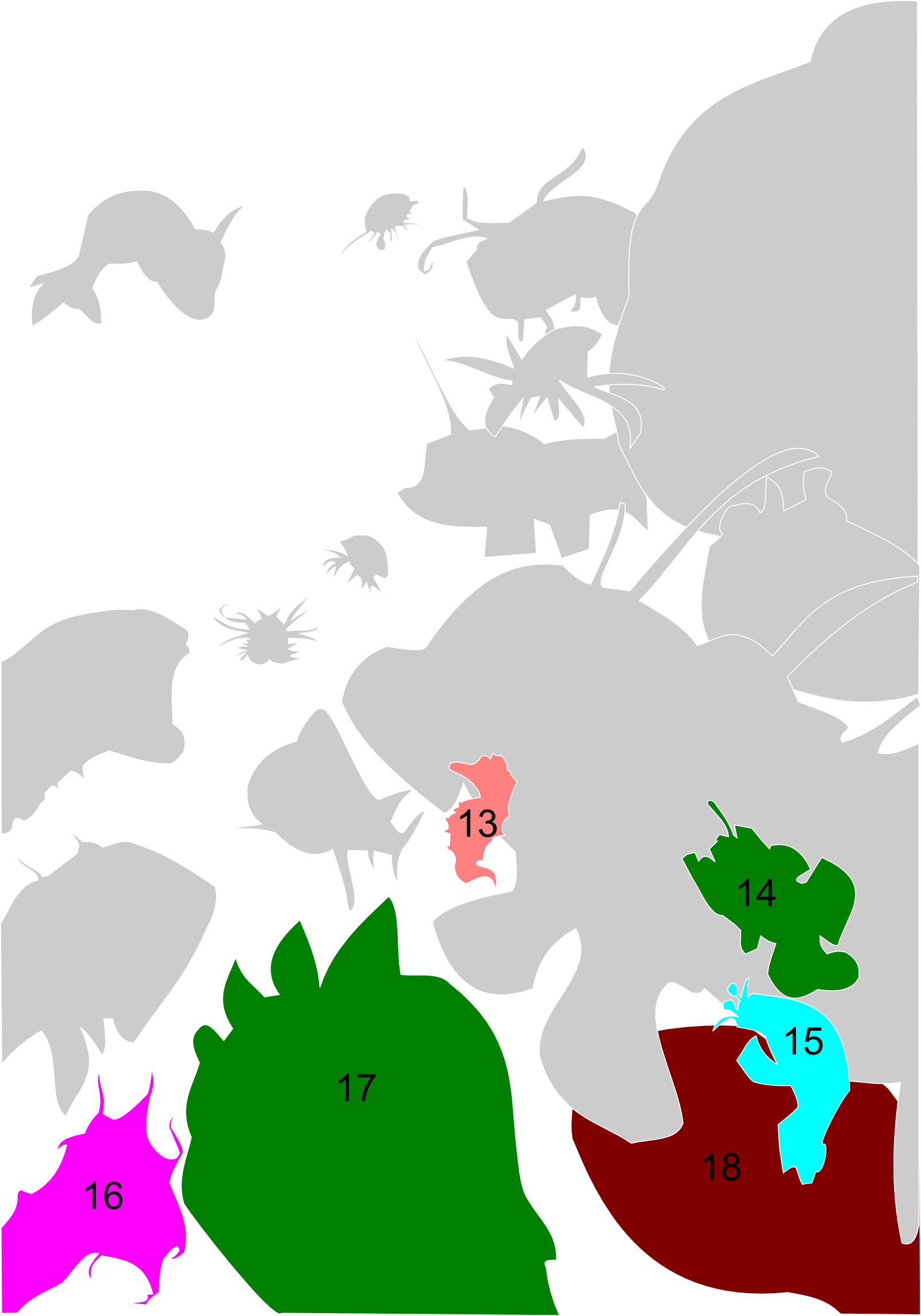
13. Pygmy Seahorse (Hippocampus bargibanti)

429px-Hippocampus_bargibanti3
Pygmy Seahorse. Photo by Jens Petersen.

seahorseI started my career in marine science working with seahorses, so these goofy, thoroughly un-fish-like fish, hold a special place in my heart. All seahorses are pretty weird, but pygmy seahorses might be the weirdest. These tiny animals, barely 2 centimeters long, live exclusively on gorgonian corals, their lump profile allows them to blend perfectly into the backdrop. Their bulbous protrusions will assume the color of their host coral.

Read More “The penultimate installment of the incredible biodiversity of Aquaman’s variant cover” »

The incredible biodiversity of Aquaman’s variant cover: Part four of a six part trilogy.

Posted on May 8, 2014May 8, 2014 By Andrew Thaler
Popular Culture, Science

aquapurged4Welcome to day four of our delightful tour through the weird, wonderful creatures on Michael Allred’s incredible Aquaman cover. It’s all fish today!

Since we’re at the halfway point, now seems like a good time to reflect on why this cover matters so much. I’ve been a fan of Aquaman for a long time, and for all the amazing visuals in the latest iteration of our Atlantean hero, the deep sea remains noticeably underrepresented. Comic books mirror life and it is rare to see deep-sea creatures feature in art, let alone popular art. To have so many deep-sea organisms featured prominently on a piece of genre-crossing pop art is a rare and welcome opportunity to share my love for fangtooths, vampire squid, vent worms, monkfish, fringeheads, and isopods with a new and diverse audience.

Downward with the bestiary of barotollerant glory!

Read More “The incredible biodiversity of Aquaman’s variant cover: Part four of a six part trilogy.” »

The incredible biodiversity of Aquaman’s variant cover: Halfway Home

Posted on May 7, 2014May 8, 2014 By Andrew Thaler
Popular Culture, Science

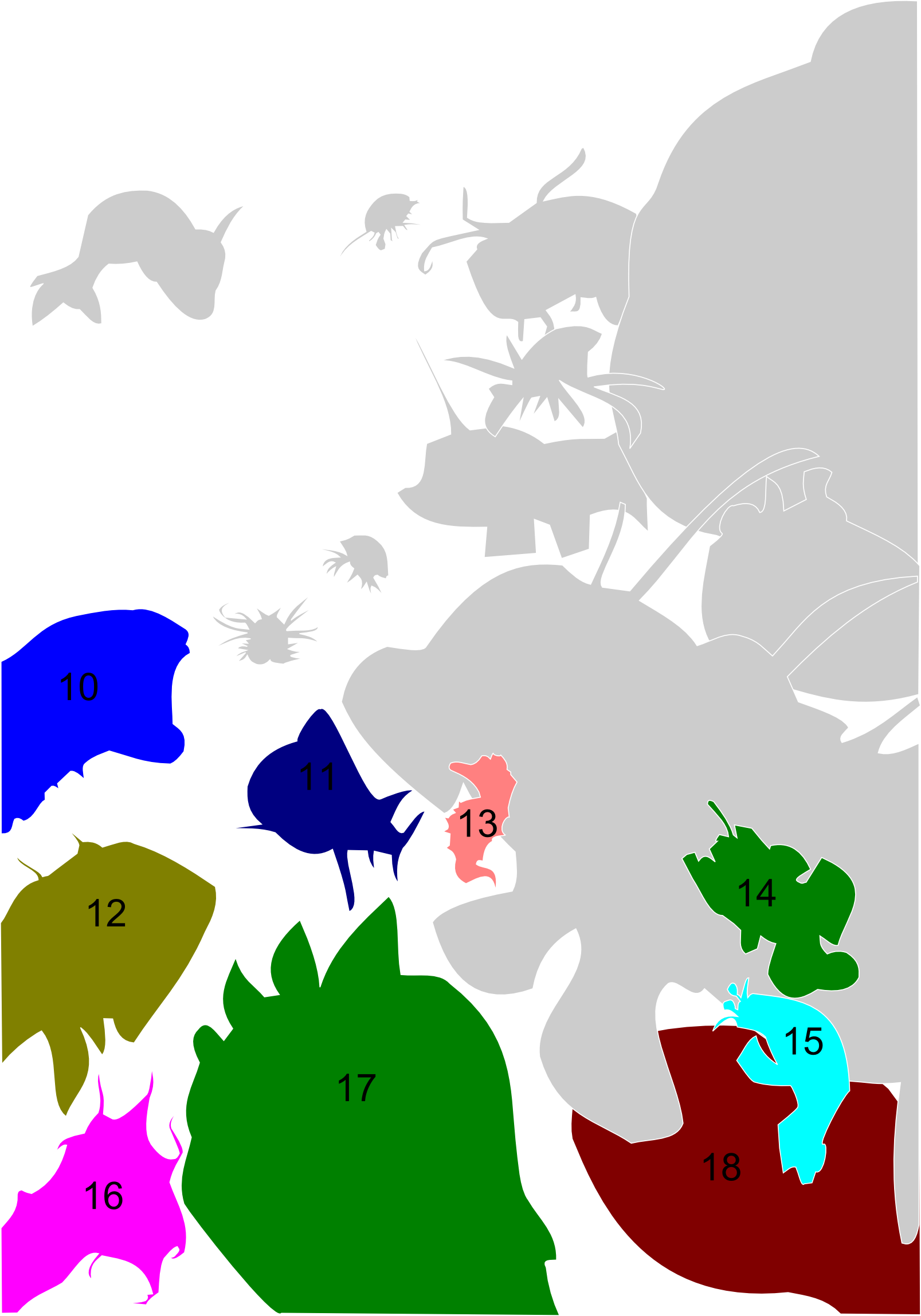
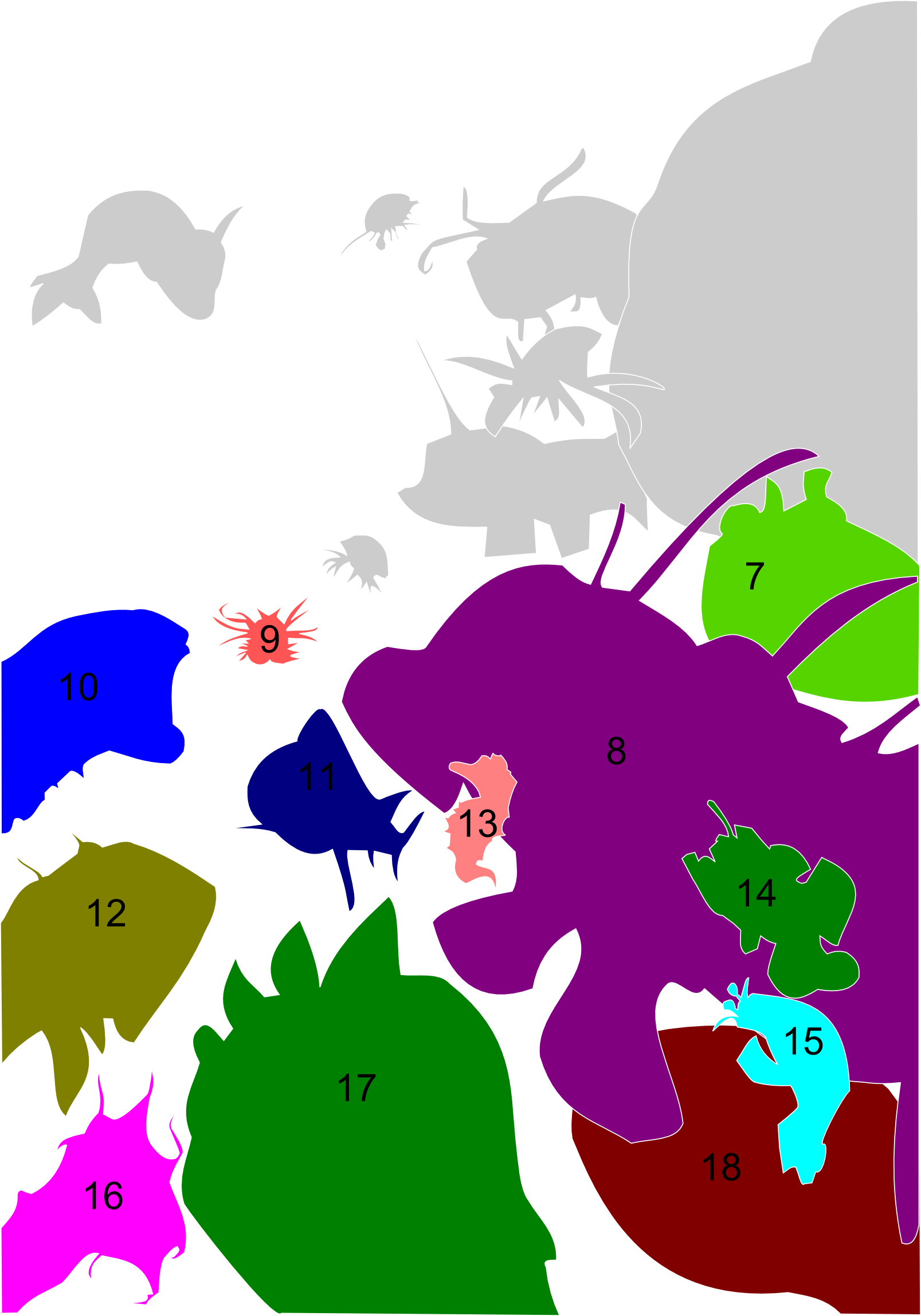
aquapurged3It’s day three of our epic journey through the wonderful deep-sea creatures featured on this variant cover for Aquaman #31. Have you taken a shot at naming all 18 species, yet? We identified species 1, 2, and 3 on Monday and 4, 5, and 6 on Tuesday.

Today we continue with 7, 8, and 9, one of which is is a major fishery.

Read More “The incredible biodiversity of Aquaman’s variant cover: Halfway Home” »

The incredible biodiversity of Aquaman’s variant cover: Episode 2

Posted on May 6, 2014May 5, 2014 By Andrew Thaler
Popular Culture, Science

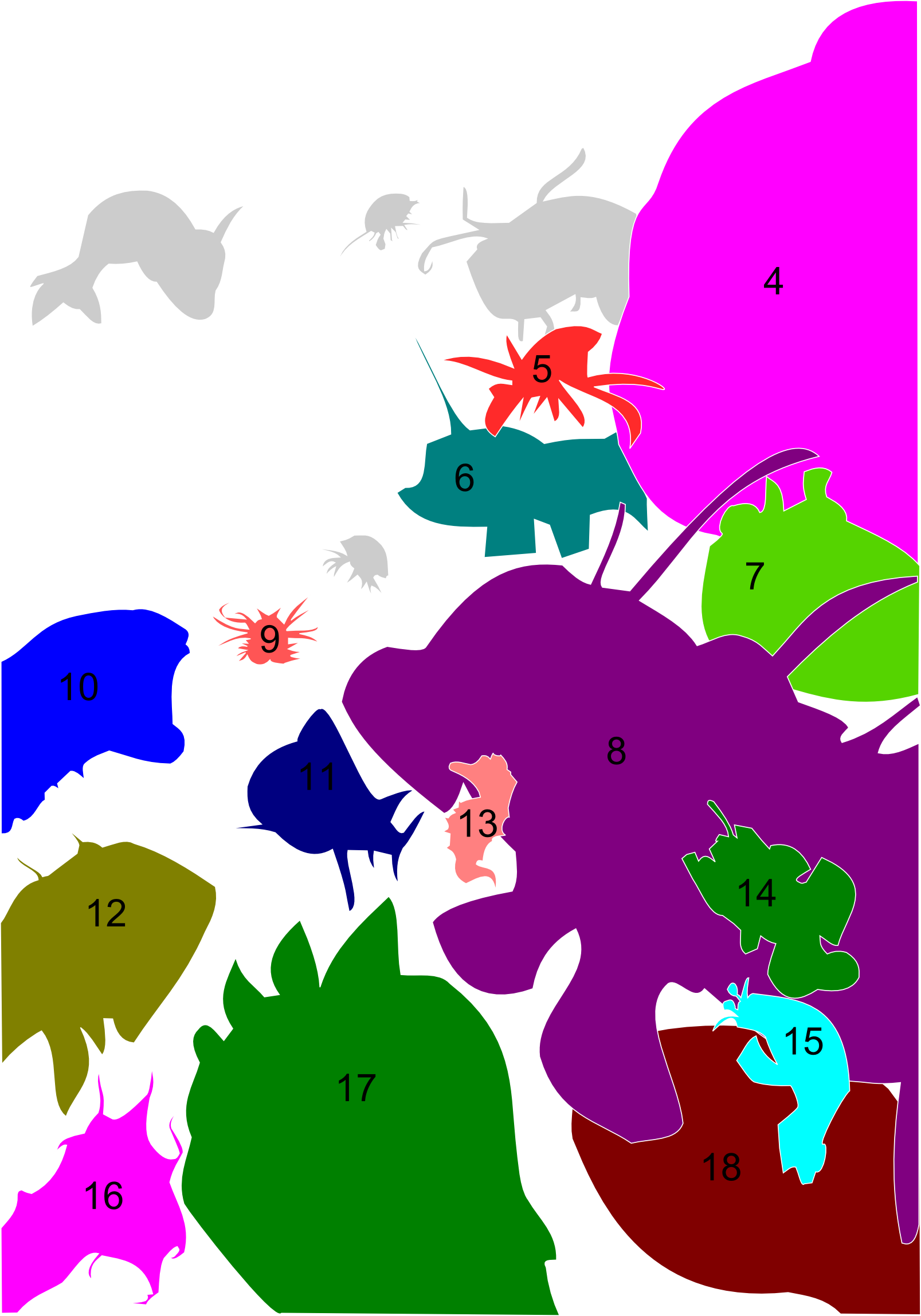
Welcome back to another exciting installment of the incredible biodiversity of this incredible Aquaman cover. Today we’re investigating species 4 through 6, where we’ll meet one of my favorite mid-water fish.

aquapurged2

fangtooth4. Fangtooth (Anoplogaster cornuta)

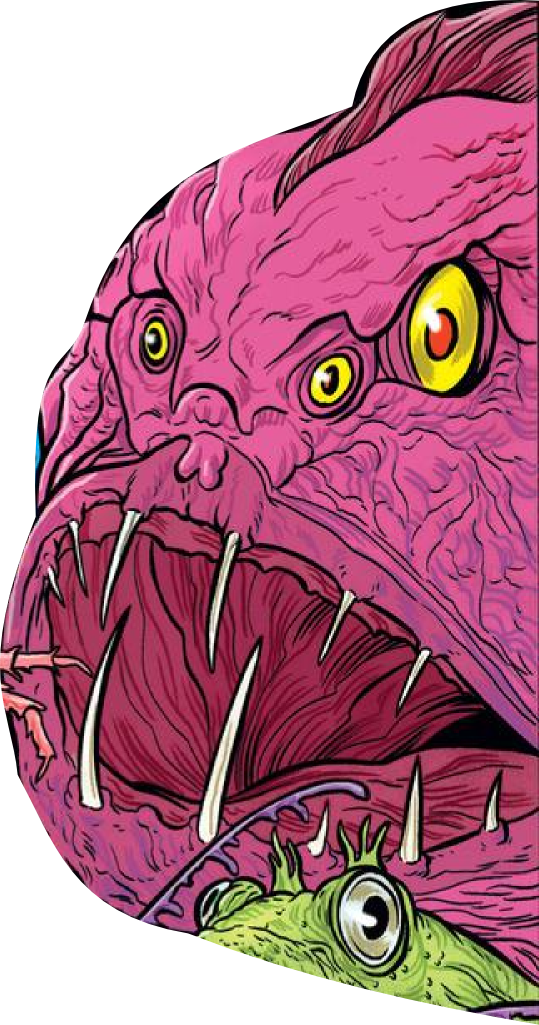
With the largest tooth-length-to-body ratio of any fish, the fangtooth has earned its menacing name. Unfortunately, this intimidating creature barely reaches 18 centimeters in length, hardly the massive, Batman-swallowing maw illustrated to the right. Fangtooths are among the deepest swimming fish. They can be found as far as 5000 meters down, though they are more common in the midwater (200-2000 meters).

Read More “The incredible biodiversity of Aquaman’s variant cover: Episode 2” »

The incredible biodiversity of Aquaman’s variant cover

Posted on May 5, 2014May 5, 2014 By Andrew Thaler 2 Comments on The incredible biodiversity of Aquaman’s variant cover
Popular Culture, Science
Aquaman #31 variant cover. Art by Mike Allred.

Aquaman. Wow. Artist Mike Allred has seriously outdone himself with this incredible variant cover to Aquaman #31, featuring a 75th anniversary tribute to Batman as well as an incredible pastel array of deep-sea creatures. What truly amazing about this cover is that each one of these animals is a real living denizen of the deep right here, on Earth Prime. Sure, the scale might be a little off, and it’s unlikely that a scale worm could swallow a Bat-thyscaph, but the salient details are uncanny. Join me on a tour of the 18 wonderful animals featured on this sure-to-be epic installment of Aquaman’s ocean-spanning adventures. Today we’re looking at the first three, including one of my all time favorite marine organisms.

Read More “The incredible biodiversity of Aquaman’s variant cover” »

Attack of the paranormal mermaid romance novel: Why you should never, ever lose a bet to David Shiffman

Posted on March 3, 2014March 3, 2014 By Andrew Thaler 1 Comment on Attack of the paranormal mermaid romance novel: Why you should never, ever lose a bet to David Shiffman
Popular Culture

breakingblueTake heed, all those who would dare to gamble against David Shiffman. You will fail.

It seemed innocent enough. I was in the middle of a job search, paying the bills with consulting, freelance work, and science writing while pursuing the next academic appointment. Finally having a bit of time, I wrote a science fiction novel, something I’ve always wanted to do. Sometime last summer, our resident shark fanatic made a dangerous suggestion. “Why don’t you just cash in on the mermaid craze?” “Fine,” I said, “if I don’t land a job by 2014, I’ll write a marine science-inspired paranormal mermaid romance novel.”

It’s 2014. This is Breaching Blue.

Below, for your enjoyment, is the first chapter.

If you’re interested in my other writings, you can check out Fleet and Prepared on Amazon or read my short story, The Lucky Ones, at Nature. And a huge shout-out to Mark Gibson, who writes the excellent marine science blog, Breaching the Blue, and was kind enough to let me use the inadvertently parallel name. For obvious reasons, this is not the final draft.


Chapter 1: Sisters of the Reef

The reef was old. It rose out of the seamount, a honeycomb of chambers piled one on top of the other; each chamber perfectly sized for Janthia and her sisters. This reef was made for them.

Read More “Attack of the paranormal mermaid romance novel: Why you should never, ever lose a bet to David Shiffman” »

Release the Karaqan! How does Aquaman’s latest foe stack up against real ocean giants?

Posted on January 31, 2014January 31, 2014 By Andrew Thaler 1 Comment on Release the Karaqan! How does Aquaman’s latest foe stack up against real ocean giants?
Popular Culture
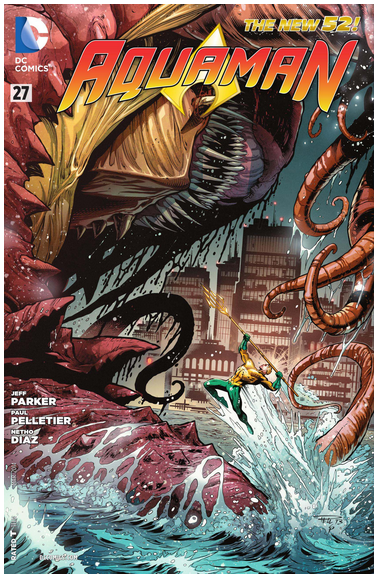
Aquaman #27. DC Comics.

It’s been more than 2 months since we last discussed the patron saint of Southern Fried Science, the one and only Aquaman. The Atlantean übermensch has a new lead writer, Jeff Parker, who’s teamed up with Aquaman veteran Paul Pelletier to produce an engaging and visually stunning story. After the epic conclusion to Throne of Atlantis, Aquaman is off on an entirely new adventure. Unfortunately, this new quest puts our hero in the path of a gargantuan guardian of ancient Atlantis, the Karaqan!

The Karaqan is big, but just how big is it? How does the Karaqan stack up against living sea creatures? Could an arthropod ever get as big as the Karaqan? Most important, if Aquaman does successfully slay the Karaqan, just how much Old Bay would we need to steam it?

Read More “Release the Karaqan! How does Aquaman’s latest foe stack up against real ocean giants?” »

Posts pagination

Previous 1 … 6 7 8 … 19 Next

Popular Posts

How close did the world's first deep-sea mining come to the dredging the world's largest cold-water coral reef?How close did the world's first deep-sea mining come to the dredging the world's largest cold-water coral reef?March 17, 2026Andrew Thaler
At least 74 practicing shark researchers: How a silly thing I said online raised thousands for conservationAt least 74 practicing shark researchers: How a silly thing I said online raised thousands for conservationFebruary 26, 2025David Shiffman
What Ocean Ramsey does is not shark science or conservation: some brief thoughts on "the Shark Whisperer" documentaryWhat Ocean Ramsey does is not shark science or conservation: some brief thoughts on "the Shark Whisperer" documentaryJuly 2, 2025David Shiffman
Here are some ocean conservation technologies that I'm excited aboutHere are some ocean conservation technologies that I'm excited aboutFebruary 19, 2026David Shiffman
That's not a blobfish: Deep Sea Social Media is Flooded by AI SlopThat's not a blobfish: Deep Sea Social Media is Flooded by AI SlopDecember 19, 2025Andrew Thaler
My "Follow ocean science and conservation experts on Bluesky and Instagram" assignmentMy "Follow ocean science and conservation experts on Bluesky and Instagram" assignmentNovember 19, 2024David Shiffman
I turned my woodshop into a personal solar farm.I turned my woodshop into a personal solar farm.June 21, 2021Andrew Thaler
Urea and Shark OsmoregulationUrea and Shark OsmoregulationNovember 15, 2010David Shiffman
Alberta, Canada is the proud owner of the largest man-made pyramid on the planetAlberta, Canada is the proud owner of the largest man-made pyramid on the planetOctober 16, 2012Andrew Thaler
Here's what I teach my students about finding jobs in marine biology and conservationHere's what I teach my students about finding jobs in marine biology and conservationApril 10, 2024David Shiffman
Subscribe to our RSS Feed for updates whenever new articles are published.

We recommend Feedly for RSS management. It's like Google Reader, except it still exists.

Southern Fried Science

  • Home
  • About SFS
  • Authors
  • Support SFS


If you enjoy Southern Fried Science, consider contributing to our Patreon campaign.

Copyright © 2026 Southern Fried Science.

Theme: Oceanly Premium by ScriptsTown