Skip to content

Southern Fried Science

Over 15 years of ocean science and conservation online

  • Home
  • About SFS
  • Authors
  • Support SFS

Category: Science

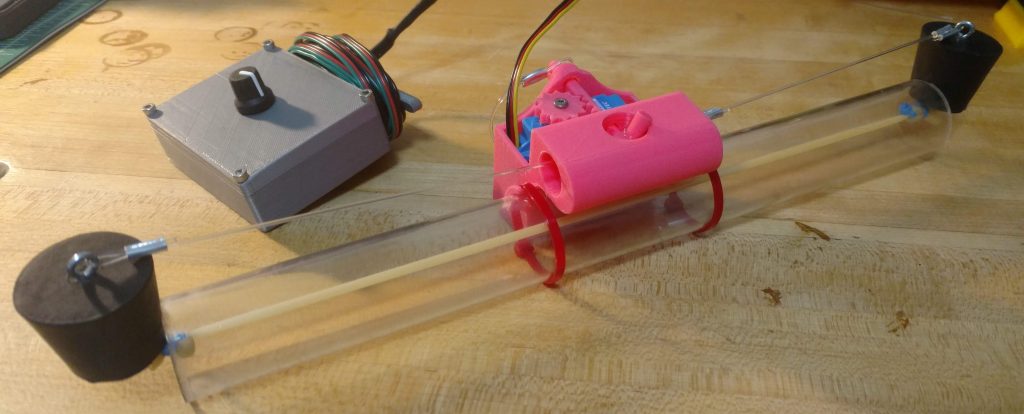
The next generation open-source, 3D-printable Niskin bottle has arrived!

Posted on February 12, 2019February 12, 2019 By Andrew Thaler
Oceanography for Everyone, Science

The Niskin bottle, a seemingly simple device designed to take water samples at discrete depths, is one of the most important tools of oceanography. These precision instruments allow us to bring ocean water back to the surface to study its chemical composition, quality, and biologic constituency. If you want to know how much plastic is circulating in the deep sea, you need a Niskin bottle. If you need to measure chemical-rich plumes in minute detail, you need a Niskin bottle. If you want to use environmental DNA analyses to identify the organisms living in a region of the big blue sea, you need a Niskin bottle.

View this post on Instagram

It's ready! The next-generation open-source, 3D-printable Niskin bottle is here! What do you want to sample? #ocean #oceanography #opensource #3dprinting #ecology #conservation

A post shared by Andrew David Thaler (@drandrewthaler) on Feb 12, 2019 at 2:52pm PST

Niskin bottles are neither cheap nor particularly easy to use. A commercial rosette requires a winch to launch and recover, necessitating both a vessel and a crew to deploy. For informal, unaffiliated, or unfunded researchers, as well as citizen scientists or any researcher working on a tight budget, getting high-quality, discrete water samples is an ongoing challenge.

Read More “The next generation open-source, 3D-printable Niskin bottle has arrived!” »

A lost continent, rich in cobalt crusts, could create a challenging precedent for mineral extraction in the high seas.

Posted on January 18, 2019January 18, 2019 By Andrew Thaler
A lost continent, rich in cobalt crusts, could create a challenging precedent for mineral extraction in the high seas.
Science

[This article originally appeared yesterday in the Deep-sea Mining Observer. ~Ed.]

The Rio Grande Rise is an almost completely unstudied, geologically intriguing, ecologically mysterious, potential lost continent in the deep south Atlantic. And it also hosts dense cobalt-rich crusts.

The Rio Grande Rise is a region of deep-ocean seamounts roughly the area of Iceland in the southwestern Atlantic. It lies west of the Mid-Atlantic Ridge off the coast of South America and near Brazil’s island territories. As the largest oceanic feature on the South American plate, it straddles two microplates. And yet, like much of the southern Atlantic deep sea, it is relatively under sampled.

Almost nothing is known about the ecology or biodiversity of the Rio Grande Rise.

Read More “A lost continent, rich in cobalt crusts, could create a challenging precedent for mineral extraction in the high seas.” »

All the slime that sticks, we print: 2018 in Hagfish Research

Posted on December 27, 2018December 27, 2018 By Andrew Thaler
Science

Hagfish. You love them. I love them. Of all the fish in all the seas, none are more magnificent than the hagfish. Across the world, children celebrate the hagfish by making slime from Elmer’s glue, their own mucous, or just, like, something. Seriously, how is is that toddler hands are always coated in some strange, unidentifiable slime?

And never, ever forget:

Your car has just been crushed by hagfish: Frequently Asked Questions.

2018 was a big year in hagfish science. Below are just a few of my favorite studies.

Biogeography

A hagfish in the high Antarctic? Hagfish have previously never been observed in the shallow waters around Antarctic, but a photograph from 1988 was determined this year to be a hagfish feeding on a large pile of clam sperm in shallow water. Neat!

Possible hagfish at 30 m in Salmon Bay in 1988. The white patch is Laternula elliptica sperm.

Incidentally, the reason the photo languished for so long is that it was originally though to be a Nemertean. Because Antarctic Nemertean worms are huge and horrifying.

  • Dayton and Hammerstrom (2018) A hagfish at Salmon Bay, McMurdo Sound, Antarctica? DOI: 10.1017/S0954102018000202.

Read More “All the slime that sticks, we print: 2018 in Hagfish Research” »

Canada announced new marine protected area standards. Here’s how science and conservation professionals reacted.

Posted on October 22, 2018 By David Shiffman
Science

Recently, the Canadian government released the Final Report of the National Advisory Panel on Marine Protected Area Standards. This report is a set of guidelines and goals for the creation of new marine protected areas in Canada, and comes as Canada is hoping to greatly increase the number and quality of MPAs. I reached out to MPA experts and environmental nonprofits to ask what they think.

Read More “Canada announced new marine protected area standards. Here’s how science and conservation professionals reacted.” »

Barndoor skates, once a textbook example of overfishing, have recovered enough to allow fishing

Posted on October 19, 2018October 19, 2018 By David Shiffman
Science

Barndoor skates were once thought to be so overfished that a highly-publicized paper from 1998 noted that they had been “driven to near extinction without anyone noticing.” One of the largest skates, barndoor skates can reach over 5 feet in wingspan, which is large enough that their diet includes small sharks like spiny dogfish; for a skate, that’s about as close as it gets to charismatic megafauna!

Recently, NOAA Fisheries announced that Barndoor skate populations off the Northeastern United States had finally recovered enough that fishing for them could resume. This move comes after a 2009 NOAA Fisheries report showed that the species had begun to recover enough that they could be removed from the species of concern list, though they remained protected at the time. “This is good news,” Mike Ruccio, a Supervisory Fishery Policy Analyst for NOAA Fisheries Greater Atlantic Regional Fisheries Office, told me. “Rebuilding overfished stocks is one of the cornerstones of the US domestic policy on fisheries.”

Read More “Barndoor skates, once a textbook example of overfishing, have recovered enough to allow fishing” »

What to do after the first fatal shark bite in Massachusetts since 1936: 3 experts respond

Posted on October 1, 2018 By David Shiffman 3 Comments on What to do after the first fatal shark bite in Massachusetts since 1936: 3 experts respond
Science

Two weeks ago, tragedy struck in New England as a boogie boarder was killed by a great white shark. Though shark bites* in general and fatal shark bites* specifically are incredibly rare (Mr. Medici was the first person killed by a great white shark in Massachusetts waters in 82 years), emotions are running high. Some Cape Cod residents are explicitly calling for a cull (targeted killing) of great white sharks.

Such a cull would be devastating for a recovering but still protected shark species, has been shown not to effectively reduce shark bites, and is opposed by shark experts around the world, but what, if anything, should local governments do instead? I’ve written in the past about alternatives to lethal shark control here and here, but not every solution is applicable for every location; local oceanographic conditions vary, as well as local laws and cultural norms. I reached out to three experts to ask what, if anything, they think should be done here. Here’s what they had to say:

Read More “What to do after the first fatal shark bite in Massachusetts since 1936: 3 experts respond” »

The rise of low-cost ROVs and community submersibles

Posted on September 20, 2018 By Andrew Thaler
Open Science, Science

The following appeared this Monday on the DSM Observer, the only trade journal committed to covering all aspects of the emerging deep-sea mining industry. Though written for the deep-sea mining community, the subject is broadly relevant to a host of ocean industries, so we reprint it below. 


The submarine Noctiluca cruises across the surface. Photo Courtesy Shanee Stopnitzky.

As a community, we discuss mining, management, and monitoring, as well as the regulations that shape them, in terms of governments, major corporations, and research institutions. The deep-sea mining community is small and the complexities of working at abyssal depths engenders collaboration, cooperation, and, in the case of exploitation, compromise. While there are many stakeholders potentially affected by deep-sea mining, only a small proportion of them will ever directly engage with the deep seafloor.

A few extremely wealthy individuals have access to private submersibles and ROVs and have on occasion made them available for research and exploration, but they are the exception. The tools necessary to reach the depths of a hydrothermal vent or polymetallic nodule field are simply too expensive.

That may soon change.

Read More “The rise of low-cost ROVs and community submersibles” »

Shark Week 2018 overall thoughts and episode reviews

Posted on August 15, 2018 By David Shiffman
Popular Culture, Science

The 30th anniversary of Shark Week was the biggest ever, with 22 episodes. It was, as usual, a bit of a mixed bag, though nothing was anywhere near as bad as the bad old days of Megalodon, and there was some pretty good stuff. As has become tradition here at Southern Fried Science, here are some overall thoughts on this year’s Shark Week, as well as reviews for each episode (not counting the clip shows, which I didn’t watch- even I have limits).

Overall thoughts:

  • I heard more references to shark conservation this year, though almost exclusively offhand references to how the Bahamas is a Shark Sanctuary (there was one mention of shark fin trade bans in the Shark Tank show).
  • There were more women scientists and non-white scientists than I can remember, but still some major issues with diversity of scientists. (The white male scientists were still treated differently, including being given their full titles, and in one case a white male with a Masters was called Dr. while a woman with a Ph.D. was not called Dr.).
  • 22 shows is too many shows. I may be the only one in the world who actually tried to watch them all and I had to skip the clip shows because even I have limits.

Rather than organizing episode reviews in chronological order or air date, this year I’m going to organize them by theme.

Read More “Shark Week 2018 overall thoughts and episode reviews” »

I built a head-mounted LiDAR array that lets you see the world like a dolphin via vibrations sent through your jaw.

Posted on July 24, 2018July 24, 2018 By Andrew Thaler 5 Comments on I built a head-mounted LiDAR array that lets you see the world like a dolphin via vibrations sent through your jaw.
Education, Open Science, Science

I’m Andrew Thaler and I build weird things.

Last month, while traveling to Kuching for Make for the Planet Borneo, I had an idea for the next strange ocean education project: what if we could use bone-conducting headphones to “see” the world like a dolphin might through echolocation?

The author wearing a head mounted LiDAR array, looking very pensive.
Spoilers: You can. Photo by A. Freitag.

Bone-conducting headphones use speakers or tiny motors to send vibrations directly into the bone of you skull. This works surprisingly well for listening to music or amplifying voices without obstructing the ear. The first time you try it, it’s an odd experience. Though you hear the sound just fine, it doesn’t feel like it’s coming through your ears. Bone conduction has been used for a while now in hearing aids as well as military- and industrial-grade communications systems, but the tech has recently cropped up in sports headphones for people who want to listen to music and podcasts on a run without tuning out the rest of the world. Rather than anchoring to the skull, the sports headphones sit just in front of the ear, where your lower jaw meets your skull.

This is not entirely unlike how dolphins (and at least 65 species of toothed whales) detect sound. 

Read More “I built a head-mounted LiDAR array that lets you see the world like a dolphin via vibrations sent through your jaw.” »

ACTION ALERT: Protect Florida sharks from harmful fishing practices

Posted on July 19, 2018July 19, 2018 By David Shiffman 3 Comments on ACTION ALERT: Protect Florida sharks from harmful fishing practices
Conservation, Science

After years of scientists and conservationists complaining about problems with common land-based shark fishing practices, the Florida Fish and Wildlife Conservation Commission is finally taking action! At their April meeting, FWC formally announced that they are considering revising regulations governing this activity with the goal of restricting the unnecessary and cruel handling practices that result in killing protected species of sharks.

(For background on this topic, please read my detailed open letter, or this summary of my research).

Here are the options that FWC is considering.

Examples of unequivocally illegal shark fishing from Shiffman and Friends 2017


How can you help? Either physically attend a workshop or send a formal comment online!


Read More “ACTION ALERT: Protect Florida sharks from harmful fishing practices” »

Posts pagination

Previous 1 … 11 12 13 … 82 Next

Popular Posts

What Ocean Ramsey does is not shark science or conservation: some brief thoughts on "the Shark Whisperer" documentaryWhat Ocean Ramsey does is not shark science or conservation: some brief thoughts on "the Shark Whisperer" documentaryJuly 2, 2025David Shiffman
Save the seals.  Congress is trying to shoot its way to salmon recoverySave the seals.  Congress is trying to shoot its way to salmon recoveryJuly 22, 2026Southern Fried Science
Shark of Darkness: Wrath of Submarine is a fake documentaryShark of Darkness: Wrath of Submarine is a fake documentaryAugust 10, 2014Michelle Jewell
What is a Sand Shark?What is a Sand Shark?November 12, 2017Chuck Bangley
What can the funniest shark memes on the internetz teach us about ocean science and conservation?What can the funniest shark memes on the internetz teach us about ocean science and conservation?November 8, 2013David Shiffman
The “Conservation Paywall”: why saving the planet has become a luxury sportThe “Conservation Paywall”: why saving the planet has become a luxury sportJuly 23, 2026Chris Parsons
That's not a blobfish: Deep Sea Social Media is Flooded by AI SlopThat's not a blobfish: Deep Sea Social Media is Flooded by AI SlopDecember 19, 2025Andrew Thaler
Our favorite sea monsters – Ningen (#4)Our favorite sea monsters – Ningen (#4)September 7, 2010Andrew Thaler
Jumping the shark: New study reviews the breaching behavior of sharks and raysJumping the shark: New study reviews the breaching behavior of sharks and raysSeptember 19, 2024David Shiffman
Why would a serious scientist agree to participate in a nonsense Shark Week show?Why would a serious scientist agree to participate in a nonsense Shark Week show?July 15, 2025David Shiffman
Subscribe to our RSS Feed for updates whenever new articles are published.

We recommend Feedly for RSS management. It's like Google Reader, except it still exists.

Southern Fried Science

  • Home
  • About SFS
  • Authors
  • Support SFS


If you enjoy Southern Fried Science, consider contributing to our Patreon campaign.

Copyright © 2026 Southern Fried Science.

Theme: Oceanly Premium by ScriptsTown