Skip to content

Southern Fried Science

Over 15 years of ocean science and conservation online

  • Home
  • About SFS
  • Authors
  • Support SFS

Category: Science

What can be done to protect the incredibly long-lived Greenland shark?

Posted on August 16, 2016August 17, 2016 By Guest Writer 1 Comment on What can be done to protect the incredibly long-lived Greenland shark?
Science
Sonja Fordham President, Shark Advocates International
Sonja Fordham
President, Shark Advocates International

Sonja Fordham founded Shark Advocates International as a project of The Ocean Foundation in 2010 based on her two decades of shark conservation experience at  Ocean Conservancy.  She is Deputy Chair of the IUCN Shark Specialist Group and Conservation Committee Chair for the American Elasmobranch Society, has co-authored numerous publications on shark fisheries management, and serves on most of the U.S. federal and state government advisory panels relevant to sharks and rays.  Her awards include the U.S. Department of Commerce Environmental Hero Award, the Peter Benchley Shark Conservation Award, and the IUCN Harry Messel Award for Conservation Leadership.
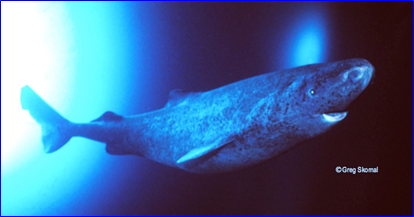
1A new study confirming the mysterious deepsea Greenland Shark as the world’s longest lived vertebrate has made huge news in the last few days – from Science News and BBC to People magazine and the Wall Street Journal. While some scientists are questioning whether these sharks live quite as long as estimated (392 years ± 120), most agree they could well live for a century or two and – as a result —  are particularly vulnerable to overfishing. Experts also warn that risks to Greenland sharks may be increasing as melting sea ice changes Arctic ecosystems and makes fishing in the region more feasible. Study authors are among those urging a precautionary approach to the species’ conservation. In other words, an incomplete picture of status and threats should not be used as an excuse for inaction. So what might be threatening Greenland sharks today, and which upcoming policy opportunities might warrant consideration, given worldwide interest in these jaw-dropping findings?  To come up with some ideas, I first took a look back.

Read More “What can be done to protect the incredibly long-lived Greenland shark?” »

Bill that would ban SCUBA divers from feeding sharks in U.S. waters introduced in Congress

Posted on July 15, 2016July 15, 2016 By David Shiffman 3 Comments on Bill that would ban SCUBA divers from feeding sharks in U.S. waters introduced in Congress
Blogging, Science

Some SCUBA diving operators use bait or chum to attract sharks so that their customers can get an up close and personal encounter. A new bill that would make this practice illegal in all U.S. waters has just been introduced into Congress. Section 3 of S. 3099, the “Access for Sportfishing Act of 2016,” contains the following provision:

Read More “Bill that would ban SCUBA divers from feeding sharks in U.S. waters introduced in Congress” »

Help crowdfund shark research: understanding the yo-yo dives of a top predator

Posted on June 30, 2016June 30, 2016 By Guest Writer
Science
Photo by Zoe Gillam
Photo by Zoe Gillam

Sammy Andrzejaczek grew up ocean obsessed in Western Australia and knew from an early age she wanted to be a marine biologist. She completed her Bachelor of Science Degree in Queensland and developed a fascination with all things shark. Her Honours thesis on whale sharks fed that fascination and she has now moved onto a PhD where she is looking at the vertical movements of sharks and other pelagic predatory fishes. She hopes her project on tiger sharks will become the cornerstone of her thesis and enable her to compare findings with other species of shark around the world. In her (limited) spare time she can be found outside – surfing, diving, camping and hiking. She also loves martial arts and is a black belt in Zen Do Kai.  

We live in the age of computers and information. While technology advances, the devices we use are getting smaller and more compact, and we are able to carry a world of information in our pockets. The same can be said for animal-borne tagging devices. Tags no longer just record where an animal is going; rather they are capable of telling us how an animal is moving, measure the physical environment that the animal passes through and record the physiological state of the animal as it undergoes movement.  Some tags even have embedded video cameras that effectively carry us along for the ride as animals go about their daily behaviours. These advances in tagging technology offer a huge potential for researchers to gain an understanding of drivers behind movement patterns, i.e. not just where an animal goes, but how it moves and why it moves to get to a particular destination. For sharks – my study species – most movement research to date has largely focused on horizontal scales i.e. movements across ocean basins or along coastlines. However, marine animals live in a three dimensional environment, moving up and down through the water column as well as across it. It is fair to say that unless we understand how and why animals move in these three dimensions, then we have little chance of getting a real insight into their ecology.

Read More “Help crowdfund shark research: understanding the yo-yo dives of a top predator” »

Shark Thrillers as Old as Time – The Tales We Told before Jaws

Posted on June 28, 2016June 28, 2016 By Guest Writer
Science

unnamedMareike Dornhege is currently finishing up her PhD on shark fisheries in Japan. She is based in Tokyo at Sophia University and after seeing no sharks many times were there should be sharks on reefs all around the world she wanted to dig deeper and find out when we lost them, why and where. She is trying to reconstruct baselines by looking at the history of sharks and humans, talking to old fishermen and of course modern data as well. And she really loves going on that shark-feeding dive about 90 minutes south of Tokyo!
The latest shark thriller The Shallows just hit theaters—coincidentally with Shark Week around the corner – and is latest in a long line of shark thrillers. In the grand, yet predictable fashion of movies like Deep Blue Sea, The Reef or Open Water, it fuels our fear of the sleek ocean predators that was first awakened by the mother of all shark movies, Jaws, in 1975. Or, was it? It is only since the Jaws theme that got stuck in our heads, even if we are just paddling around in a swimming pool at dusk, and images of dangling legs under water, that we got so irrationally scared and obsessed with the well-designed teeth of these fish after all, right?

Actually no. During my research on the history of shark and men I came across some hair-raising anecdotes of monster sharks from the Caribbean and man-hunting mantas that are just a bit older. A few centuries that is. This fishermen’s yarn must be the pre-digital equivalent of this youtube video of a megalodon shark caught on tape, real mermaids, and dragon footage. Let’s look at what they say and then at what the real science behind these stories is.

Read More “Shark Thrillers as Old as Time – The Tales We Told before Jaws” »

Sink Your Teeth into Elasmobranch Science: A Primer on Shark Teeth

Posted on June 27, 2016June 27, 2016 By Guest Writer
Science

Josh Moyer PIctureA member of the American Society of Ichthyologists and Herpetologists (ASIH) and the American Elasmobranch Society (AES), Joshua Moyer is an ichthyologist specializing in the evolution, biodiversity, and morphology of sharks and their relatives. Joshua has co-authored multiple scientific articles about shark teeth and routinely lectures in courses on marine biology, vertebrate biology, and evolution. He earned his Masters of Science in Ecology and Evolutionary Biology at Cornell University and is an instructor in the massively open online course (MOOC) in shark biology offered by Cornell and the University of Queensland through edX.org. Follow him on twitter! 

What is a shark without its teeth? For that matter, what is any animal without the ability to process and ingest its food? So important are teeth to the way many jawed vertebrates survive, that you can tell a great deal about an animal just by looking at its teeth, or in some cases, lack thereof. Sharks are no different. By asking a series of questions, you can look at shark teeth and begin to piece together a more complete picture of the shark whose teeth you’re studying.

Read More “Sink Your Teeth into Elasmobranch Science: A Primer on Shark Teeth” »

Help crowdfund shark research: will the weasel shark disappear before we know it?

Posted on June 24, 2016June 24, 2016 By Guest Writer
Science

Manuel_Dureuil_BWManuel Dureuil is a Ph.D. candidate whose research focuses on the conservation ecology of sharks. He did both, his Bachelor and Master thesis, in the field of shark conservation at the University of Marburg and Kiel in Germany. His main interest are spatial ecology and data-limited assessment approaches to form a scientific basis for a more comprehensive protection of sharks. A species with particular focus of his research is the Atlantic weasel shark, which is only found in West Africa. Sharks in this area are among the least researched yet most threatened by illegal and unregulated fishing. The weasel shark fulfills all criteria to be considered data-limited: there is no population assessment, no information on its spatial ecology and almost no information on its biology. Manuel is raising funds till the 9th of July as part of The Experiment’s Sharks Grant Challenge, to start a weasel shark project in Cabo Verde, West Africa. Using the weasel shark as an umbrella species the researchers also hope to create awareness for sharks in this region in general, on a national and international level.

The remote island nation of Cabo Verde holds one of the last remaining hotspots for sharks in the entire North Atlantic Ocean and therefore could offer some degree of protection from the ongoing decline in shark populations. This is particularly important for locally endemic species which only occur in this area, such as the Atlantic weasel shark. We know almost nothing about this species and accordingly it is listed as ‘data deficient’ on the IUCN Red List. However, the little we know suggest that this shark is vulnerable to overfishing, making the protection of important habitats (such as nursery grounds) crucial for healthy populations and preventing extinction.

Read More “Help crowdfund shark research: will the weasel shark disappear before we know it?” »

Help crowdfund shark research: Jaws, lost sharks, and the legacy of Peter Benchley

Posted on June 22, 2016June 22, 2016 By Guest Writer
Science

1-Head shot for bio_Dave SFS Article pic_Photo by DA EbertDavid Ebert has been researching sharks and their relatives (the rays, skates, and ghost sharks) around the world for more than three decades focusing his research on the biology, ecology and systematics of this enigmatic fish group. His current research efforts are focused on finding, documenting, and bring awareness to the world’s “lost sharks”. If you would like to learn more please see our crowd funding project “Looking for Lost Sharks: An Exploration of Discovery through the Western Indian Ocean” and consider making a donation. The more we raise, the more sharks we can name and the more schools we will be able to reach.

Jaws, the mere mention of the movie conjures up images of a large triangular fin cutting through the water, beneath it a large fearsome-looking toothy shark swimming with a sense of authority, a purpose. One of the movie’s trailers at the time hyped the fact that this was a mindless eating machine!

I recall seeing the movie Jaws in the theater for the first time during my high school days in the summer of 1975.  It was the first big summer blockbuster film, it was something new to audiences, and certainly new to me. Prior to the film’s release people generally did not anticipate such great summertime entertainment from movies like Jaws and subsequently Star Wars (released in 1977).  These were fun movies to see with your friends and spend an afternoon or evening afterwards talking about certain scenes or dialog from the movie, “You’re gonna need a bigger boat”; remember this was back in the pre-iPhone, Facebook, Twitter, social media era when kids actually spent time together talking with each other, without the aid of electronic devices and no texting!

The movie as an ancillary and an unintended consequence brought a lot of attention to sharks, both good and not so good. Shark attacks that were of minimal media attention became big news stories, catching big sharks became a sport and shark diving became popular; all of this after the movie’s release. A few high profile shark attacks, one in particular in Monterey that made international news, only further fueled the public’s fascination and fear of sharks. Just going into the water suddenly became an adventure, with the prospects (however unlikely) that one may see a shark. It certainly put the public’s awareness of sharks in their conscience.

Read More “Help crowdfund shark research: Jaws, lost sharks, and the legacy of Peter Benchley” »

Help crowdfund shark research: bycatch reduction with the loopy leader

Posted on June 15, 2016June 15, 2016 By Guest Writer
Science

GlennDr. Glenn R. Parsons is a 30 year veteran in the battle against University Administrators, bean-counting bureaucrats, and disinterested students (i.e. he is a Professor at Ole Miss). In his spare time he conducts research work on fish physiology and ecology and has published many papers on shark biology, primarily Gulf of Mexico species. He is author of the seminal book on sharks of the Gulf of Mexico entitled “Sharks, Skates and Rays of the Gulf of Mexico” and a popular novel entitled “Cherokee Summer” that could have been on the New York Times best seller list (if only it was better written and was backed by a high-powered agent like John Grisham’s). He received his PhD from the University of South Florida, School of Marine Science, MS from the University of South Alabama and BS from the University of Alabama. He was a DISL Marine Research Fellow, a Gulf Research Council Research Fellow, and a winner of a World Wildlife Fund, Smartgear Competition (for his bycatch research).

Folks, The world has witnessed an unparalleled decline in sharks that began about 30 years ago and has continued to the present. While the explanations for this decline are varied, scientists are in agreement that “bycatch” during fishing is one of the problems. Bycatch is the un-intended capture of non-target species during fishing. For example, commercial fishing for tuna and swordfish results in the capture of many sharks. The World Wildlife Fund estimates that 50,000,000 sharks are taken as bycatch during commercial fishing. Unfortunately, many of these sharks do not survive the stress of capture (a topic that my lab has researched for many years). Fishers do not want these sharks (they are dangerous to handle and they damage fishing gear) and they would welcome new developments that would reduce or eliminate shark capture.

Read More “Help crowdfund shark research: bycatch reduction with the loopy leader” »

Help crowdfund shark research! Always chew your food – how freshwater stingrays gnaw on prey.

Posted on June 14, 2016June 14, 2016 By Guest Writer
Science

MattMatt Kolmann is a PhD candidate whose research program is at the interface of evolution, comparative anatomy, and biomechanics. He completed his Master’s degree at Florida State University with Dr. Dean Grubbs on the feeding biomechanics and fisheries ecology of cownose rays, a purported pest on commercial shellfish. During this process he developed a love of field work, and since then has collected rays and other fishes on expeditions across South and Central America with the Royal Ontario Museum. His PhD research investigates the evolution of biodiversity using South American freshwater stingrays as a model system. The number of different feeding niches these stingrays occupy is astounding, and Matt is using gene-sequencing, comparative phylogenetic methods, and biomechanical modeling to characterize the evolutionary processes underlying this biodiversity. From June 8th through the end of Shark Week, he will be raising funds to delve more deeply into the evolution of feeding behavior in freshwater rays – specifically investigating whether freshwater rays ‘chew’ tough prey like insects in a manner comparable to mammals. Follow him on twitter! 

What role does our food have in explaining where we live, what we look like, and how we behave?  I study how properties of prey – material, structural, and ecological – shape the evolution of predators.  Specifically, I am interested in how animals adapt to novel foods and diets that pose unique challenges: prey that are tough, stiff, hard, or just generally robust.  I approach these questions at the macroevolutionary (how species are related) level; biodiversity lends insight into engineering and synthetic design based on an understanding of how animals evolve using similar organic principles.

Read More “Help crowdfund shark research! Always chew your food – how freshwater stingrays gnaw on prey.” »

Help crowdfund shark research: Quick(silver?) stingrays

Posted on June 10, 2016June 10, 2016 By Guest Writer
Science

KadyKady Lyons is a Ph.D. candidate whose research focuses on the intersection of physiology, ecology and toxicology.  Her Master’s at Cal State Long Beach with Dr. Chris Lowe got her involved in elasmobranch toxicology.  She is interested in how elasmobranchs respond to anthropogenic contaminants and how contaminants can be used as another tool to study ecology.  Currently, her Ph.D. is examining how accumulation of these man-made contaminants influences round stingray growth and reproduction. As part of her Master’s work, she began to investigate mercury accumulation and body distribution of mercury, a potent neurotoxin, in elasmobranchs using the round stingray as a model species. She is continuing to work on this project and will be raising funds to finish this research as part of The Experiment’s Sharks Grant Challenge beginning June 8th and running through the Discovery Channel’s Shark Week.

Mercury concentrations in the earth’s atmosphere have significantly increased with human activities such as mining and fossil fuel burning.  Mercury can be transformed into its more dangerous form (methylmercury) and this form is what becomes concentrated in animals’ tissues.  For animals that occupy higher positions in the food web such as elasmobranchs (sharks, skates and rays), mercury can bioaccumulate to high levels due to their long life and carnivorous behavior.

Read More “Help crowdfund shark research: Quick(silver?) stingrays” »

Posts pagination

Previous 1 … 15 16 17 … 81 Next

Popular Posts

How close did the world's first deep-sea mining come to the dredging the world's largest cold-water coral reef?How close did the world's first deep-sea mining come to the dredging the world's largest cold-water coral reef?March 17, 2026Andrew Thaler
Tangier, an Island out of Time.Tangier, an Island out of Time.July 3, 2017Andrew Thaler
What Ocean Ramsey does is not shark science or conservation: some brief thoughts on "the Shark Whisperer" documentaryWhat Ocean Ramsey does is not shark science or conservation: some brief thoughts on "the Shark Whisperer" documentaryJuly 2, 2025David Shiffman
That's not a blobfish: Deep Sea Social Media is Flooded by AI SlopThat's not a blobfish: Deep Sea Social Media is Flooded by AI SlopDecember 19, 2025Andrew Thaler
Urea and Shark OsmoregulationUrea and Shark OsmoregulationNovember 15, 2010David Shiffman
Shark of Darkness: Wrath of Submarine is a fake documentaryShark of Darkness: Wrath of Submarine is a fake documentaryAugust 10, 2014Michelle Jewell
Alberta, Canada is the proud owner of the largest man-made pyramid on the planetAlberta, Canada is the proud owner of the largest man-made pyramid on the planetOctober 16, 2012Andrew Thaler
Here's what I teach my students about finding jobs in marine biology and conservationHere's what I teach my students about finding jobs in marine biology and conservationApril 10, 2024David Shiffman
America's Second-Largest Estuary is a Lagoon Full of SharksAmerica's Second-Largest Estuary is a Lagoon Full of SharksApril 12, 2018Chuck Bangley
Build a dirt cheap, tough-as-nails field computer in a Pelican caseBuild a dirt cheap, tough-as-nails field computer in a Pelican caseJuly 21, 2015Andrew Thaler
Subscribe to our RSS Feed for updates whenever new articles are published.

We recommend Feedly for RSS management. It's like Google Reader, except it still exists.

Southern Fried Science

  • Home
  • About SFS
  • Authors
  • Support SFS


If you enjoy Southern Fried Science, consider contributing to our Patreon campaign.

Copyright © 2026 Southern Fried Science.

Theme: Oceanly Premium by ScriptsTown