Skip to content

Southern Fried Science

Over 15 years of ocean science and conservation online

  • Home
  • About SFS
  • Authors
  • Support SFS

Category: Science

The Organism is Always Right.

Posted on December 6, 2016December 6, 2016 By Andrew Thaler
Science

Like this? Support me on Patreon!

Fun Science FRIEDay – Water to Wine? Close, CO2 to Alcohol (ethanol)

Posted on December 2, 2016 By Kersey Sturdivant
Open Science, Science

Science brings us many wonderful things (honestly if you enjoy the benefits of the modern era, go out and hug a scientist). One of humanities age old desires is the ability to convert something invaluable, or a nuisance, into something desirable. The old midas touch if you will. Recently some scientist stumbled onto the process of converting CO2, a primary culprit of anthropogenic climate change, into alcohol… though not the kind you drink, the kind that humanity could use as fuel.

(Photo credit: Getty + Space Images)

Producing fuel from CO2 is huge because it lets us take a nuisance compound, and converts it into a productive one. This was accomplished by scientists at Oak Ridge National Laboratory in Tennessee by using common materials (copper and carbon), but arranging them with nanotechnology. The researchers were attempting to find a series of chemical reactions that could turn CO2 into a useful fuel, such as ethanol. They figured they would go from CO2 to methanol, and then work out the logistics of going from methanol to ethanol, when they realized the first step in their process managed to do it all by itself. Science for the win!

Read More “Fun Science FRIEDay – Water to Wine? Close, CO2 to Alcohol (ethanol)” »
Do you see the deep sea?

Posted on November 29, 2016November 27, 2016 By Andrew Thaler
Science

Like this? Support me on Patreon!

Secrets of the Deep Sea

Posted on November 22, 2016 By Andrew Thaler
Science

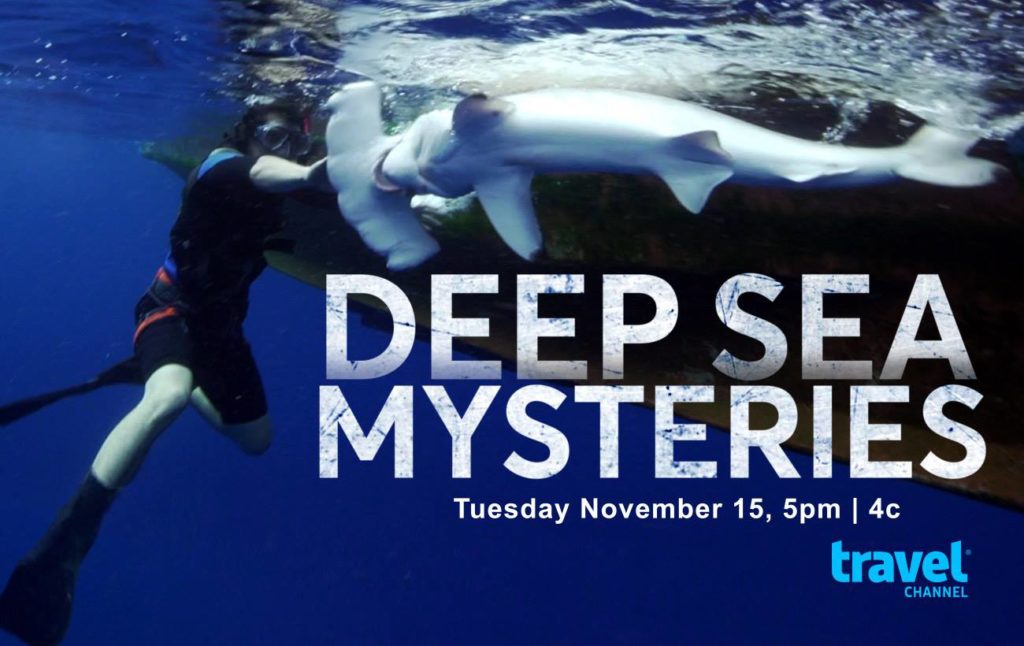
New TV show: Deep Sea Mysteries with Paul Clerkin premieres tonight!

Posted on November 15, 2016November 15, 2016 By Guest Writer
Science

dsc_5896-for-print-twoPaul J. Clerkin is a graduate researcher at the Pacific Shark Research Center of Moss Landing Marine Laboratories in Moss Landing, California. Clerkin specializes in rare and deep-sea chondrichthyans and is focusing on new species descriptions and life histories of poorly understood sharks species. His thesis work is with Dr. David A. Ebert studying sharks encountered during two surveys in the Southern Indian Ocean in 2012 and 2014, a total of 126 days at sea. He has also conducted research for other projects aboard ships in the Bering Sea, South East Atlantic, Philippine Sea, and across the Pacific. He was featured in the “Alien Sharks” series on Shark Week.

This week, Travel Channel is airing a pilot for my new series, Deep Sea Mysteries (“like” our page on Facebook!). In the course of research, I visit extraordinary fishing communities to find and study rare, poorly known and even undescribed species. This show is the first of its kind, different from the Shark Week programs I’ve done in the past. It continues a focus on sharks and other deep-sea animals, but is notably (and pleasantly) more educational. There are more species, more facts, more science, and an emphasis on conservation effort.

dsm_hh

Also, as a travel show, the series combs through the beautiful regions, interesting people and unique stories behind each expedition.

Read More “New TV show: Deep Sea Mysteries with Paul Clerkin premieres tonight!” »

Fun Science FRIEDay – Visualize the Seafloor

Posted on November 4, 2016November 7, 2016 By Kersey Sturdivant
Open Science, Science, Uncategorized

Happy FSF! As some of you may know (and for those who don’t), I study the bottom of the ocean, and I do so primarily using innovative technology to image the seafloor (e.g., Wormcam). The interesting work I’ve conducted has resulted in me having the opportunity to present my work to a larger lay audience, in the form of a TEDx presentation.

(Photo Credit: TEDx Newport)

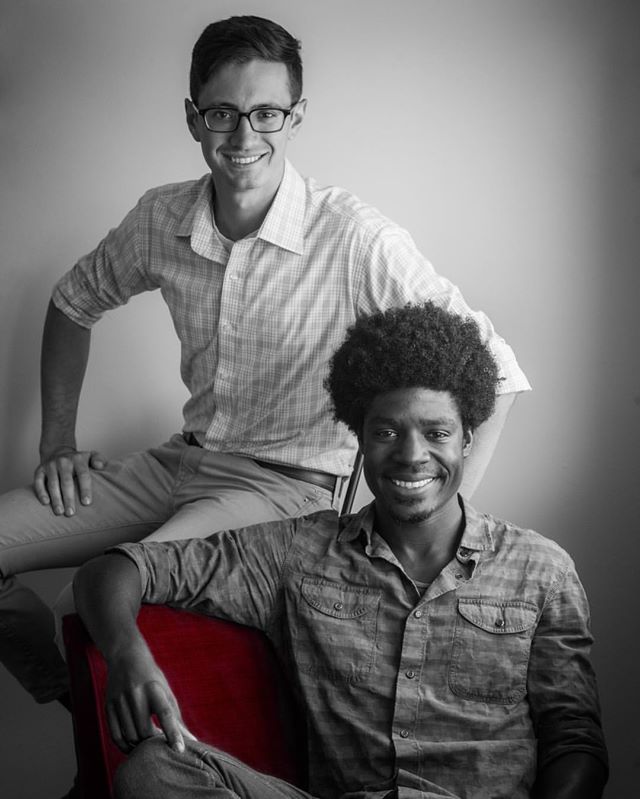
I am giving my TED talk with my good buddy and colleague Steve Sabo.  In our talk, “A Picture is Worth a Thousand Worms”, Steve & I will illustrate the significance of the ocean floor through advancements in underwater camera technology and data visualization, making complex science more accessible for everyone.

Our TED photo (Photo credit: Meg Heriot)

Read More “Fun Science FRIEDay – Visualize the Seafloor” »

Adopt the giant deep-sea isopod, Bathynomus giganteus, as the National Deep-sea Animal of the United States.

Posted on November 3, 2016November 7, 2016 By Andrew Thaler
Education, Science

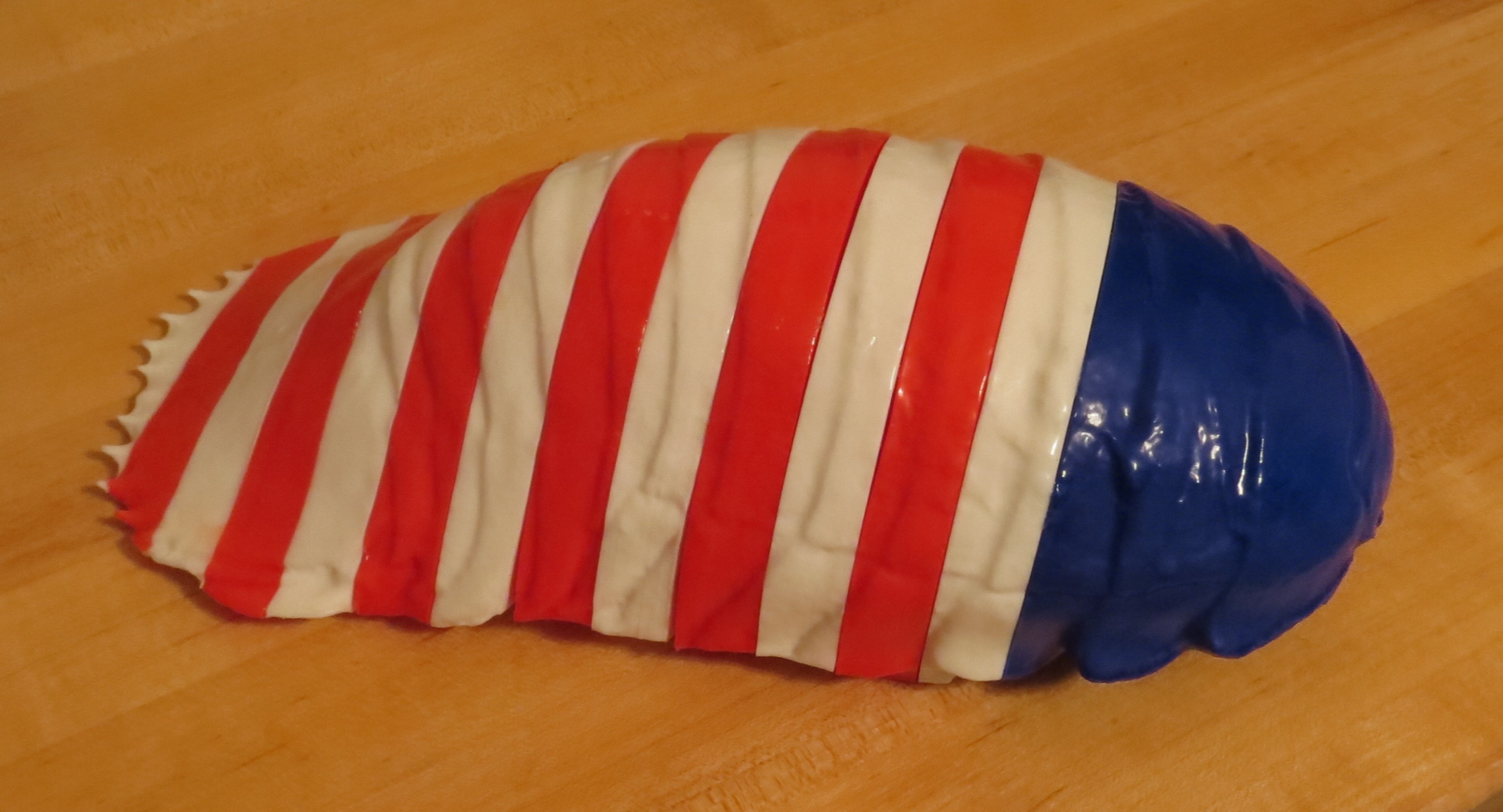
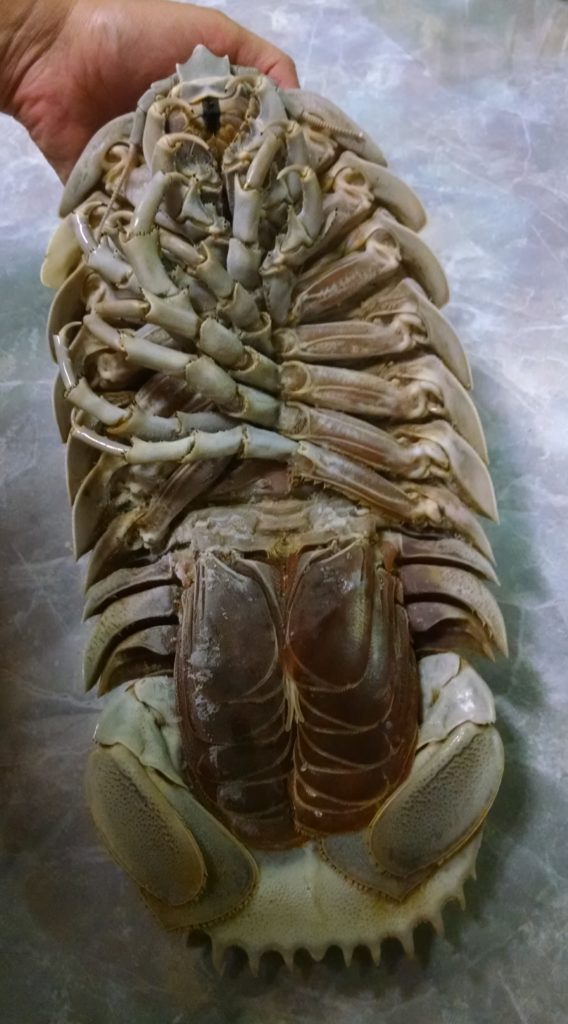
Picture a pill bug, roly poly, woodlouse, or doodle bug, an animal found under rocks and logs throughout the United States. Now picture an animal similar to that pill bug, but as big as a cat, crawling across the Gulf of Mexico. That is the giant deep-sea isopod.

allamerican

The deep waters of the United States’ Exclusive Economic Zone is home to this large, recognizable animal, which can reach almost 2 feet in length. Since their discovery in the late 19th century, giant isopods have captured the public’s imagination, acting as an Ambassador Species for deep-sea ecosystems. Ambassador Species are important for education, exploration, and conservation as they provide a charismatic icon to help introduce people to new and unfamiliar places.

WHEREAS:

Read More “Adopt the giant deep-sea isopod, Bathynomus giganteus, as the National Deep-sea Animal of the United States.” »

Fun Science FRIEDay – Underwater World of Pollination

Posted on October 14, 2016 By Kersey Sturdivant
Science

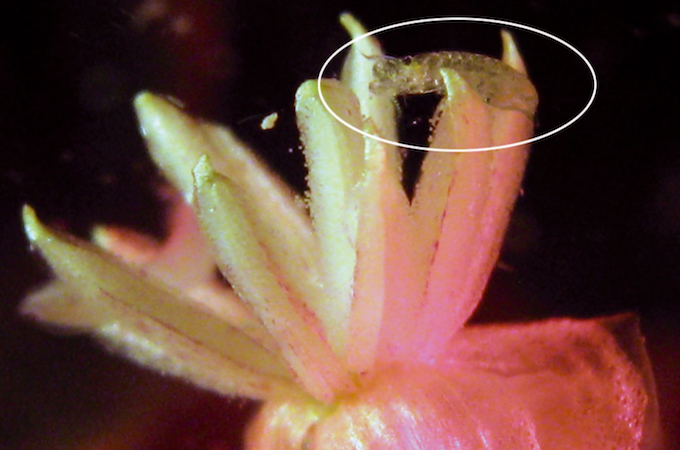
Pollination. I think most people understand why this is important (or maybe I should say, I hope). To put it simply, the process of pollination facilitates reproduction in plants by transferring pollen from one plant to another. In the terrestrial world, this can be mediated by physical forcing (e.g., wind) or by animals (e.g., insects) – and its why people are freaking out about the loss of bees due to pesticides (because they are a primary pollinator), but I digress. Until relatively recently, pollination by animals was not thought to occur in the ocean. Unlike on land, where most flowering plants rely on creatures to carry pollen, plant reproduction in an aquatic world was surmised to rely exclusively on currents and tides. However, a team of researchers led by marine biologist Brigitta van Tussenbroek revoked the long standing paradigm that pollen in the sea is transported only by water, discovering and documenting the process of zoobenthophilous pollination (a term they coined).

Gamarid amphipod feeding on pollen or mucilage of a male flower of the seagrass Thalassia testudinum at night. (Photo credit: Tussenbroek et al. 2012)
Gamarid amphipod feeding on pollen of a male
flower of the seagrass Thalassia testudinum at night. (Photo credit: Tussenbroek et al. 2012)

Read More “Fun Science FRIEDay – Underwater World of Pollination” »

The 3D-Printed Giant Deep-sea Isopod You Always Wanted.

Posted on October 6, 2016 By Andrew Thaler 1 Comment on The 3D-Printed Giant Deep-sea Isopod You Always Wanted.
Popular Culture, Science
Giant Isopod. Photo by author.

I love giant deep-sea isopods (Bathynomous giganteus if you’re fancy).

I’ve written quite a few articles about giant isopods. Giant isopods were prominently featured in our epic ocean monograph, Sizing Ocean Giants. I’ve even been fortunate enough to observe novel giant isopod behavior in the deep sea. If Southern Fried Science had a mascot, it would have to be the giant isopod.

When I started Scanning the Sea, I knew that a giant isopod would have to be part of the collection. There was just one problem: 3D scanning marine critters is an imprecise art, and you need to start with a very clean specimen. Most of the giant isopods I had access to had been floating in formalin for decades, or came up in pieces, or were preserved in a twisty, roly-poly ball. They weren’t good candidates for scanning.

Read More “The 3D-Printed Giant Deep-sea Isopod You Always Wanted.” »

The international gill plate trade: a highway to hell for devil rays?

Posted on September 29, 2016September 29, 2016 By Guest Writer 1 Comment on The international gill plate trade: a highway to hell for devil rays?
Science

sebphoto2Seb Pardo is a biologist currently doing a PhD at Simon Fraser University in Canada. He is broadly interested in the biology, ecology, and conservation of sharks and rays. At present, his research is focused on borrowing tools from evolutionary biology to predict the biology and extinction risk of poorly studied sharks and rays. By using these data-poor methods, he hopes to make the most out of currently available data to inform policy decisions relevant for the sustainable management of sharks and rays. His twitter handle is @sebpardo

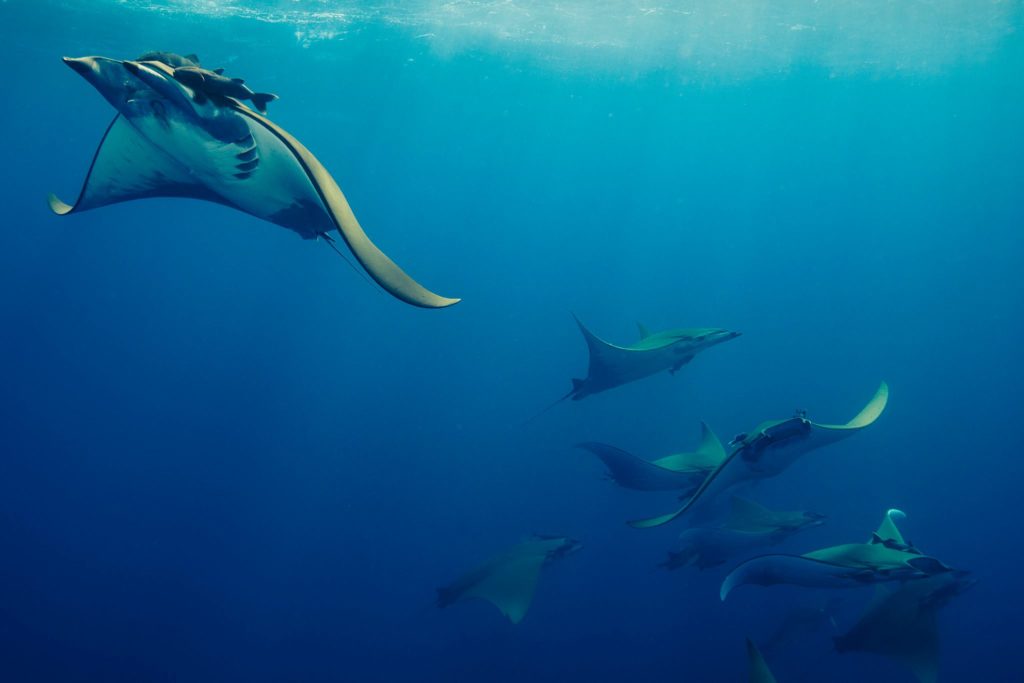
Chilean Devil Rays (Mobula tarapacana) swimming in the Azores. © Daniel Van Duinkerken — http://danielvandphoto.com — Instagram: daniel.van.d
Chilean Devil Rays (Mobula tarapacana) swimming in the Azores.
© Daniel Van Duinkerken — http://danielvandphoto.com — Instagram: daniel.van.d

Rays rarely get the same amount of attention as sharks do. Perhaps the most notable exception are the manta rays (genus Manta), which are charismatic, filter-feeding rays that inhabit warm waters throughout the world’s oceans. Their closest relatives, the devil rays (genus Mobula), are not nearly as “famous” — even though they are the only other members of the family Mobulidae. There are nine species of devil rays found throughout the world’s tropical and temperate oceans, and while they are smaller than mantas (only reach over 3 metres in width), devil and manta rays are so similar that they are sometimes confused with each other. Because devil rays garner less public interest, the are very few studies on their basic biology and ecology, hindering our ability to assess their status.

Devil and manta rays face similar threats. Both are often caught as bycatch in industrial and artisanal fishing operations, which may result in considerable mortality even after being released. On top of this, there has been an increase in the international demand for their gill plates, which are used a health tonic in Chinese medicine. This has increased targeted fishing and bycatch retention in many places around the world. However, because of the lack of information on devil rays, it is very difficult assess whether this level of catch and trade is sustainable. This is the key question we set out to answer.

Read More “The international gill plate trade: a highway to hell for devil rays?” »

Posts pagination

Previous 1 … 16 17 18 … 83 Next

Popular Posts

At least 74 practicing shark researchers: How a silly thing I said online raised thousands for conservationAt least 74 practicing shark researchers: How a silly thing I said online raised thousands for conservationFebruary 26, 2025David Shiffman
Why the new Trump order to shoot wolves is both illegal and a dreadful precedent for endangered speciesWhy the new Trump order to shoot wolves is both illegal and a dreadful precedent for endangered speciesSeptember 5, 2026Ali Gaster
Severely injured great white shark found, are scientists responsible?Severely injured great white shark found, are scientists responsible?March 29, 2011David Shiffman
5 things I learned helping to reassess the global conservation status of every species of tuna and billfish5 things I learned helping to reassess the global conservation status of every species of tuna and billfishSeptember 15, 2026David Shiffman
That's not a blobfish: Deep Sea Social Media is Flooded by AI SlopThat's not a blobfish: Deep Sea Social Media is Flooded by AI SlopDecember 19, 2025Andrew Thaler
Getting a sense of porpoiseJanuary 20, 2009Andrew Thaler
How to build a canoe from scratch on a graduate student stipendHow to build a canoe from scratch on a graduate student stipendApril 17, 2010Andrew Thaler
13 wrong things about sharks that conservation advocates should stop saying in 2013 (and what they should say instead)December 27, 2012David Shiffman
What is a Sand Shark?What is a Sand Shark?November 12, 2017Chuck Bangley
The Trump Administration’s latest attack on endangered speciesThe Trump Administration’s latest attack on endangered speciesSeptember 17, 2026Ali Gaster
Subscribe to our RSS Feed for updates whenever new articles are published.

We recommend Feedly for RSS management. It's like Google Reader, except it still exists.

Southern Fried Science

  • Home
  • About SFS
  • Authors
  • Support SFS


If you enjoy Southern Fried Science, consider contributing to our Patreon campaign.

Copyright © 2026 Southern Fried Science.

Theme: Oceanly Premium by ScriptsTown